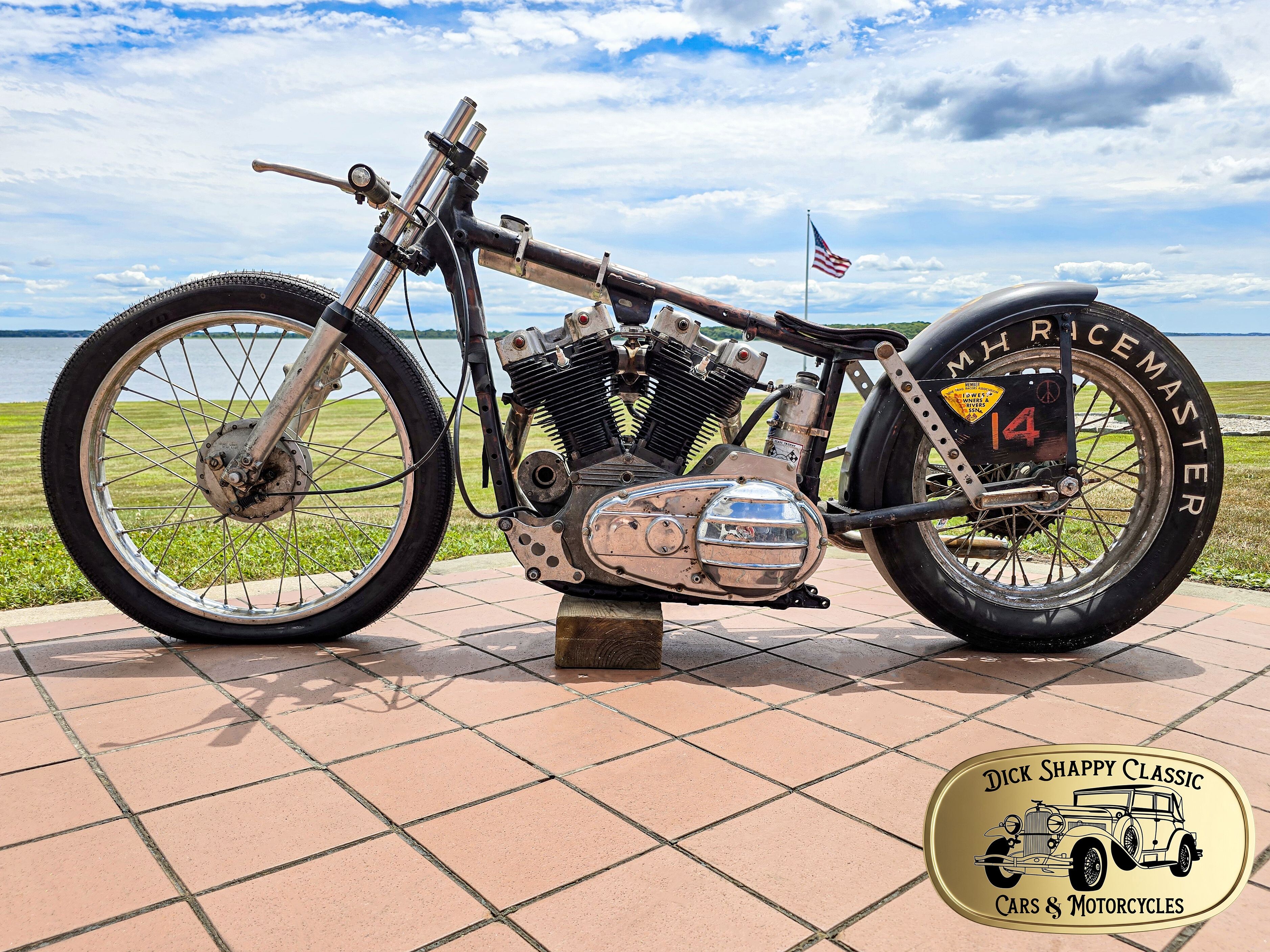
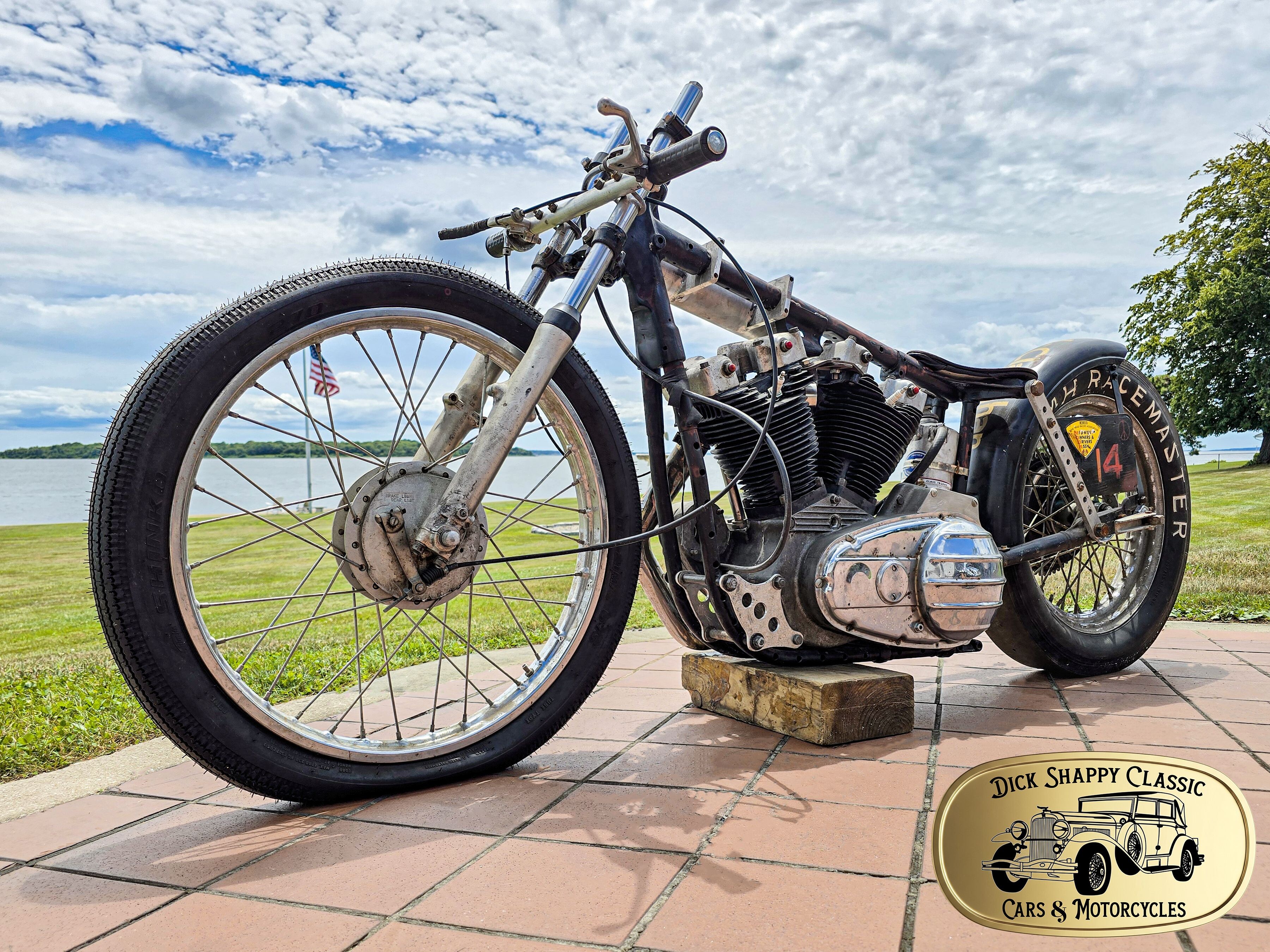
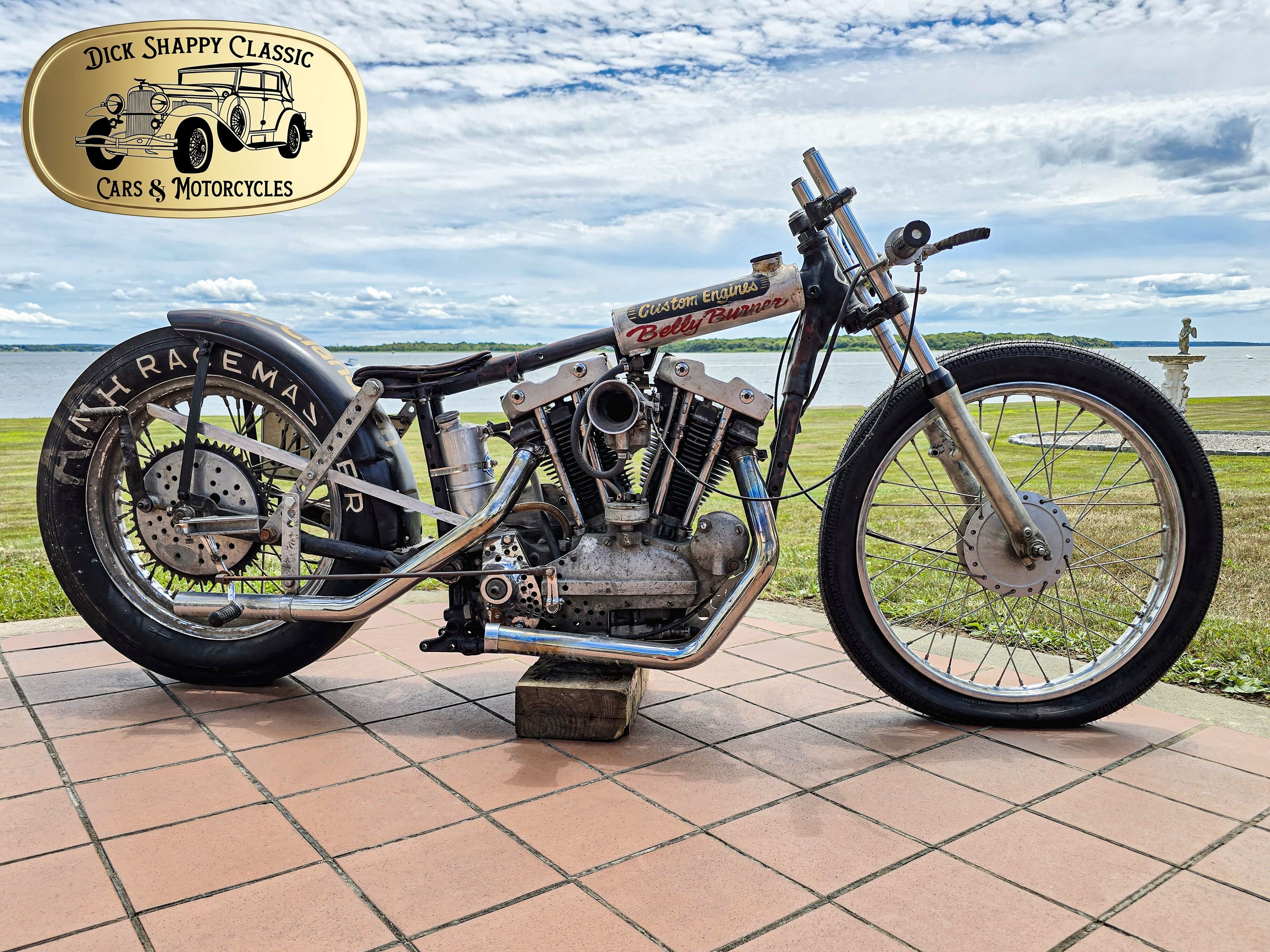
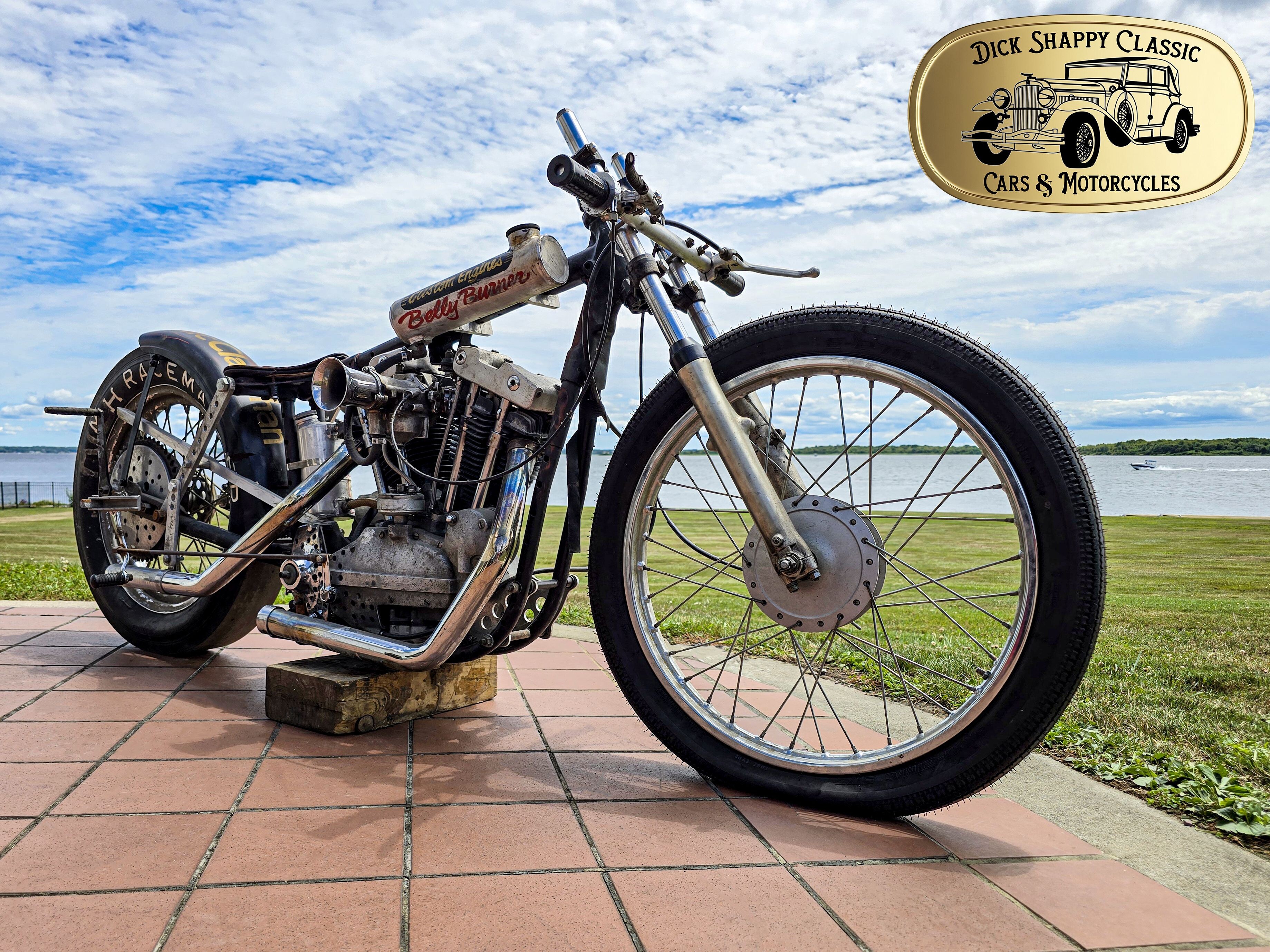
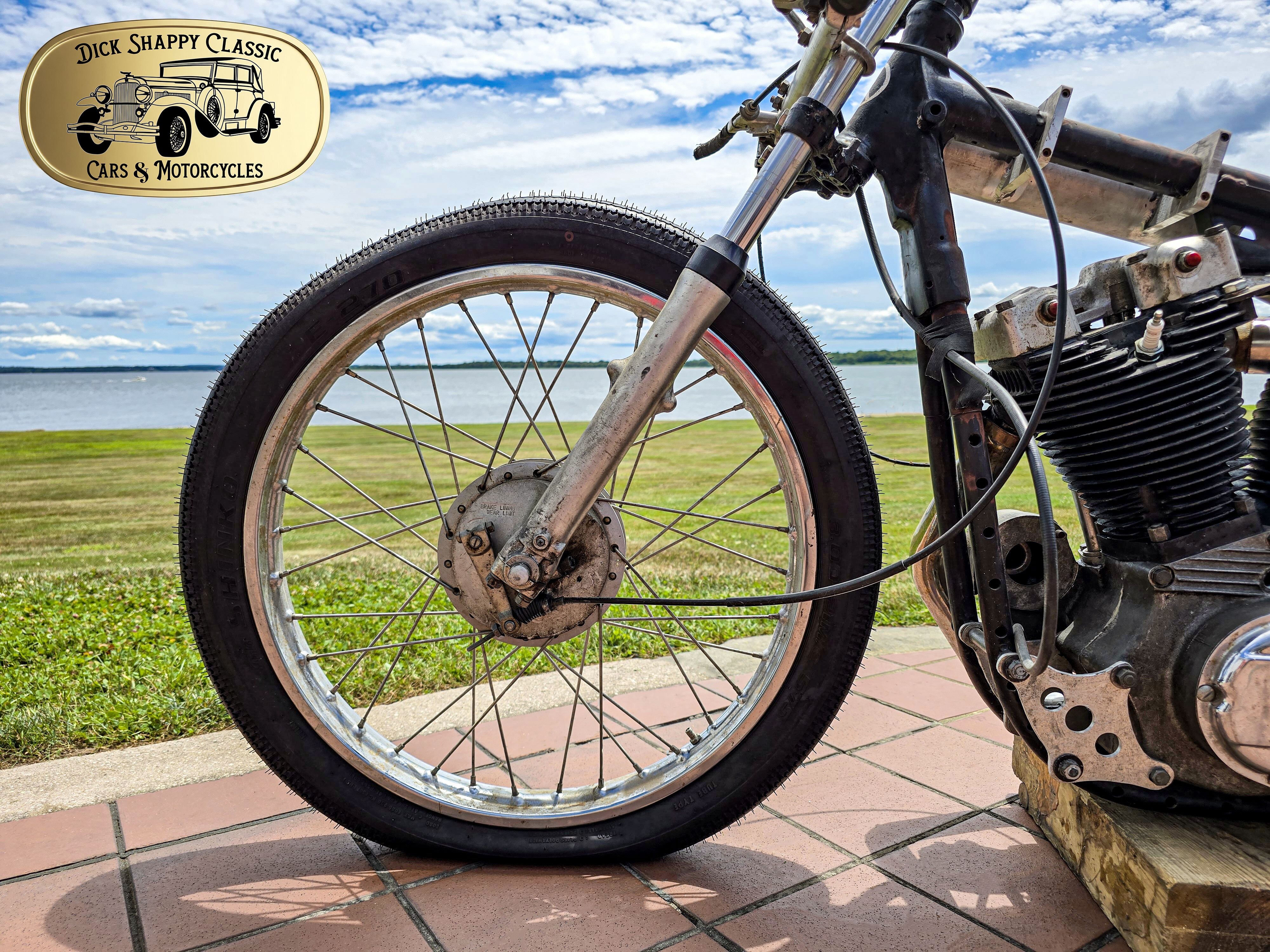
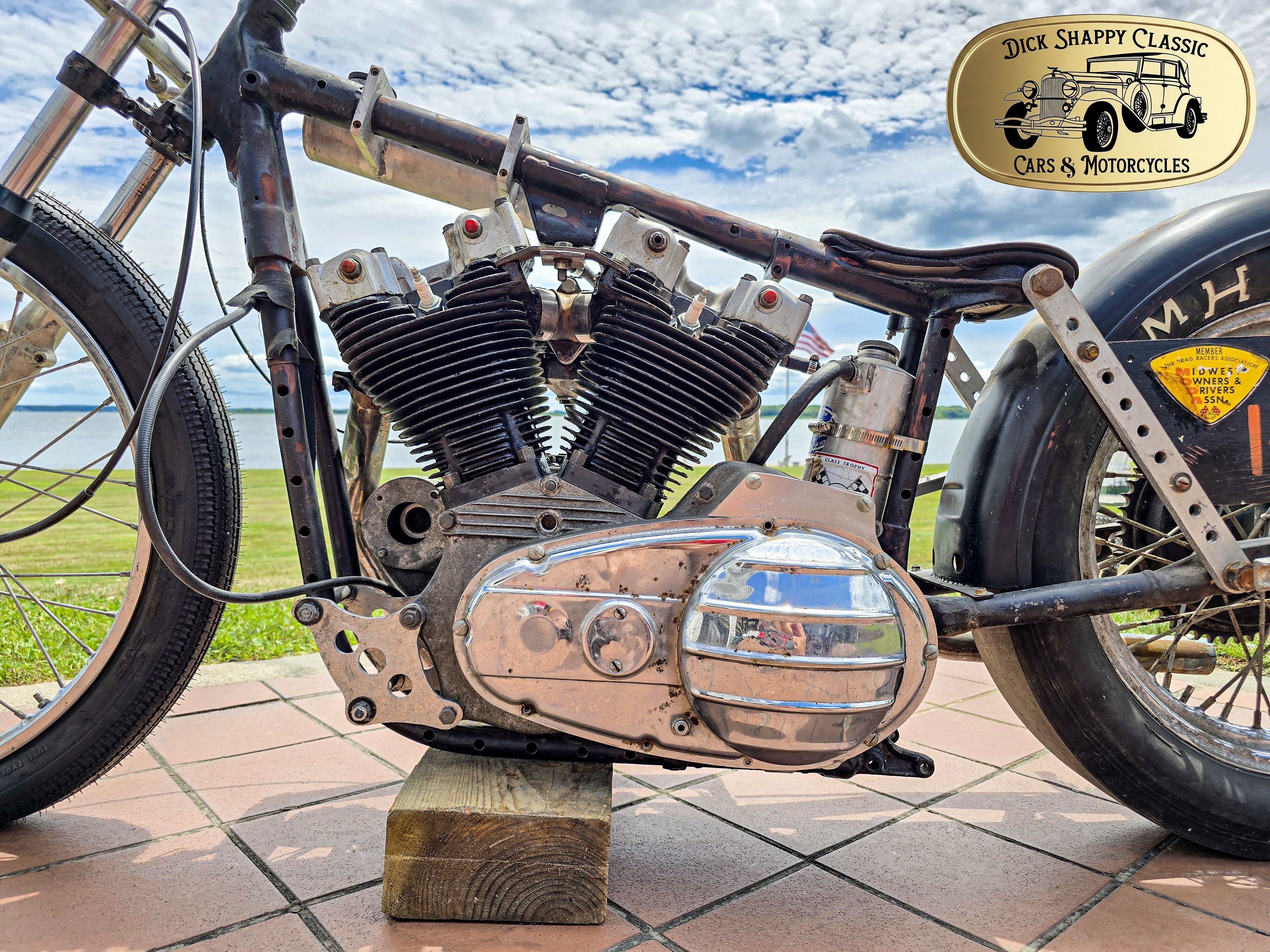
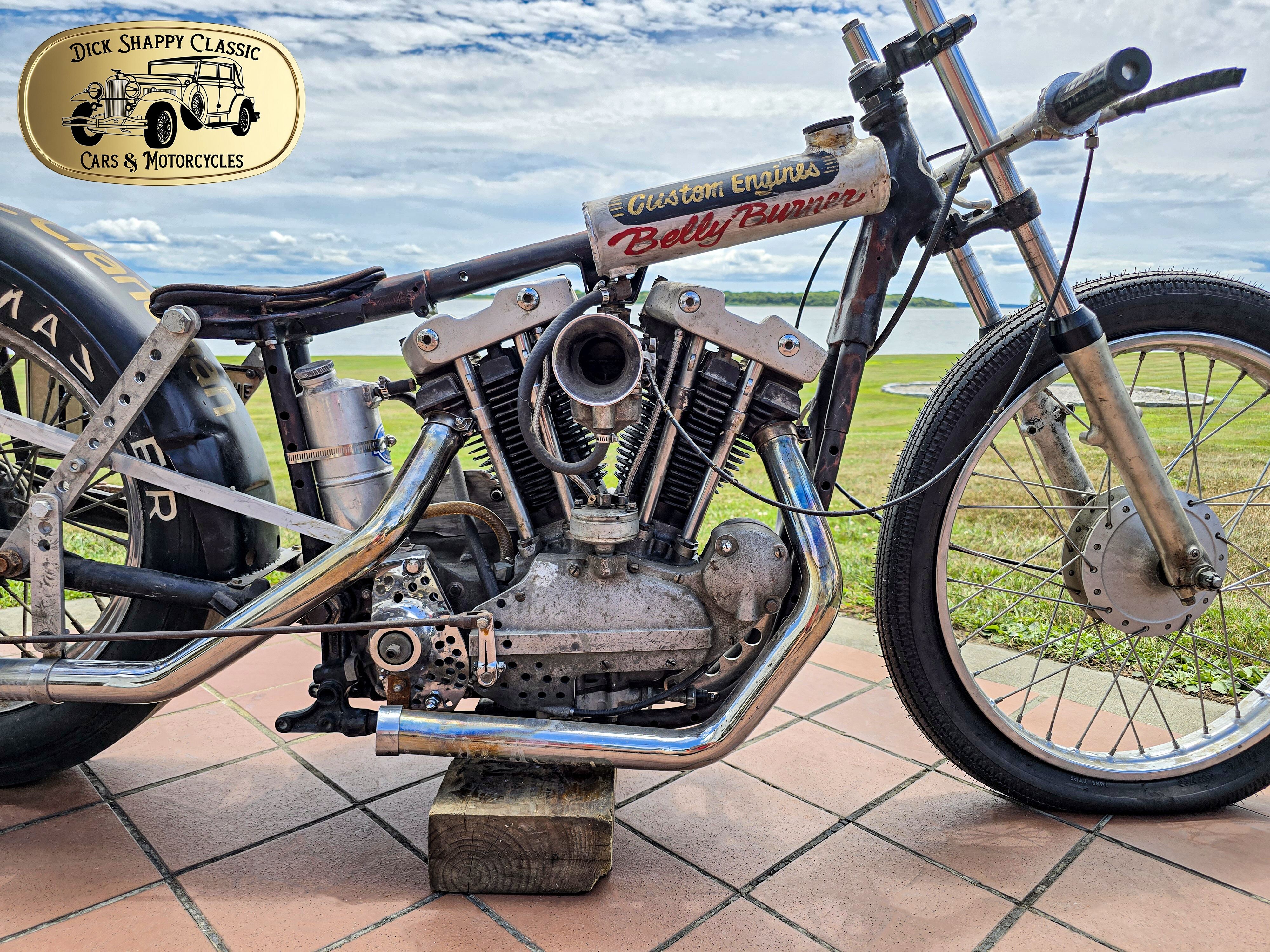
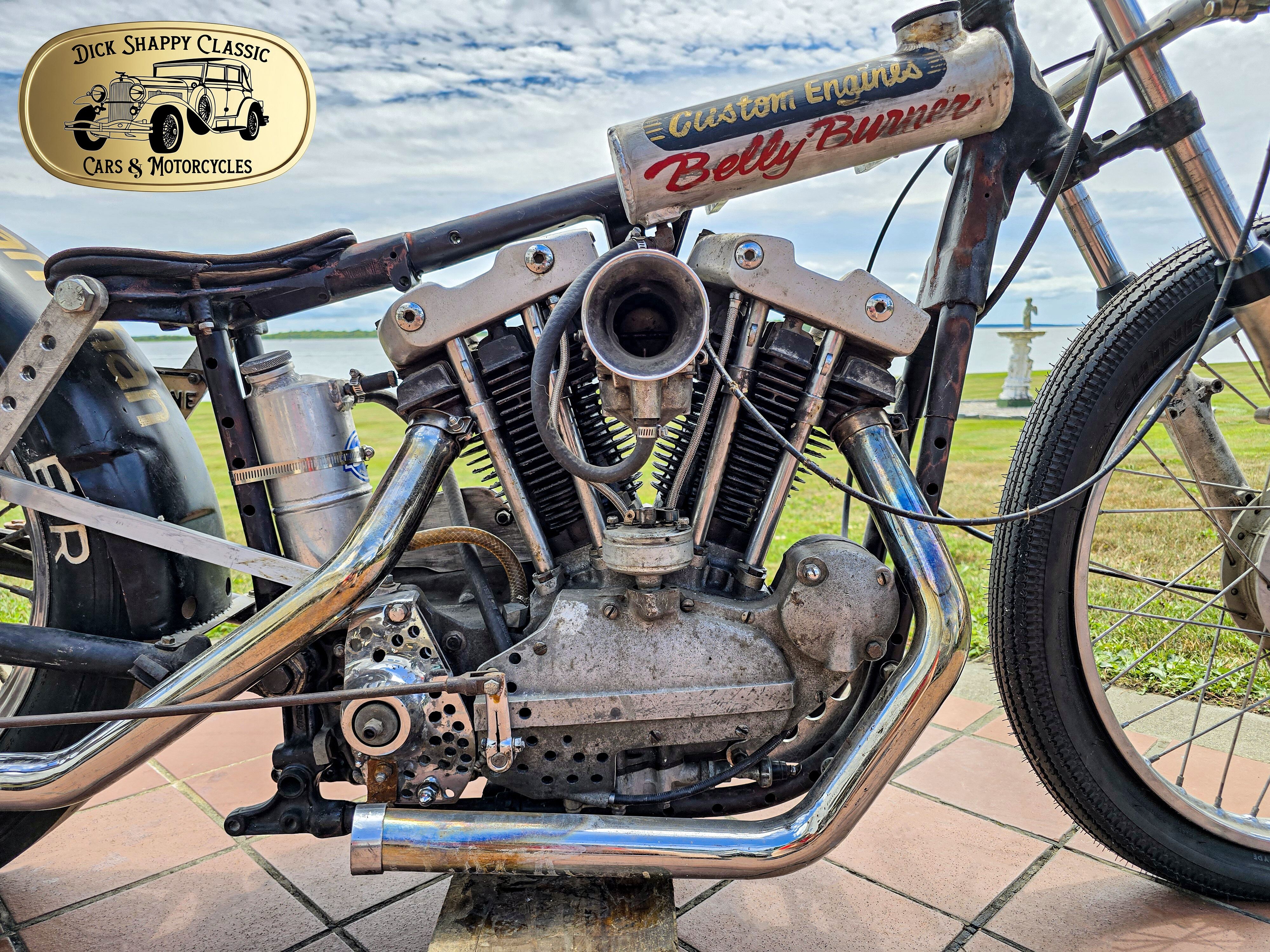
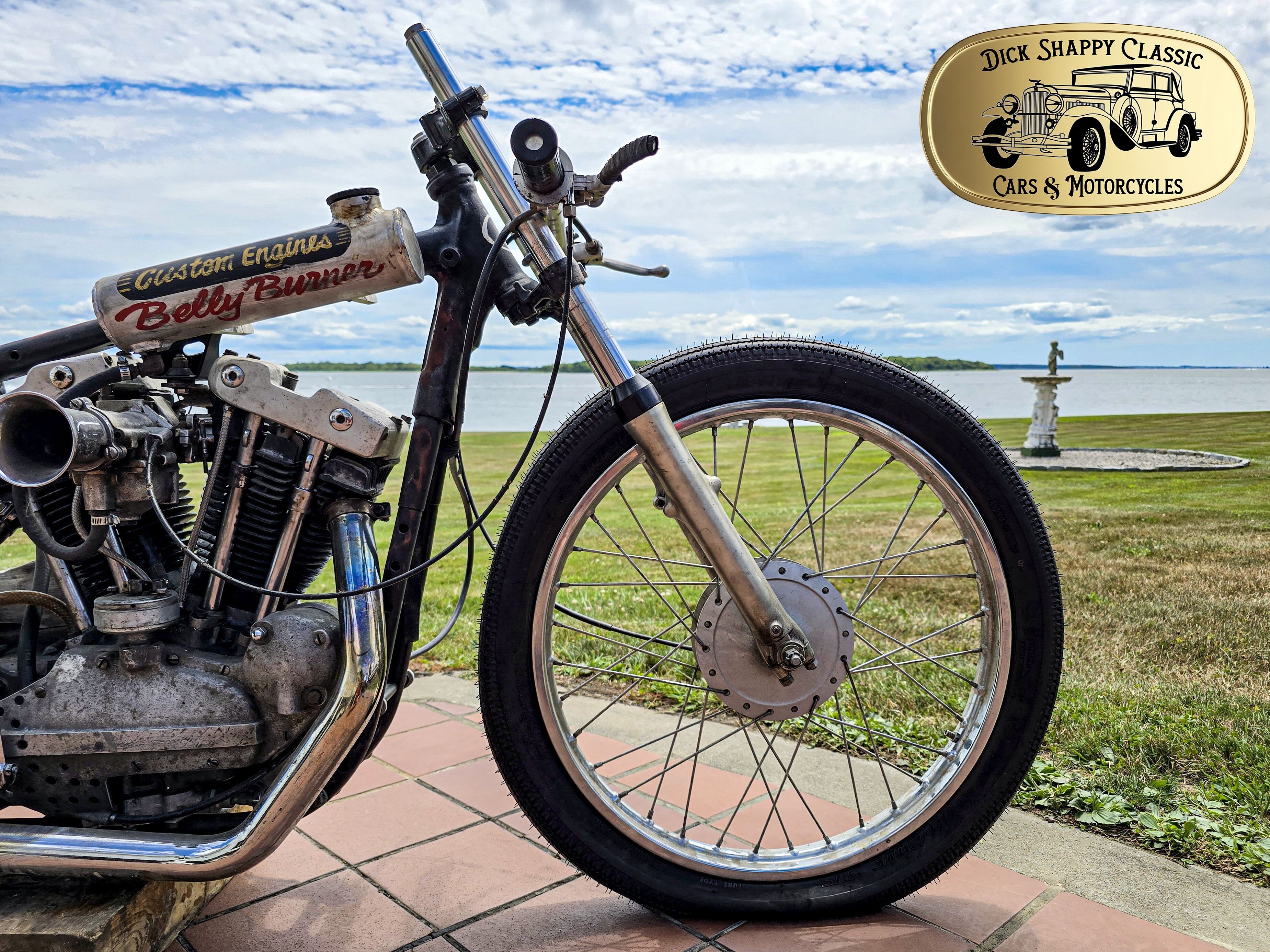
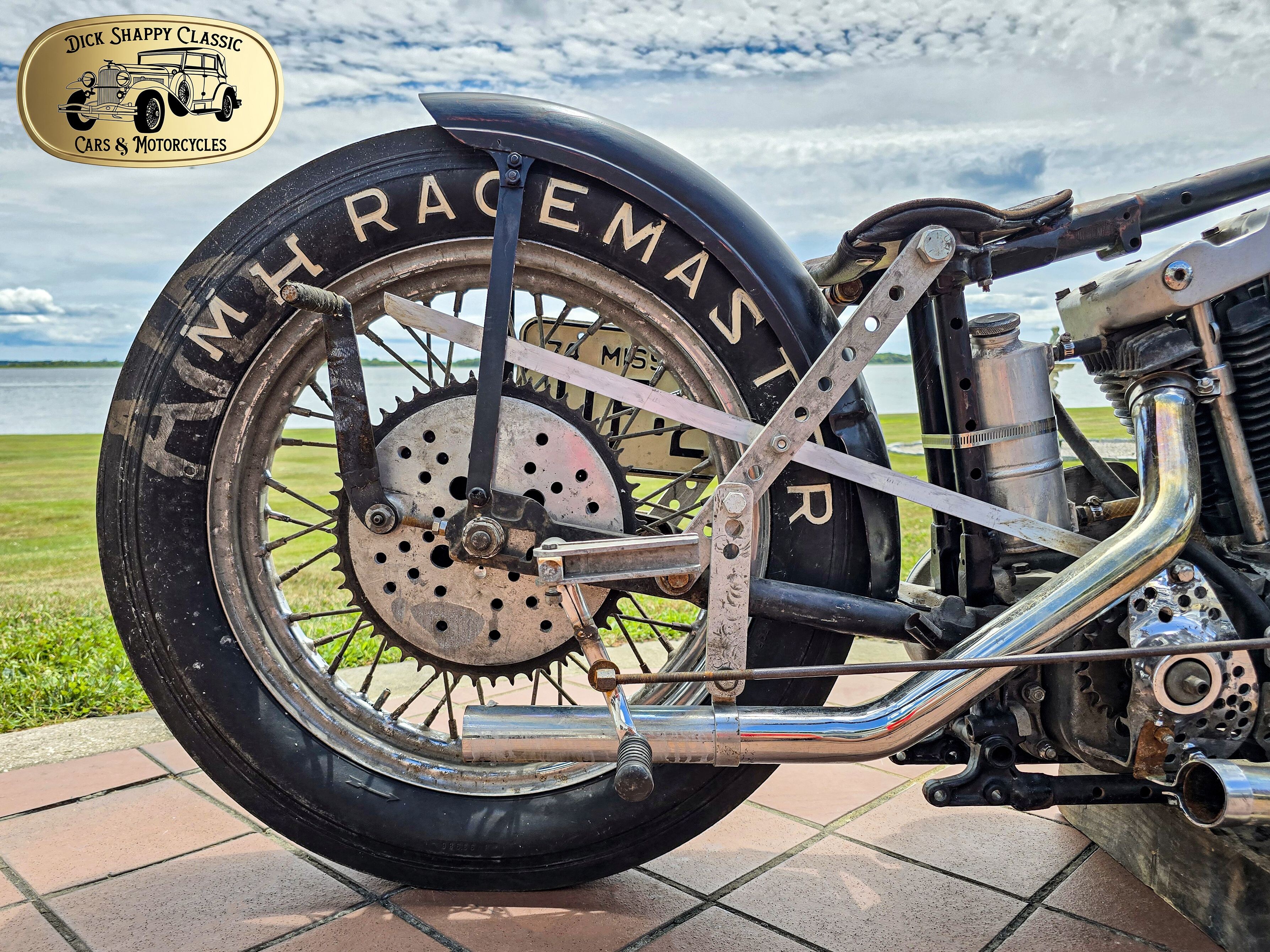
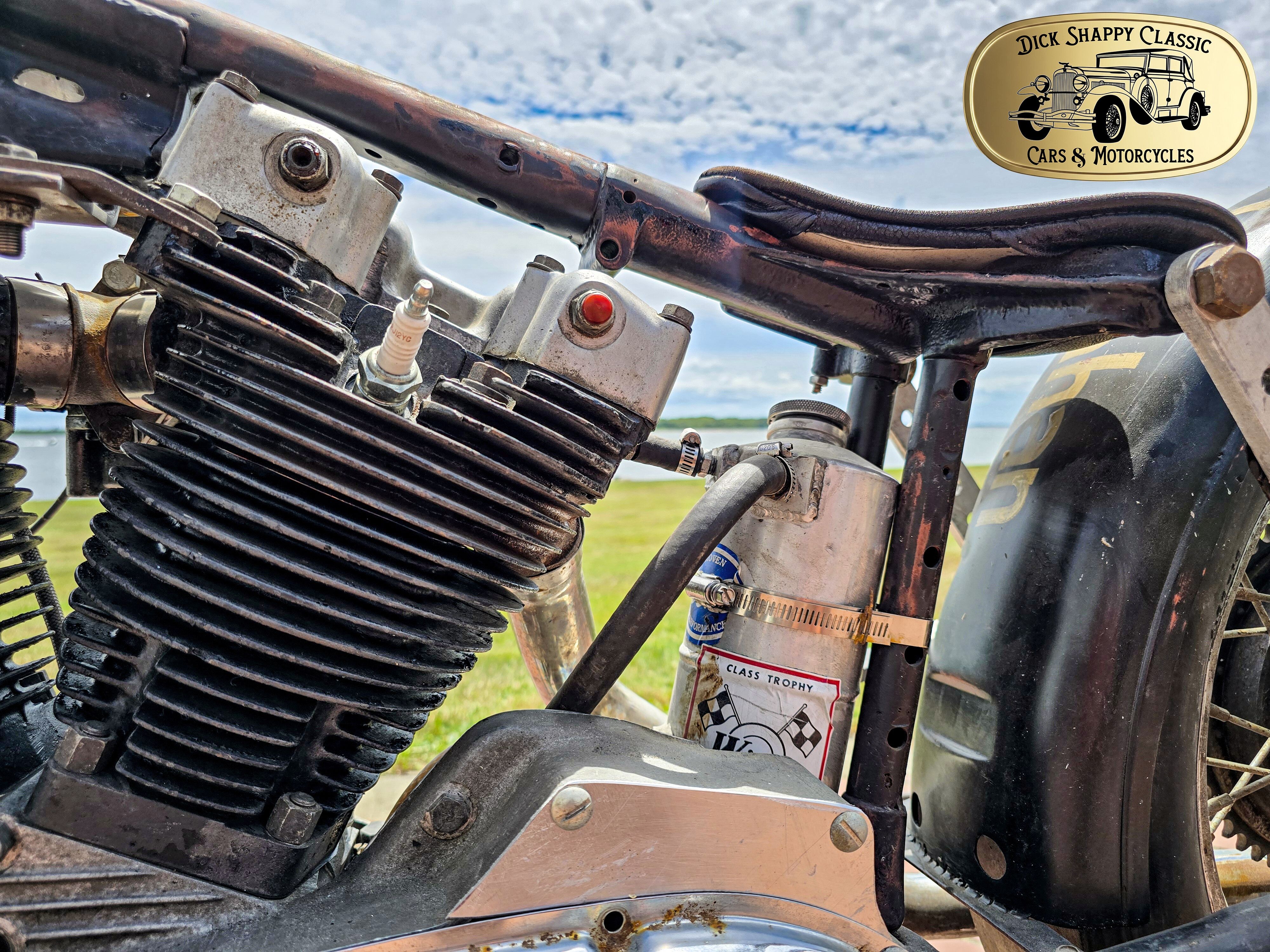
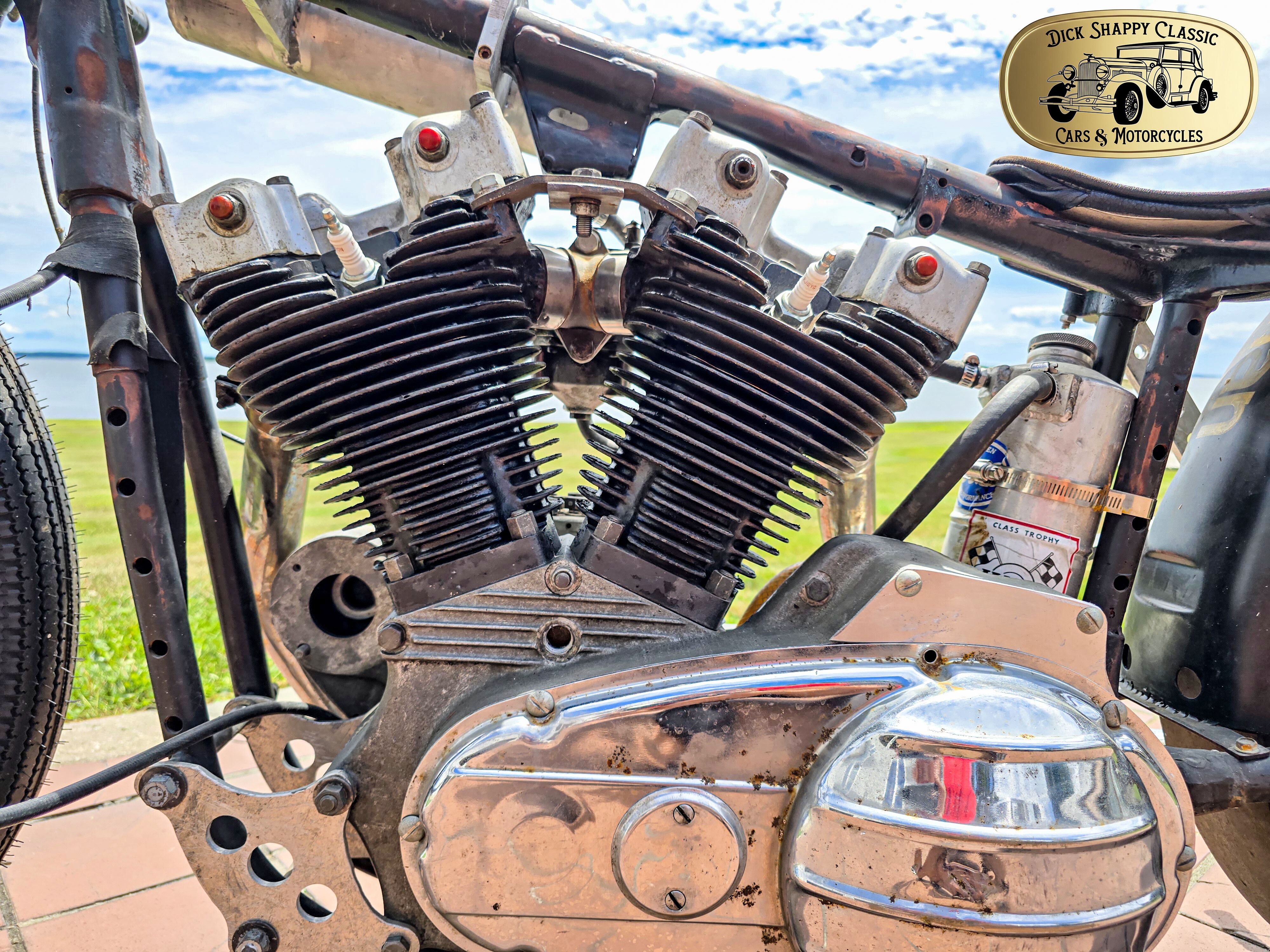
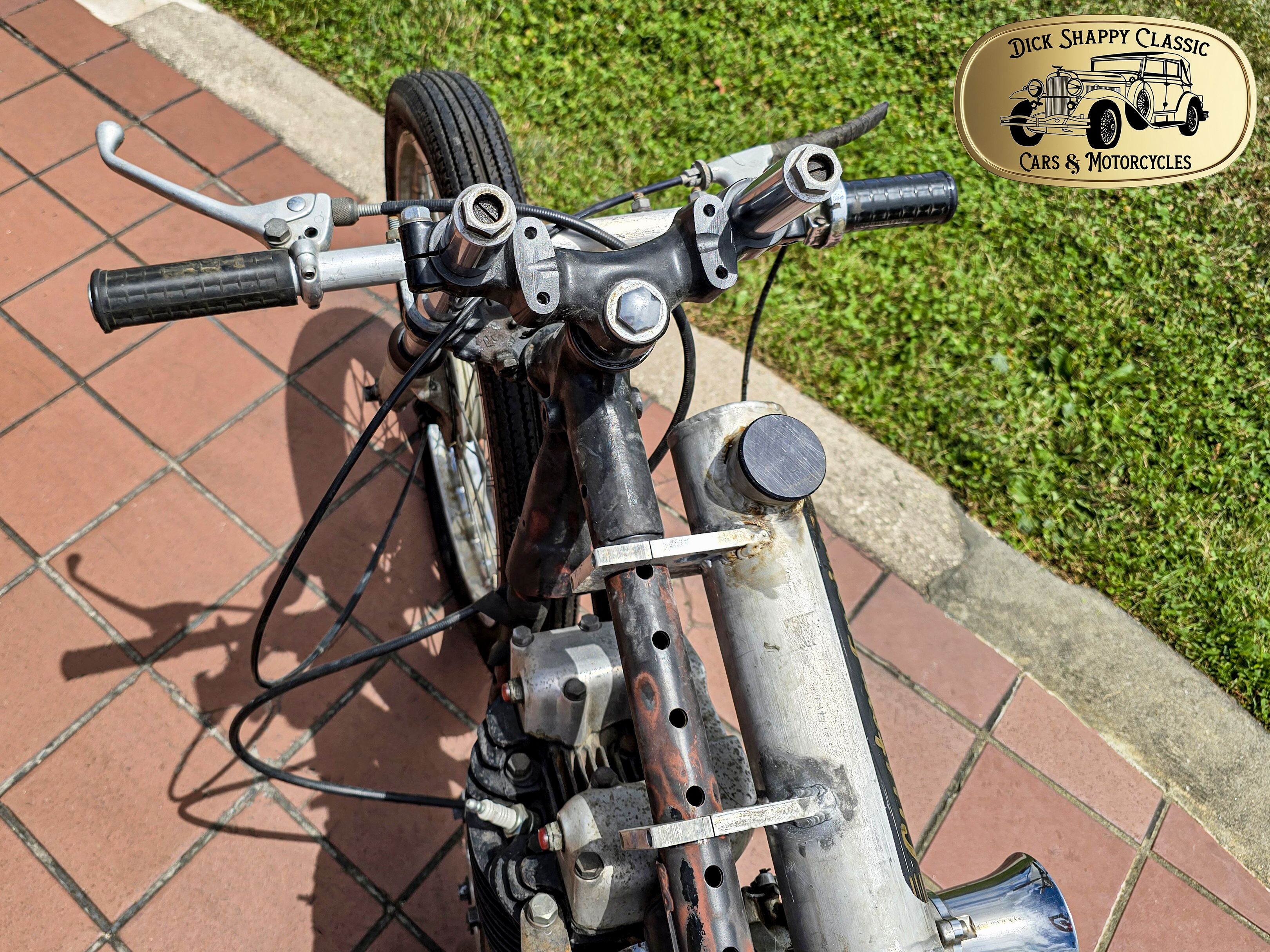
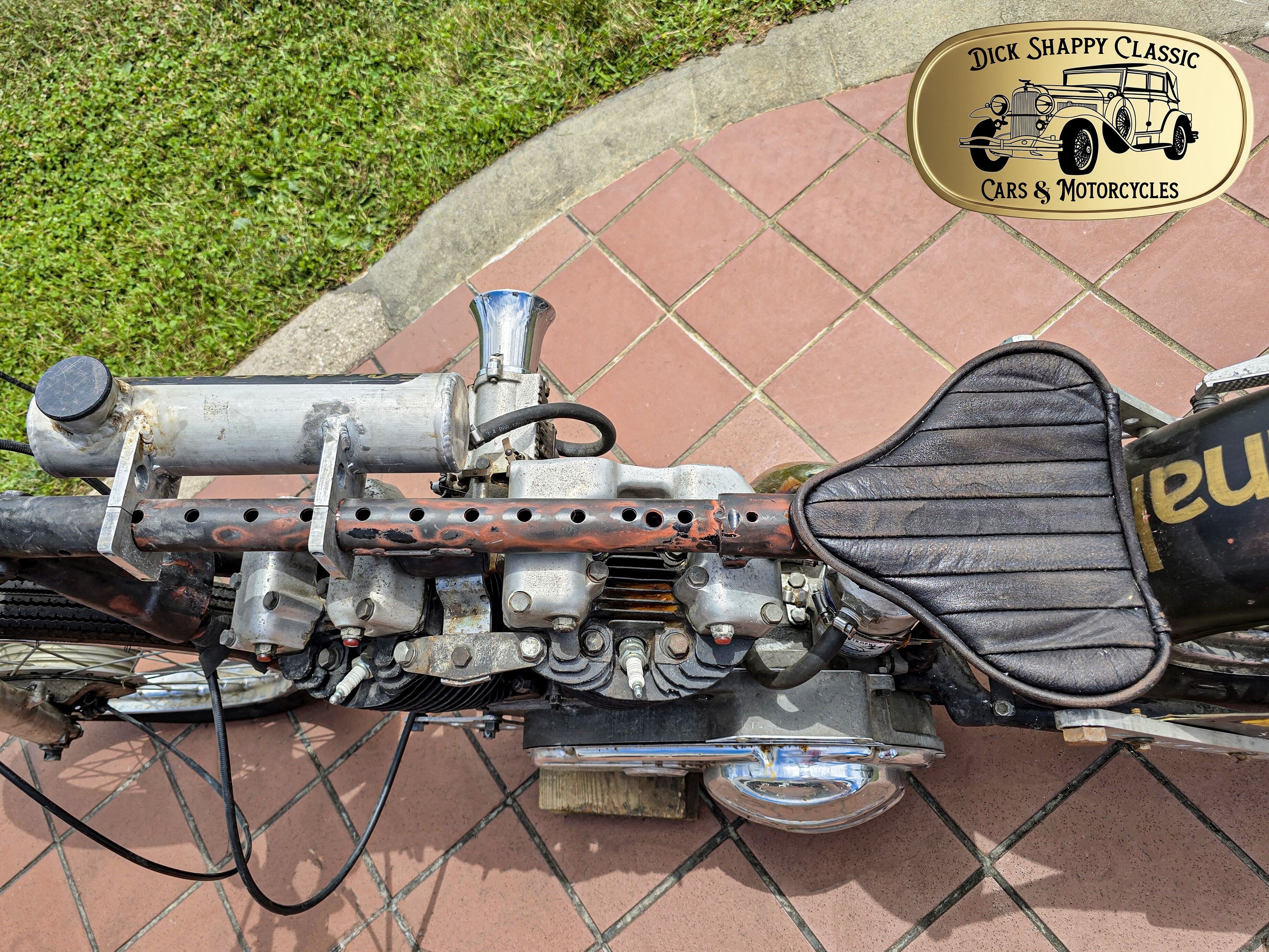
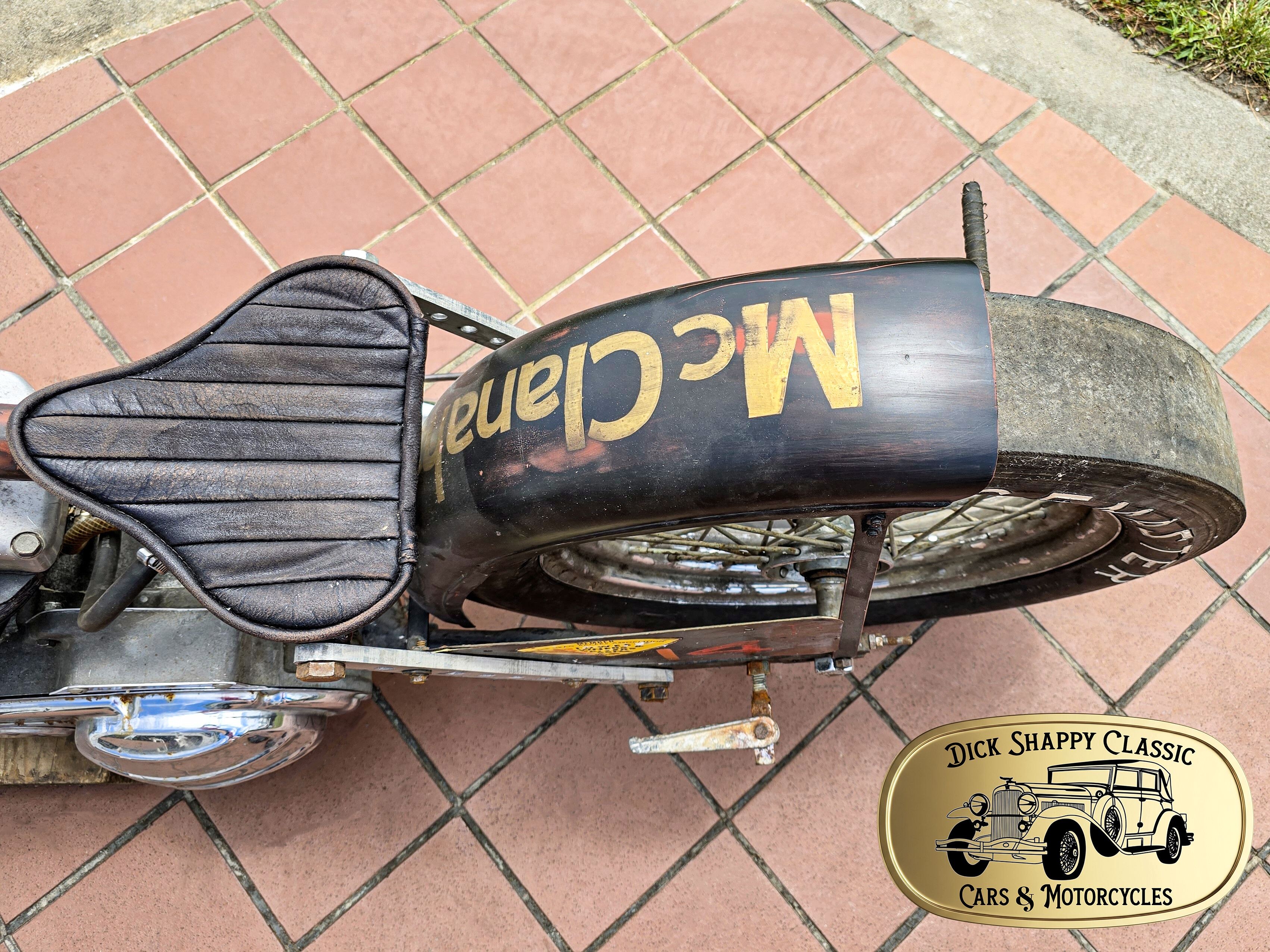
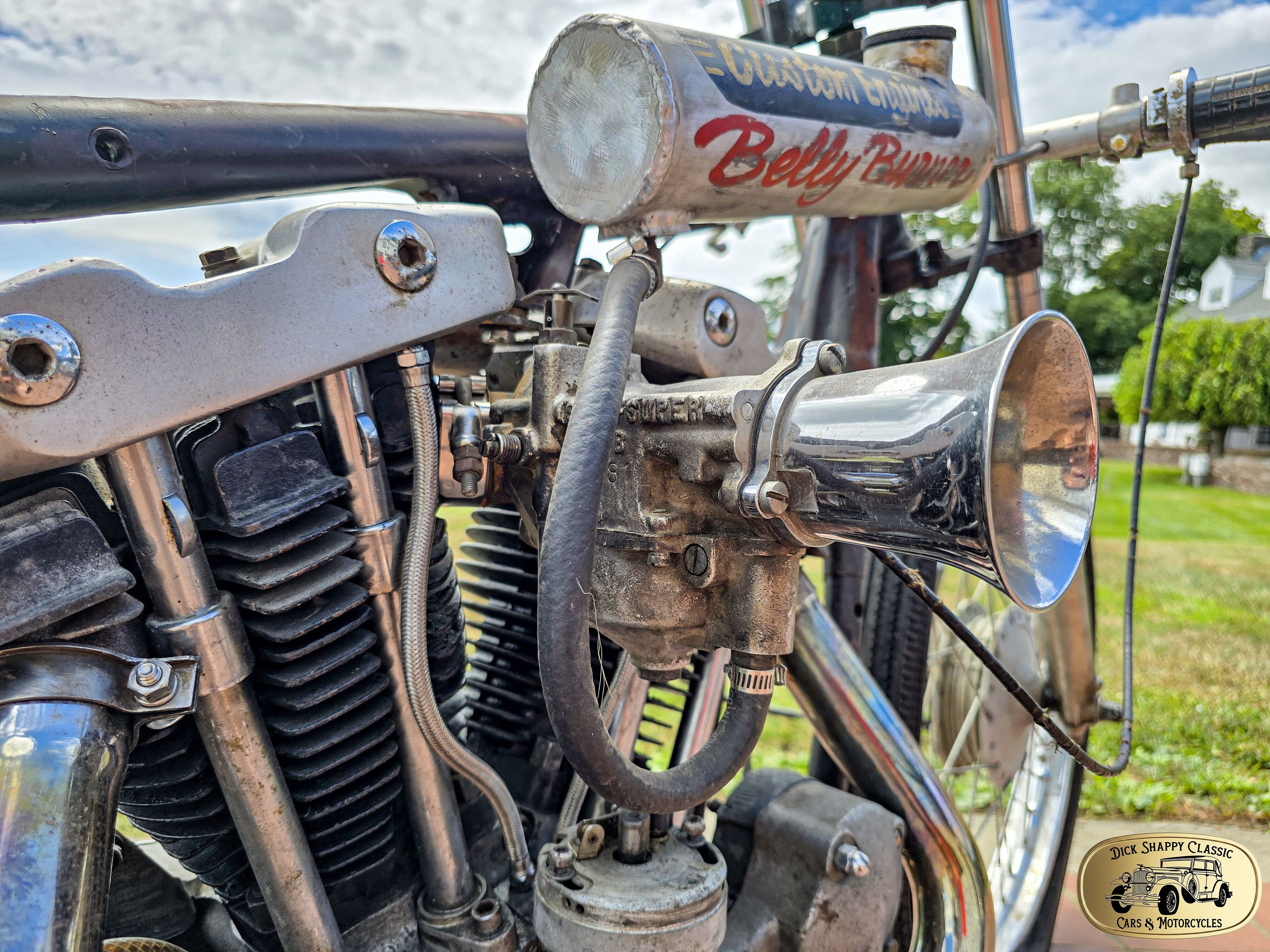
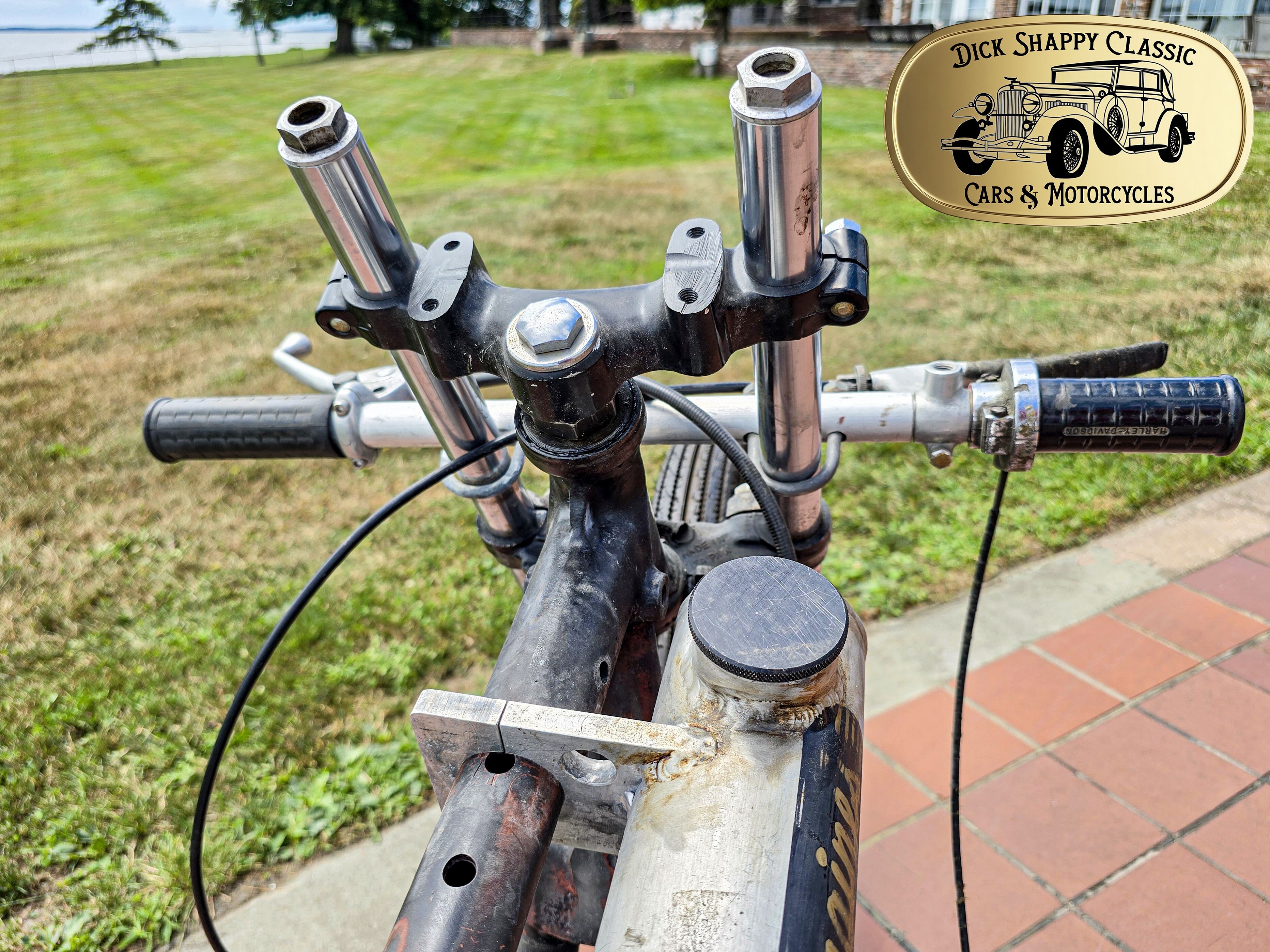
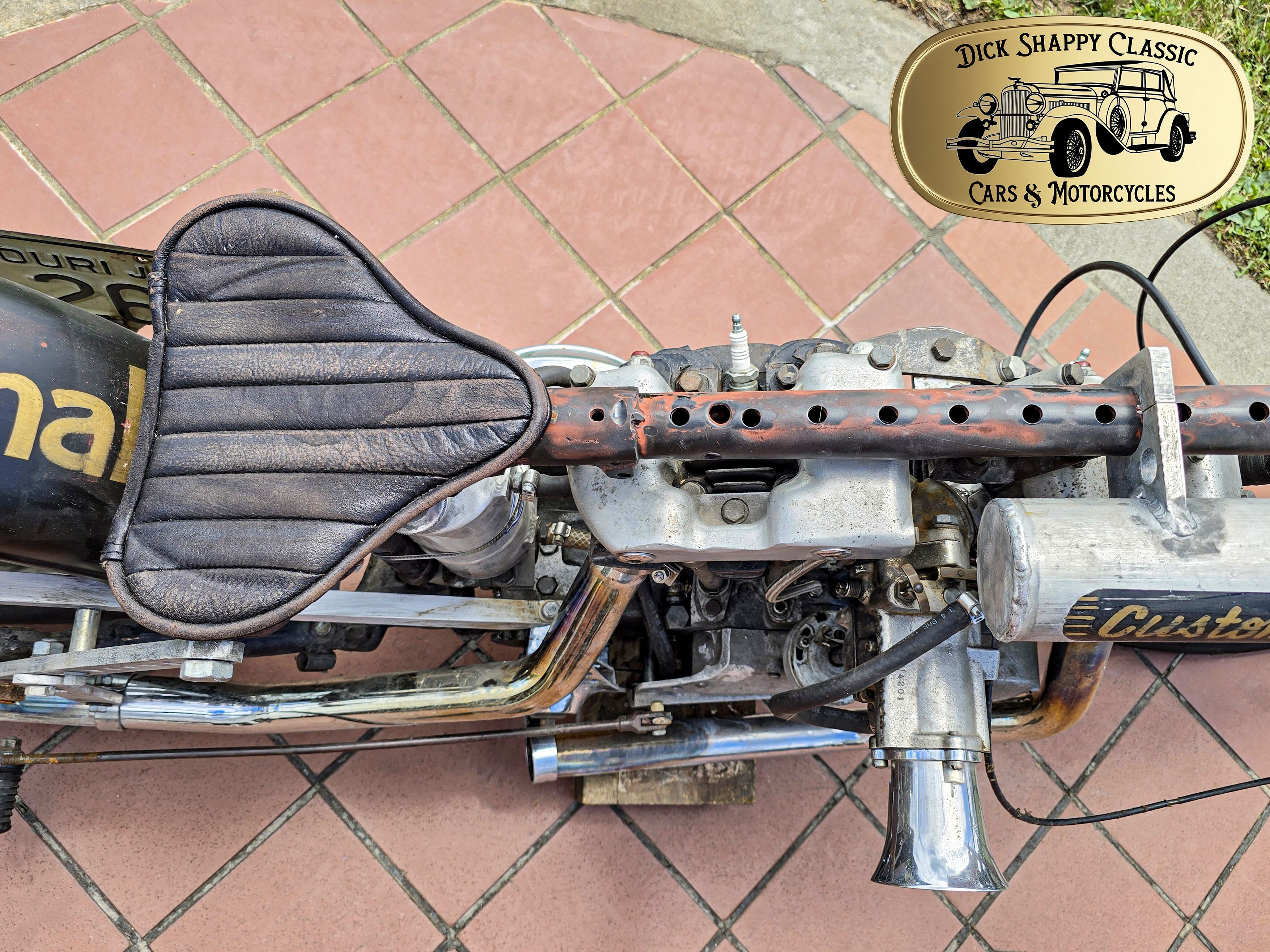
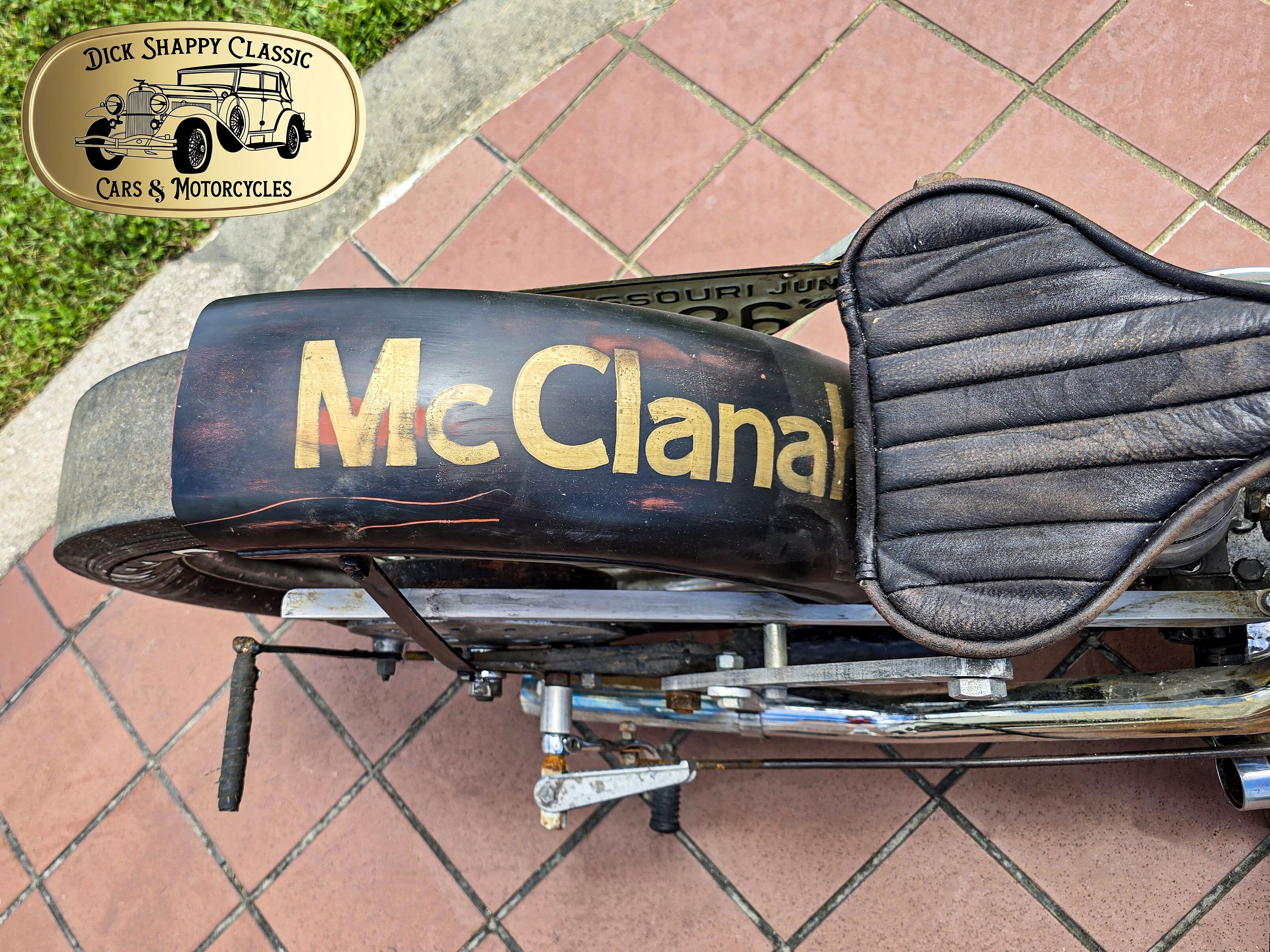
1964 Harley-Davidson Sportster XLH "McClanahan" Dragster
Inventory Number: 5131
$5,900
- VIN: 4A4264H3
- ENGINE: Stock V-Twin
- CARBURETOR: S & S Super B
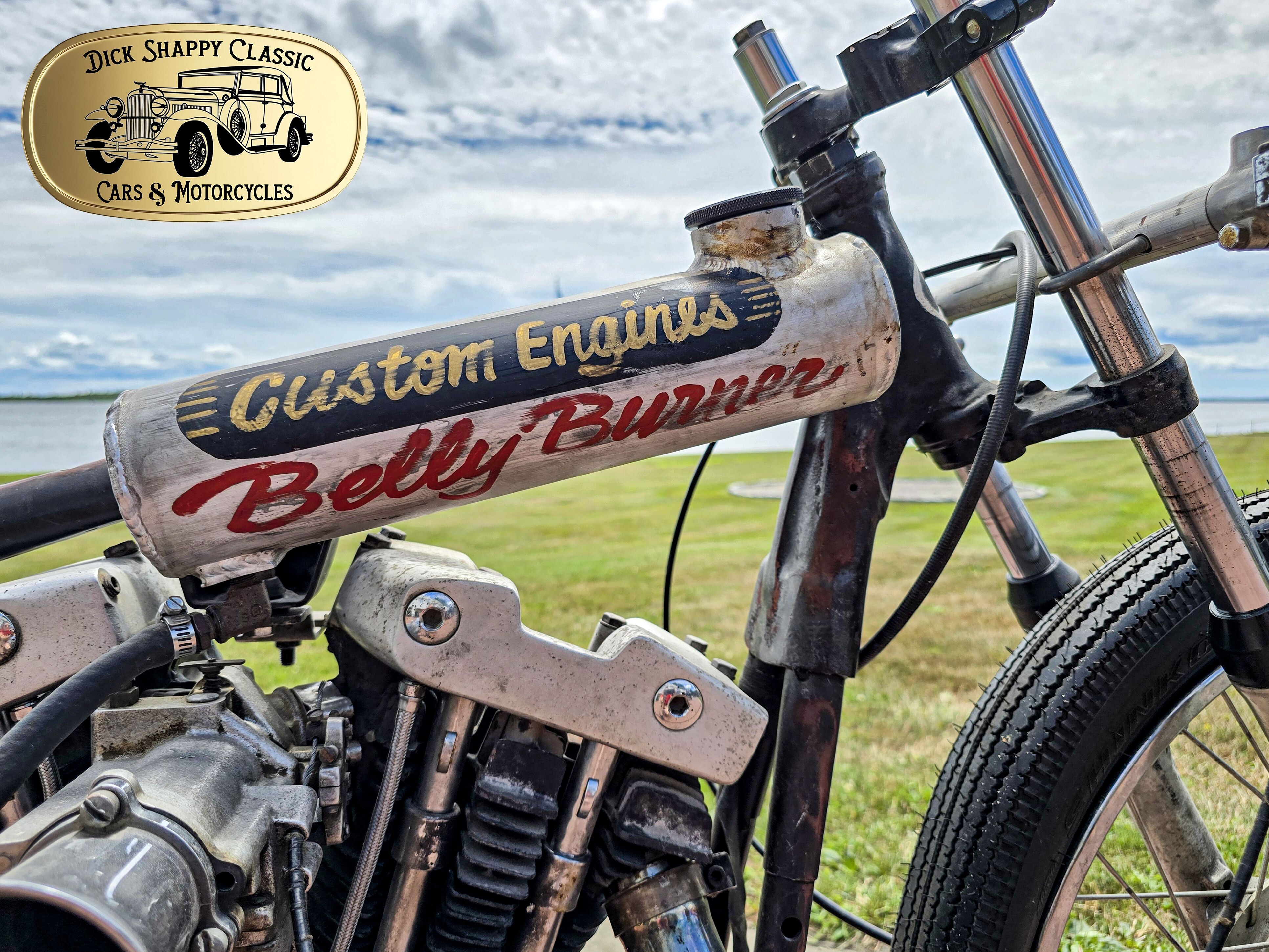
- TANK: “Custom Engines” “Belly Burner”
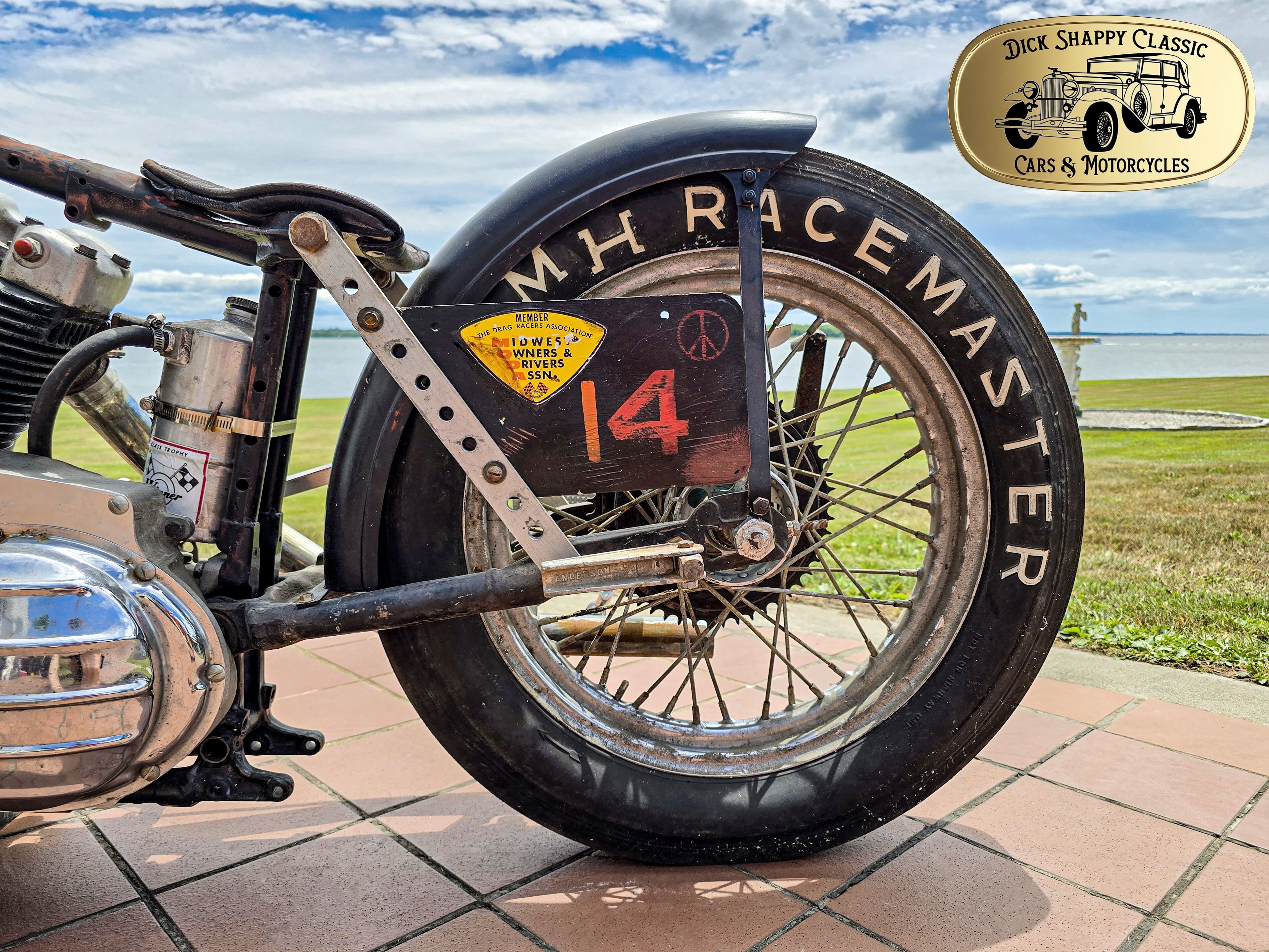
- REAR FENDER: “McClanahan”
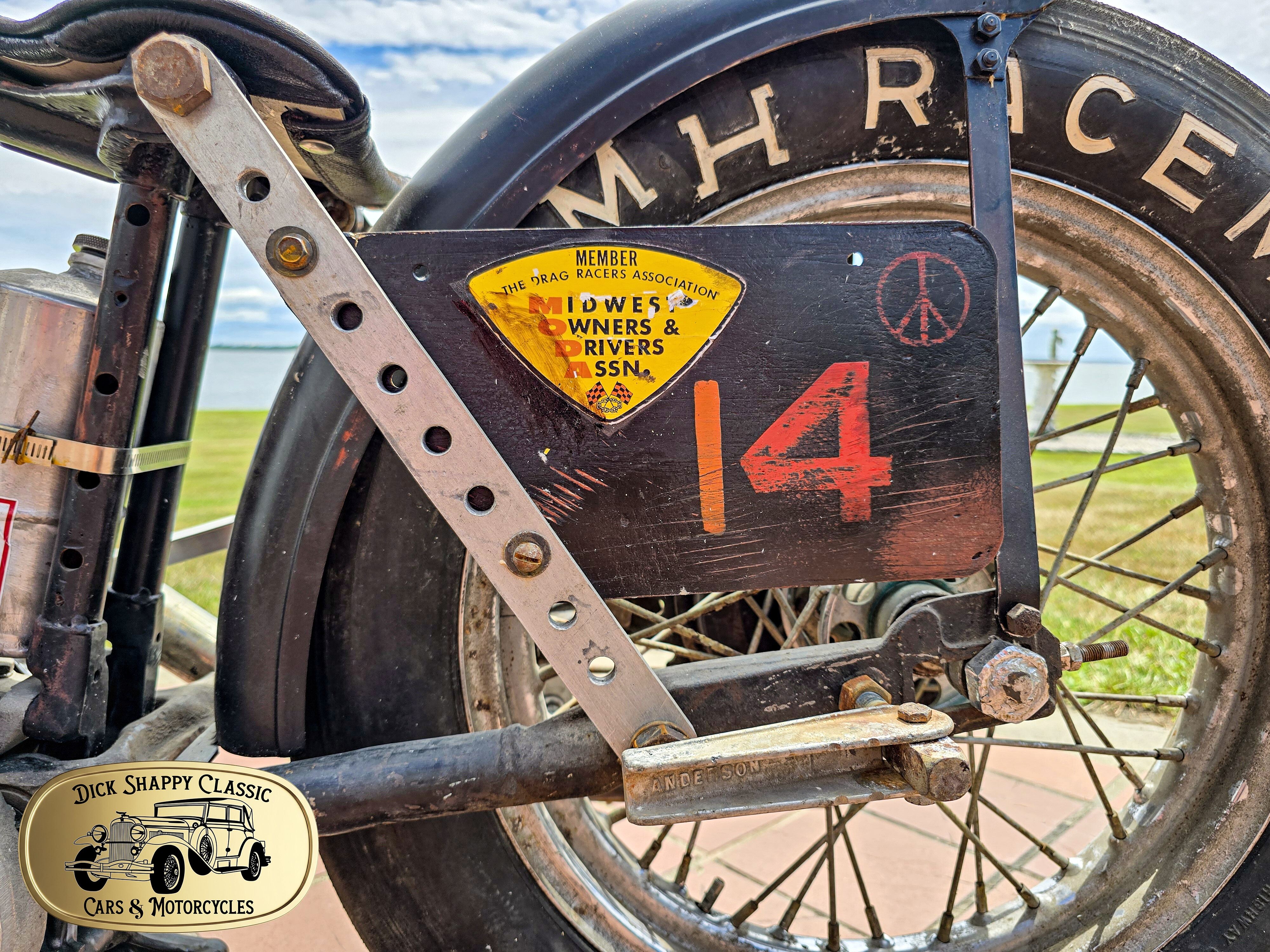
- RACING TAGS: 14, The Drag Racers Association Member - Midwest Owners & Drivers Association, Alton Dragway Class Trophy Winner
In the 1960s, Harley-Davidson motorcycles were a prominent force in drag racing. These bikes, often modified Sportsters, gained popularity for their powerful engines and competitive performance. The motorcycles were known for their single-engine, carbureted setups and, in the Top Fuel class, the use of nitromethane, which provided significantly more power than gasoline. Some riders pushed the boundaries of speed and performance with innovative modifications. Racers often lightened their motorcycles, incorporating features like lightweight aluminum rims, modified transmissions, and custom tires.
The Harley-Davidson brand dominated the Top Fuel and "no-bar" drag racing classes. In the 1960s, the Top Fuel motorcycle class was a relatively new and evolving category, though other brands also saw experimentation with nitromethane fuel. The "no-bar" style, where bikes raced without wheelie bars—safety devices designed by Carl McClanahan that prevented the motorcycle from lifting too high—was a popular style of drag racing with roots tracing back to Harley-Davidson’s early days. In the late 1960s, riders like Joe Smith and Gordon Kately achieved significant success with modified Sportsters, including multiple wins at the NHRA U.S. Nationals.
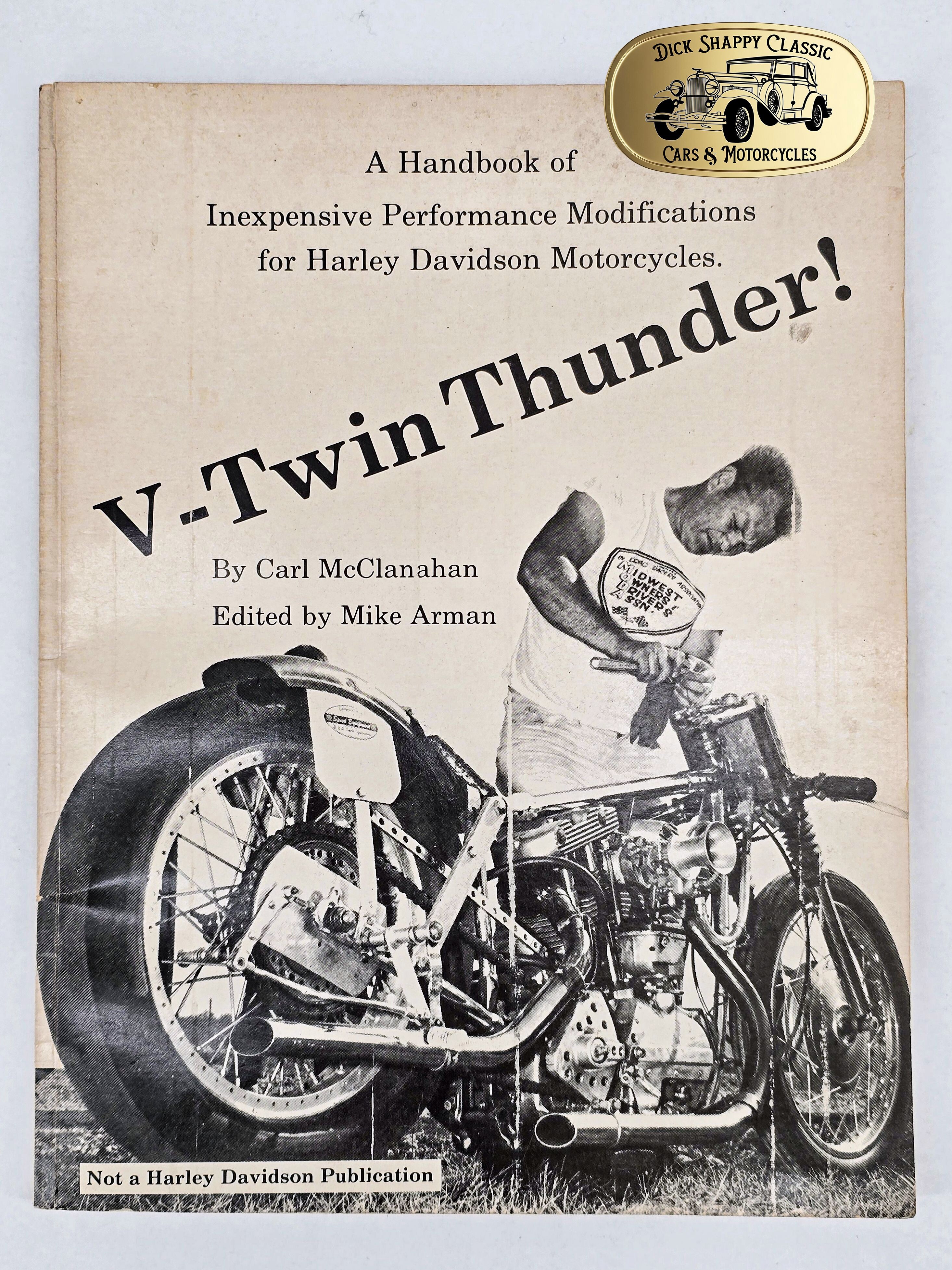
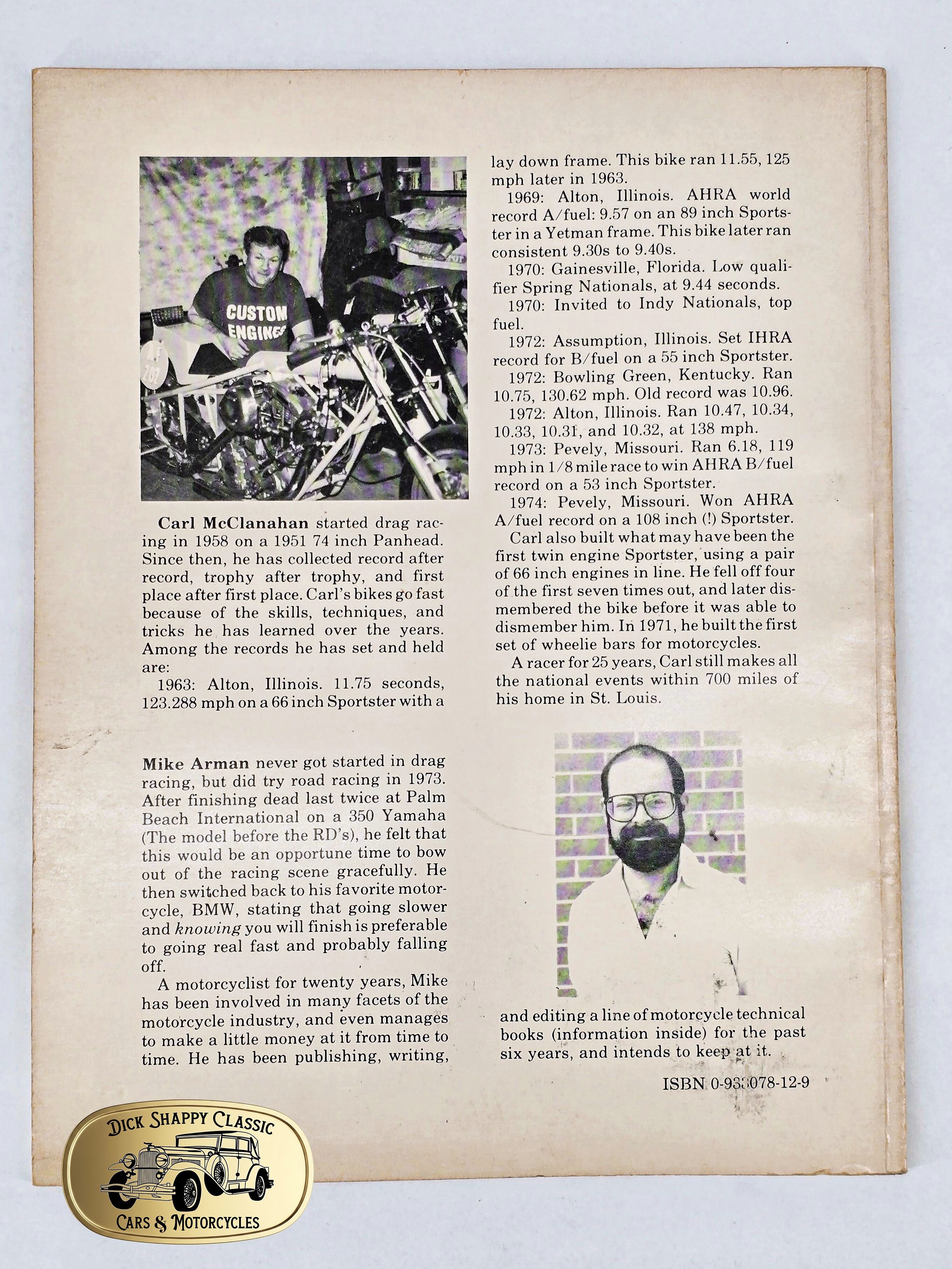
Carl McClanahan, a prominent drag racer, author, and inventor, started drag racing in 1958 on a 1951 74-inch Harley-Davidson Panhead. Since then, he has collected record after record, trophy after trophy, and first place after first place. His bikes excelled because of the skills, techniques, and tricks he’s learned over years of tinkering. He reports that he built the first set of motorcycle wheelie bars. He also built what may have been the first twin-engine Sportster using a pair of 66-inch engines in line, falling off during four of the first seven outings on the contraption before disassembling it. His genius inspired a generation with his book, V-Twin Thunder! A Handbook of Inexpensive Performance Modifications for Harley-Davidson Motorcycles.
Among the records he has set and held are:
1963: Alton, IL. 11.75 seconds, 123.288 mph on a 66-inch Sportster with a lay-down frame. This bike ran 11.55, 125 mph later in 1963.
1969: Alton, IL. AHRA world record A/fuel: 9.57 on an 89-inch Sportster in a Yetman frame. This bike later ran consistent 9.30s to 9.40s.
1970: Gainesville, FL. Low qualifier Spring Nationals, at 9.44 seconds.
1970:Invited to Indy Nationals, top fuel.
1972: Assumption, IL. Set IHRA record for B/fuel on a 55-inch Sportster.
1972: Bowling Green, KY. Ran 10.75, 130.62 mph. Old record was 10.96.
1972: Alton, IL. Ran 10.47, 10.34, 10.33, 10.31, and 10.32 at 138 mph.
1973: Pevely, MO. Ran 6.18, 119 mph in ⅛-mile race to win AHRA B/fuel record on a 53-inch Sportster.
1974: Pevely, MO. Won AHRA A/fuel record on a 108-inch (!) Sportster.
Harley-Davidson, Inc. needs no introduction as an iconic American Motorcycle manufacturer headquartered in Milwaukee, Wisconsin. In 1901, William S. Harley, Arthur Davidson, and brother Walter Davidson began work on their first Motorcycle engine. Their first attempt may have been a failure, but they founded Harley-Davidson in 1903 and became one of the largest Motorcycle manufacturers by 1920. They produced Motorcycles for the United States used in both World War I & II and were one of only two major Motorcycle manufacturers to survive the Great Depression. In fact, they’ve survived numerous changes to ownership and restructuring, intense global competition, charges of restrictive practices, claims of stock price manipulation, and a constantly evolving view of the company and bikers. Still, they are widely known for their loyal following and now manufacture in Pennsylvania, Wisconsin, Brazil, and Thailand. Their classic cruiser style, including high handlebars, low seats, and chrome parts, is easily recognizable. They’re also noted for their customizability, giving rise to the chopper style of Motorcycle, and for the distinct sound of HD’s powerful engines.