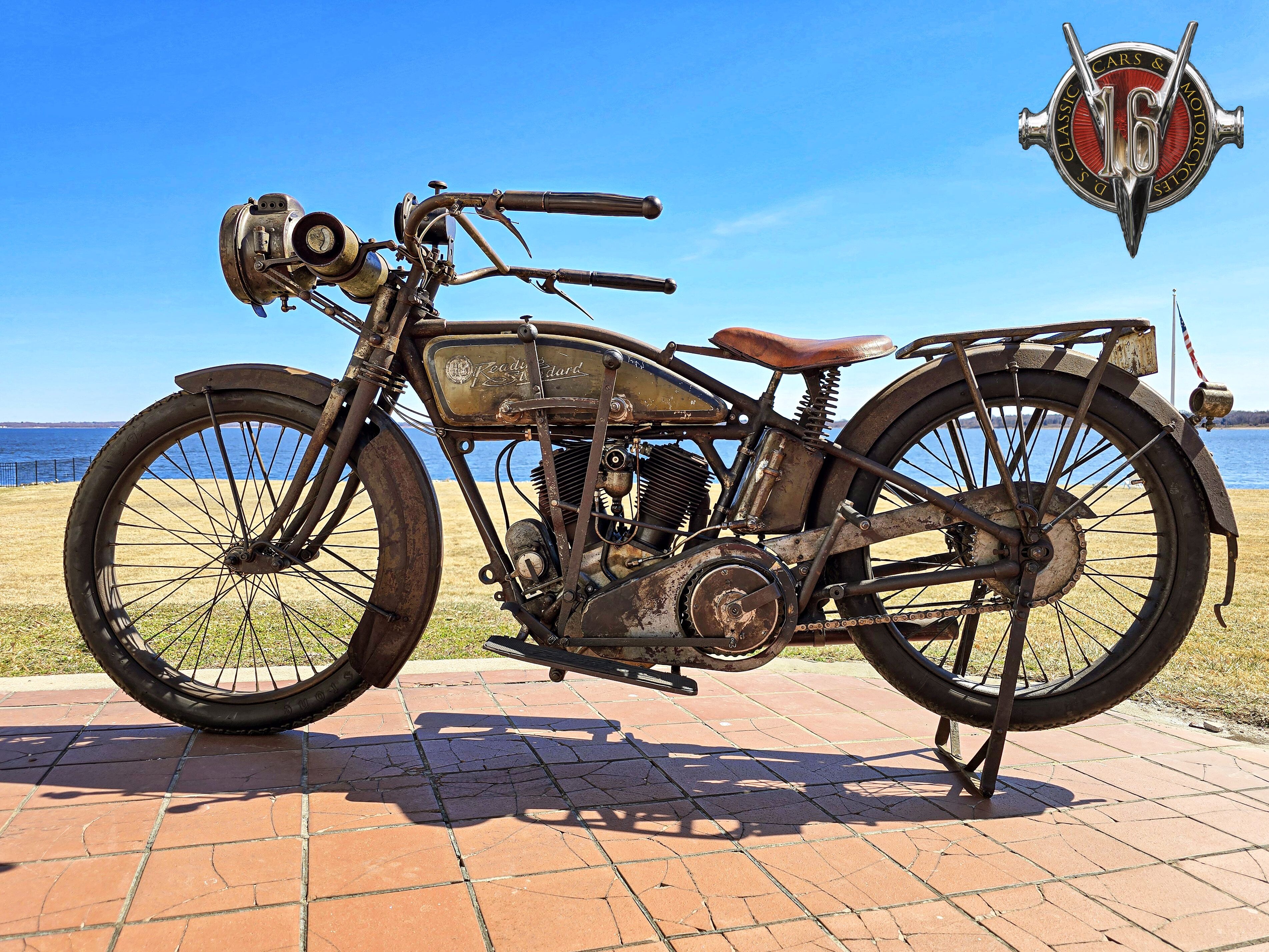
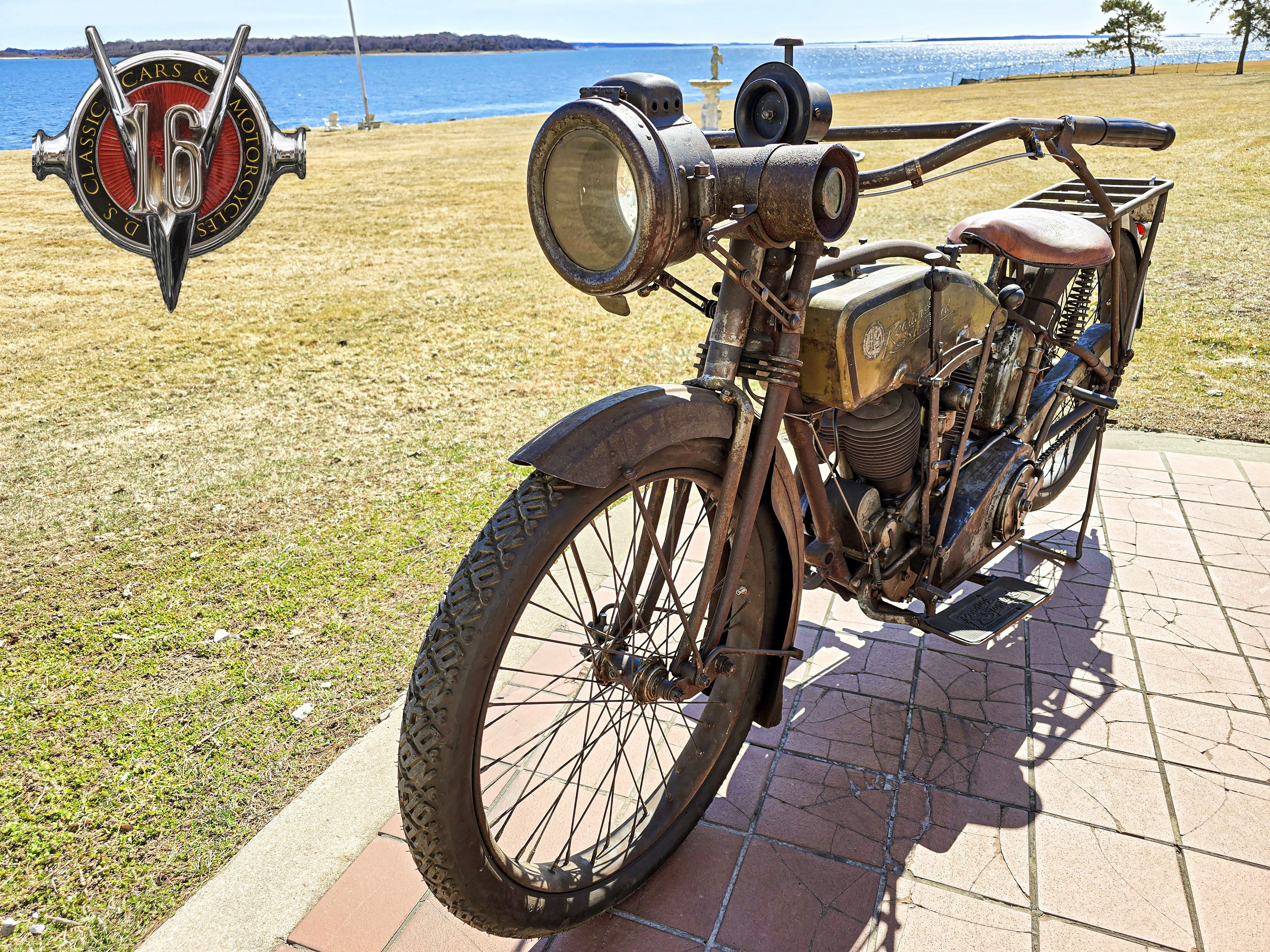
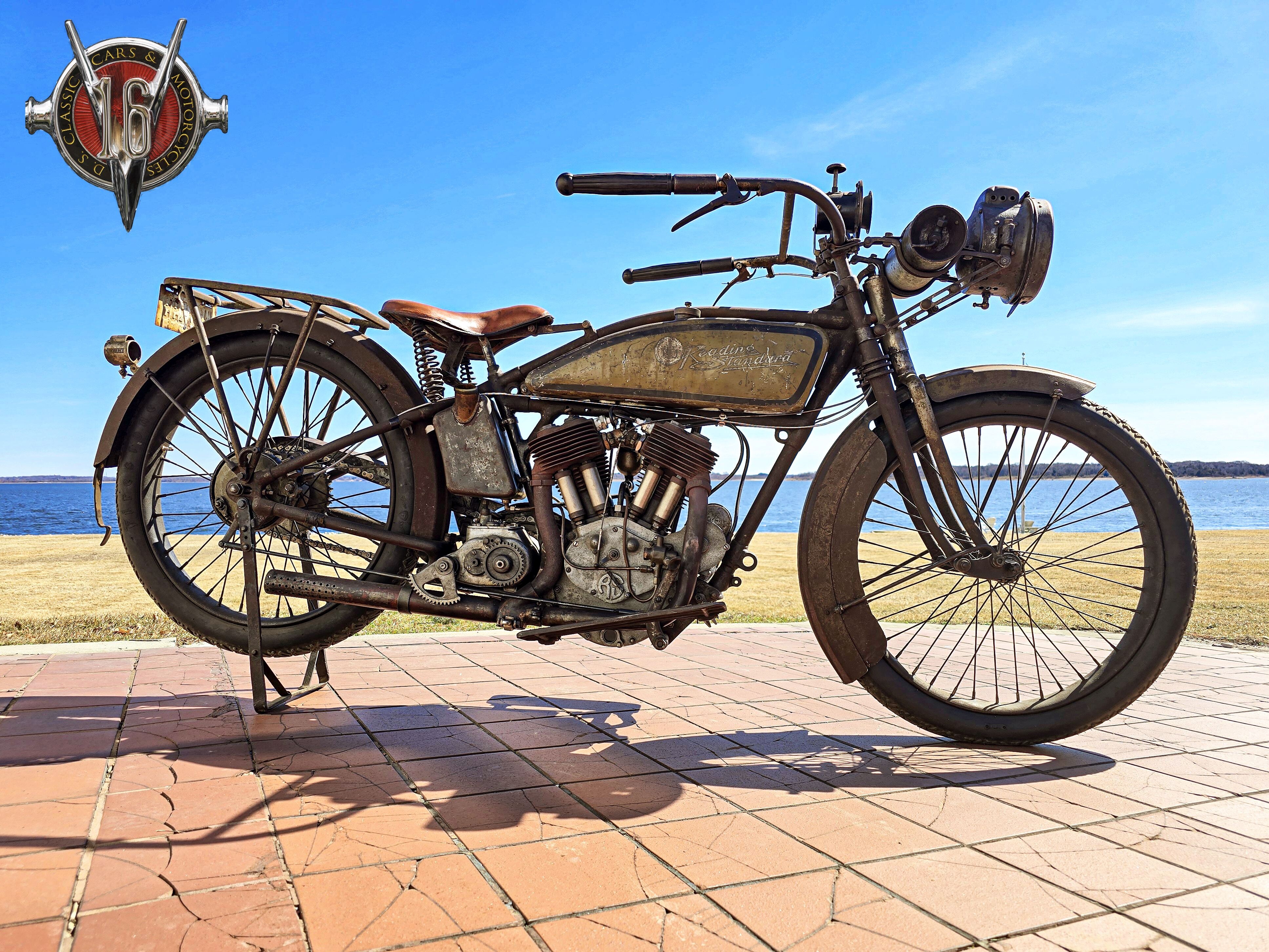
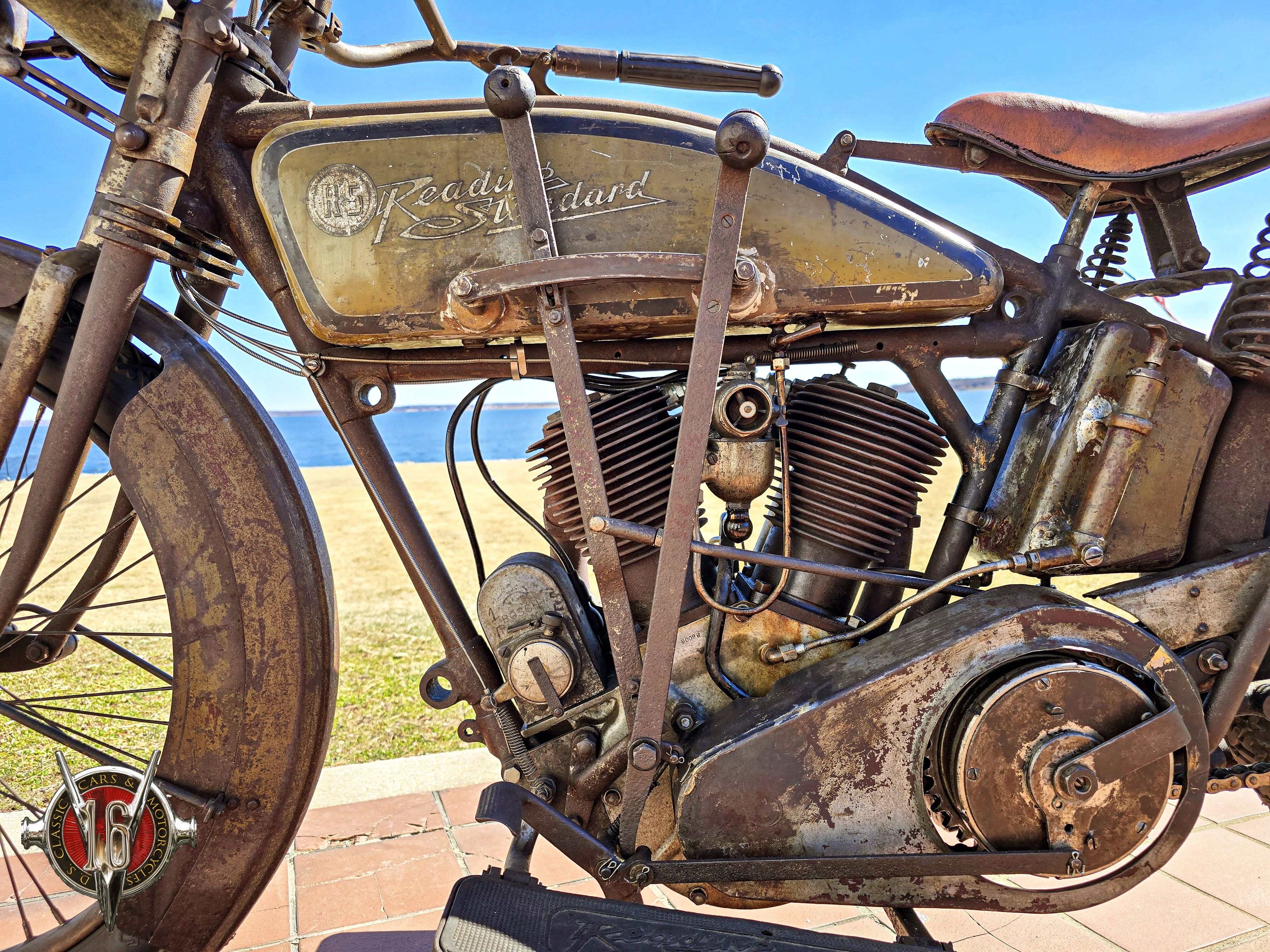
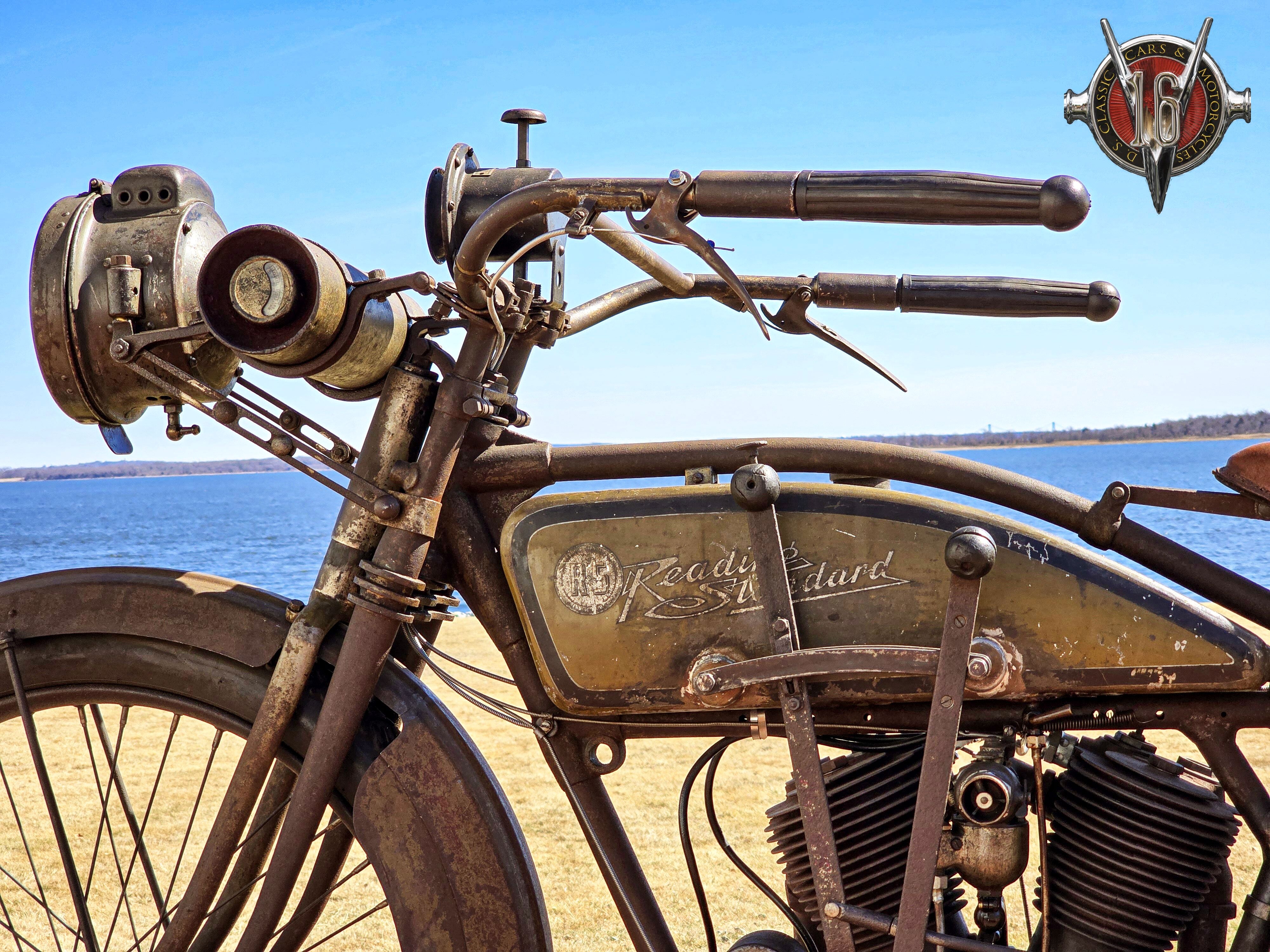
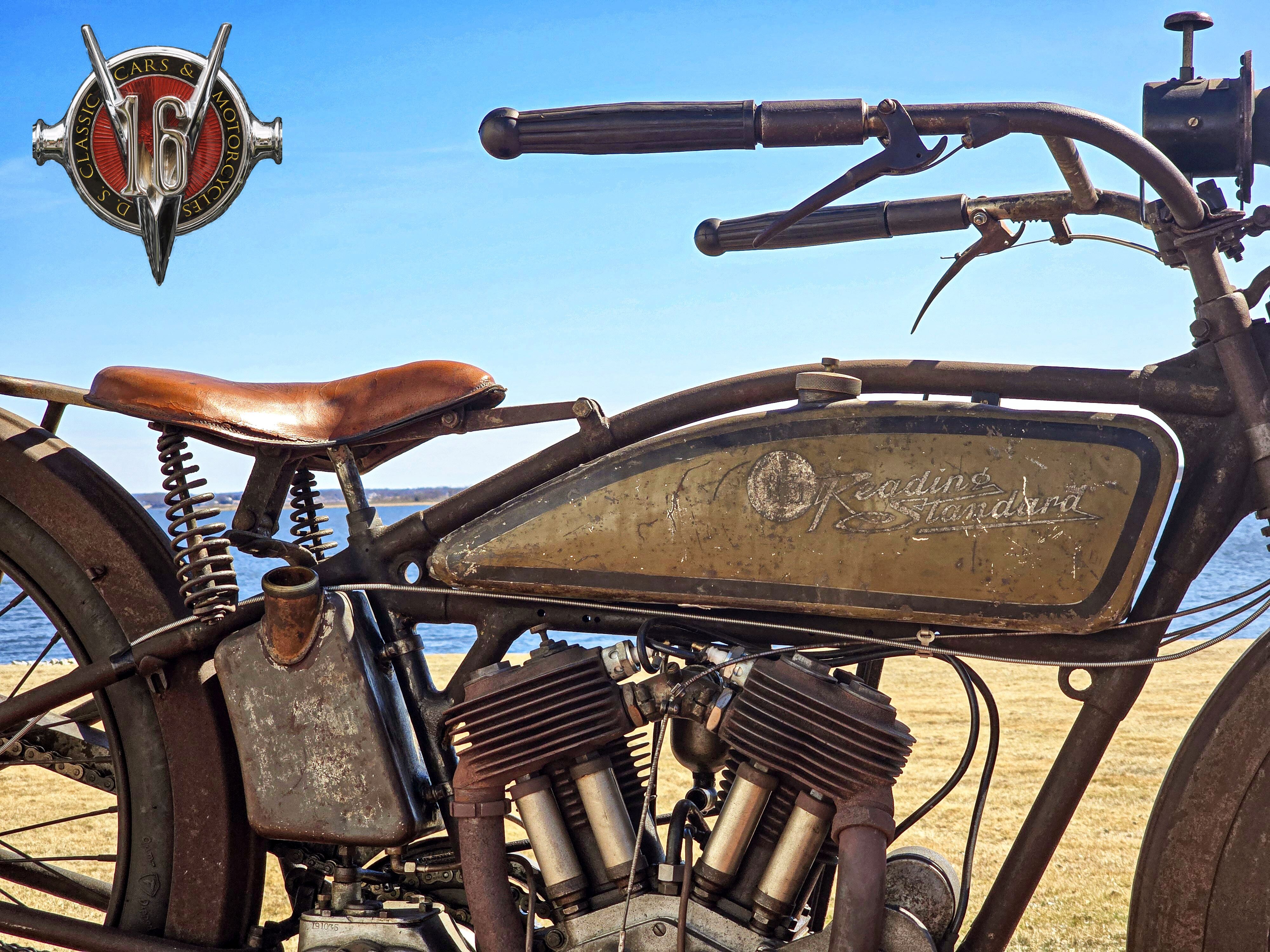
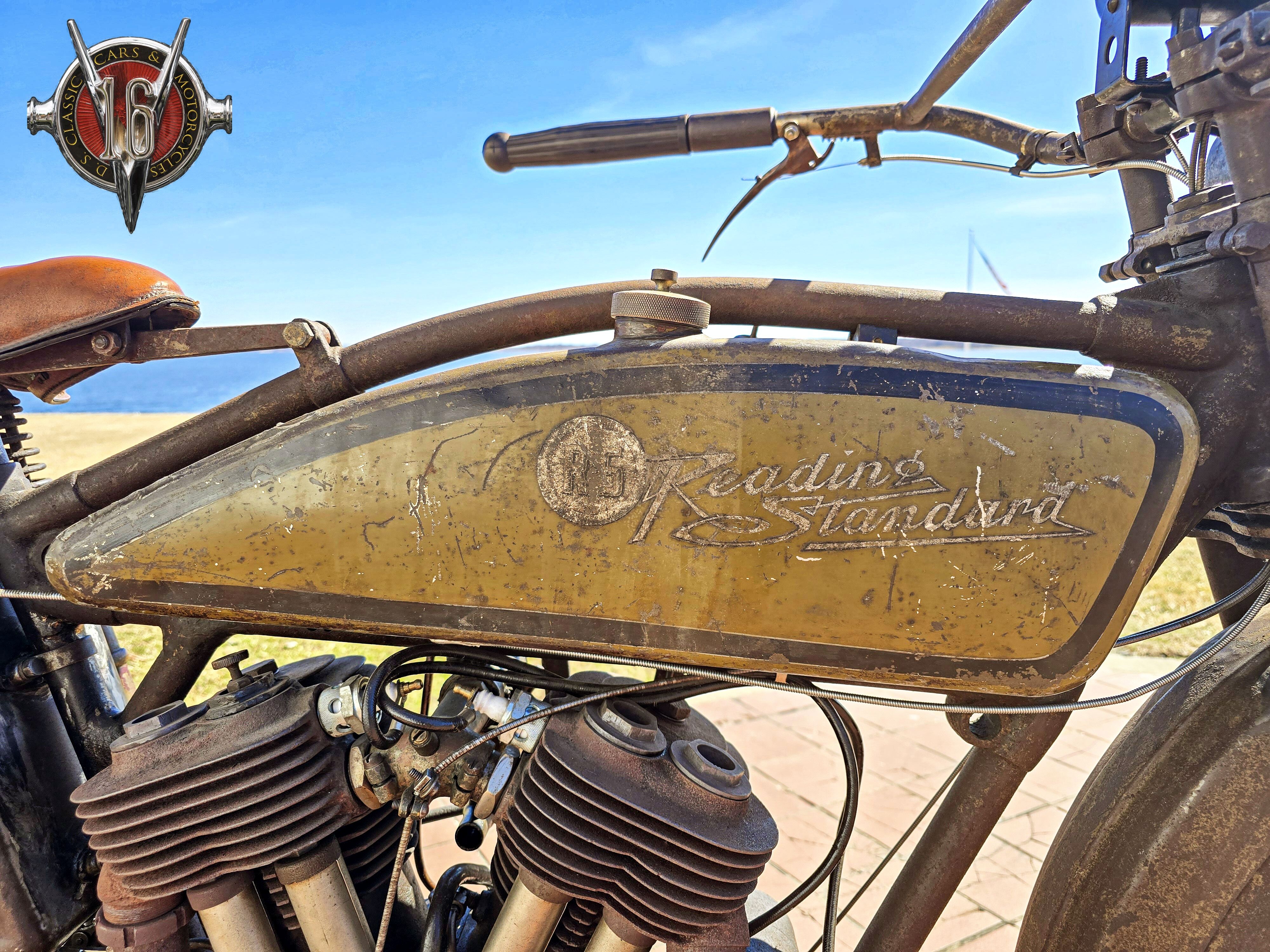
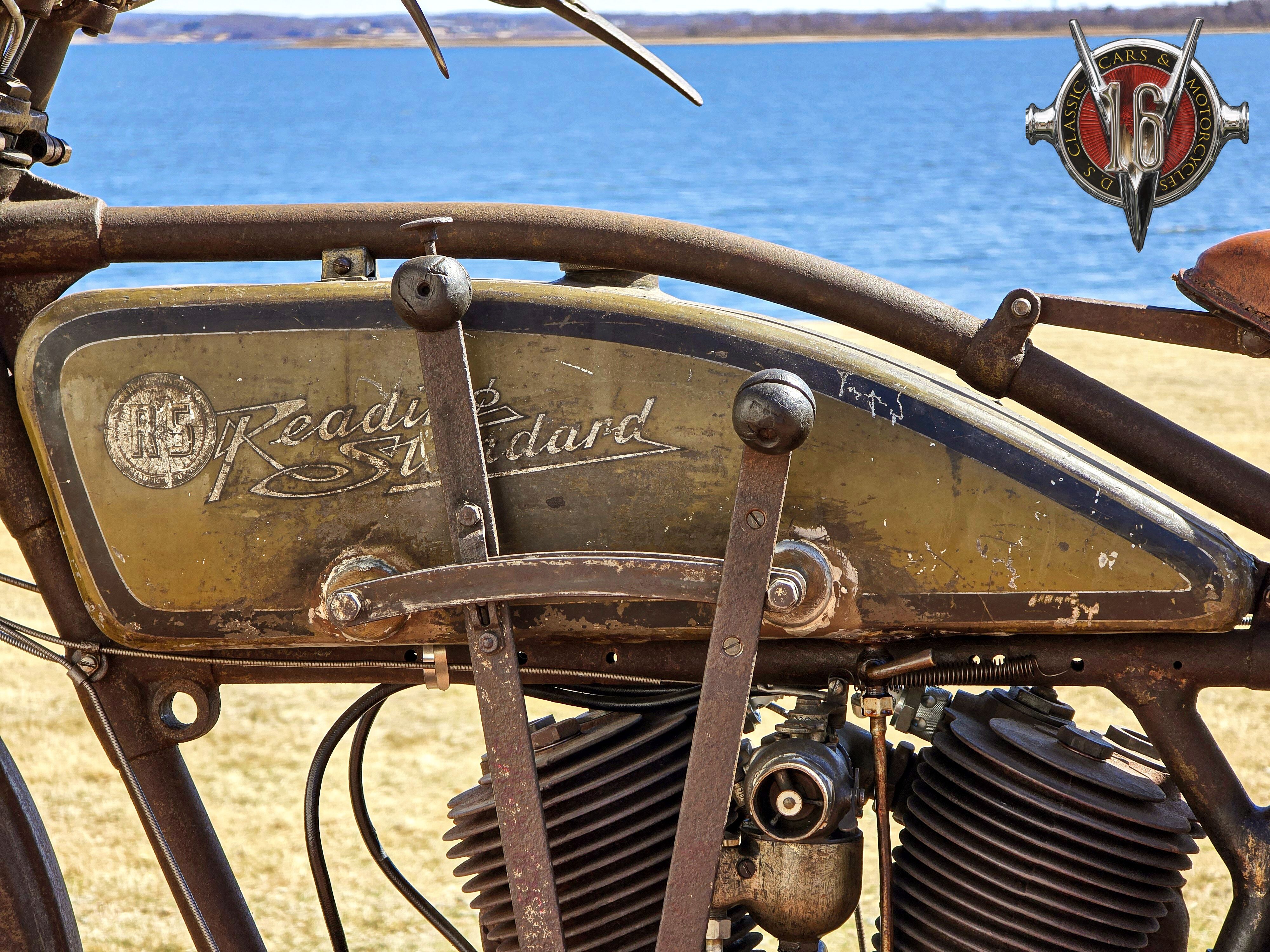
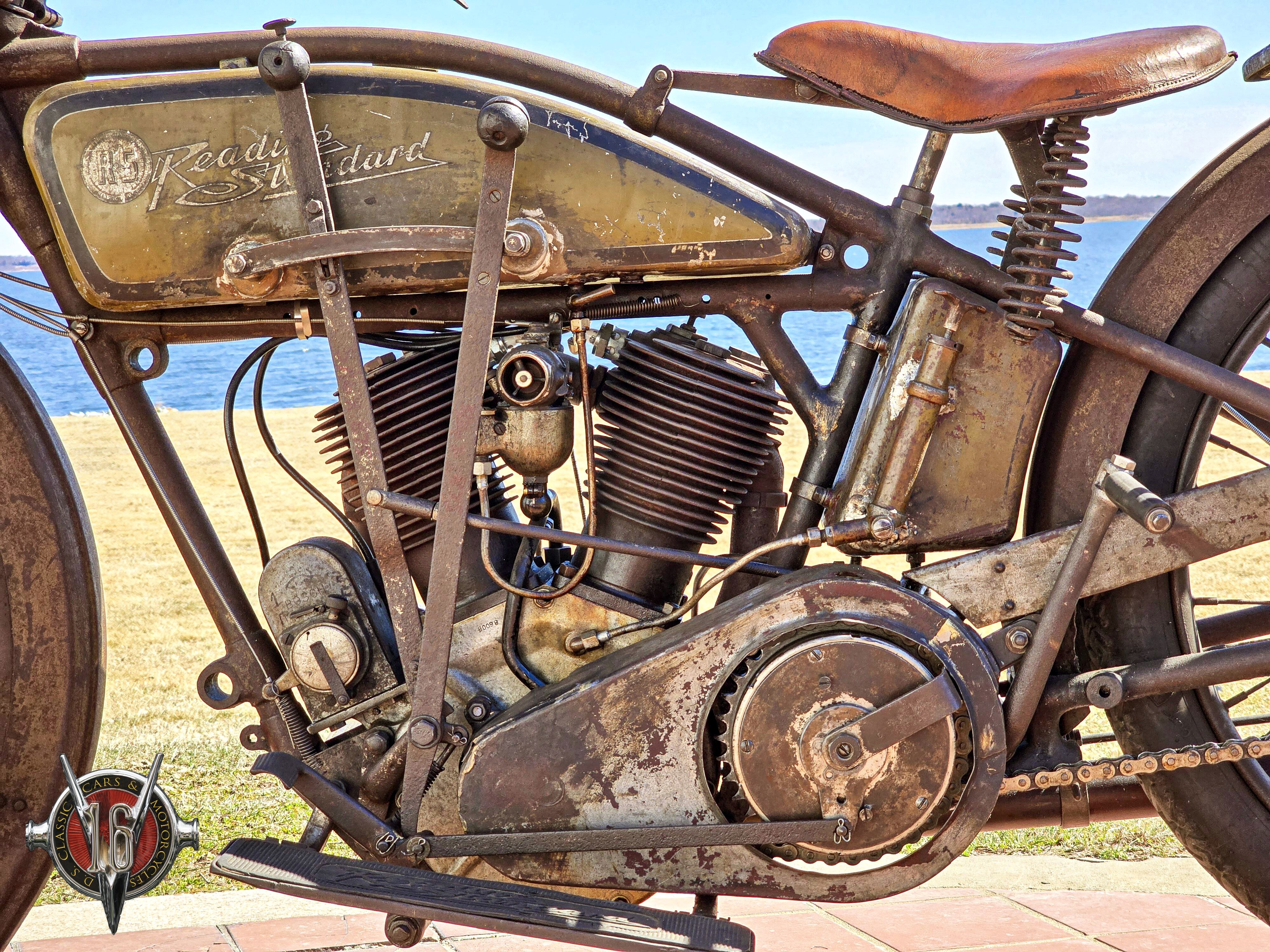
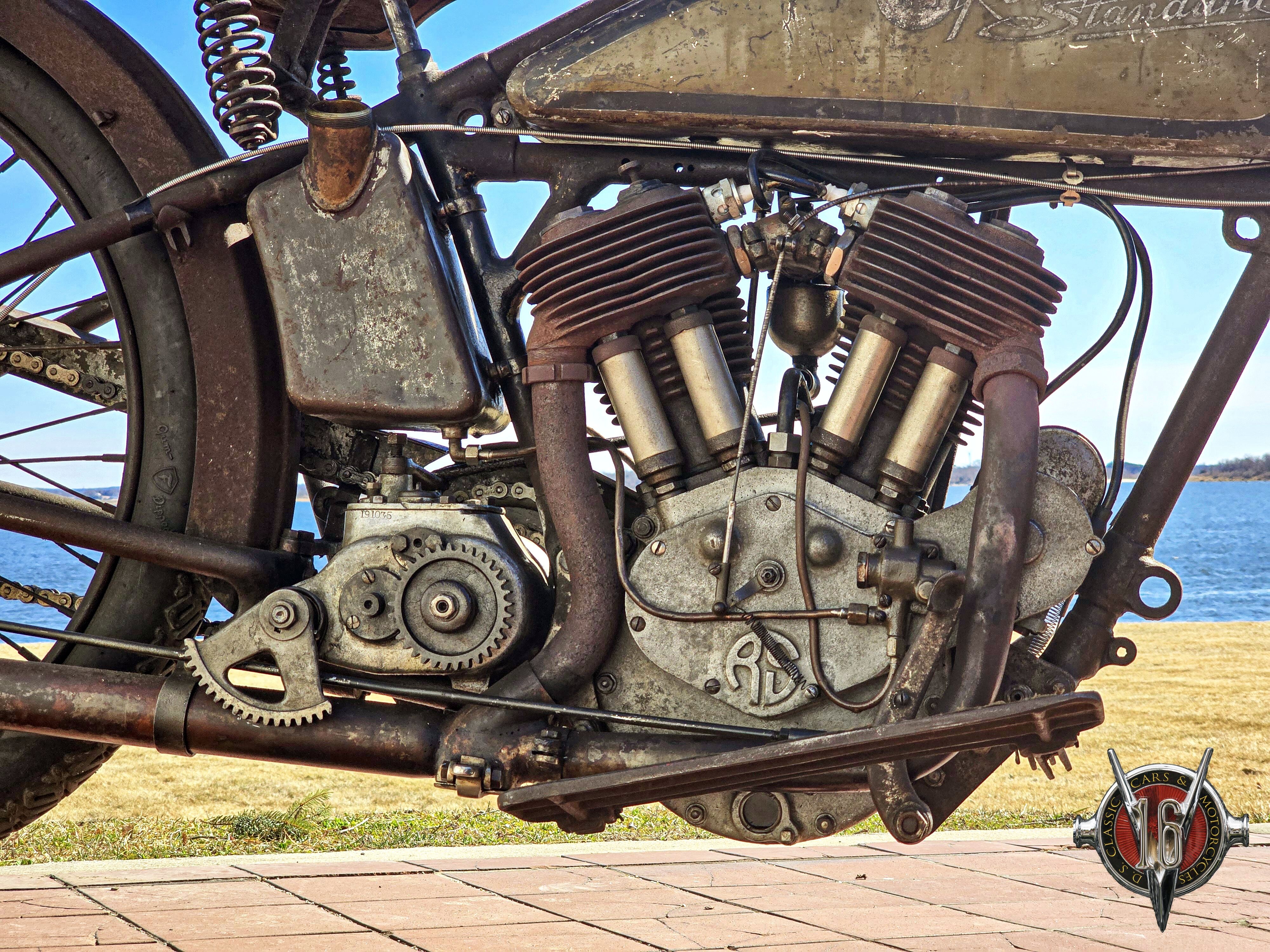
1918 Reading Standard 18-T V-Twin
Inventory Number: 3173
$60,000
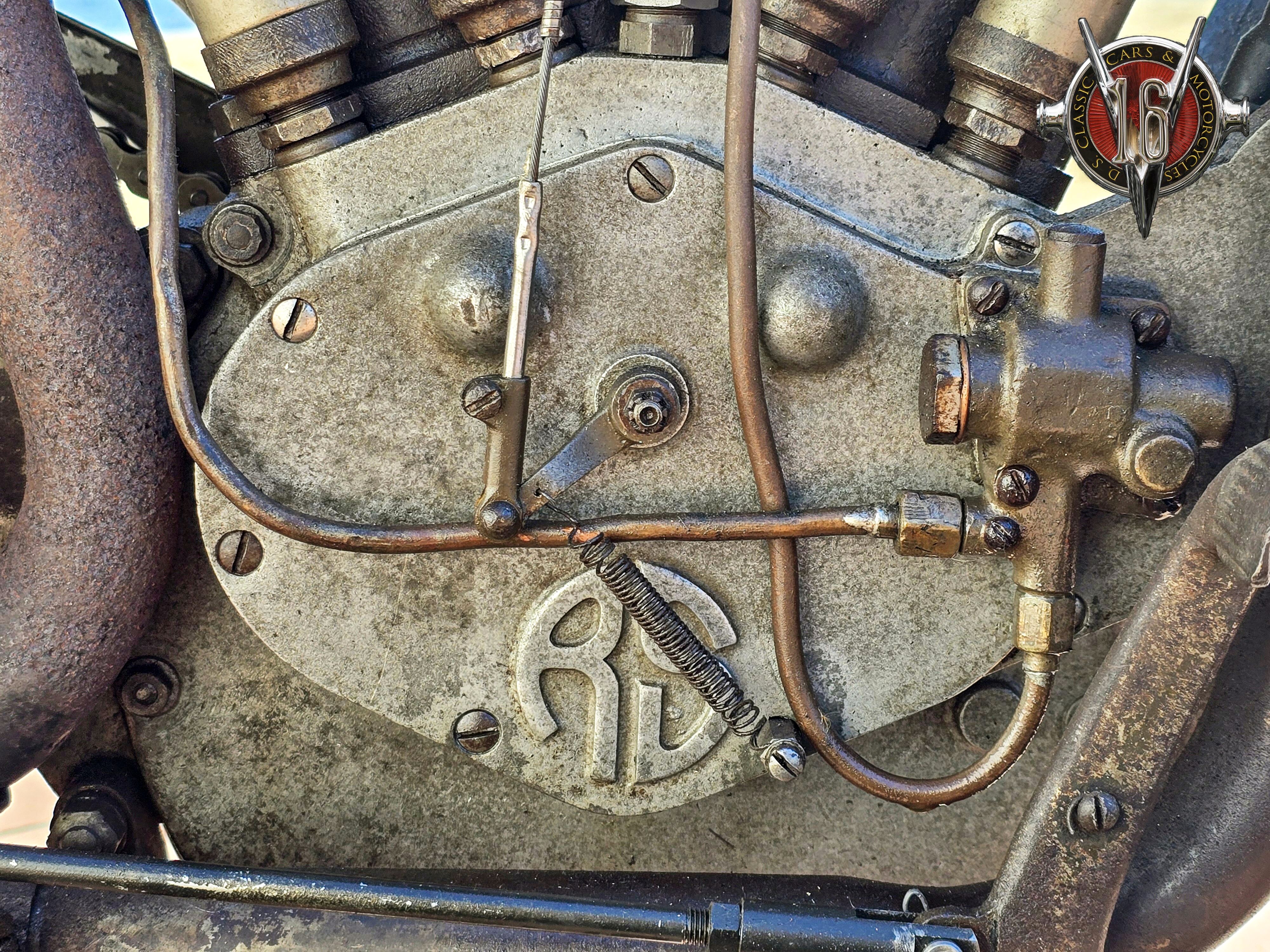
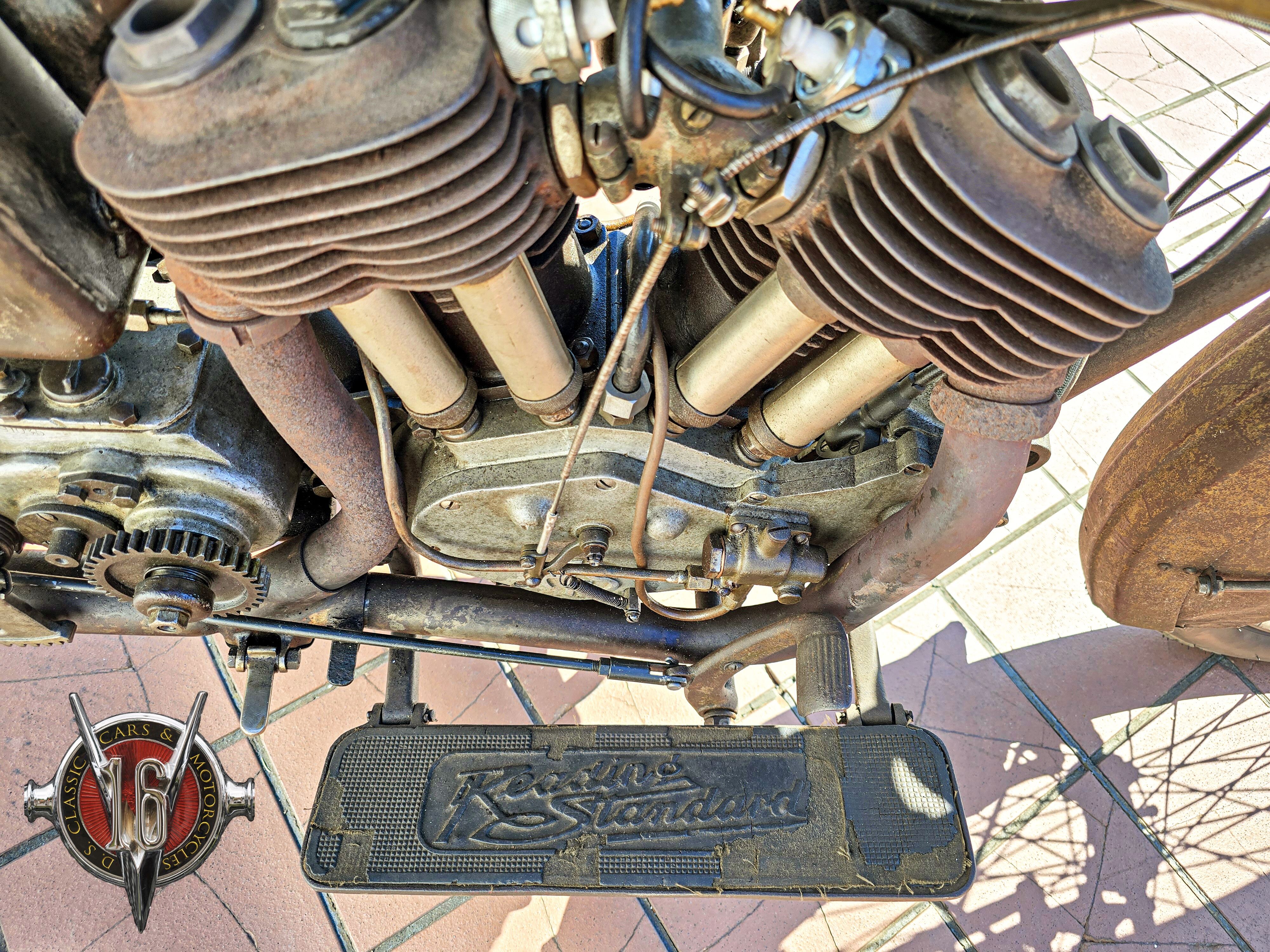
- ENGINE: 1,100+cc side-valve V-Twin
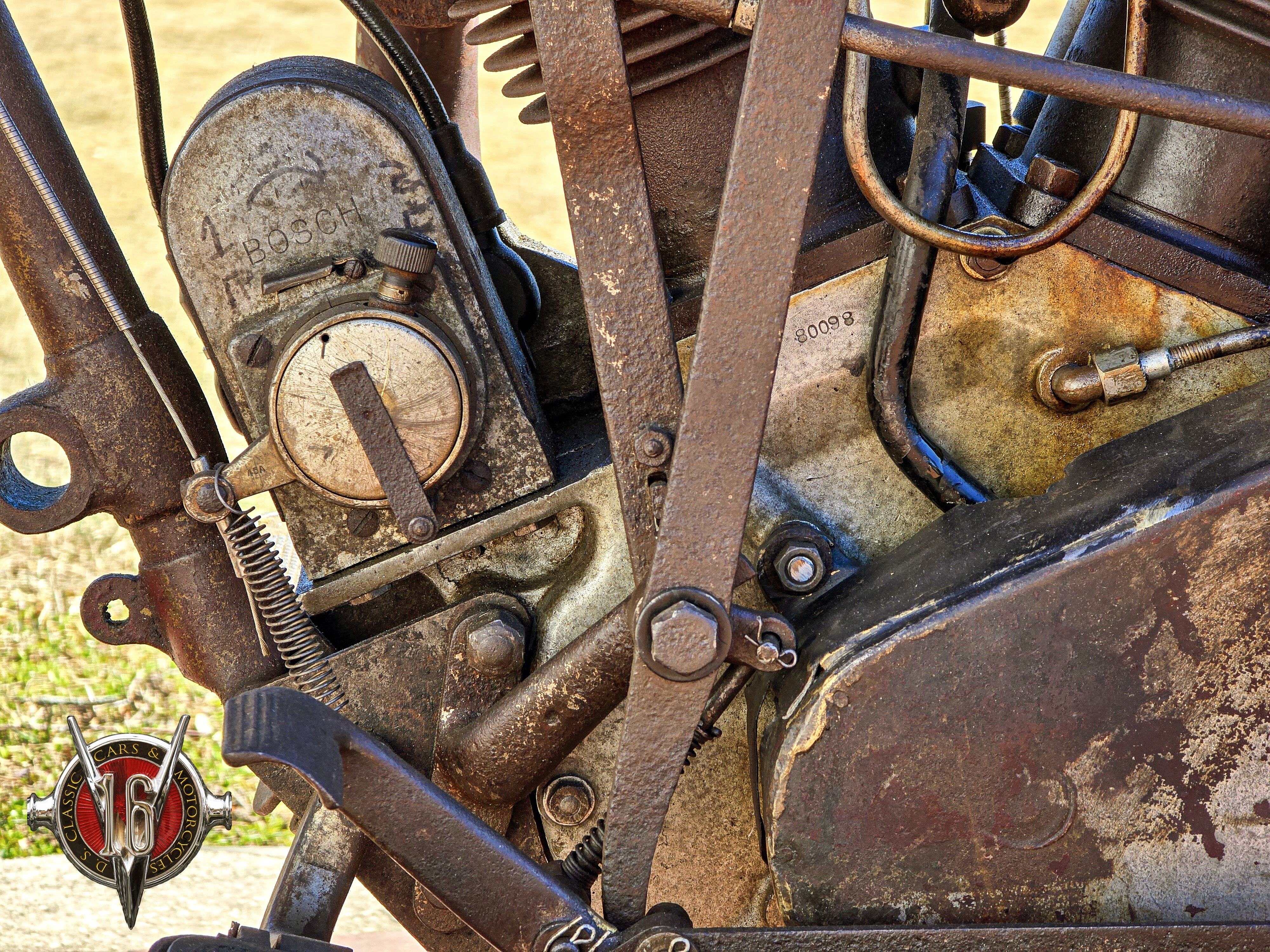
- ENGINE NO: 80098
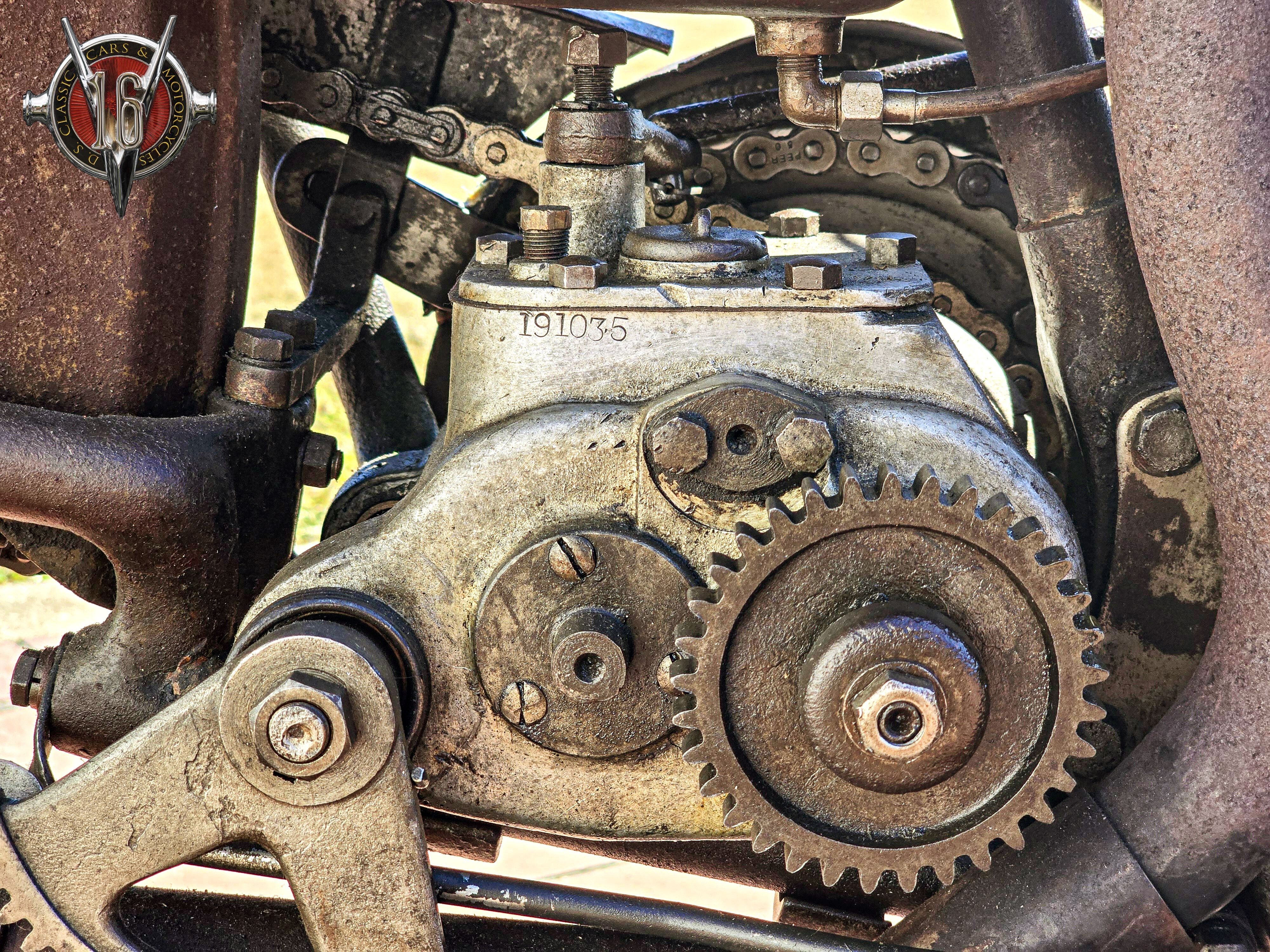
- TRANSMISSION: Three-speed gearbox
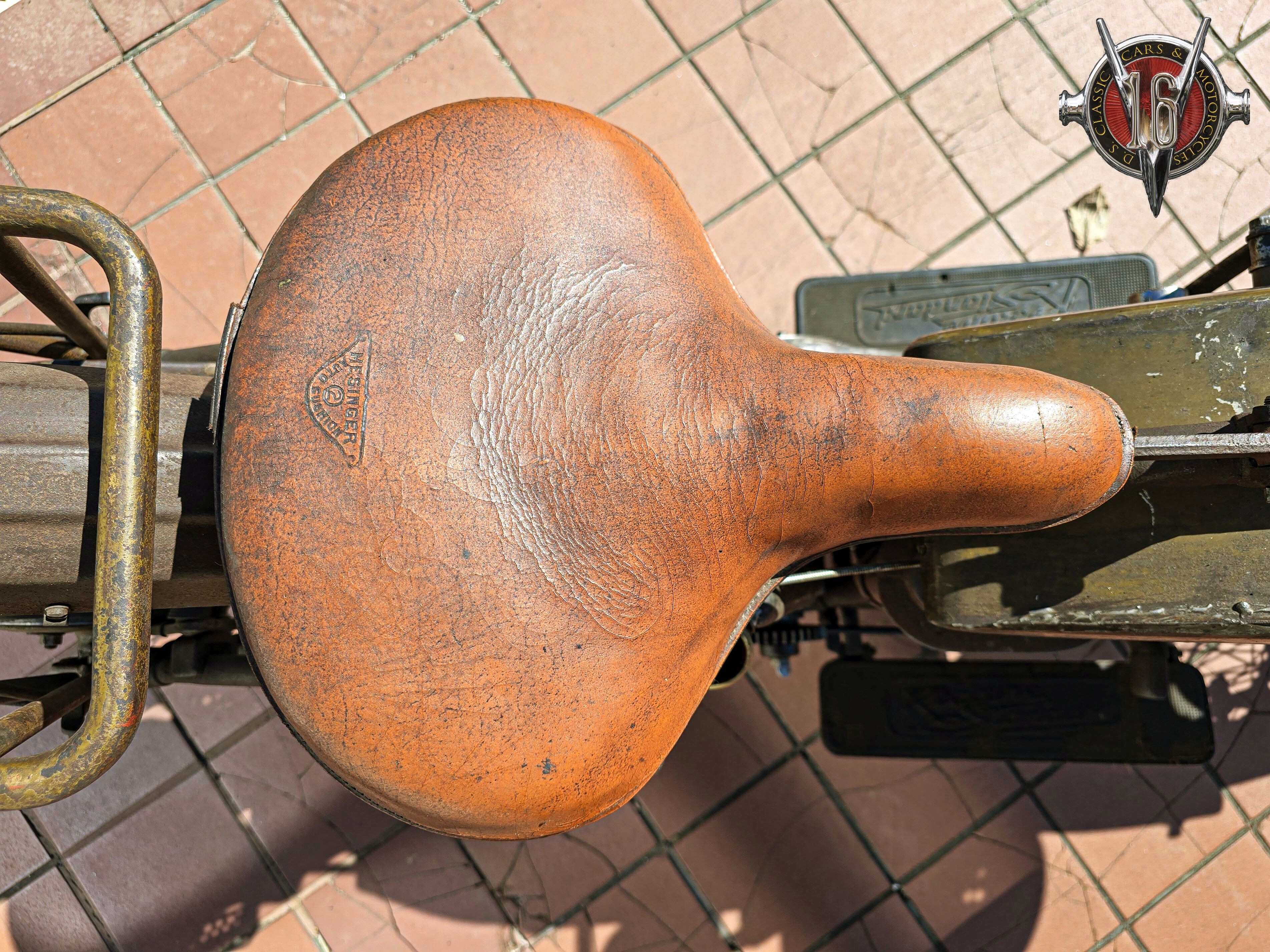
- SEAT: Mesinger
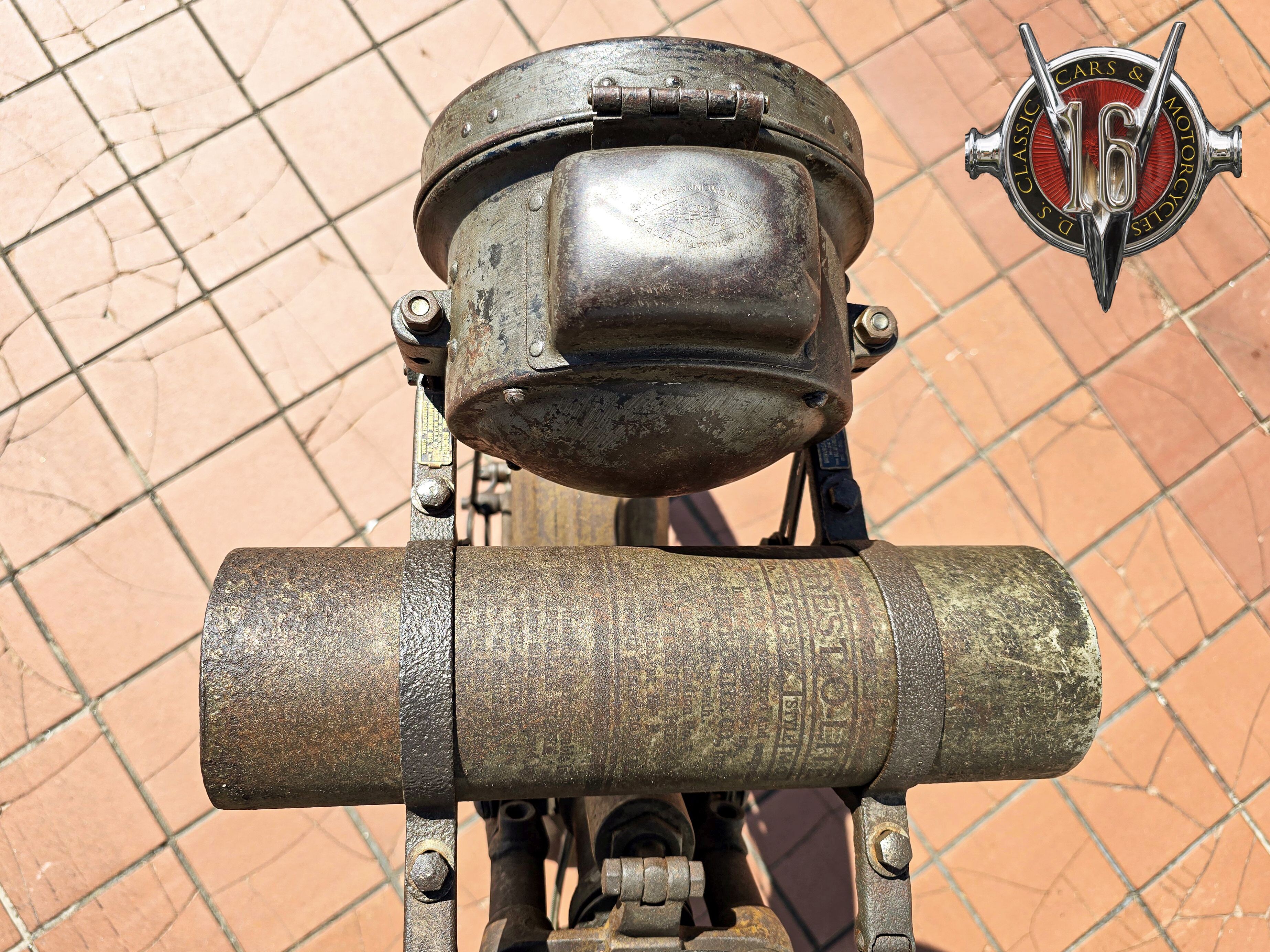
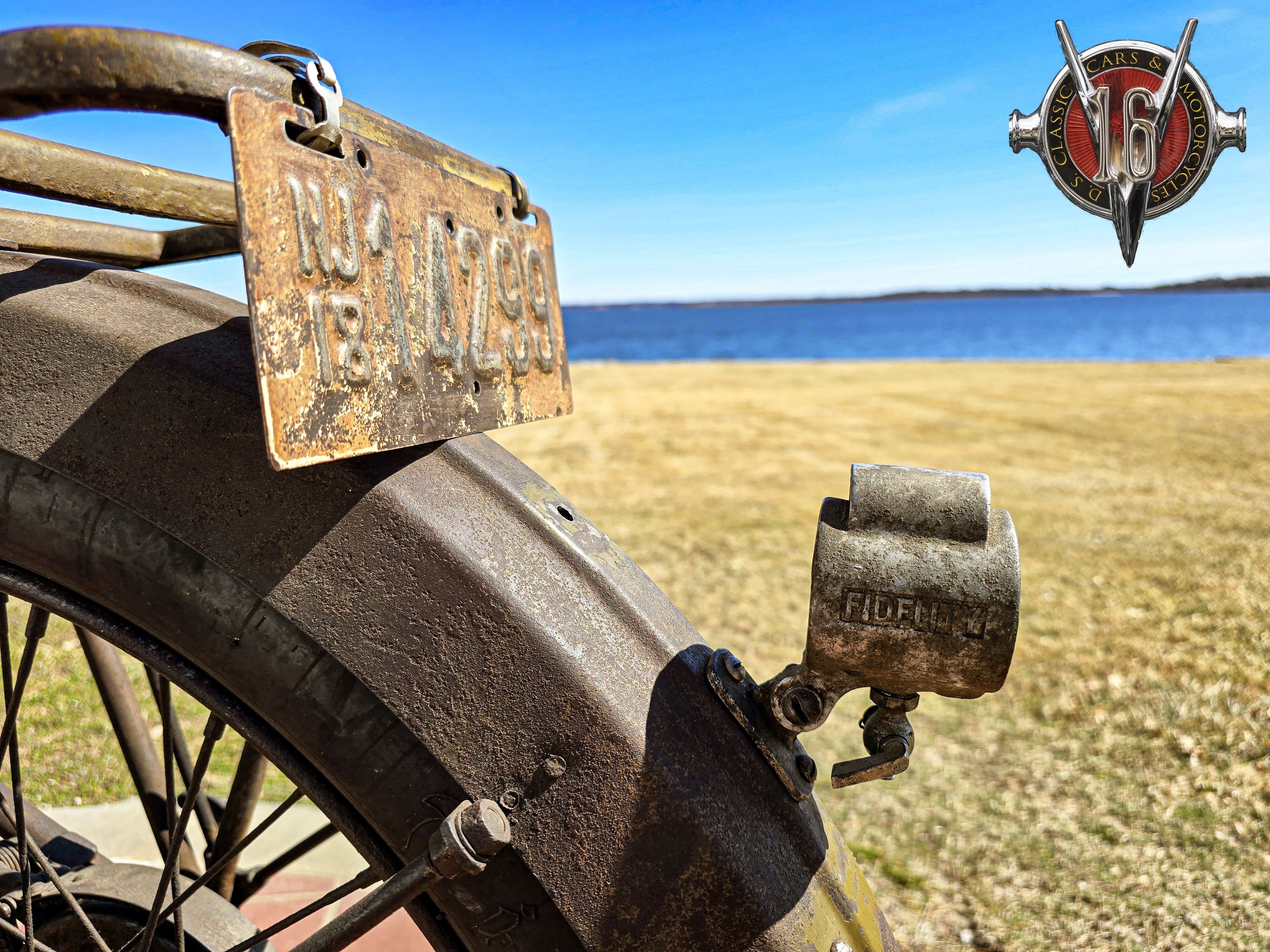
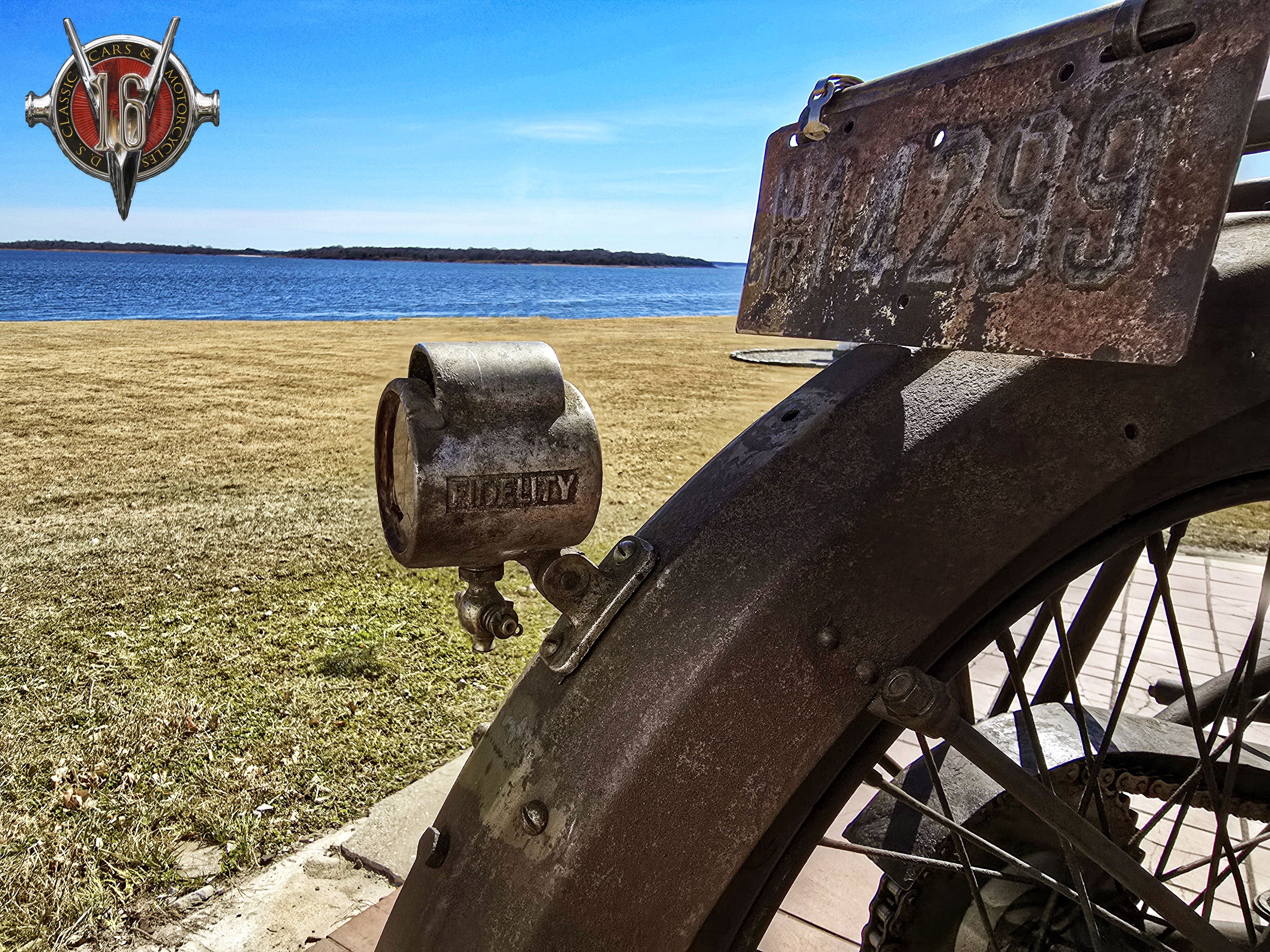
- TAILLIGHT: Fidelity
- MAGNETO: Bosch
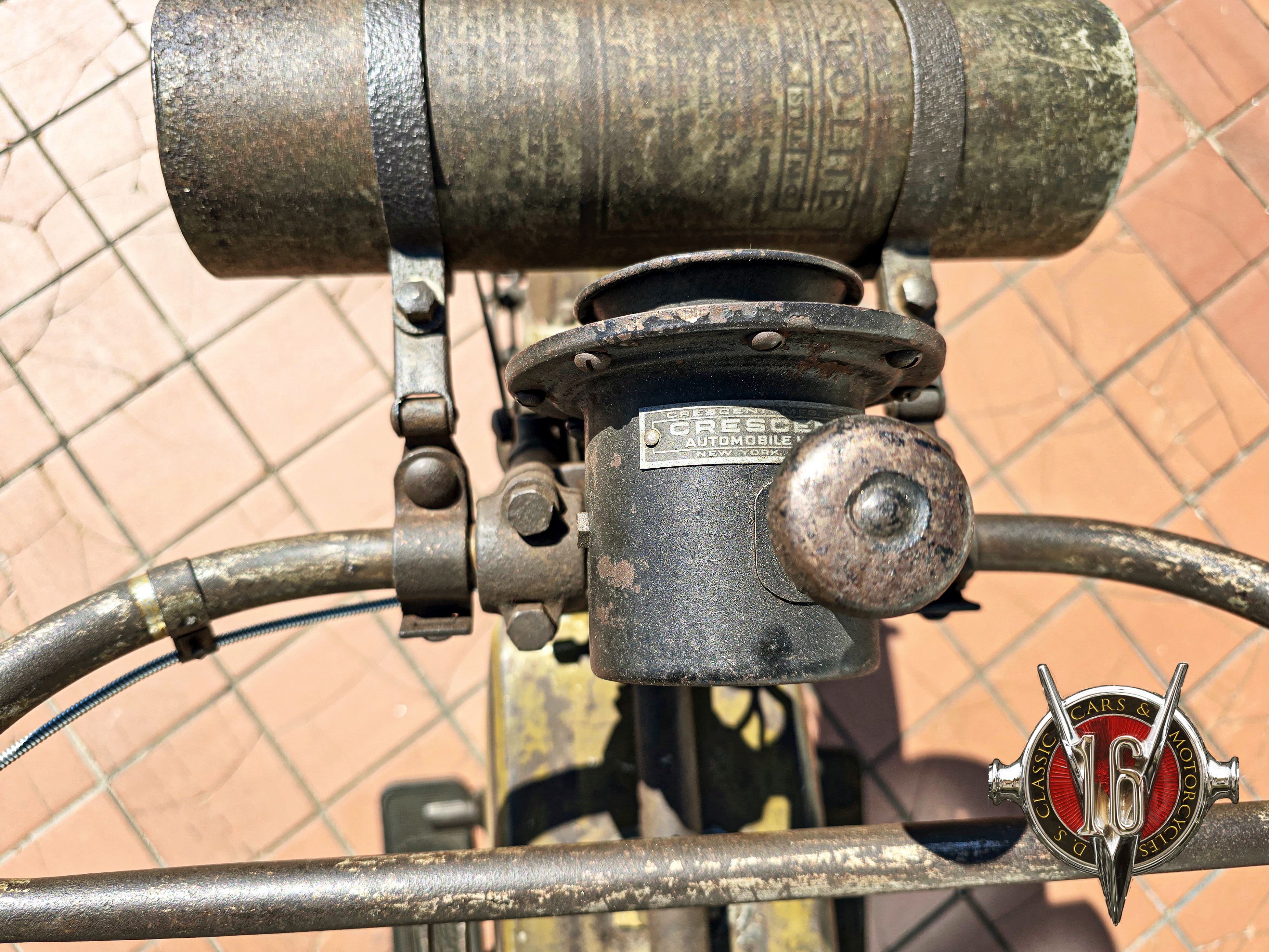
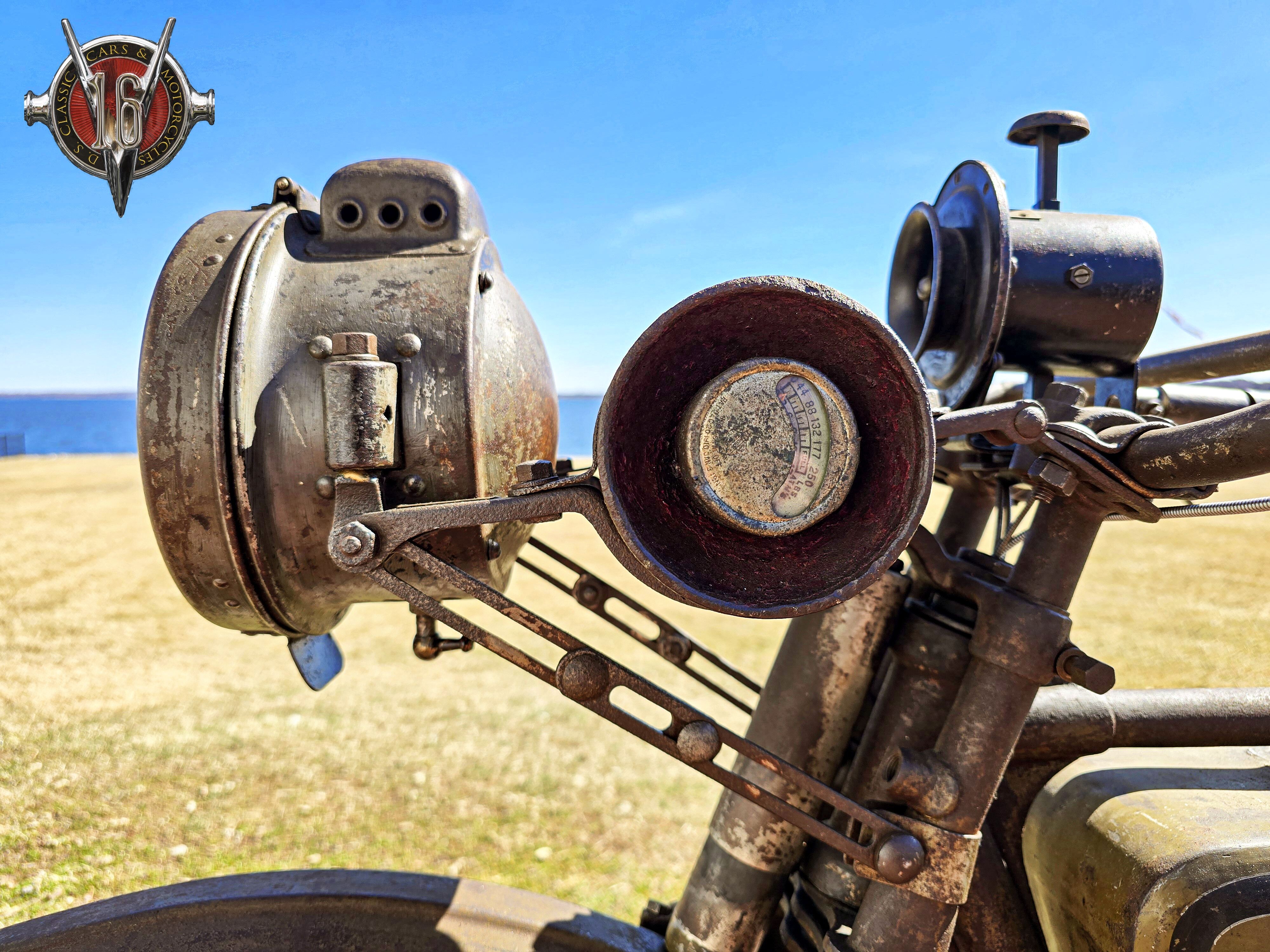
- HORN: Crescent Mfg. Co.
- FEATURES: Luggage Rack, Prest-O-Lite Tank
- HISTORY: Formerly owned by Harry Buck. Jim Carson of Ontario, Canada rebuilt the engine.
THE READING STANDARD COMPANY
The Reading Standard Company initially built bicycles before transitioning to motorcycles in 1903 in Reading, Pennsylvania. It was a hilly region that gave rise to the company’s slogan, “Built and tested in the mountains,” and the name “Reading.” Its first motorcycles were single-cylinder clones of Indians using standard available parts and Thor engines, a system that many “assemblers” were using followed by their own paint scheme, headstock badges, and transfers. Luckily, Chief Engineer Charles Gustafson studied the European designs and noted the improvement in power from their side-valve engines over the F-heads. By 1907, he had developed the first American side-valve motorcycle, the only company to offer one for several years. According to the National Motorcycle Museum, “For a period of time, Reading Standard used competition or other challenges to prove the brand. In 1907, engineer Charles Gustafson led an effort of three riders that rode to the top of Pikes Peak, a feat unchallenged for five years. Later, Reading Standard won a 1000-mile endurance race.”Two years later, Gustafson would be lured to Indian Motorcycle Co., where he would go on to design the PowerPlus series. Reading reverted to an F-head design without him, developing its first V-Twin. By 1913, there were four models with varying belt and chain drives. Facing financial struggles and strong competition from Harley-Davidson and Indian, by 1922, they had sold out to the Cleveland Motorcycle Company. Ahead of the Great Depression, Cleveland lost its market for expensive motorcycles and sold in 1923, ending both the Reading Standard and the Cleveland brand.
Surviving Reading Standard motorcycles are now considered rare and valuable collectors items, especially to those who value the history and development of the American motorcycle, as Readings are among the most respected for bringing the side valve to the states and for their excellent performance.