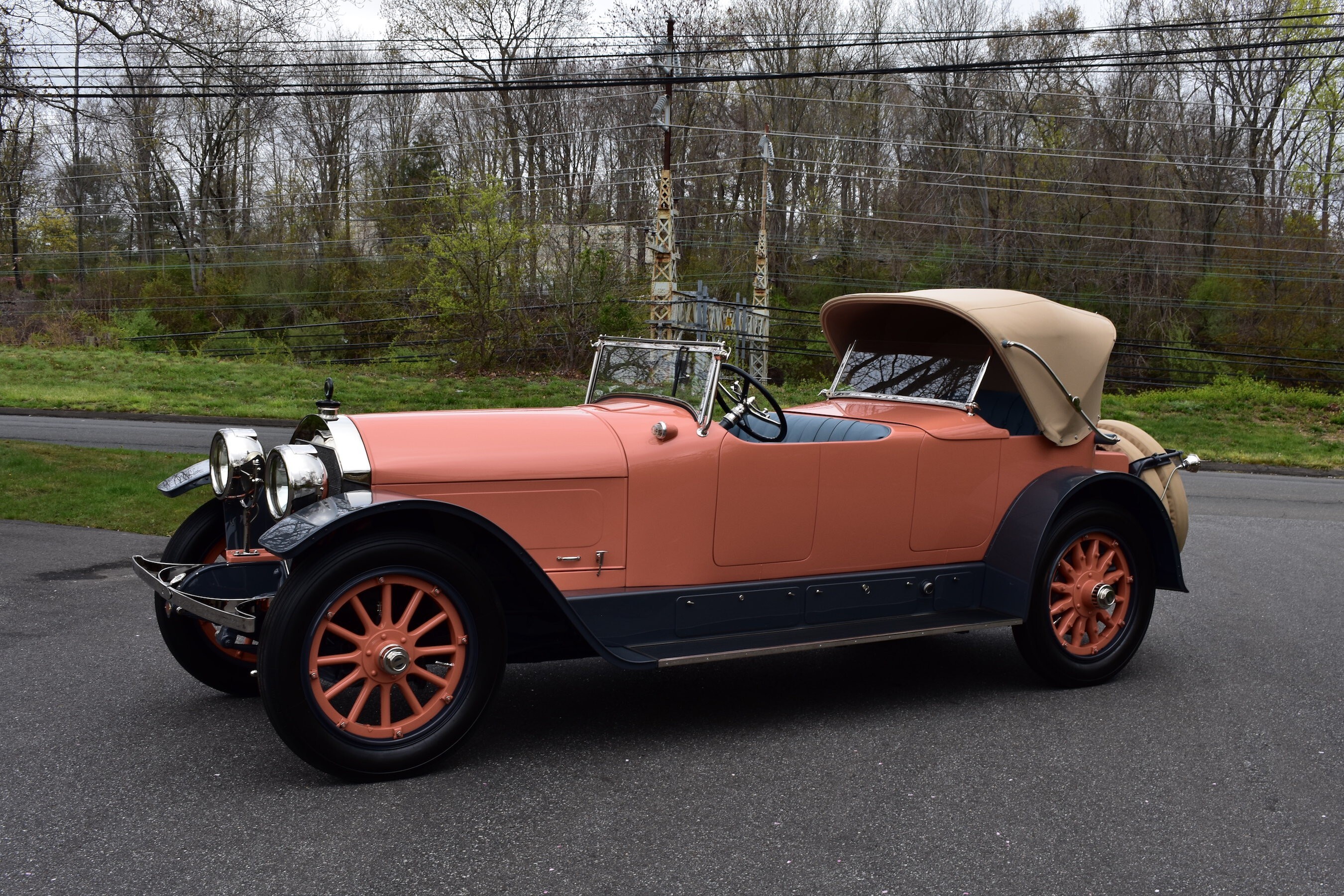
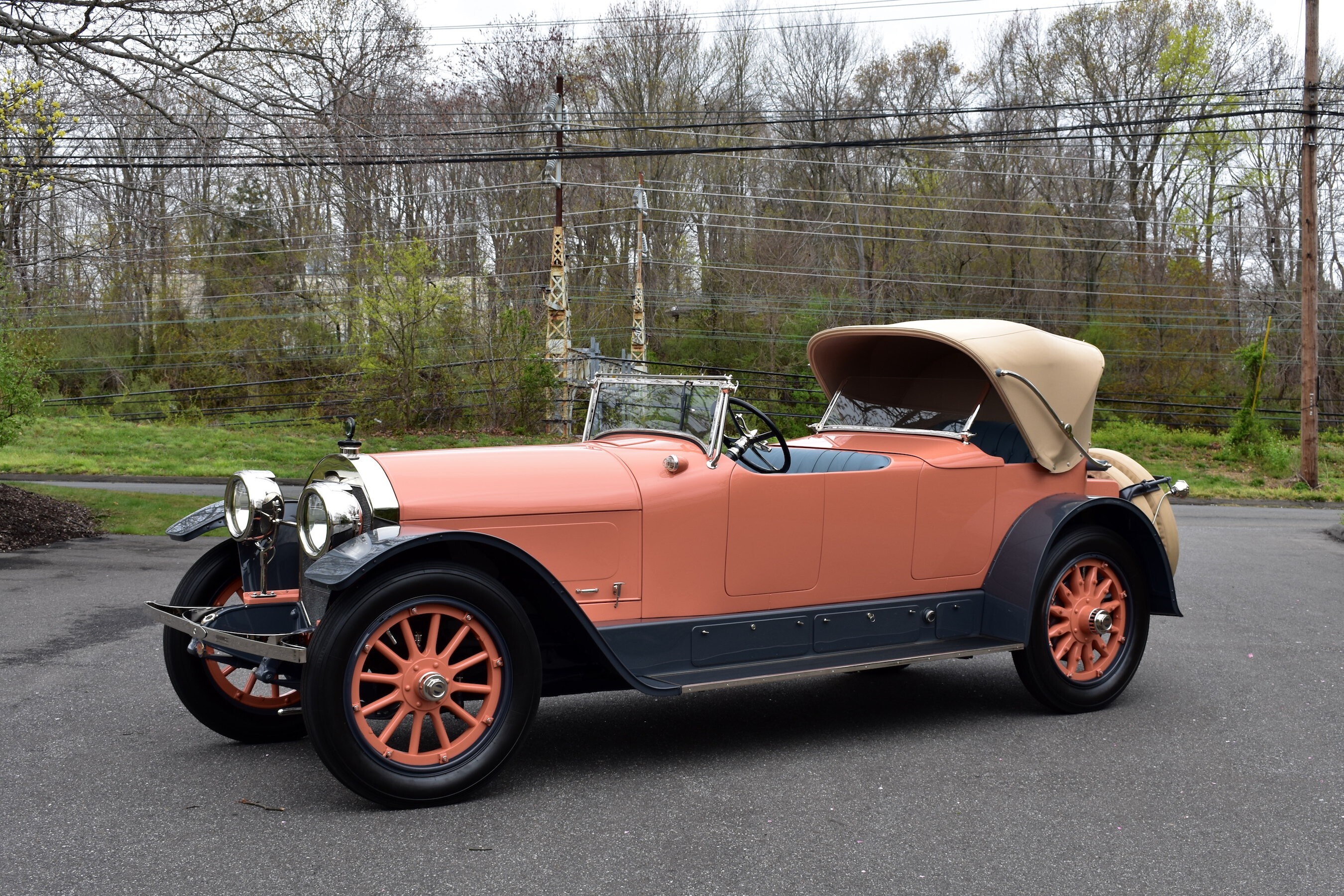
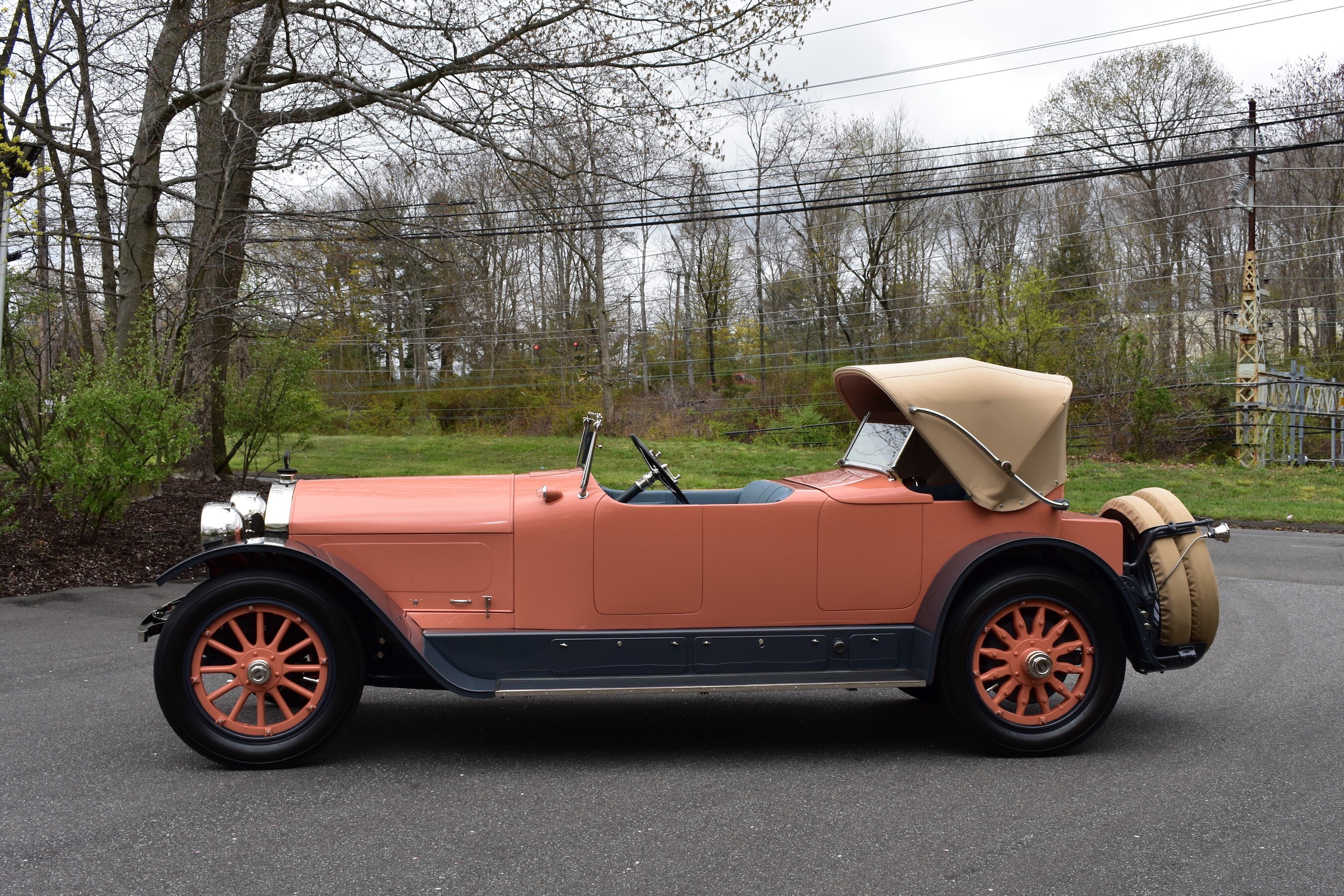
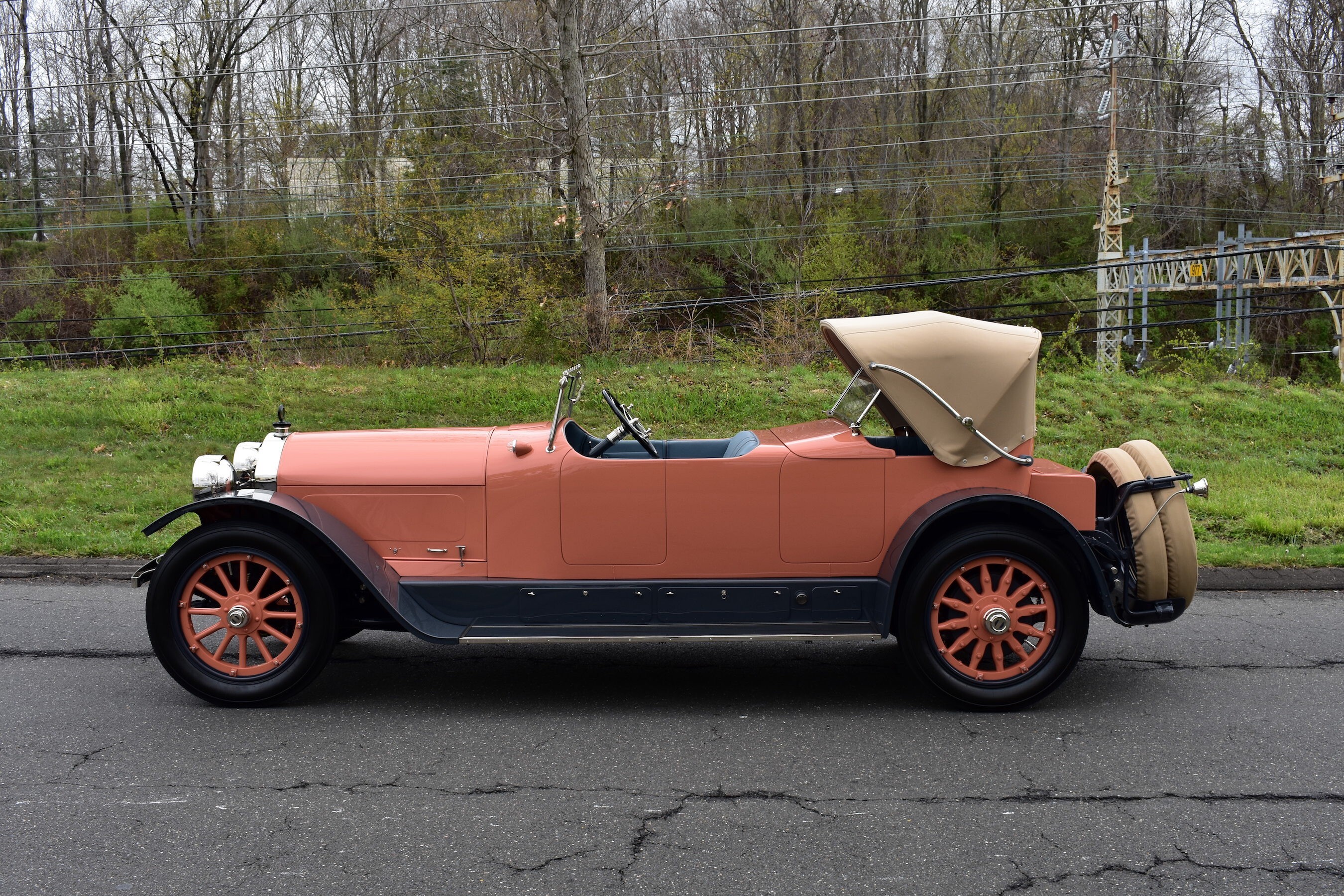
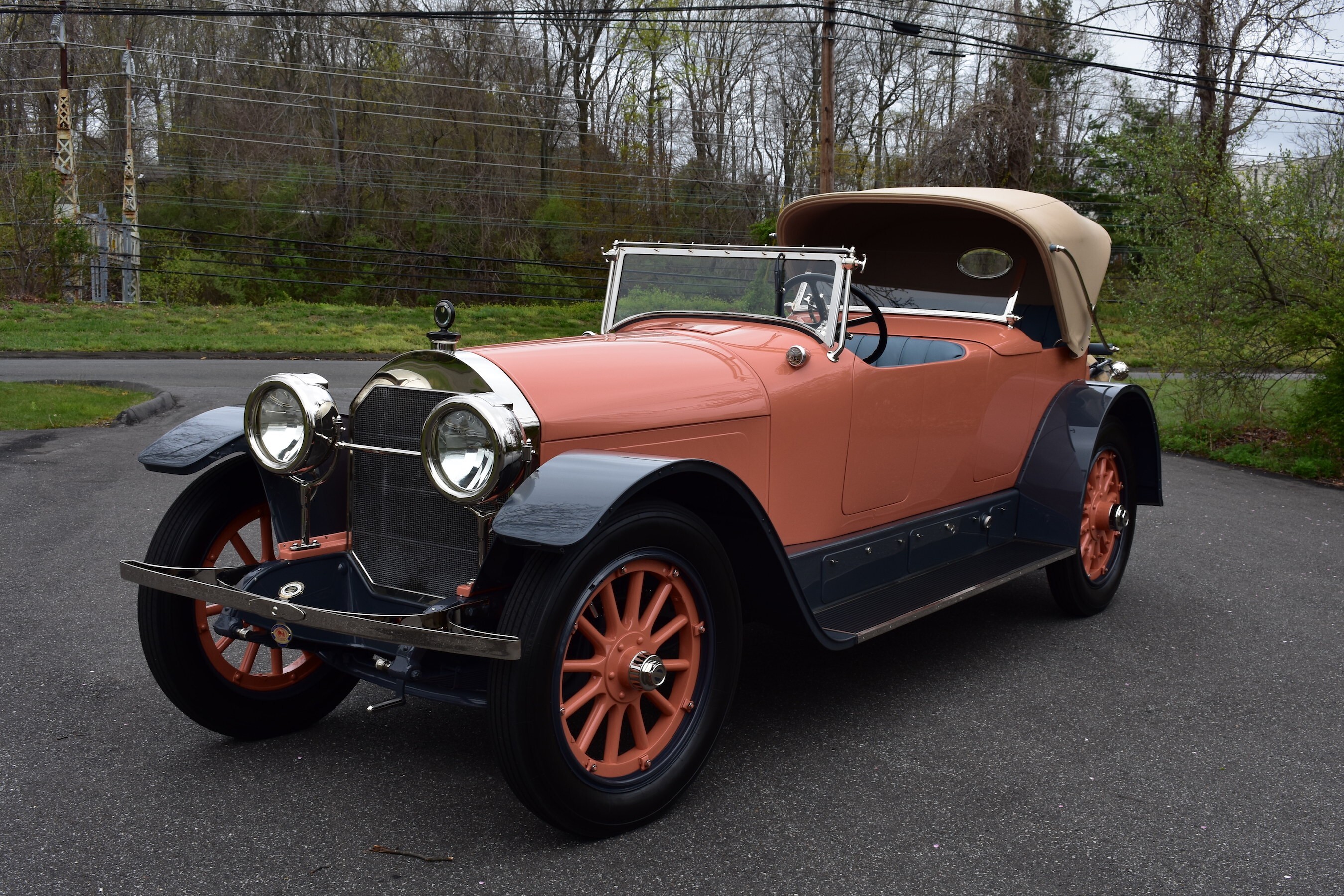
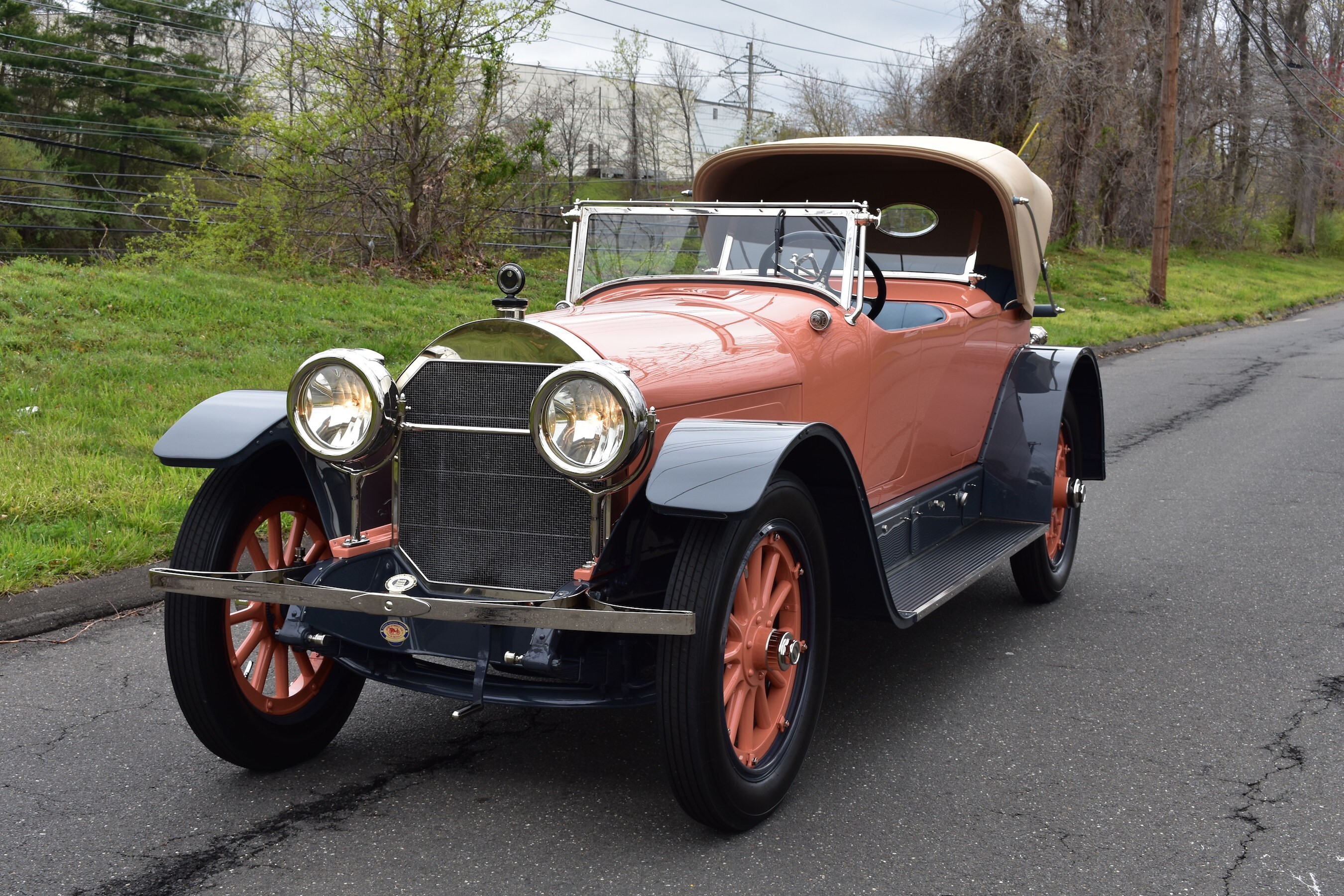
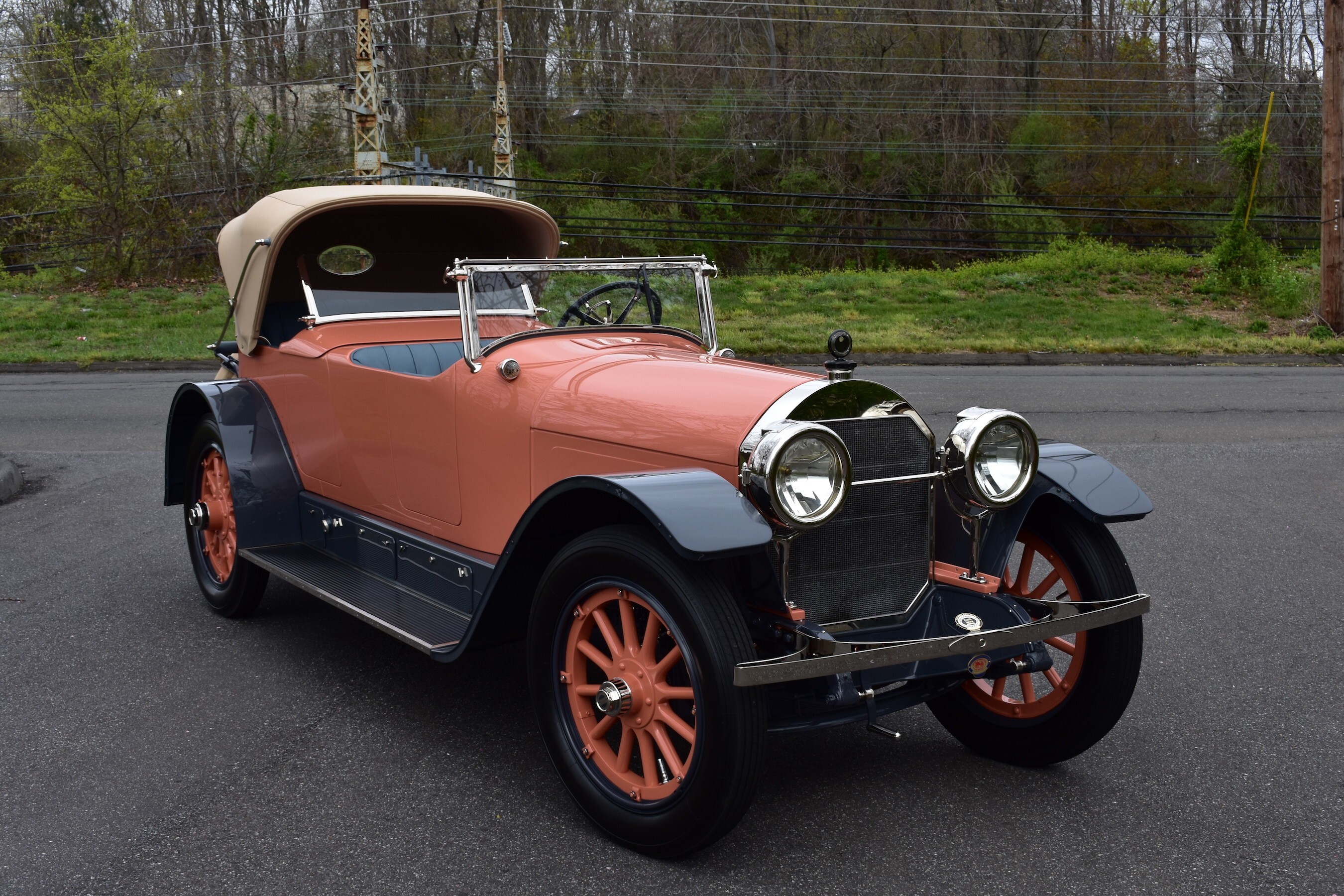
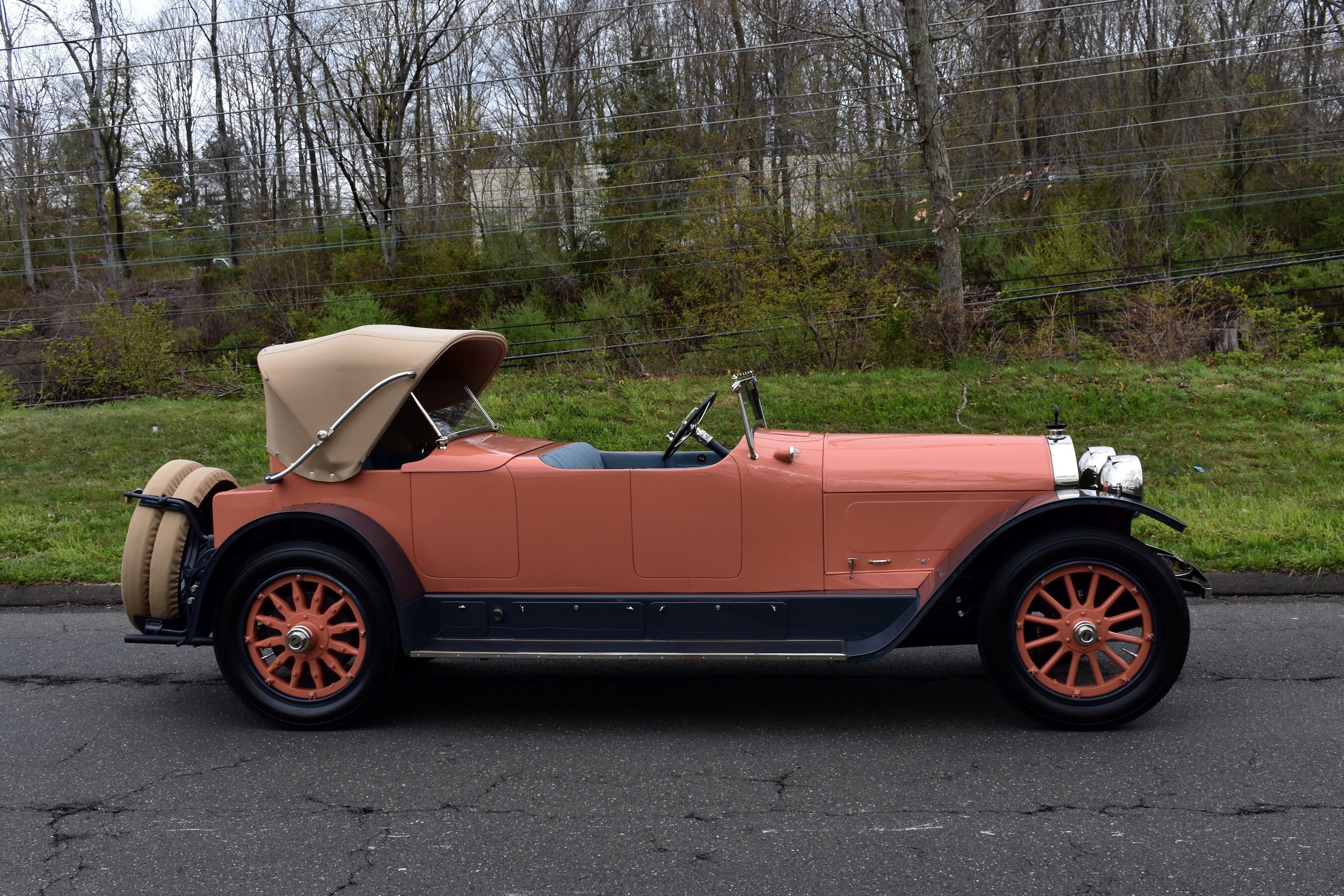
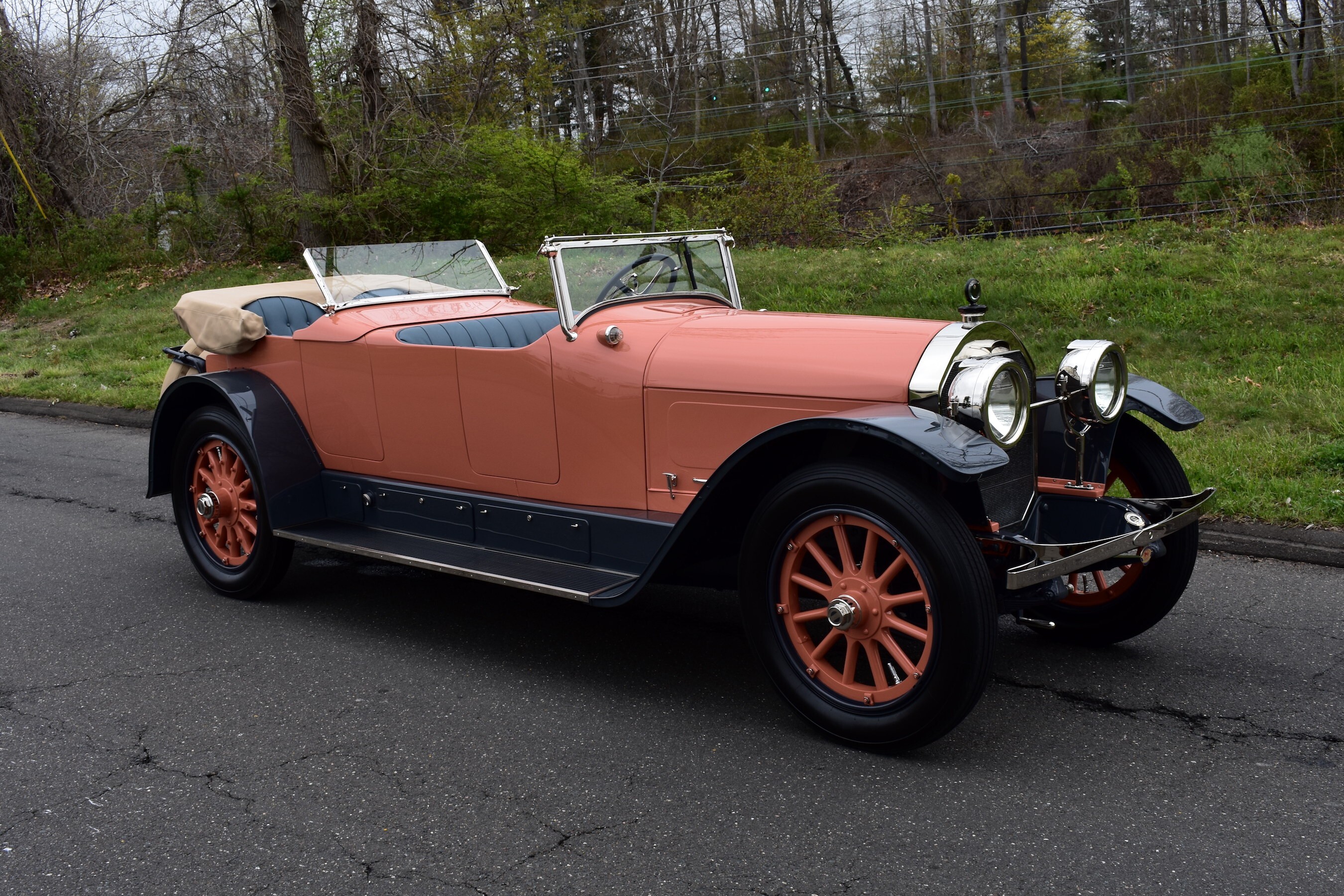
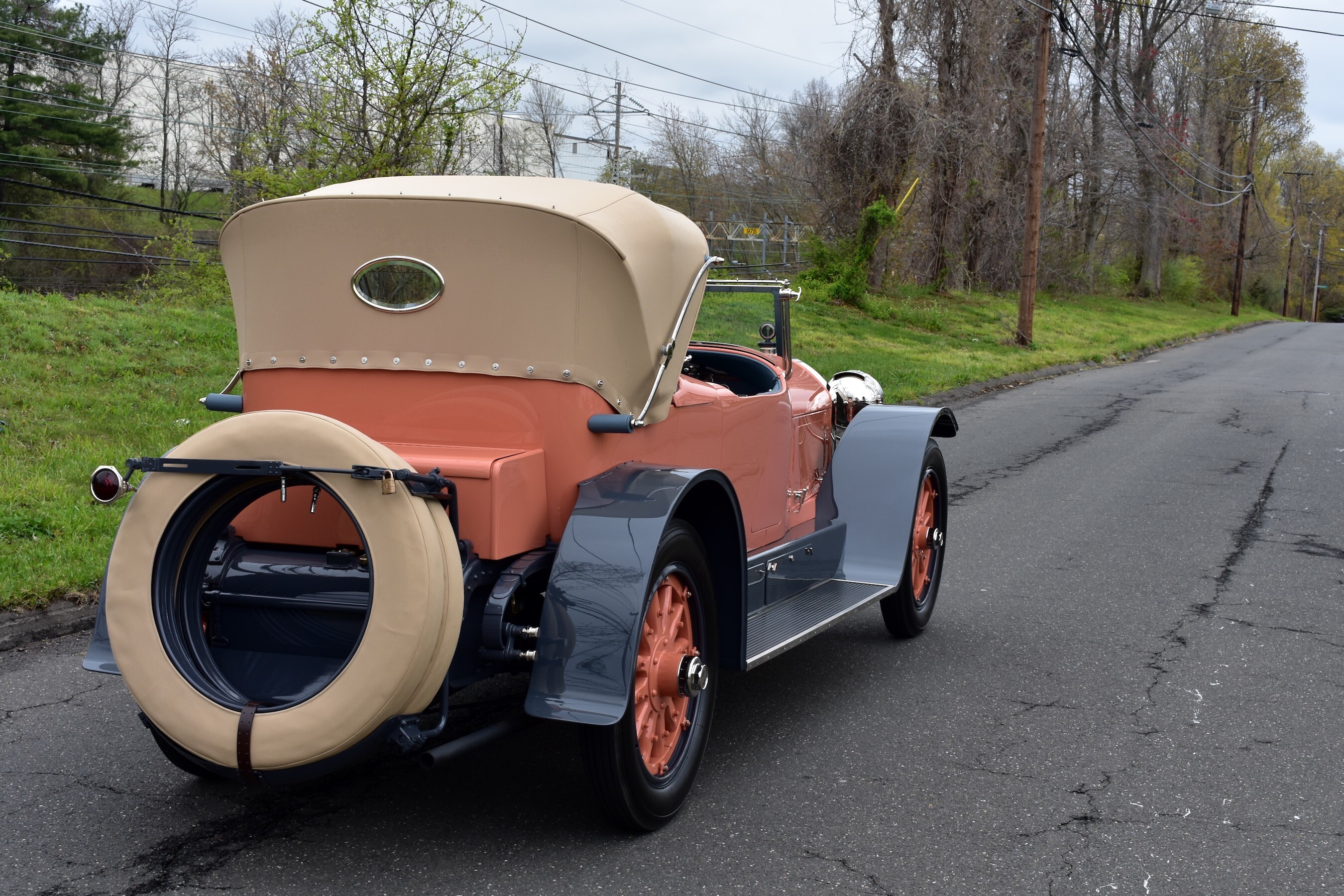
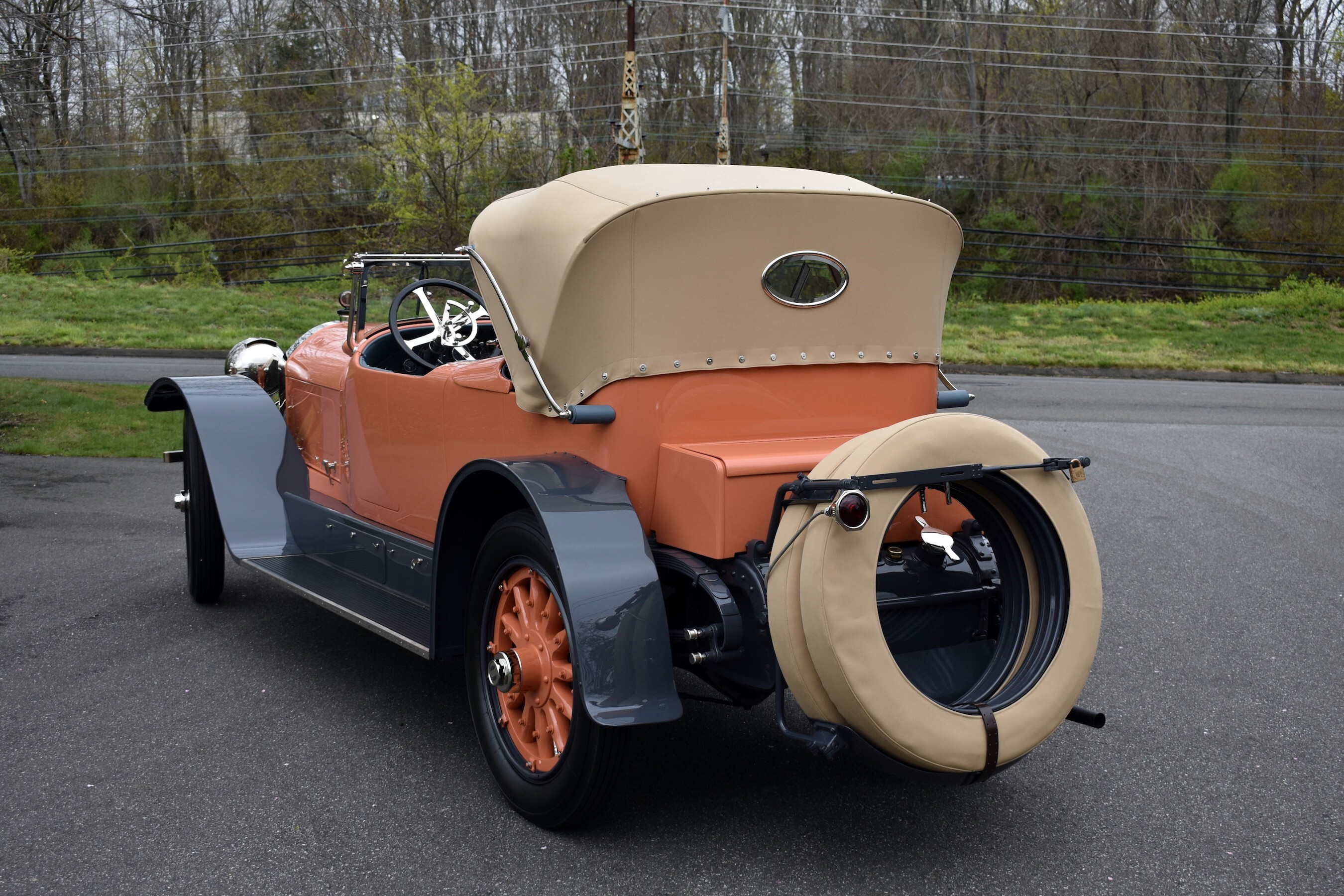
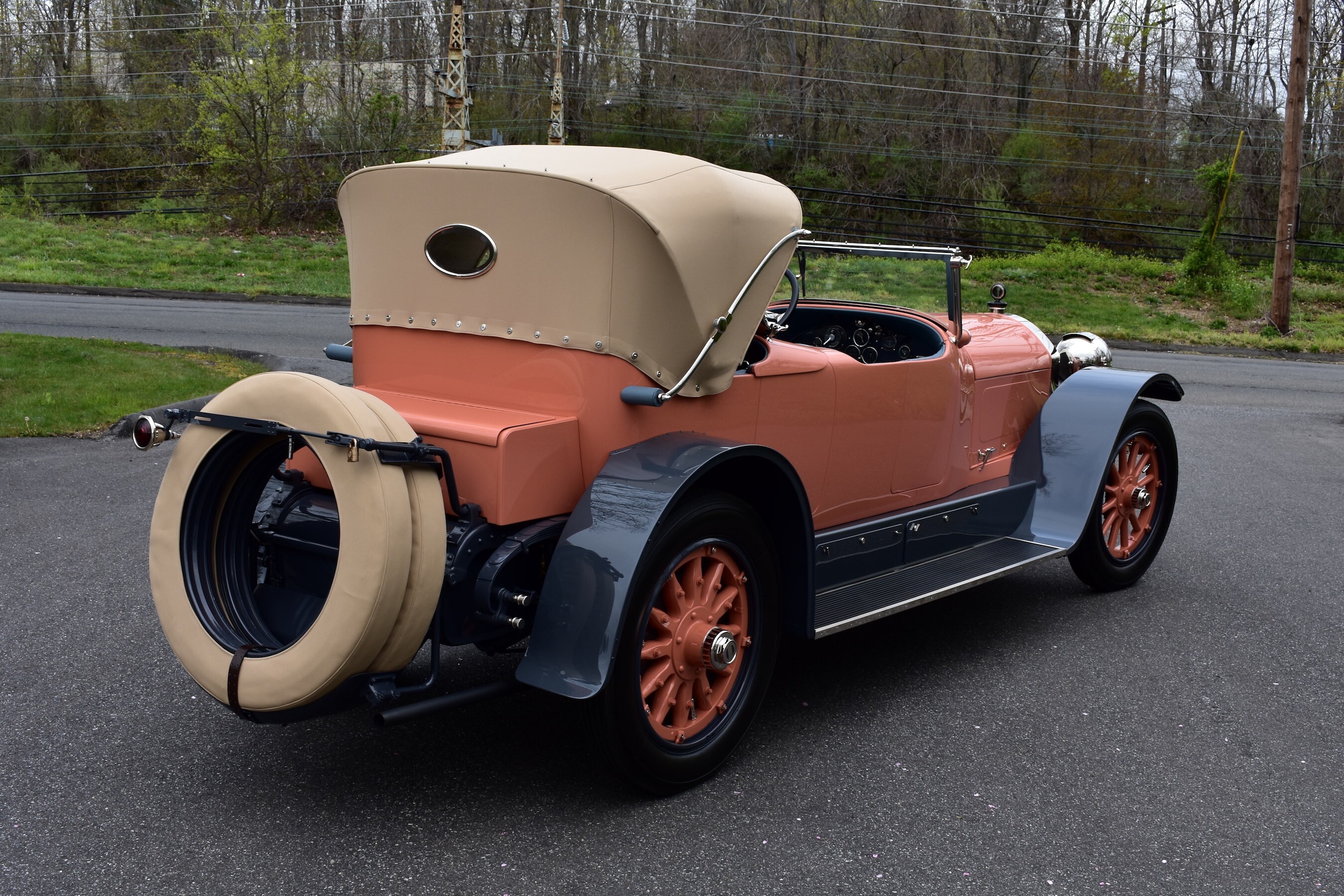
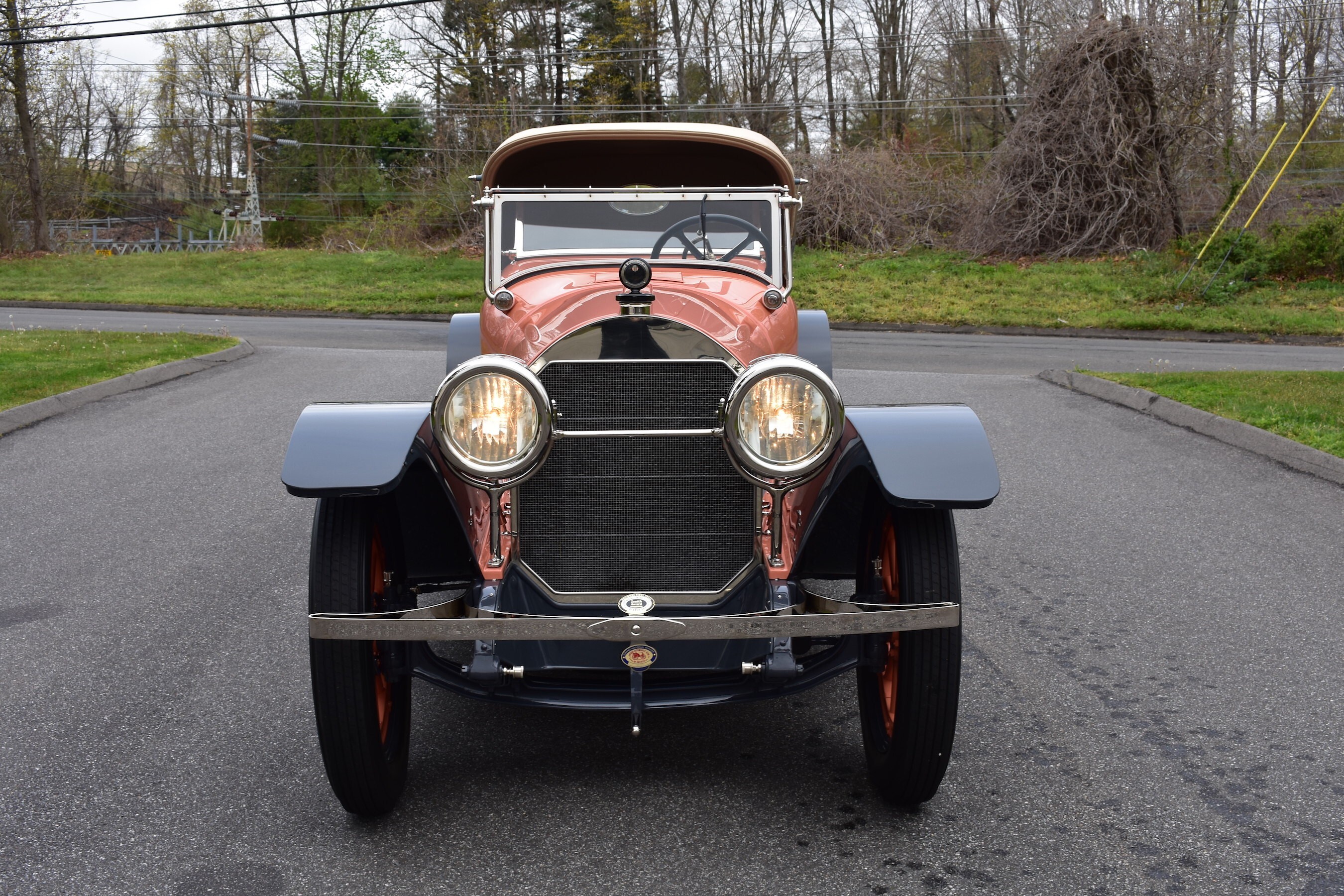
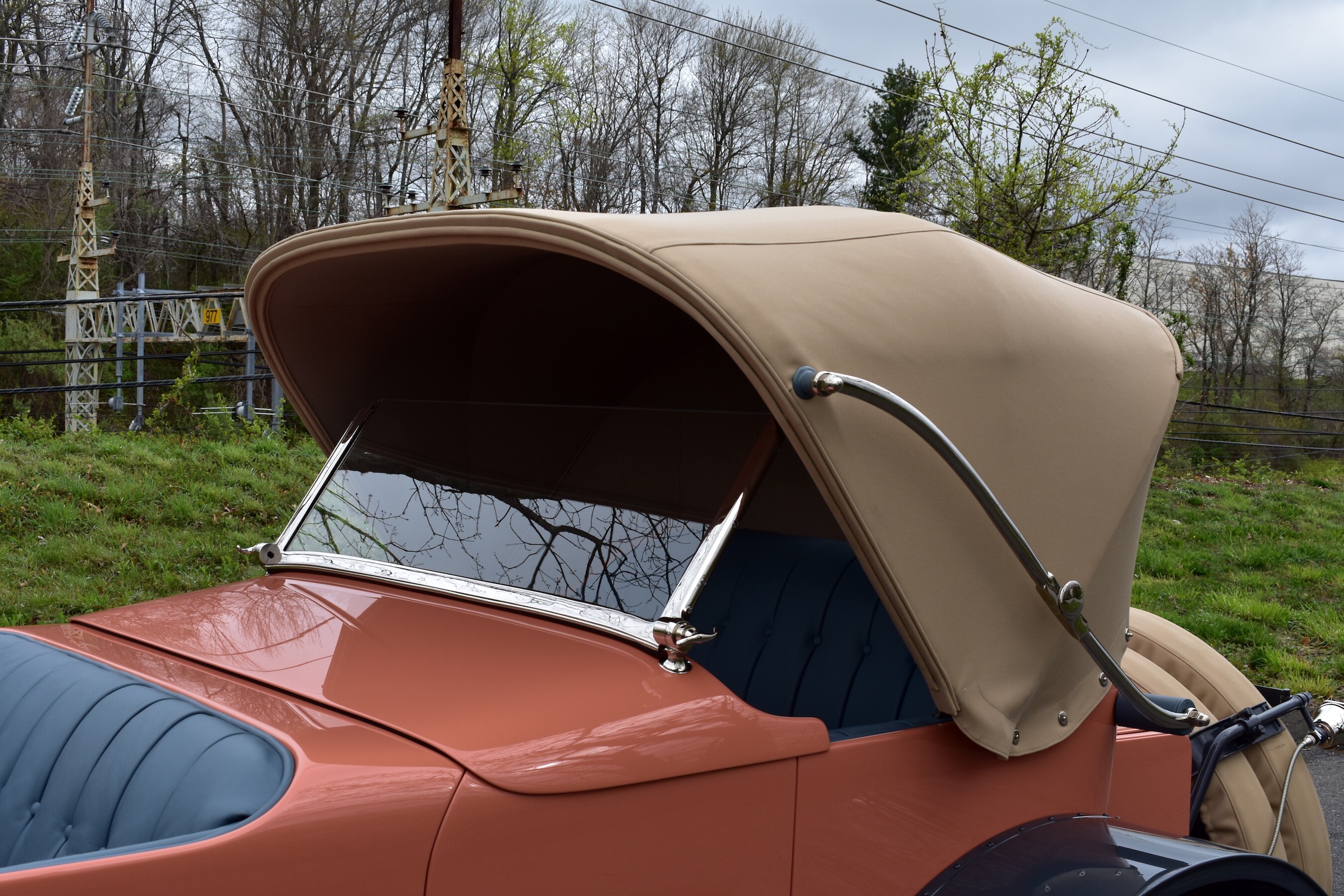
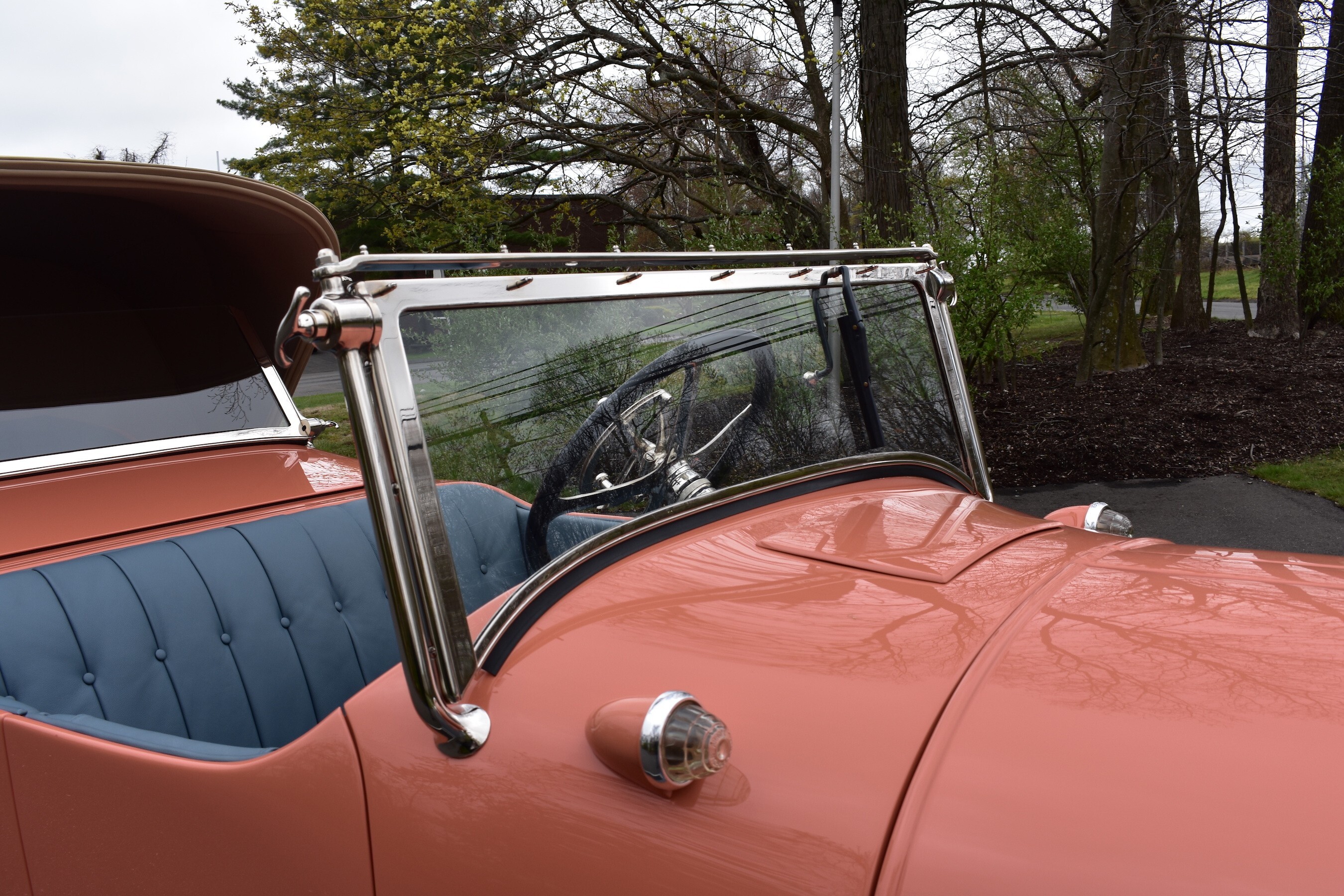
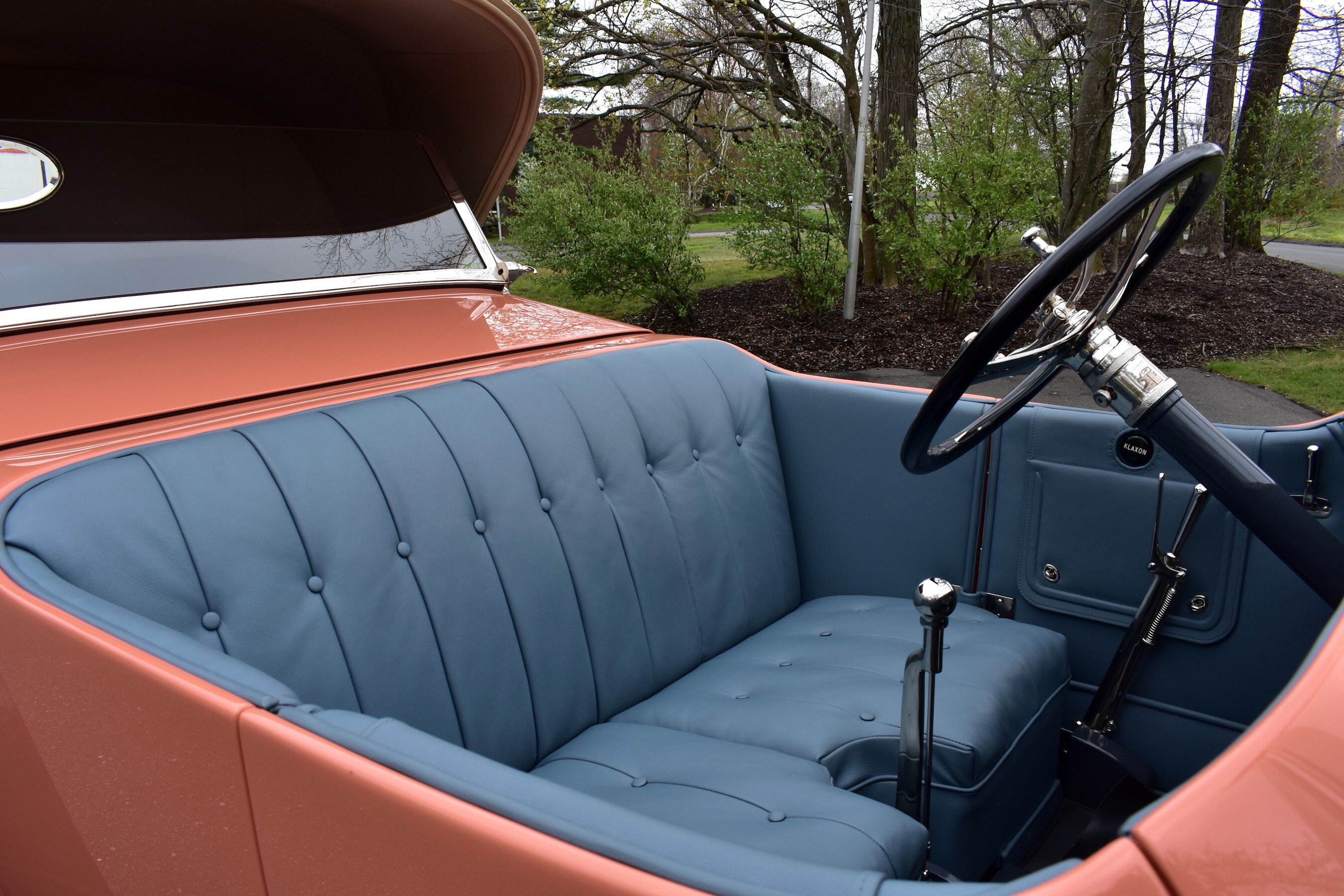
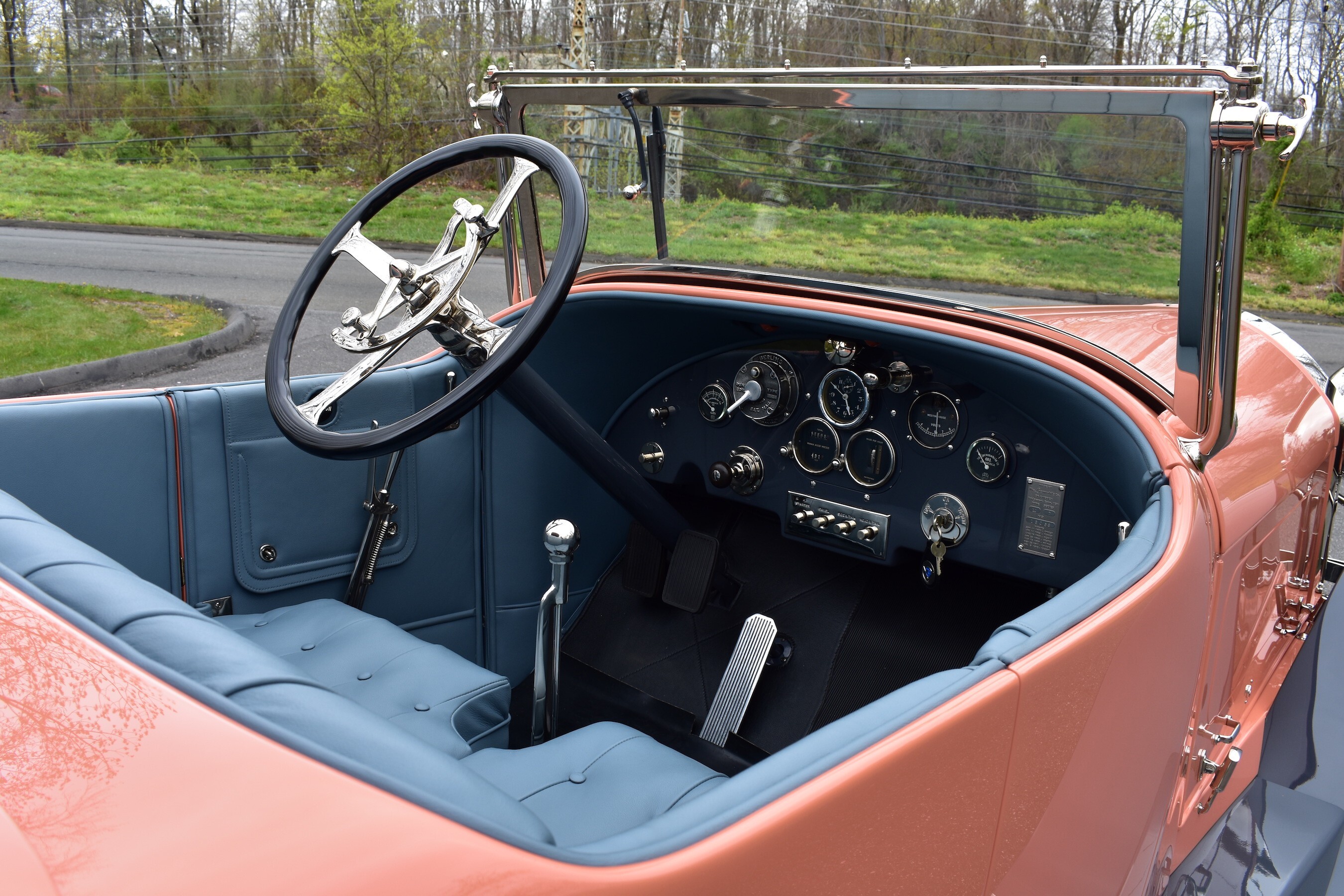
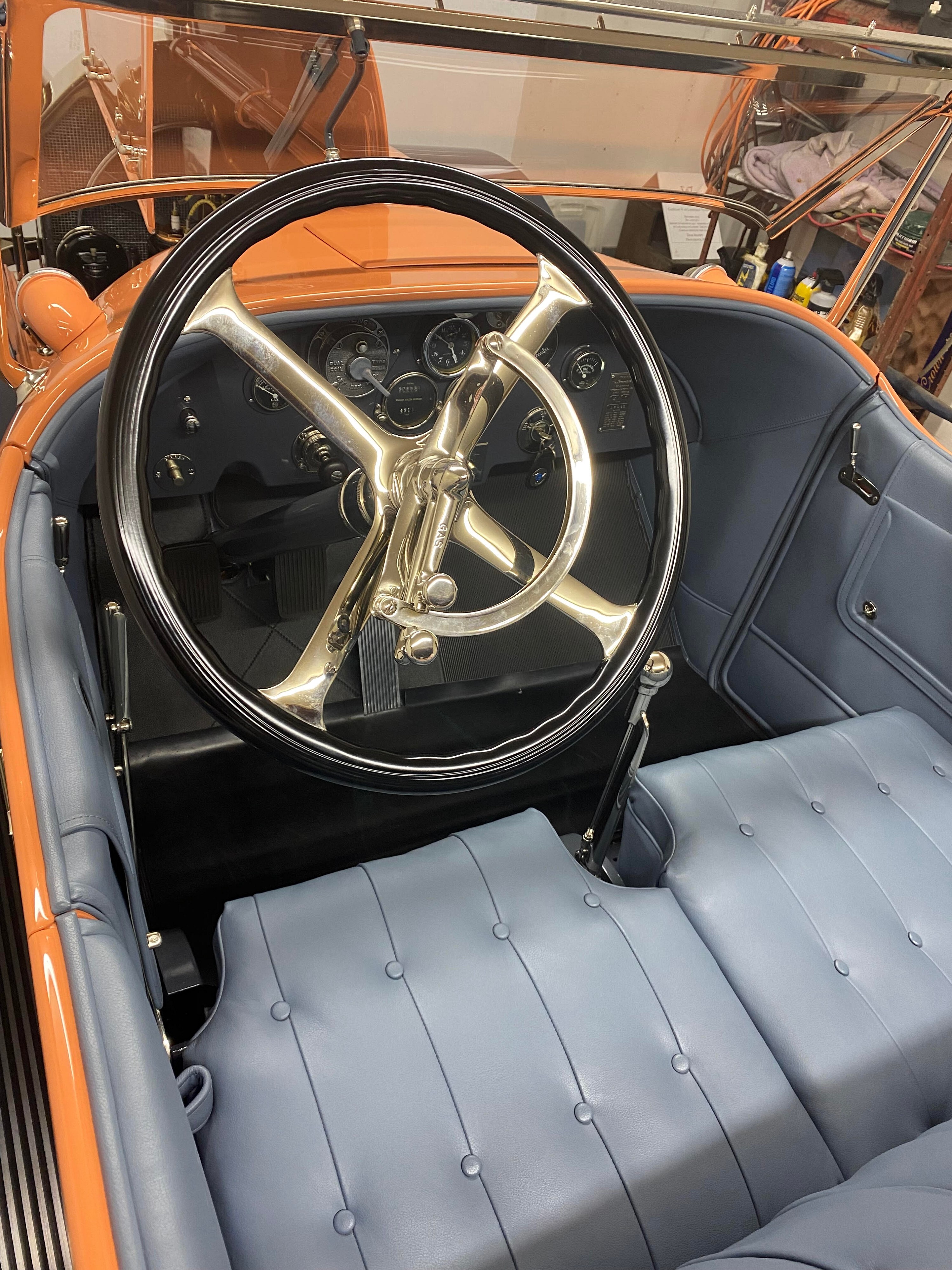
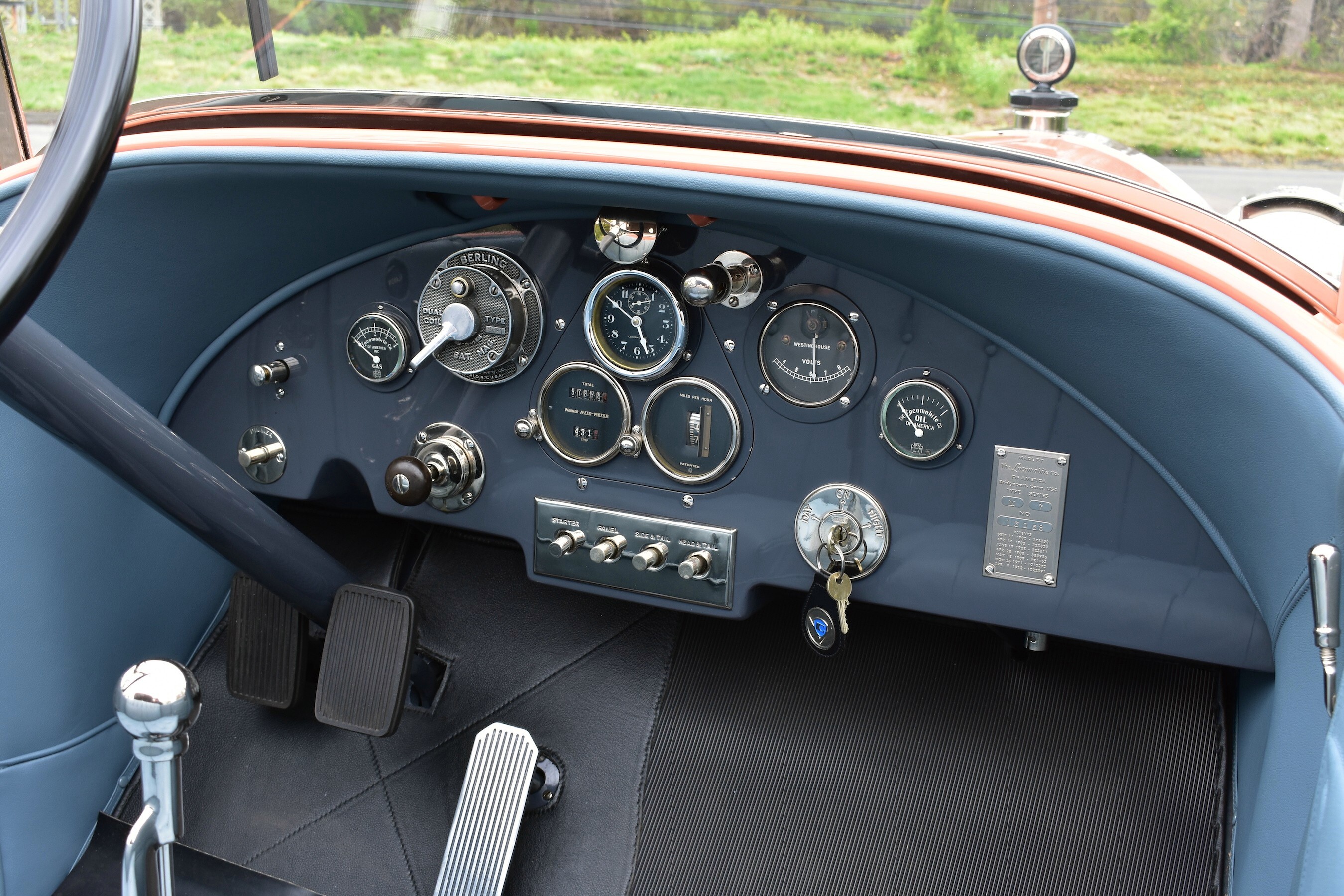
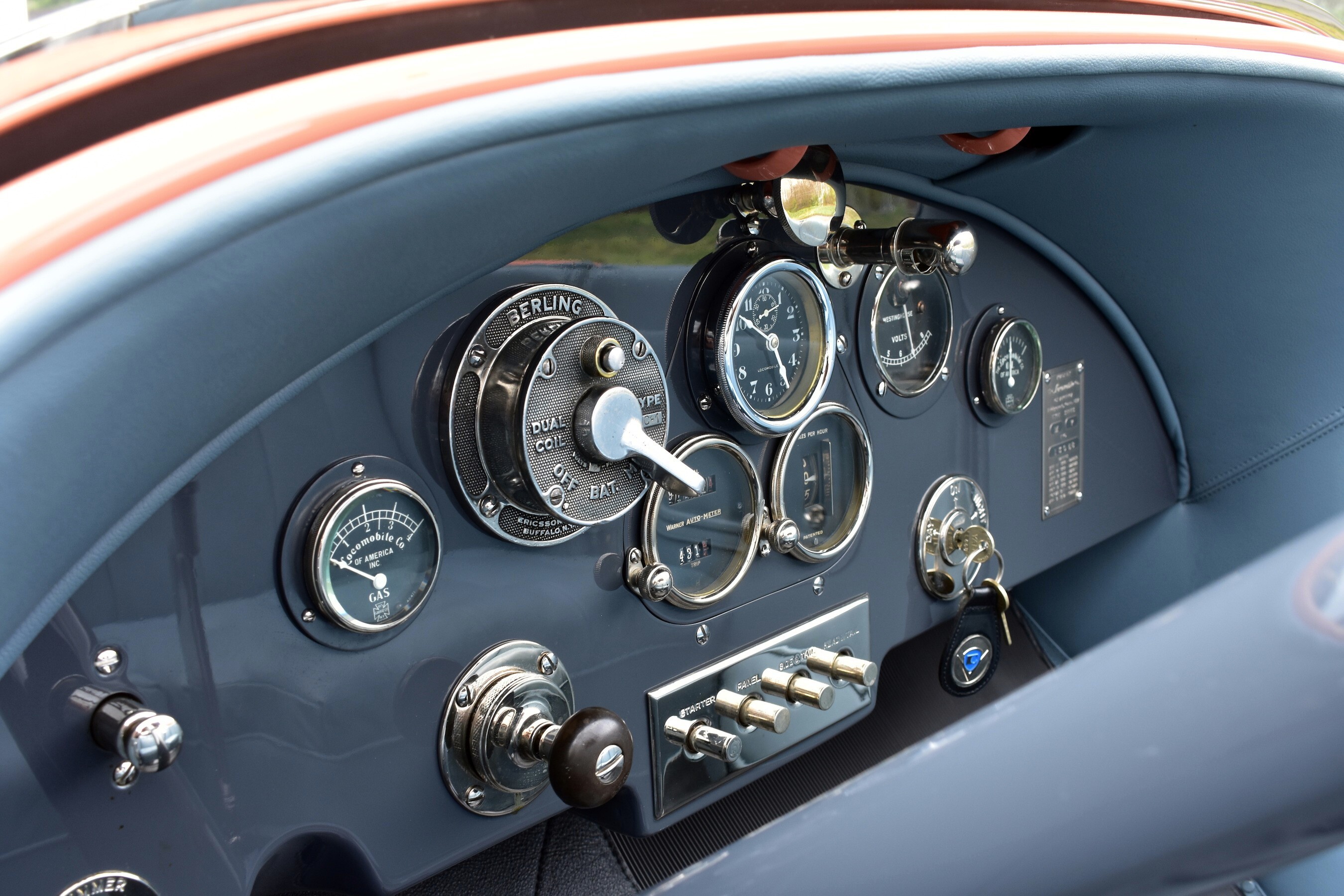
1917 Locomobile Model 48 Dual Cowl Sportif Body By Farnham & Nelson
Inventory Number: 3069
Price on Request
- YEAR: 1917
- MAKE: Locomobile
- MODEL: 48
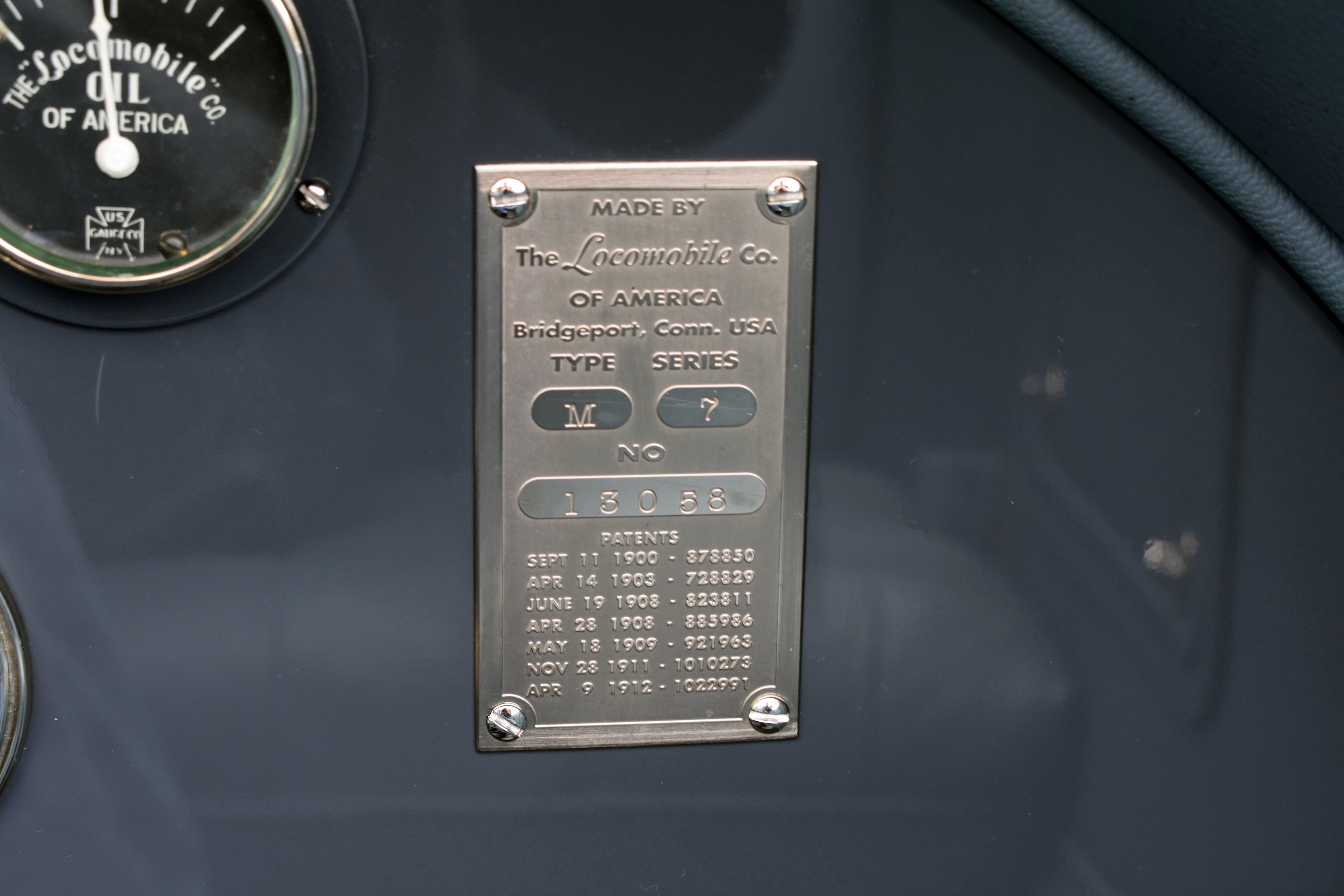
- TYPE: M
- SERIES: 7
- CHASSIS NO: 13058
- MANUFACTURED: Bridgeport, CT, USA
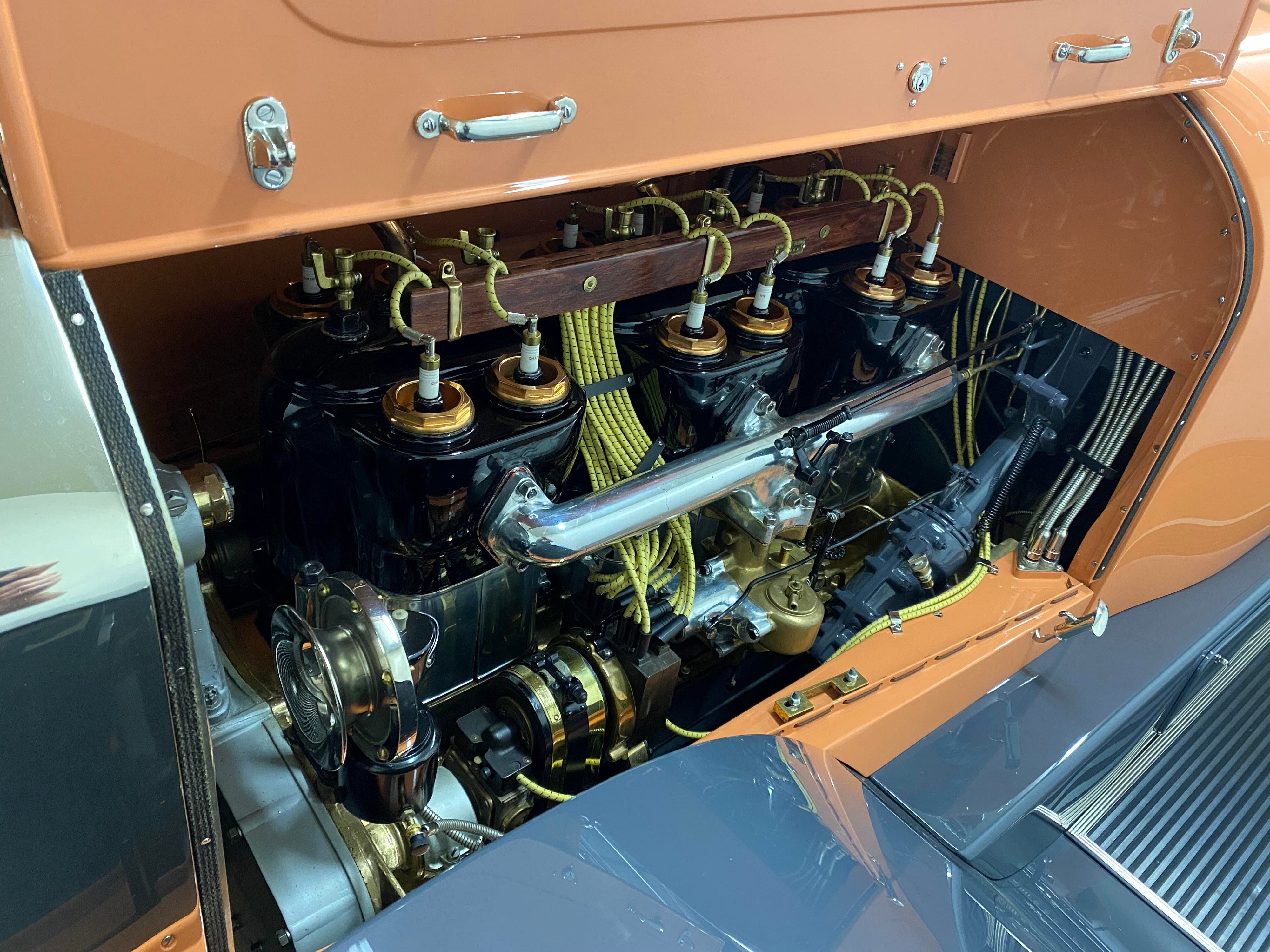
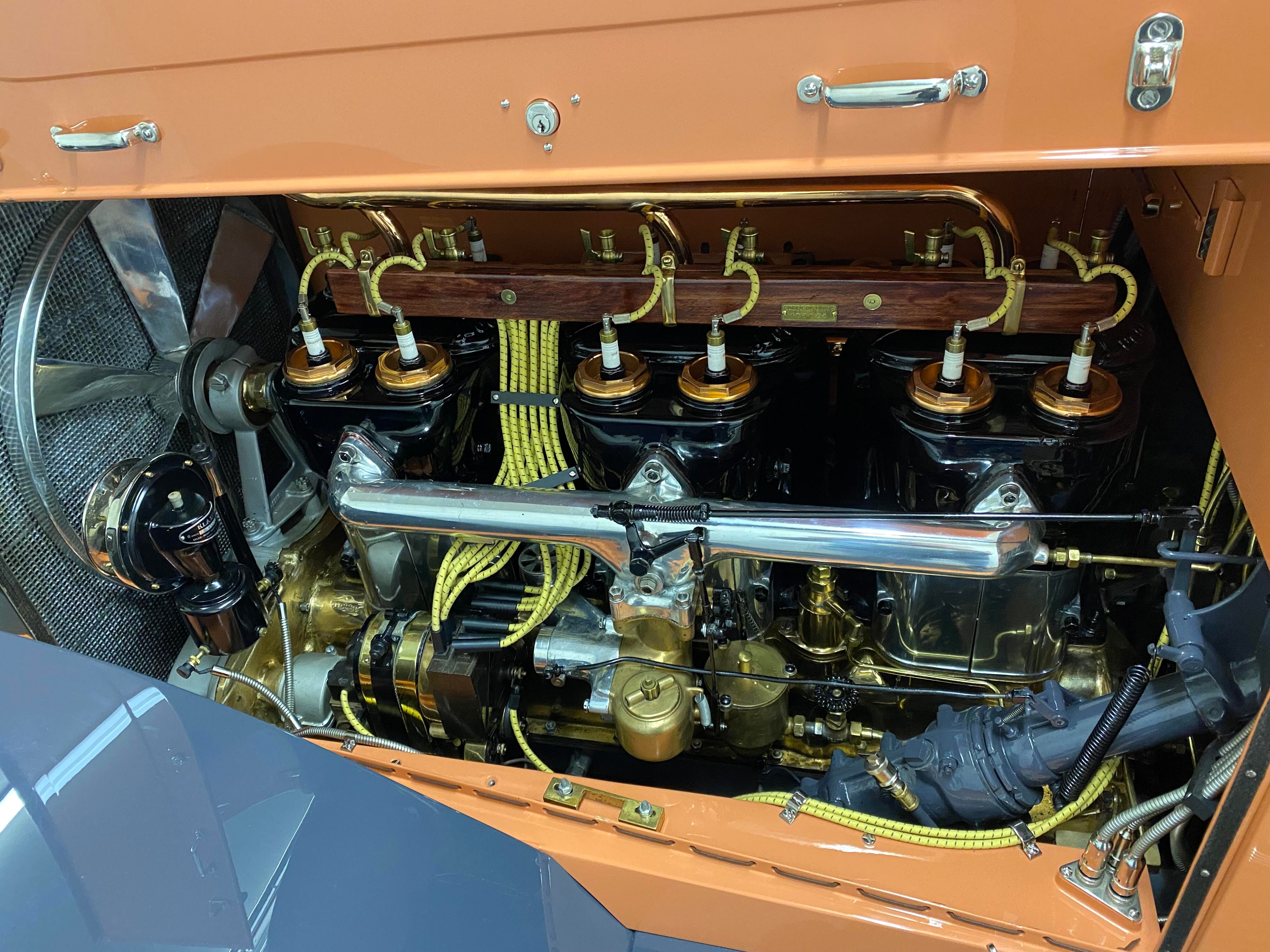
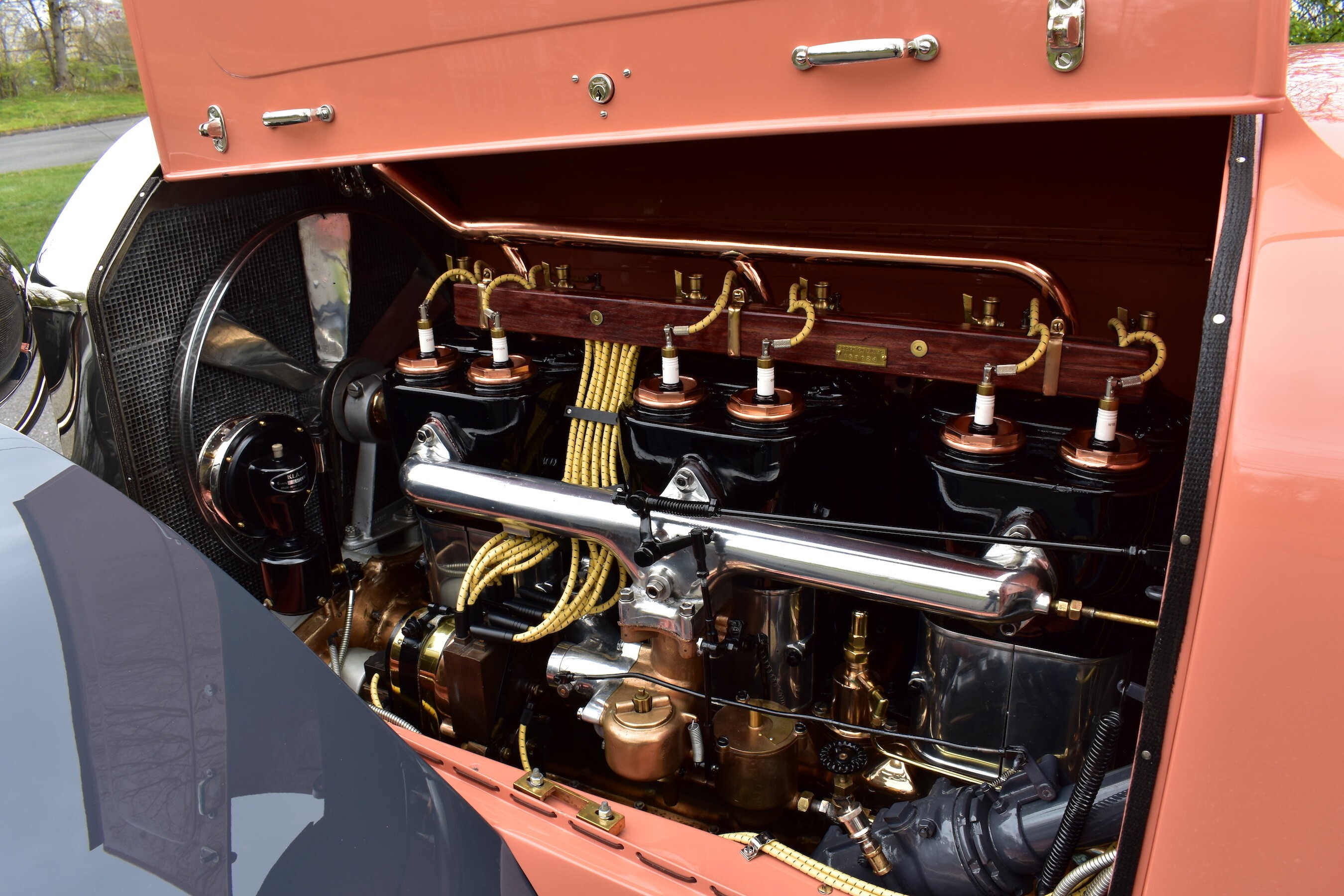
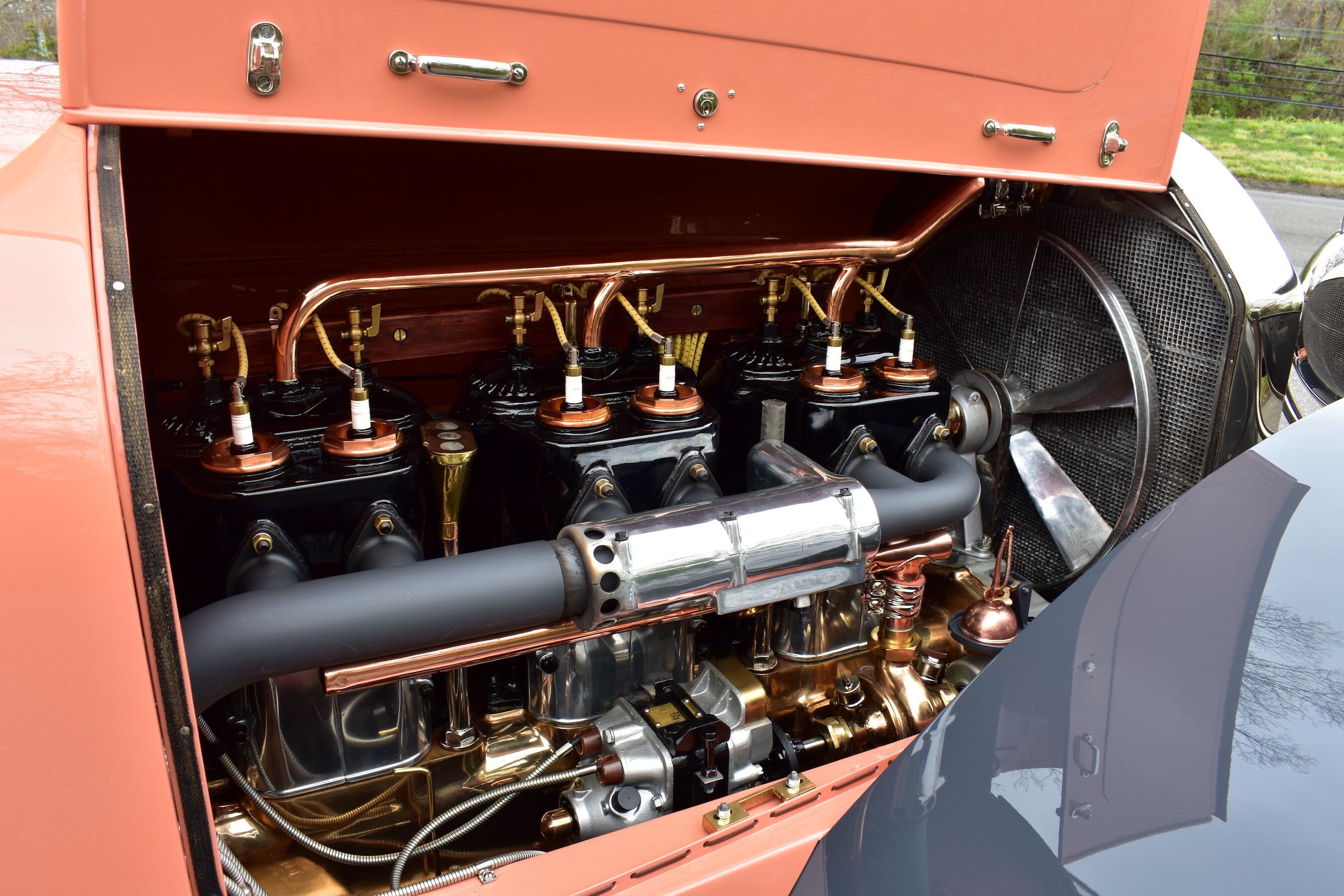
- ENGINE: T-Head 6-Cylinder with side valves
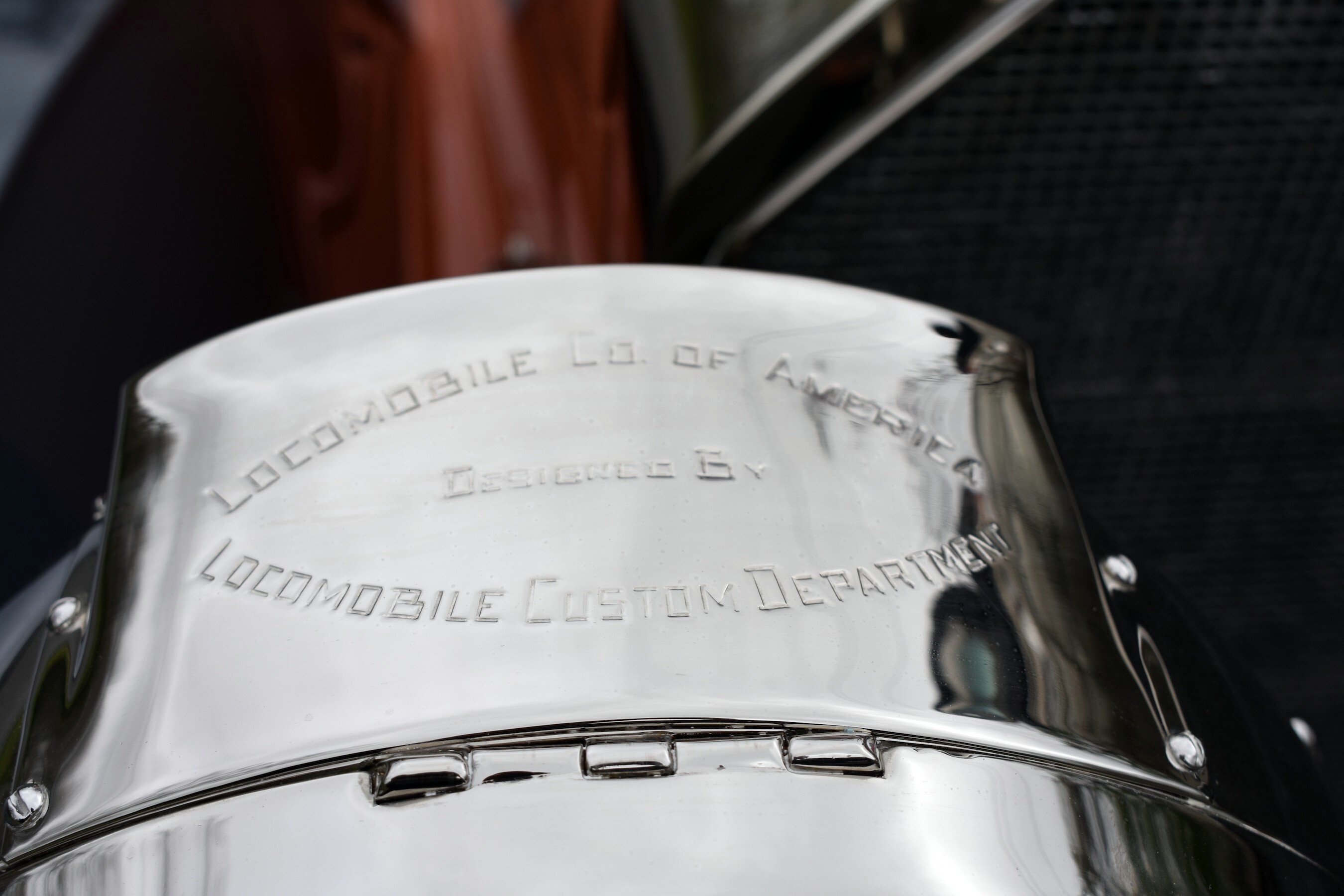
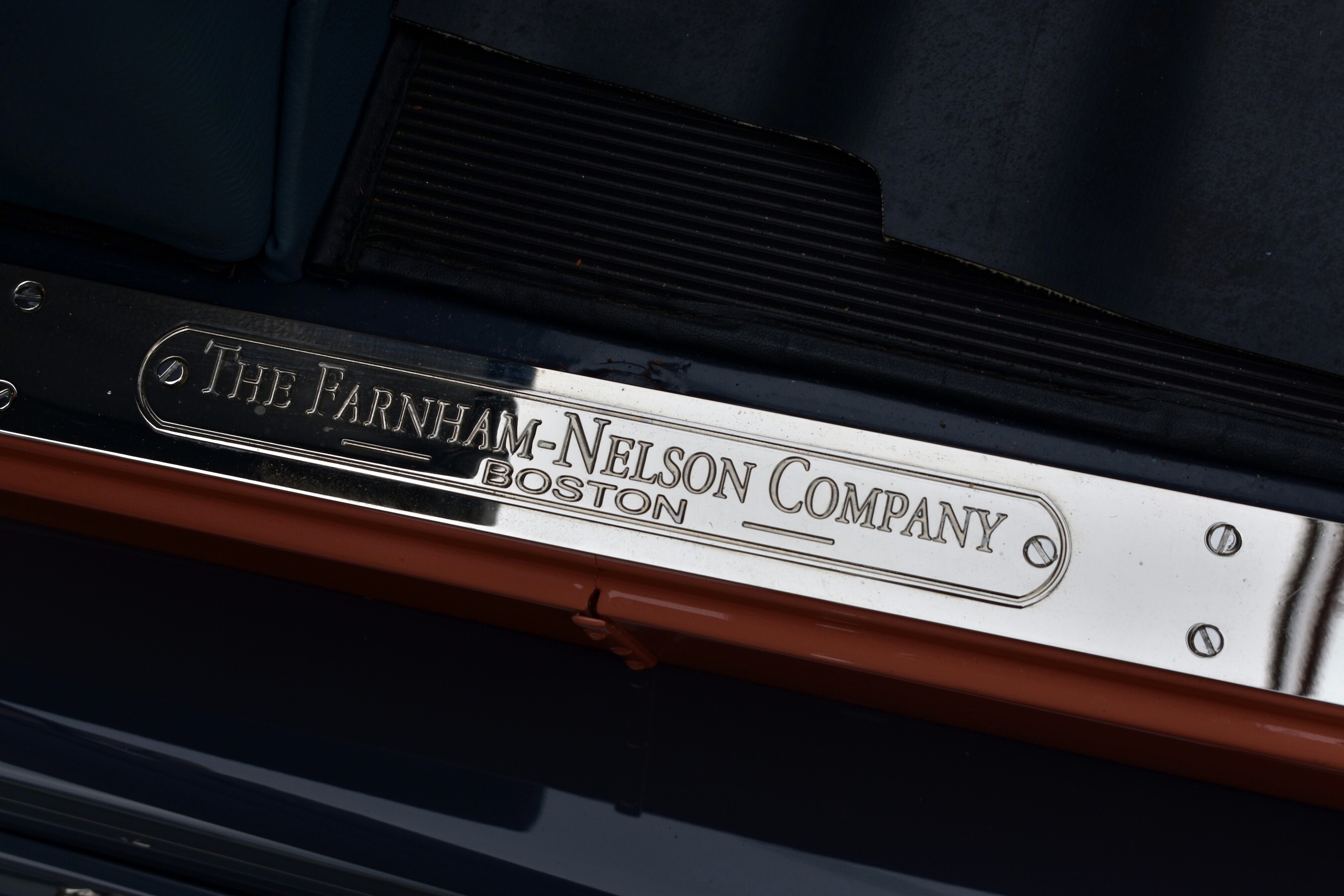
- COACHWORK: Rare dual cowl by The Farnham & Nelson Company from Boston, MA
- HP: 48
- IGNITION: Berling
- GAUGES: Warner Auto-Meter, Westinghouse Electrical Meter, US Gauge Co.
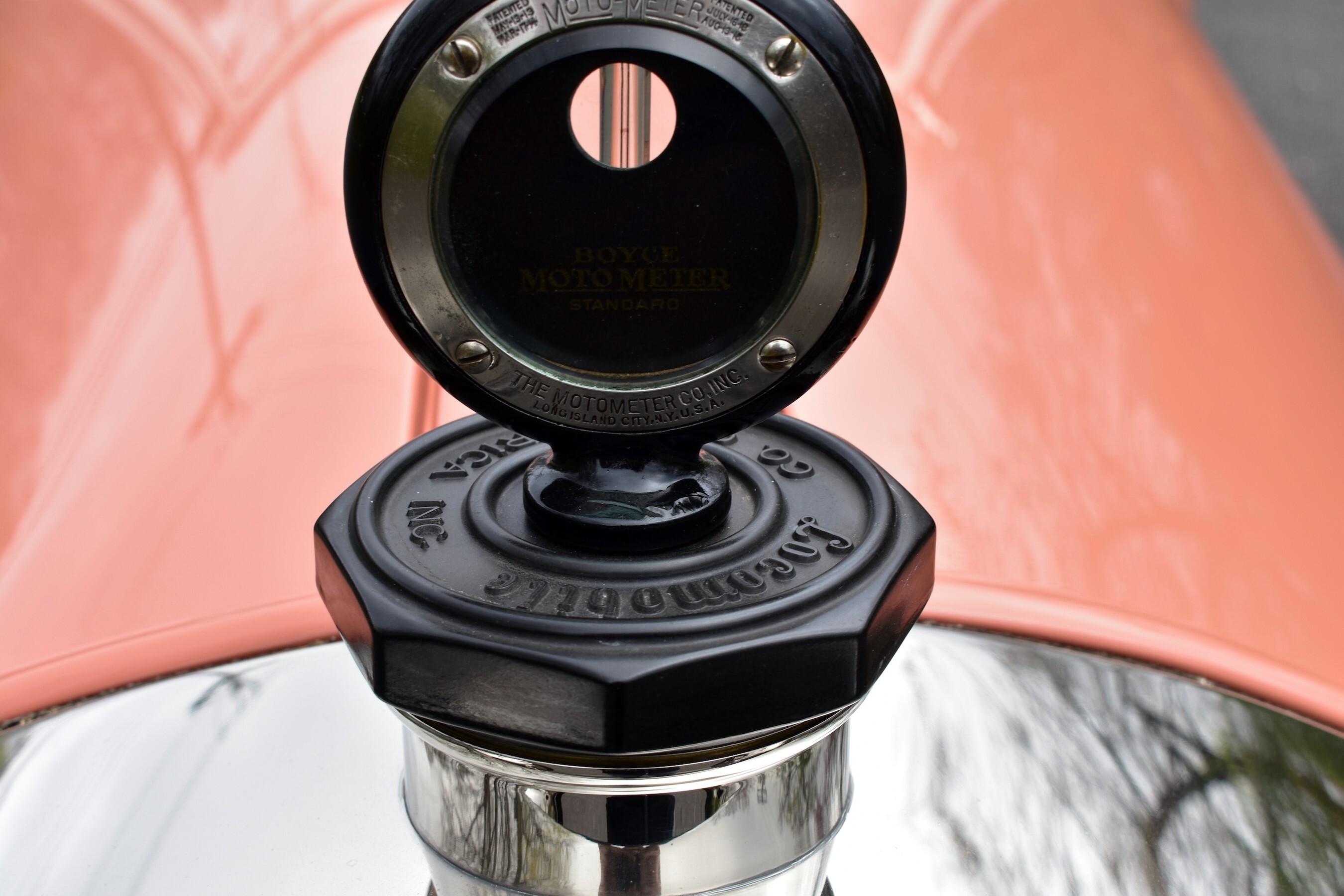
- MOTOMETER: Boyce (The MotoMeter Co.)
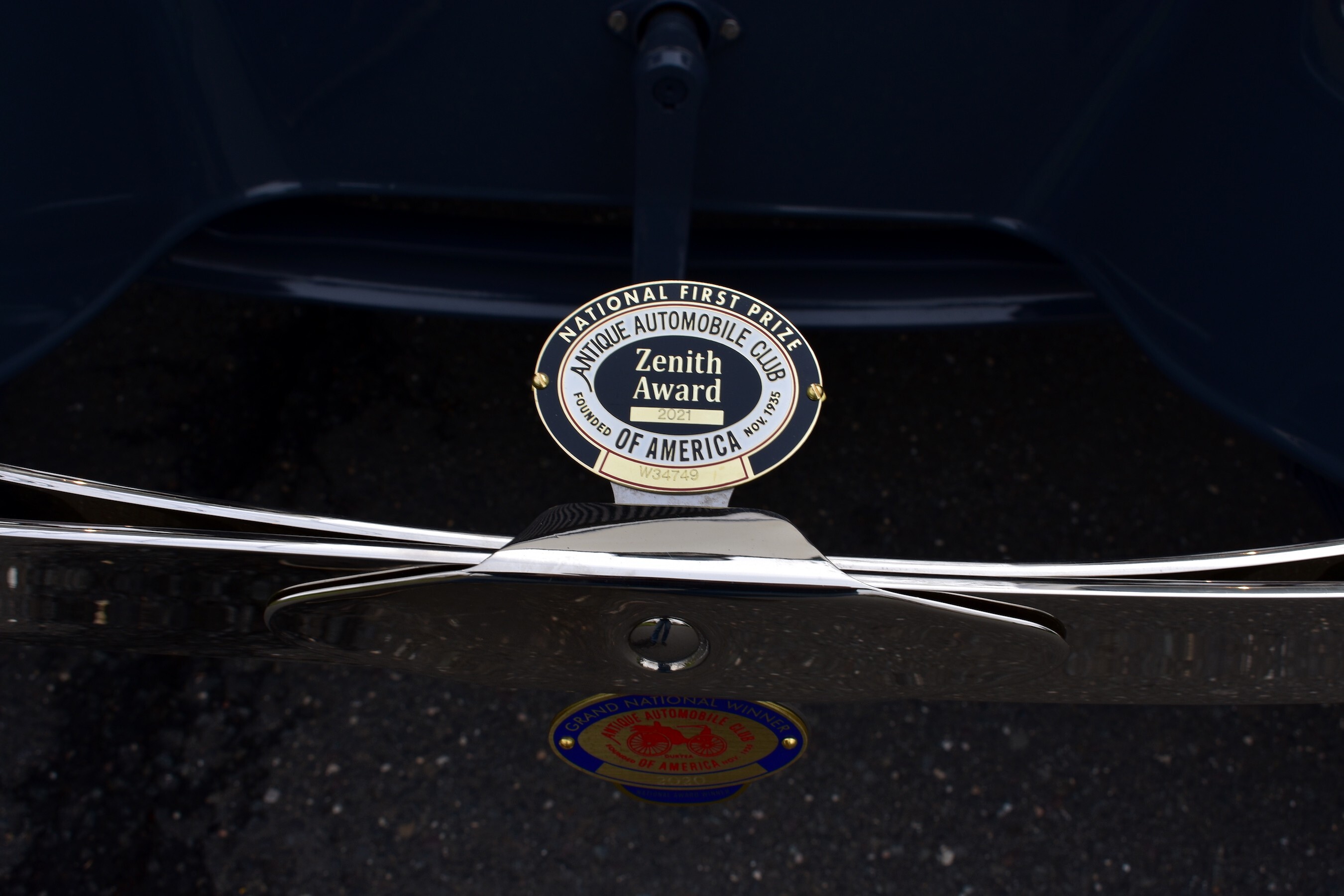
- AWARDS: National First Prize, Antique Motorcycle Club, Zenith Award 2021 (W34749); Best in Show 2022 Klingberg Motor Series Show, and Best in Show & Best Restoration at The John Martins Foundation 8th Annual Car & Tow Truck Show 2024
A car’s greatness is judged most notably by its historical significance, originality, mechanical design, and, of course, its beauty. This is an example of a car with everything: provenance back to new, original custom dual-cowl coachwork, a T-head six-cylinder engine, an extremely rare body, and an outstanding, award-winning restoration. The end result has earned this car the esteemed Zenith Award by the Antique Automobile Club of America in 2021. This award represents “The Best Restored Car in America” status, the highest award that can be given.
This particular car is also one of the most well-known, being a very early participant of the Vintage Motor Car Club of America.
It has a colorful history starting from the very beginning; its chassis, #13058, was originally ordered through the Boston Locomobile dealership and sent to Farnham and Nelson to be fitted with the dual-cowl coachwork it still wears today for its first owner, Mr. Louis K. Liggett. Mr. Liggett was a drugstore magnate who founded the famous Rexall Drug Company and later became the chairman of the United Drug Company, ordering the vehicle in unique Rexall Drug colors. Mr. Liggett used the car sparingly and kept it at his estate in Newport, Rhode Island, until later in his life when it was sold to Mr. James A. Demone of Southboro, Massachusetts, in the 1940s, who was an early member of the Vintage Motor Car Club of America. Mr. Demone used the car for numerous VMCCA events around New England, including meets at the Larz Anderson Museum. In 1958, Mr. Demone sold it to Jerry and Betty VanBenschoten of New Kingston, New York. They also showed the car around the New England area throughout the 1960s and 1970s. They would keep the vehicle until 1997, when it passed into the hands of its most recent owner, Mr. John McAlpin of Naples, New York.
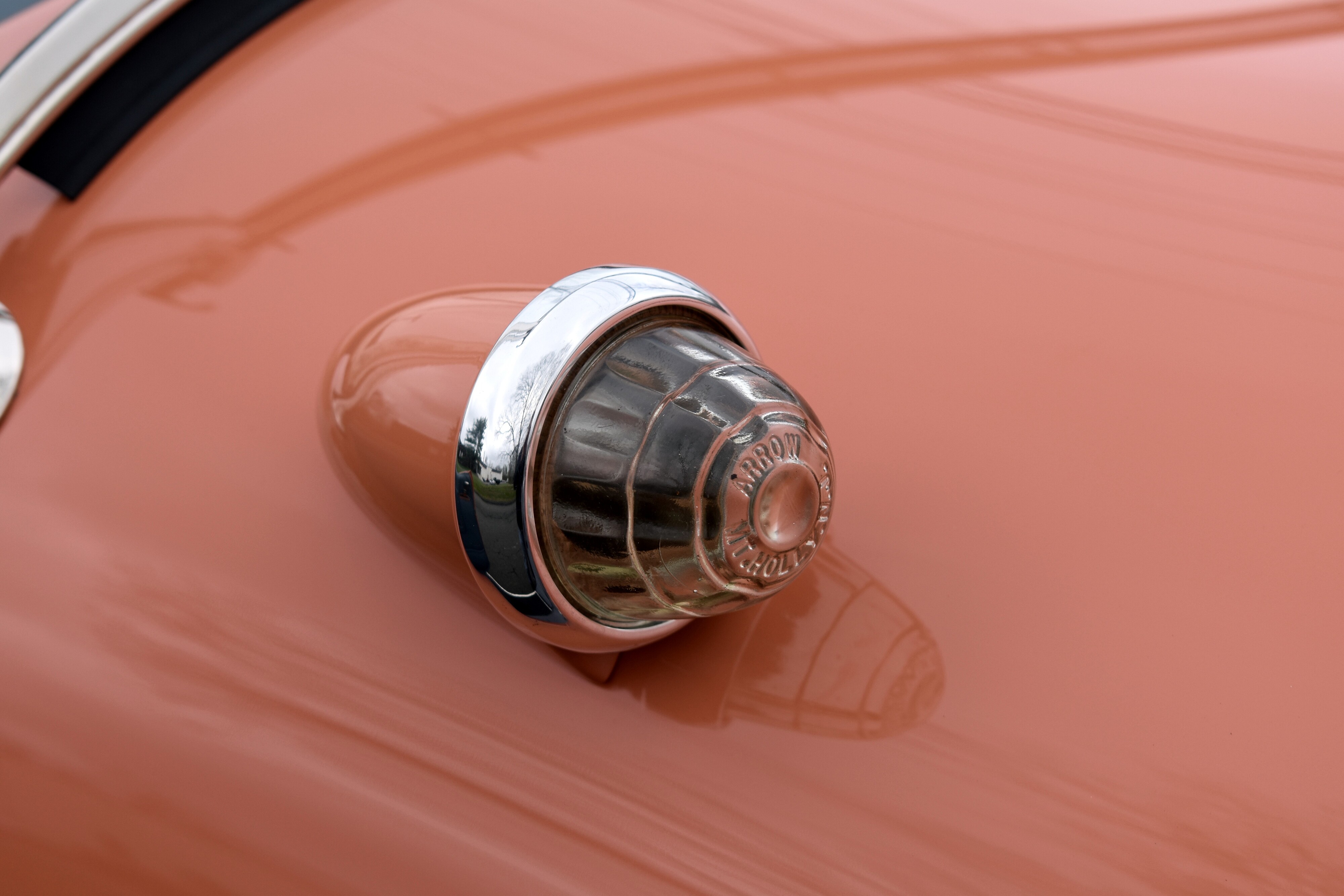
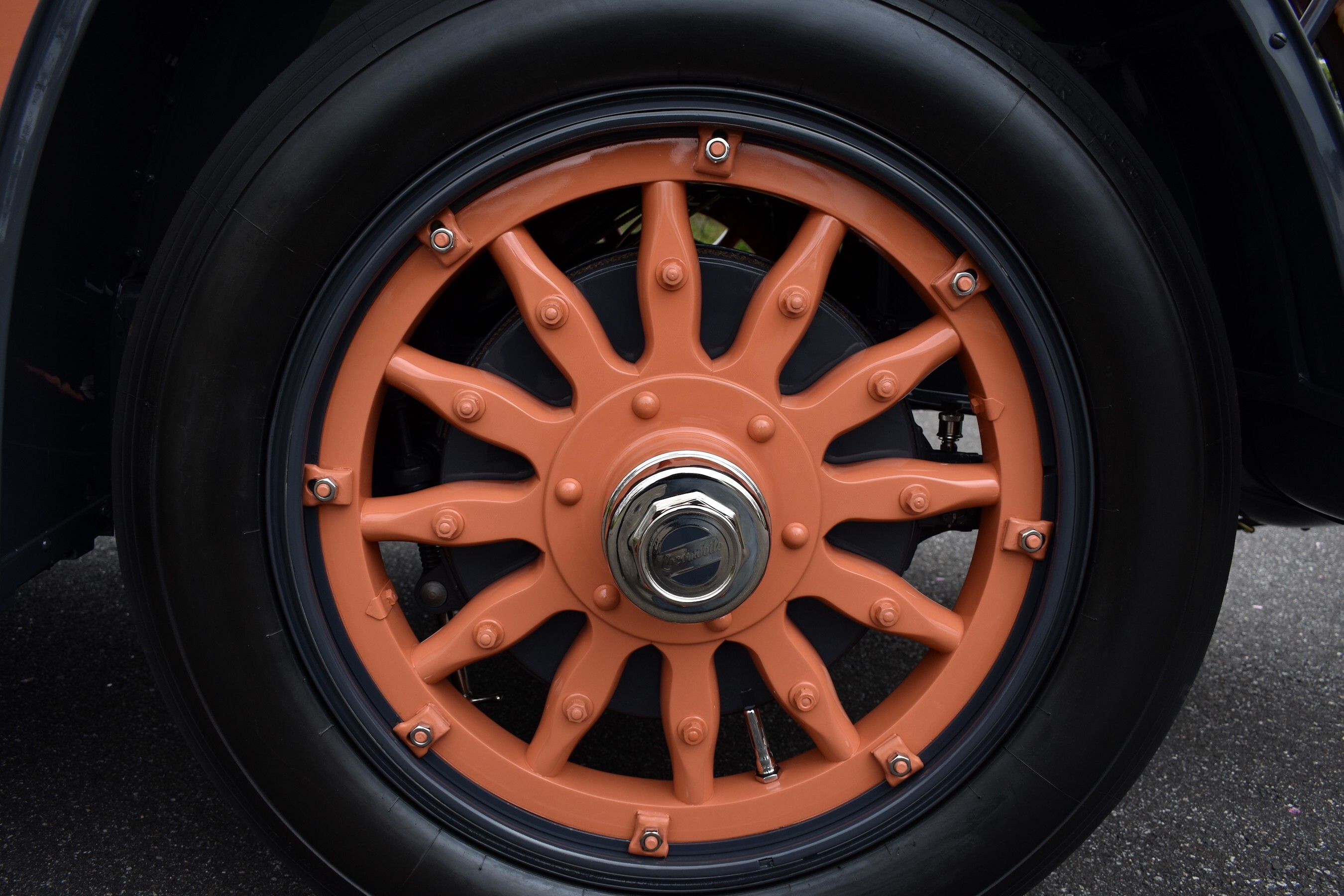
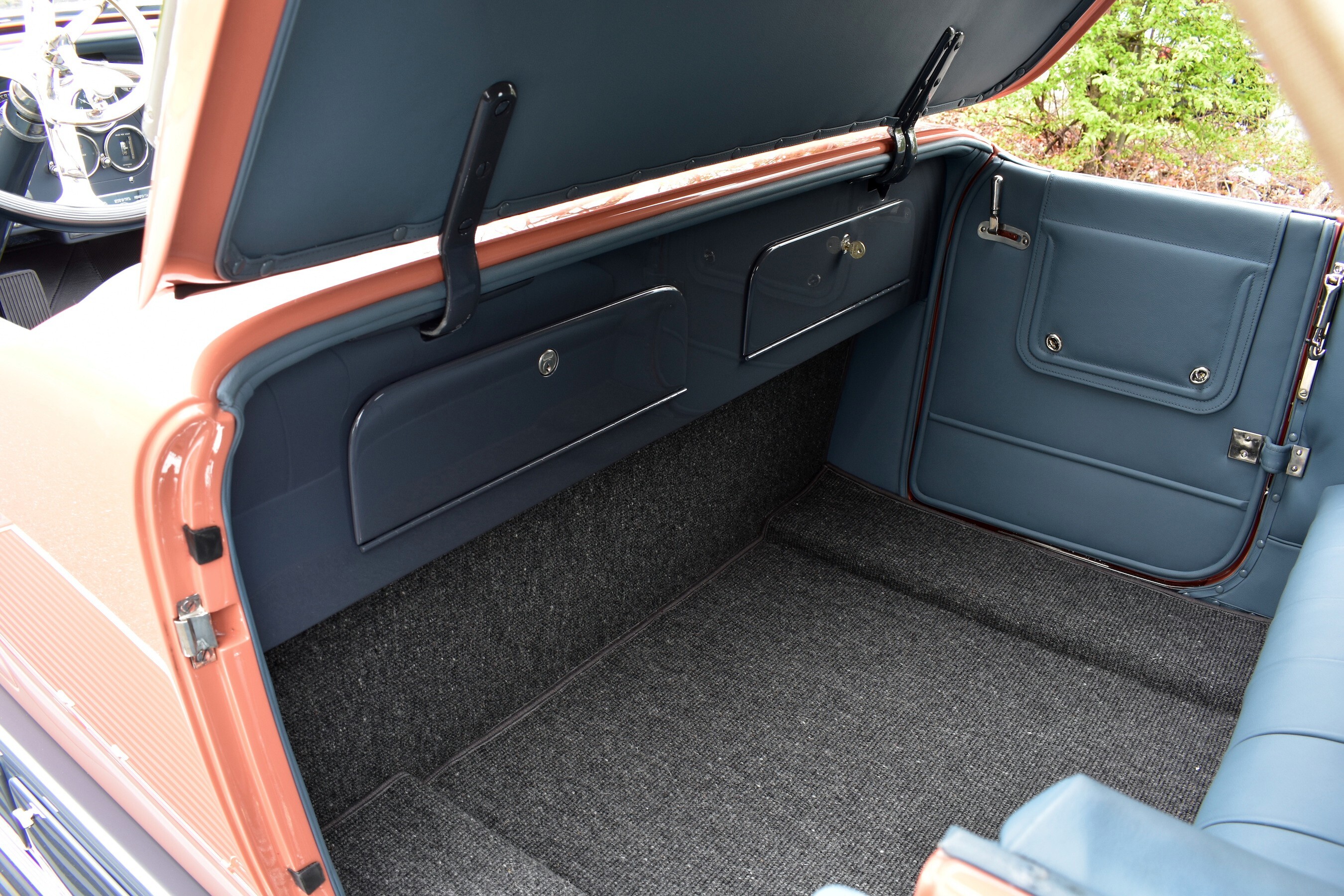
At that time, it was still mostly in its original condition, with light restoration work done to keep it going throughout the years. Upon Mr. McAlpin’s acquisition, he decided to completely restore the car from the ground up, which he began only a short time after taking ownership. Over the next 20 years, John restored every nut and bolt of #13058, taking it down to a bare chassis and spending hundreds of thousands of dollars in the process. The engine and transmission were disassembled entirely and rebuilt to factory clearances and specifications. Even the cast bronze crankcase was completely polished to a show finish. John went to the library in Bridgeport, Connecticut, where much of Locomobile’s original records are now kept, to research this particular car and ensure every detail was absolutely correct. Even this car’s unique colors of light coral and blue-gray are original and exactly how Mr. Liggett ordered the car in 1917. An original panel with original paint is included with the car to show its authenticity. The entire restoration process is documented with many photographs and records. It is as perfect as a car can possibly be.
Upon its completion in 2019, John showed #13058 at Amelia Island, winning Best in Class as well as achieving multiple other awards at other concours and events. Most notably, this car has achieved a 100-point Senior Award from the Classic Car Club of America in 2019, its Junior and Senior awards, and the most coveted Zenith Award from the Antique Automobile Club of America at the Grand Nationals in New Ulm, Minnesota, in 2021. (Video available here.) The Zenith Award is presented to the finest restored vehicle of all of their Best in Show award winners, requiring 100 points based on accuracy, precision, and authenticity of restoration. The vehicle’s bumper currently sports the Zenith Award tag. Tom Cox, AACA Board VP and the originator of the Zenith program, said of the Locomobile, “Despite tough competition from each of the vehicles nominated, the Locomobile exemplified the Zenith Award as the finest restoration of the year and will wear that title well. The competing cars and owners were first-class—a real testament to the fine spirit of the hobby.”
In 1899, John Brisben Walker (editor and publisher of The Cosmopolitan magazine) purchased the plans for a steam- powered vehicle from Francis and Freelan Stanley and partnered with paving contractor Amzi L. Barber to fill the 199 orders. Walker and Barber soon split, Walker founding Mobile Company of America in NY at the former Stanley and Barber founding Locomobile with the Stanley twins as general managers in Watertown, MA. One of the earliest car manufacturers, they derived the name from “locomotive” and “automobile” and moved to Bridgeport, CT in 1900.
Until 1903, they manufactured small, affordable steam cars. Despite being described by author Rudyard Kipling as “nickel-plated fraud” and prone to kerosene fires, Locomobile sold over 4,000 unreliable steam-powered runabouts with seven different body styles. They were the first automobiles to be used in war, joining the British in the second Boer War where they were used to dismantle a minefield and even to serve tea by tapping the boiler.
Andrew L. Riker designed a quickly-successful four-cylinder, steel-chassis internal combustion-powered luxury car in 1902 and pivoted production, selling the rights to the steam vehicle back to Stanley. Riker came from experimenting with his Riker Electric Vehicle Company, which he sold to Colonel Albert Augustus Pope in 1901. The Stanley twins would go on to found the Stanley Motor Carriage Company, becoming Locomobile’s closest competitors. First, they offered 2-cylinder engines, then evolved to large 4-cylinder T-Head engines and chain drive gearboxes. By 1908, George Robertson had won the Vanderbilt Cup with a 90 HP F-Head Locomobile, making the company famous as the first American-made manufacturer to win an international competition. From then on, Locomobile was known as “The Greatest Car Built in America”, the “Rolls-Royce” of the United States, not just because of their fame but because they created some of the highest-quality vehicles of their time. Riker entered Locomobiles into multiple endurance races and even the Grand Prix circuit, becoming competitive in the United States and Europe.
In 1911, the prestigious Type M was introduced, known more commonly as the Model 48 for its 48HP, with an open body, large chassis, straight six T-Head engine with side valves, 103 HP, signature bronze crankcases, and impeccable workmanship and materials. They came with a hefty pricetag, starting at $5,000 and going $10,000 (over $330K in 2025) by the end of their run in 1925, and offered custom lamp and metalwork from Tiffany Studios. This was the pinnacle of Locomobile’s creations, once again designed by Head Engineer Andrew Riker. The Model 48’s chassis was so well-designed and ahead of its time that it would remain unchanged until the end of production. Throughout the Model 48’s production run, many of the world’s wealthiest and most famous people chose the Model 48 as their mode of Transportation, including members of the Vanderbilt family, William Wrigley, William Carnegie, and many other famous people.
Most 48s had factory coachwork later designed by Frank DeCausse, who had previously worked as the designer for Kellner of Paris, but some were ordered as a bare chassis and sent to a custom coachbuilder. One of the most coveted, rarest, and most famous of all the custom coachwork ever to adorn the Model 48’s chassis would most certainly be the dual cowl designed by Farnham and Nelson of Boston, Massachusetts. With its narrow body sporting a low waistline, an incredibly short and rakish windshield, and, of course, the signature cape top over the rear compartment, this design is nothing short of perfect. Only three Farnham and Nelson-bodied Locomobiles survive today, and none were ever offered publicly for sale.
Orin Davis won the Los Angeles-Phoenix rally with a Locomobile in 1913, but Locomobile did not make much more of an impression in racing history, although Eva Mudge chose the Locomobile as her race car. She is believed to be the first female to hold a driver's license, race a car, and also to get into an accident. Locomobile joined the war effort again in 1917, selling the Riker Truck to the British army, and contributing more vehicles to WWI than any other American company.
Durant Motors Inc., led by Billy Durant, former CEO of General Motors, acquired Locomobile in 1922 and continued producing the Model 48. They came out with their own Locomobile 8-66 Junior Eight with a straight-eight engine and a much lower pricetag along with several other vehicles until they placed a Lycoming engine in the 8-70 of 1927, damaging the Locomobile name. Production ended in 1929, despite trying to save the company’s reputation with new 8-86 and 8-88s, after the stock market crash.
Locomobiles were known to be speedy, well-built luxury cars, revered for their precision engineering and beautiful craftmanship. It’s no wonder Locomobile Automobile Co. used the slogan, “The Best Built Car in America.”
Dick Shappy received the first-place trophy for Best in Show from Wayne Carini, star of the Chasing Classic Cars TV series, at the Klingberg Motor Series Show in New Britain, Connecticut, on June 21, 2022. To be awarded Best in Show at this prestigious event is truly an honor, as the quality of vintage cars that attend this meet is awe-inspiring. Over 375 cars were in attendance, with the theme being “Connecticut-Built Cars.”
The 1917 Locomobile Model 48 won “Best in Class” for the featured marque, “Made in Massachusetts,” at the first 2025 Bay State Motor Festival at Cushing Memorial Park in Framingham, Massachusetts. (Video available here.)
It has never been shown at the Pebble Beach Concours d’Elegance but would certainly be welcomed with open arms. Everything about this car is wonderful: its coachwork, its history, its chassis, and its restoration. It has it all. If you are looking for an amazing, high-quality, and sporty custom-bodied car, it doesn’t get much better.
You now have the opportunity to purchase one of the finest cars that exist in the world.
Click here for "The 1917 Locomobile Story".
See The Locomobile Automobile Company and its Rare Antique 1917 Model 48 Dual Cowl Sportif Victoria here. (12 minute video)
See 1917 Locomobile Model 48 Dual Cowl Sportif Wins Gold at the First 2025 Bay State Motor Festival here. (17 minute video)
See 1917 Locomobile 48 Sportif Victoria here. (20 minute video)
See 1917 Locomobile Model 48 Dual Cowl Sportif Body By Farnham & Nelson Won Best in Klingberg Show, New Britain, Connecticut June 21, 2022 here. (3 minute video)
See 1917 Locomobile Model 48 Dual Cowl Sportif Won “Best in Show” at the Klingberg Motor Series show in New Britain, Connecticut on June 18, 2022. here.
See 1917 Locomobile Model 48 Dual Cowl Sportif wins “First Place” Award in the “Best Early American” class at the Bay State Antique Auto Club 52nd Show, Endicott Estate Dedham, Massachusetts on July 13, 2025 here.