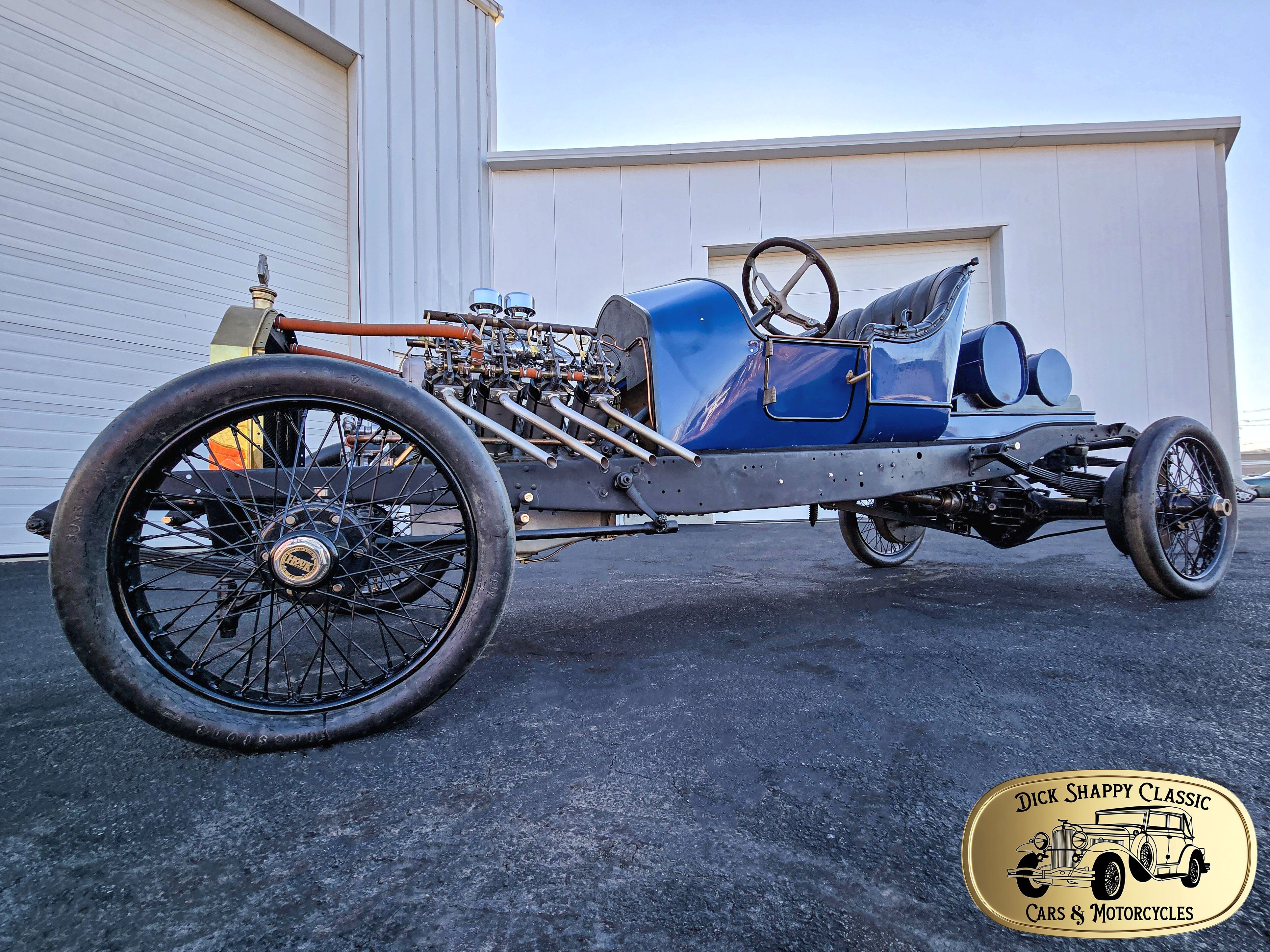
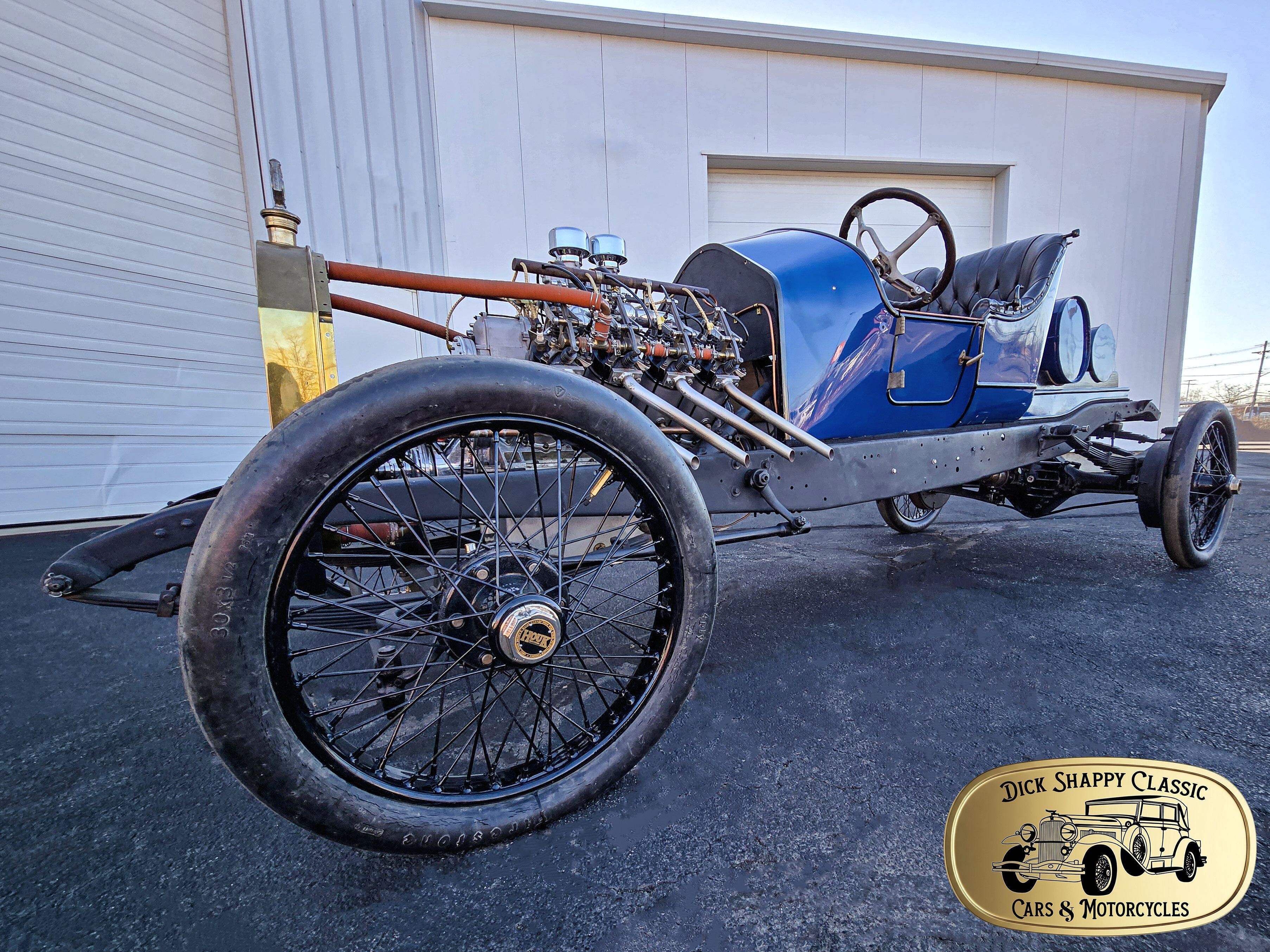
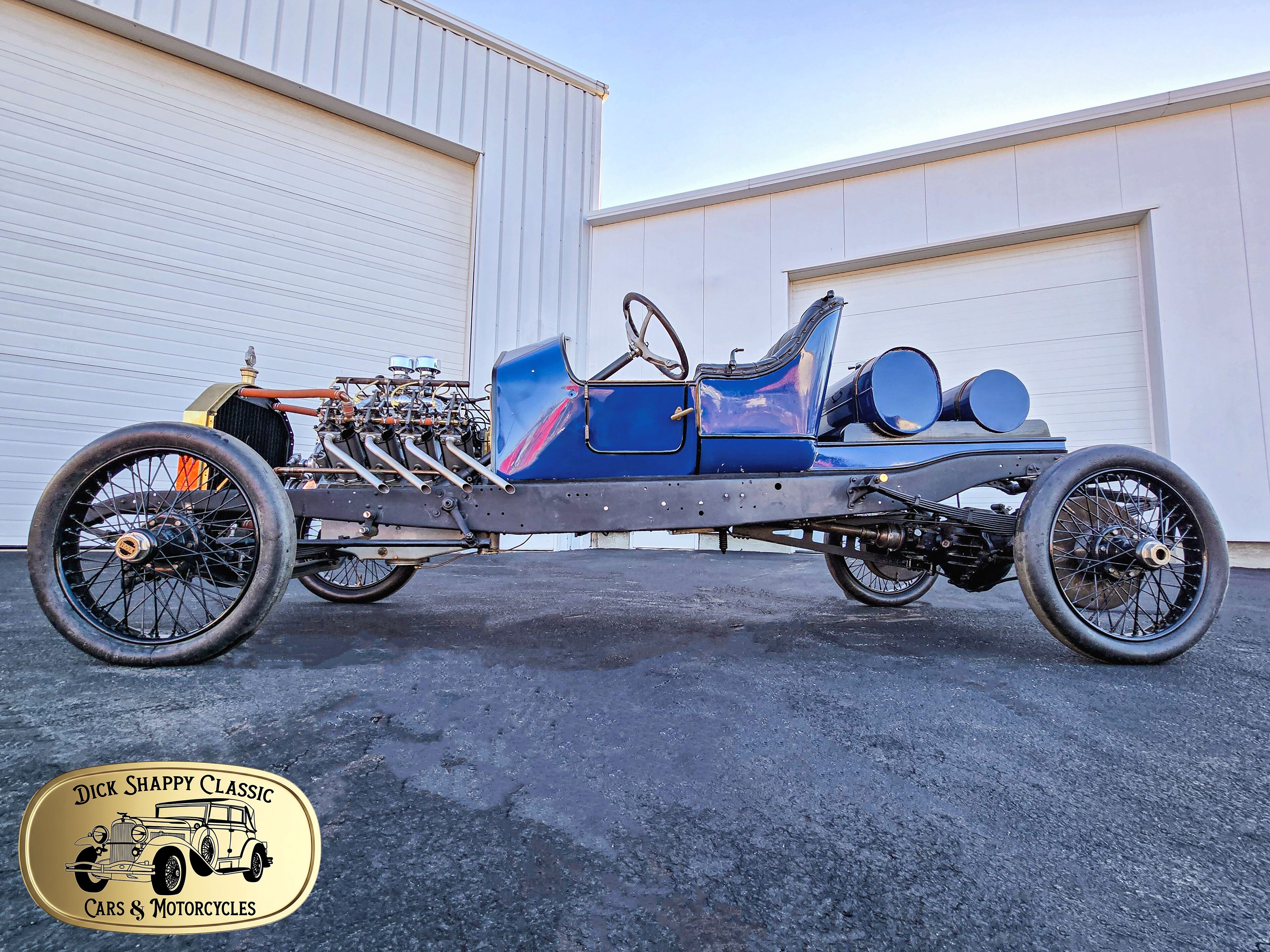
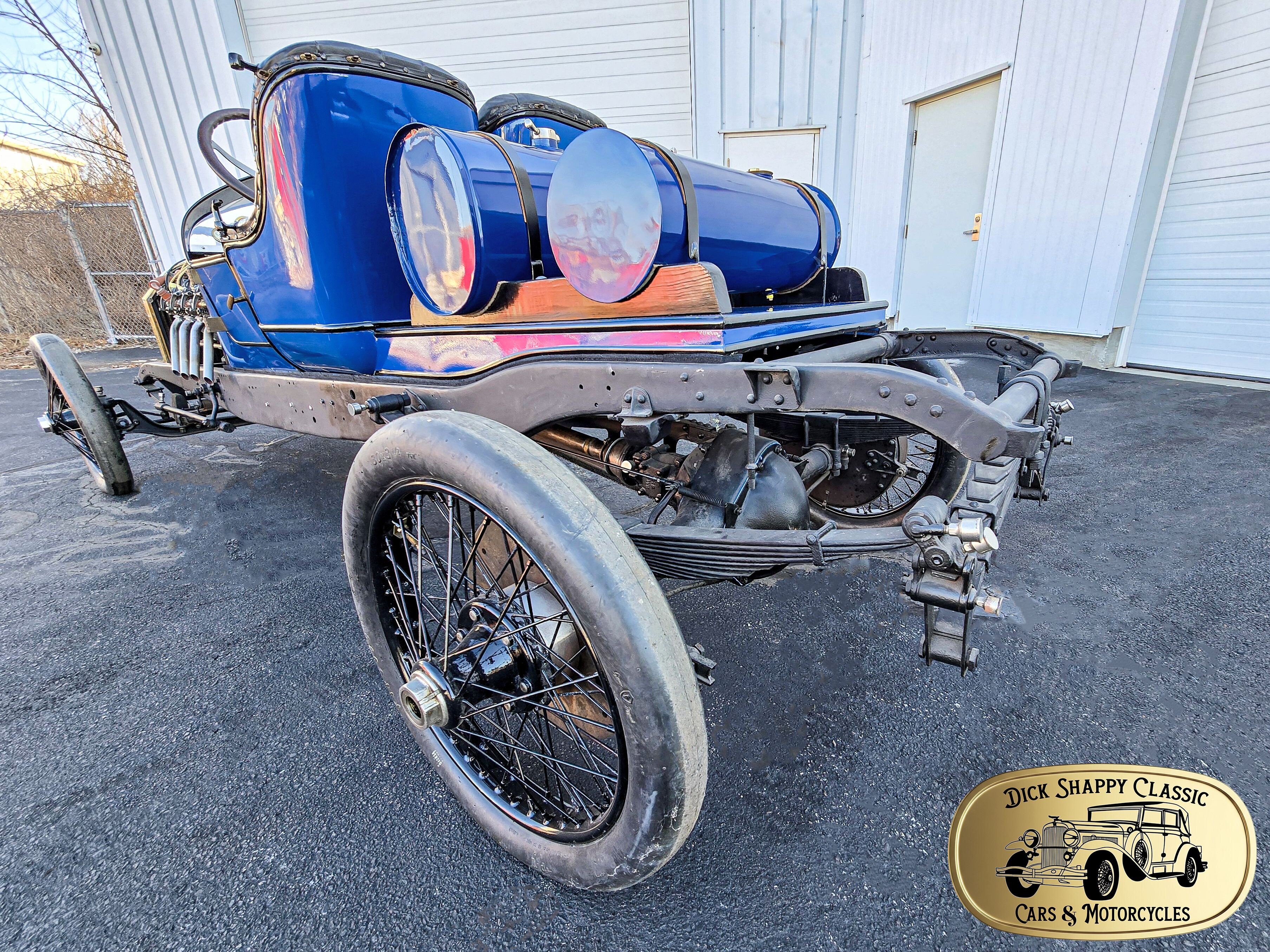
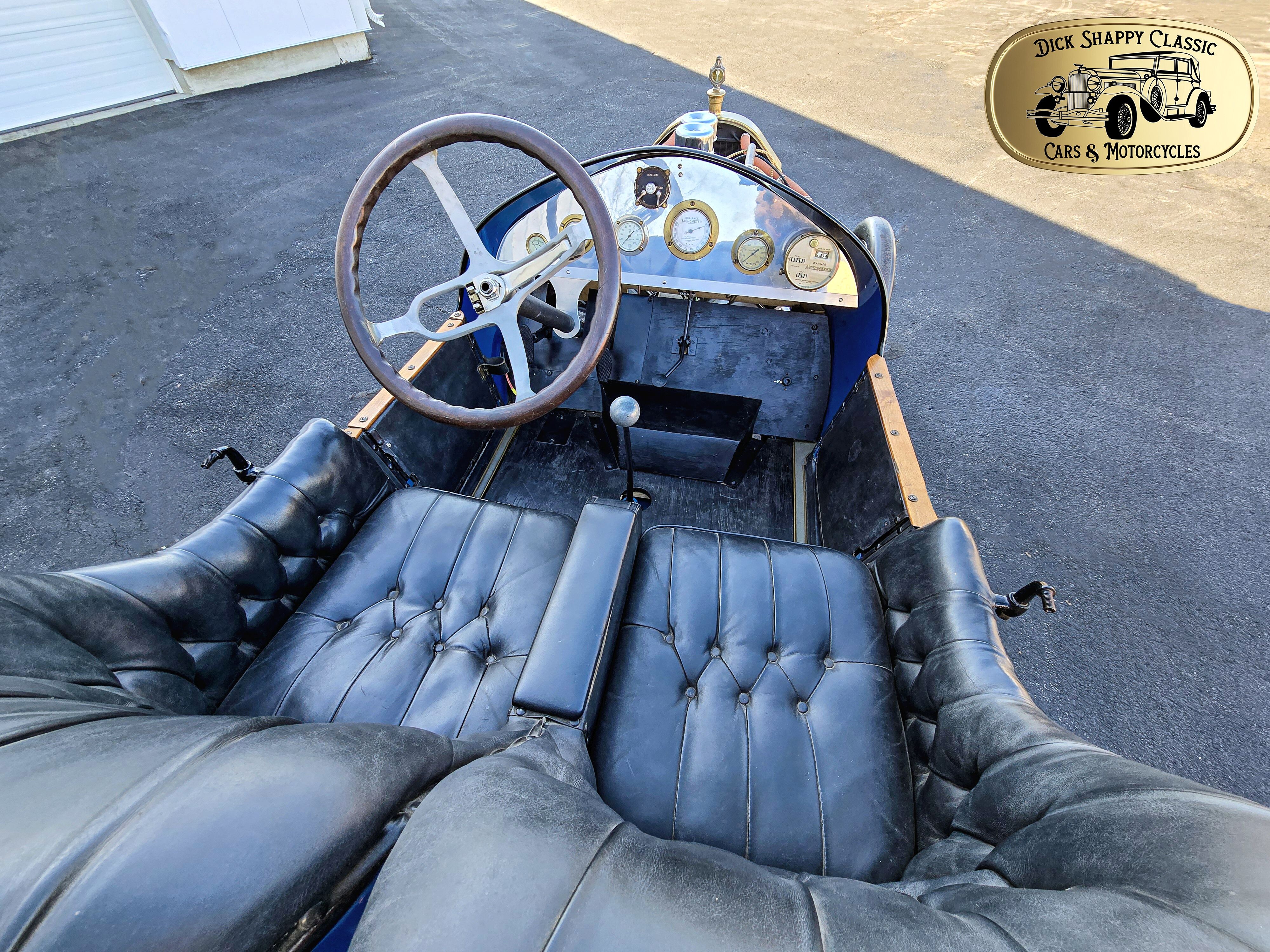
1917 Curtiss OXX-6 Aero Engine Race Car
Inventory Number: 8624
$150,000
- MANUFACTURER: Curtiss Aeroplane & Motor Corporation
- MANUFACTURED: Buffalo & Hammondsport, NY, USA
- ENGINE: OXX-6
- ENGINE MFGR’S NO.: 5665
- ENGINE DEPT. NO.: 8154
- ENGINE DISPLACEMENT: Approx. 567 cu. in. (9.3 L)
- ENGINE BORE: 4 ¼ in.
- ENGINE STROKE: 5 in.
- BHP: Rated 100 at 1,400 RPM
- ORIGINAL AIRCRAFT NO.: A 2314
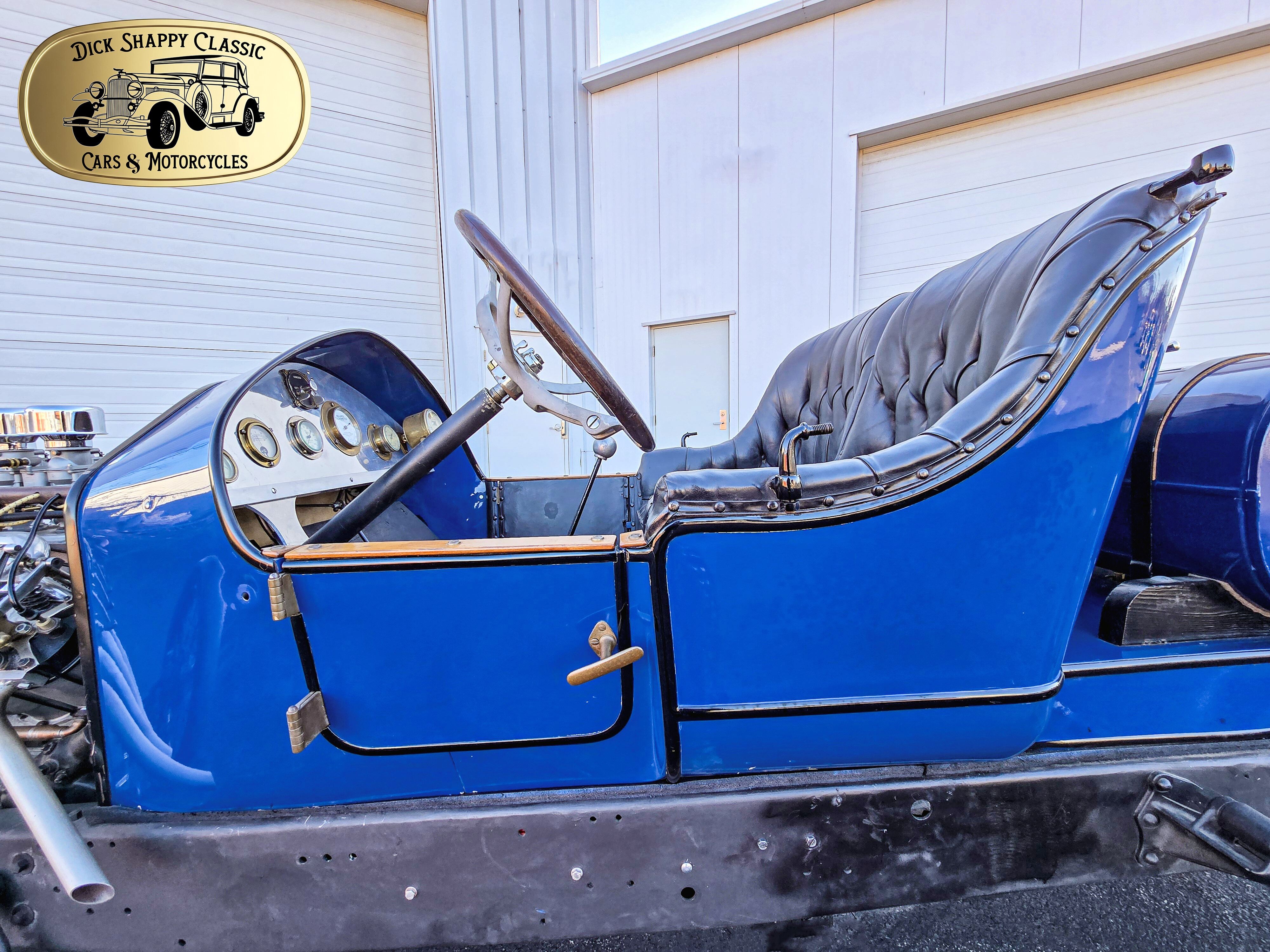
- BODY: National Speedway Model S Racer
- CHASSIS: Vintage Cadillac
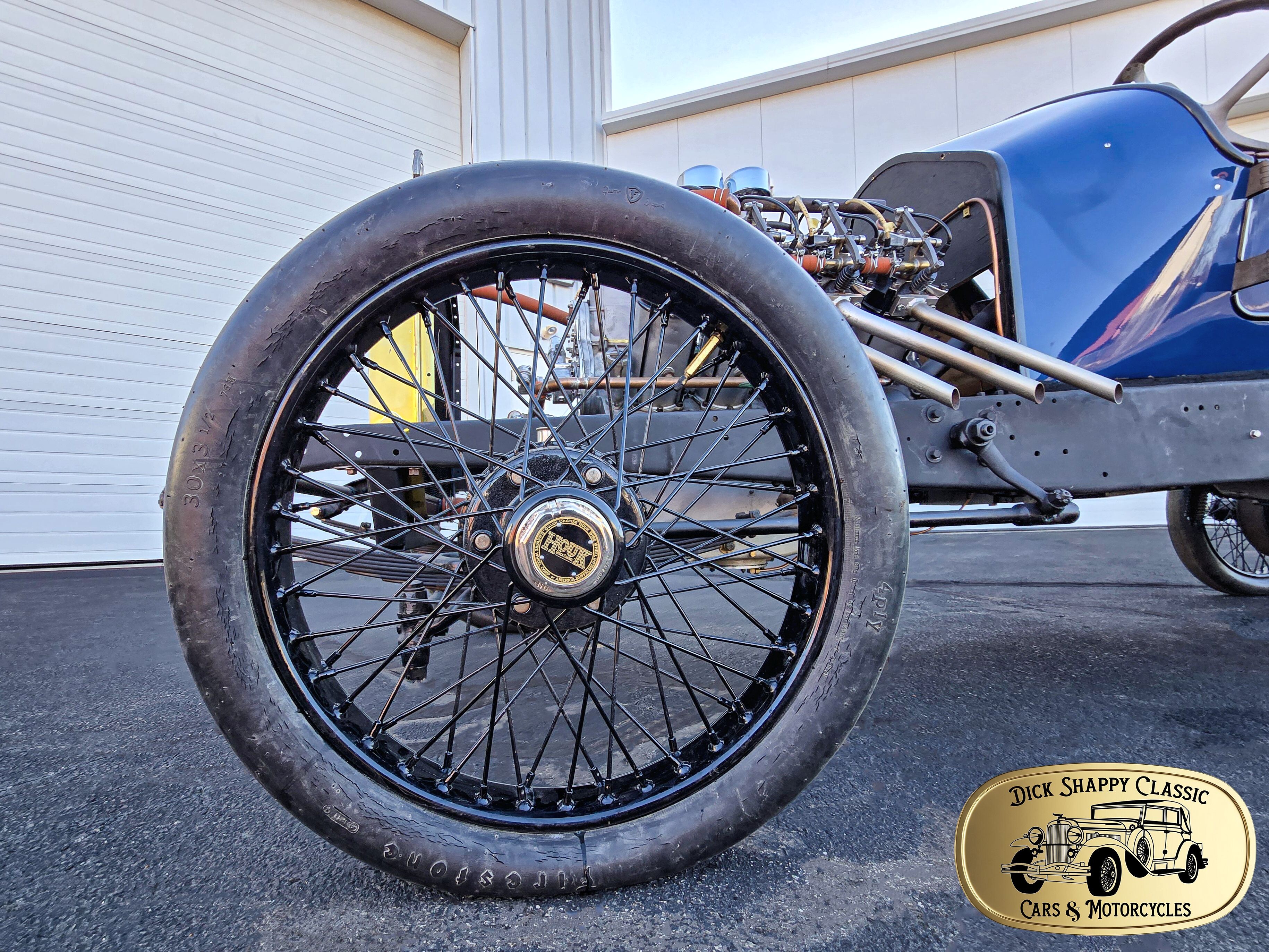
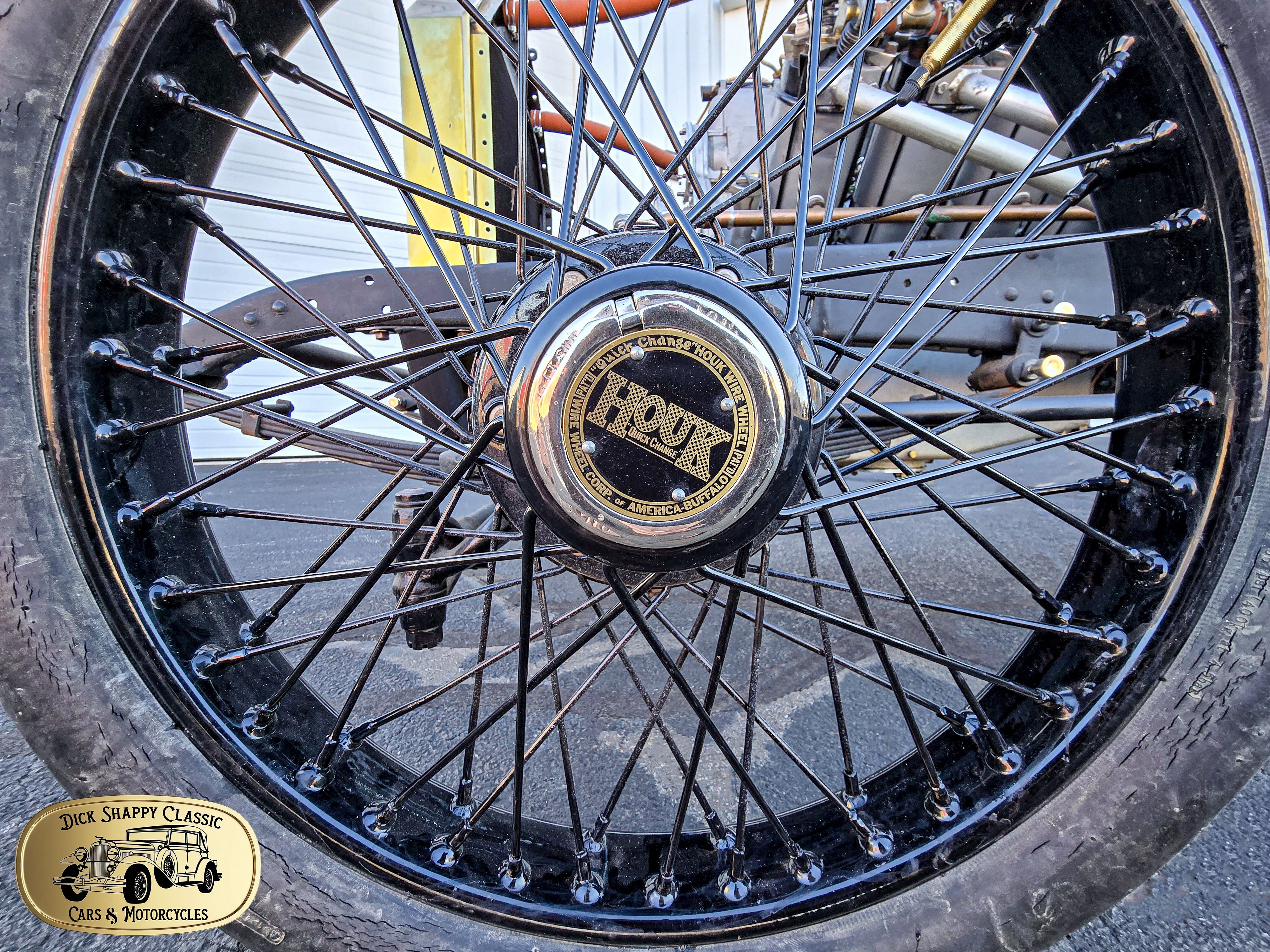
- WHEELS: Houk “Quick Change” Wire Wheels of the Wire Wheel Corporation of America from Buffalo, NY
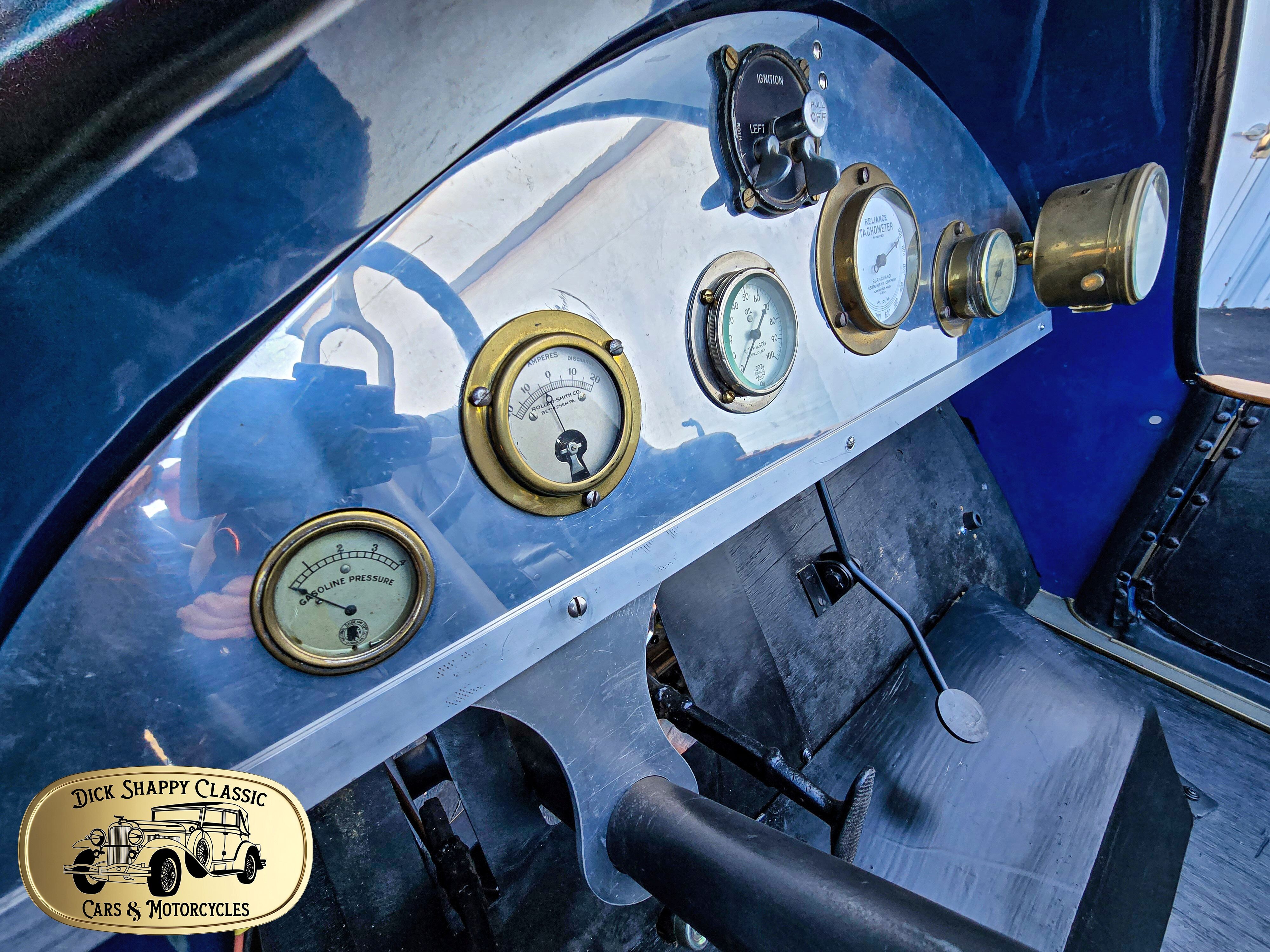
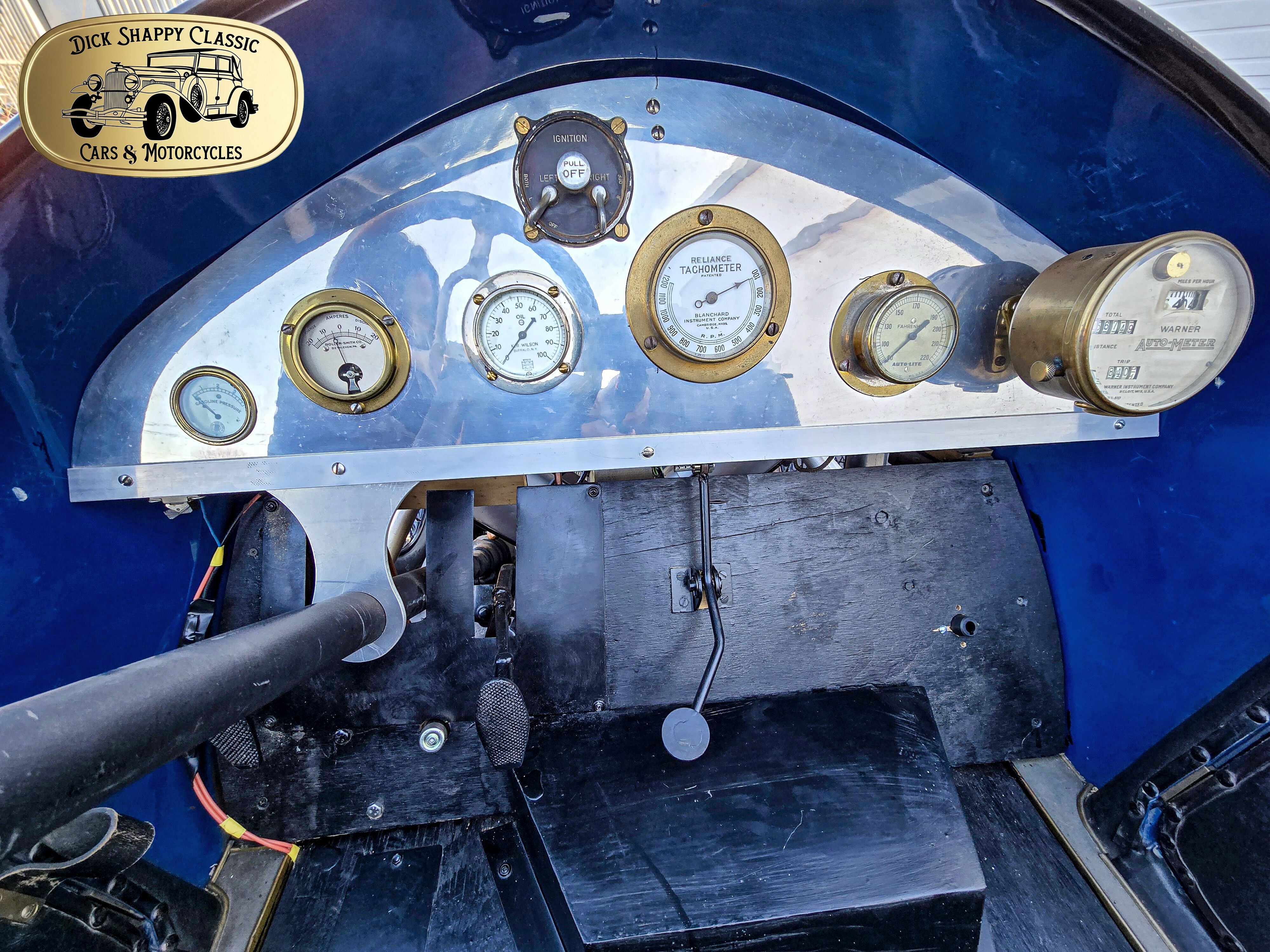
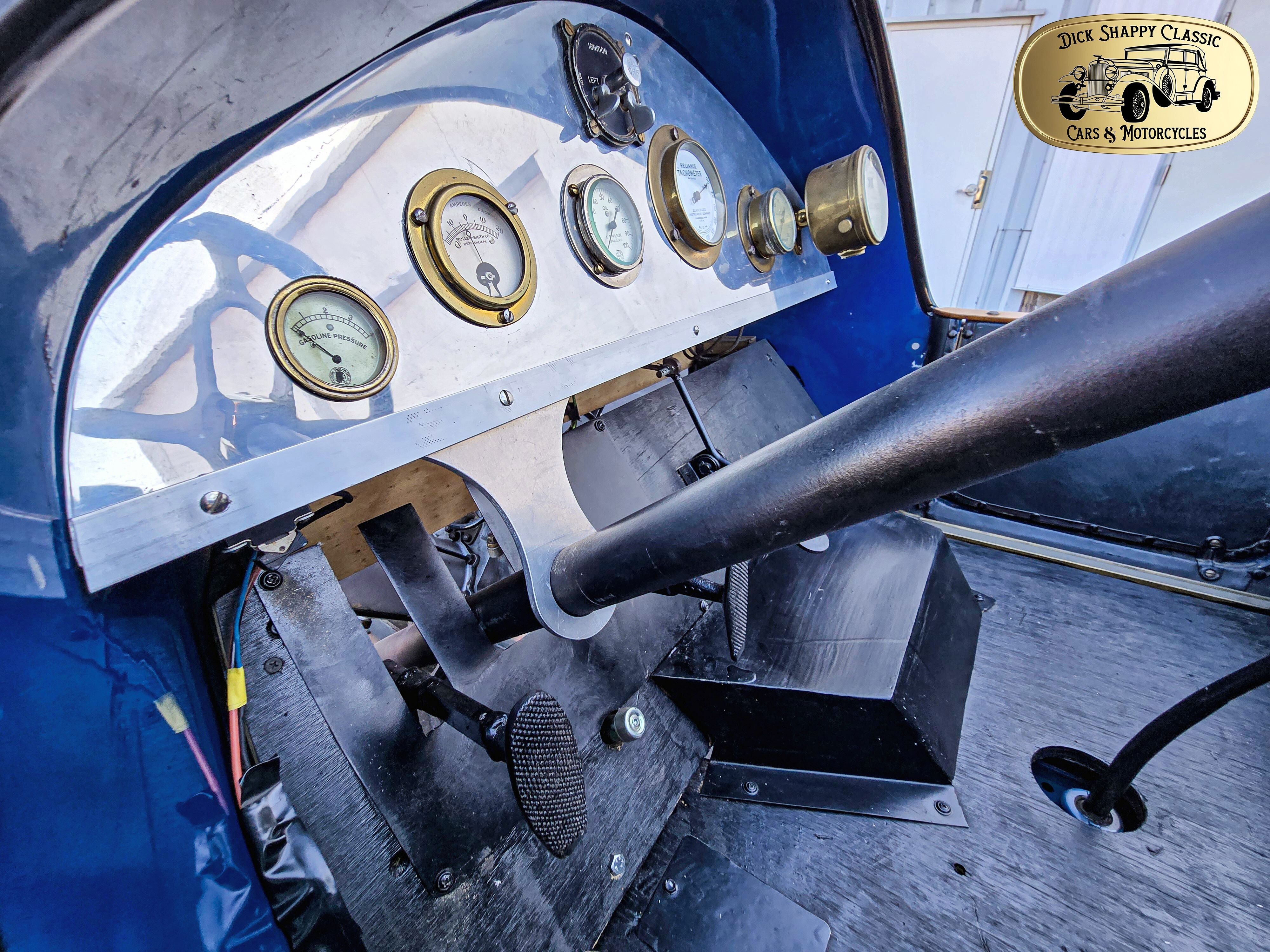
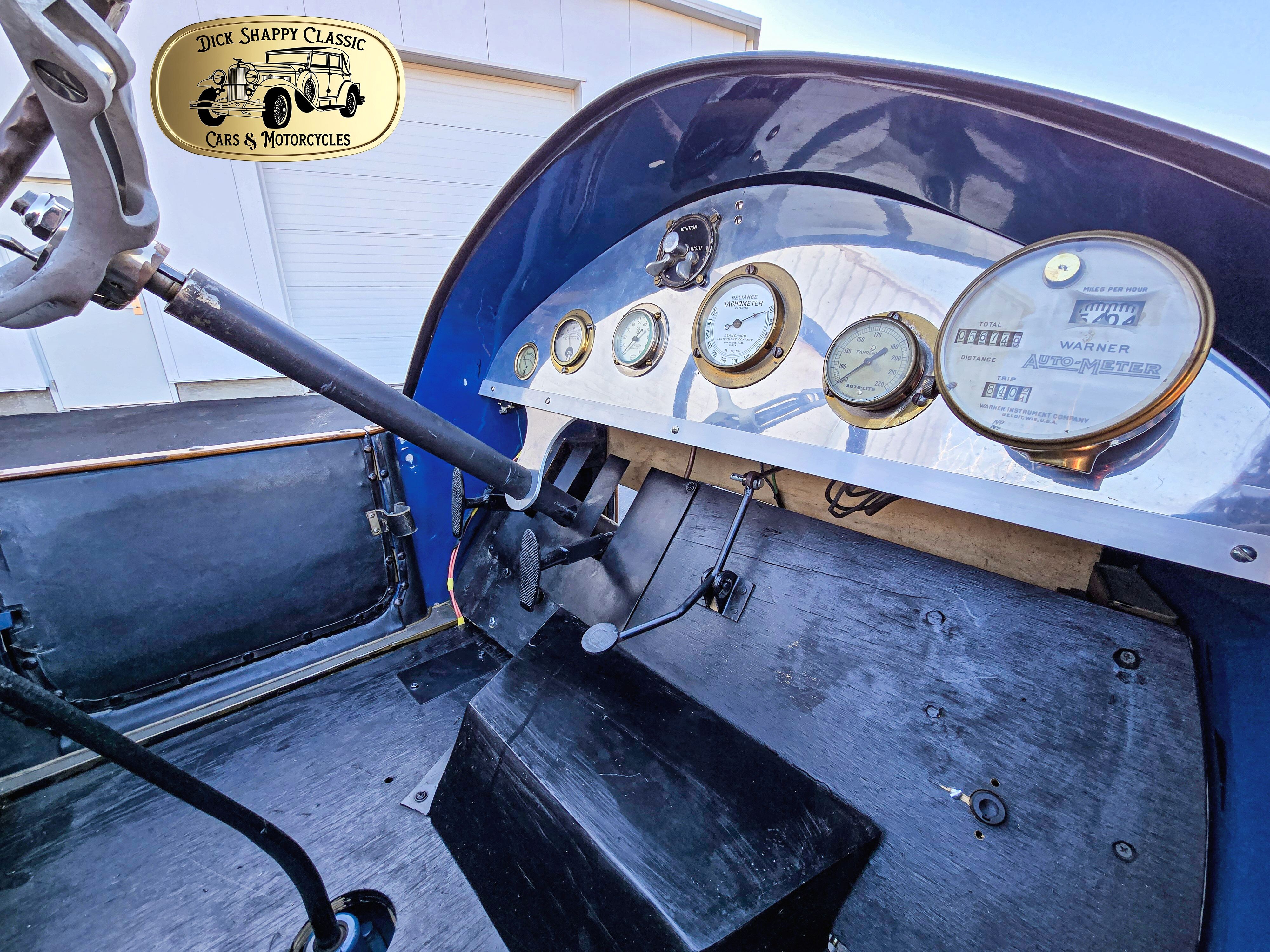
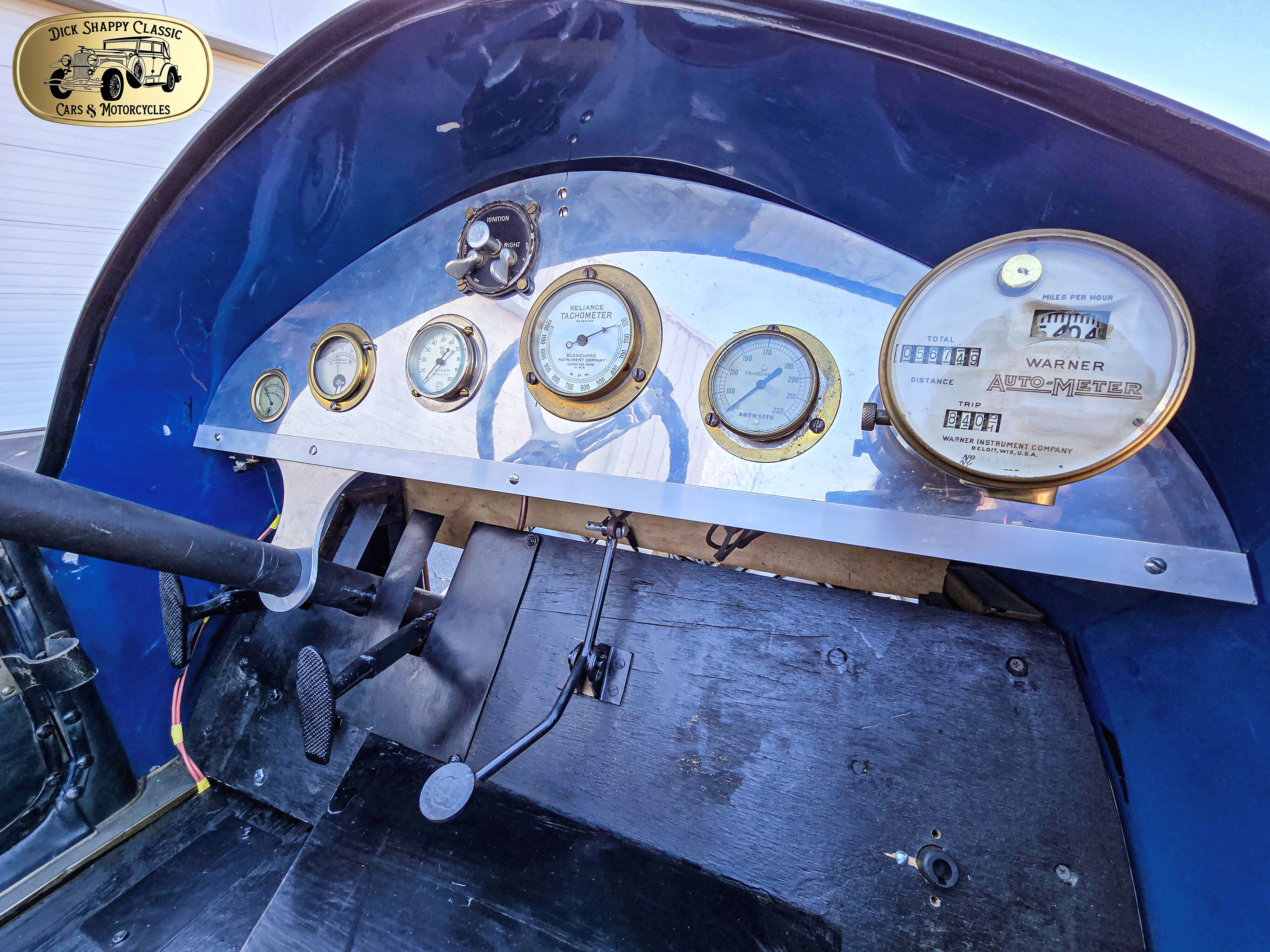
- GAS PRESSURE GAUGE: National Gauge Co.
- TEMPERATURE GAUGE: Auto-Lite
- AMPERE METER: Roller-Smith Co. of Bethlehem, PA
- OIL GAUGE: K. G. Wilson of Buffalo, NY; U.S. Gauge Co.
- TACHOMETER: Blanchard Instrument Company of Cambridge, MA
- SPEEDOMETER/ODOMETER: Warner Instrument Company of Beloit, WI
The sixth engine he ever produced, according to premier Curtiss historian Dale Axelrod, a single-cylinder 2.5 hp with a leather belt drive under the name “Hercules,” can also be found in the collection of Dick Shappy. He quickly found that “Hercules” was already patented, and by 1904, his future endeavors would begin the Curtiss line. The G. H. Curtiss Manufacturing Company engraved “126”; the “1” is reported to represent the first and earliest run of the Hercules engines. “2” is for the date of manufacture: 1902. Axelrod notes that the “6” indicates this is the sixth motorcycle engine Curtiss produced. The Audrain Auto Museum observes that this is the earliest known example of this extremely rare, unrestored motorcycle.
In 1904, he began building engines for dirigibles, including for the first successful American flight, putting his 9 hp V-twin into the “California Arrow” and marking the beginning of his crucial involvement in aviation. His engines were performing so well that he was taking home the gold against even rival Indian motorcycles. Until 1912, he and his team built, sold, and raced motorcycles out of their Hammondsport garage, but this wasn’t his only successful endeavor.
By 1906, he had pioneered the addition of a twist-grip throttle, advancing his motorcycle concept and that of American motorcycle history. The 1909 Curtiss V-Twin Roadster in the Dick Shappy Collection is an extremely rare specimen, considered the “Duesenberg” of early American motorcycles. It sports a powerful air-cooled engine rated at 8 to 10 horsepower with splash oil lubrication and a dry-cell battery ignition. The Audrain Auto Museum reports that this 1909 Curtiss is one of the most well-preserved motorcycles in the world today and the last of the Curtiss line. After the disbanding of the Alexander Graham Bell Aerial Experiment Association in 1909, where they pioneered the use of ailerons for lateral control in airplanes, Curtiss formed the Herring-Curtiss Company with Augustus Herring, delivering his first aircraft that year.
Only a handful of Curtiss motorcycle engines are known to have survived, including the Hercules. The 1909 Roadster, engine number 3302, was sent to Dale Stoner, in collaboration with the Glenn H. Curtiss Museum in Hammondsport, NY, for a careful, meticulous restoration and documentation. Dale Stoner is not only the premier Curtiss historian and a master machinist, but also an engineering pioneer who will one day be regarded in the history books right alongside Glenn. He is currently recreating the beautiful and historic 1907 Curtiss 8-cylinder experimental motor cycle that set the world land speed record of 136 mph in exacting detail. It has been rumored that, upon completion, this vehicle could be worth between $500,000 and $1 million. (Check it out at Jay Leno’s Garage and with us in Oley, PA.)
By 1910, the company became the Curtiss Aeroplane Company, and Glenn began training the first U.S. Navy pilots, establishing the first military aviation school in the U.S. He sold the U.S. Navy its first aircraft, the A-1 Triad (an amphibian), in 1911, for which he developed the first retractable landing gear. By 1912, Curtiss had developed the first practical flying boat, the Model E, which became highly successful along with his other seaplanes. He added the “Father of the Flying Boat” to his collection of monikers, which would soon include the “Father of Naval Aviation” and “Thomas Edison of Aviation.” By 1916, Curtiss had merged his companies into the Curtiss Aeroplane and Motor Company and had begun development of what would become America’s iconic WWI primary flight trainer. The two-seat biplane known as the “Jenny,” or the Curtiss JN-4, powered by the 90 hp Curtiss OX-5 V-8 engine, was one of the first aircraft ever mass-produced. It was essential in bringing aviation to the masses post-war and in pioneering the use of dual-pilot controls.
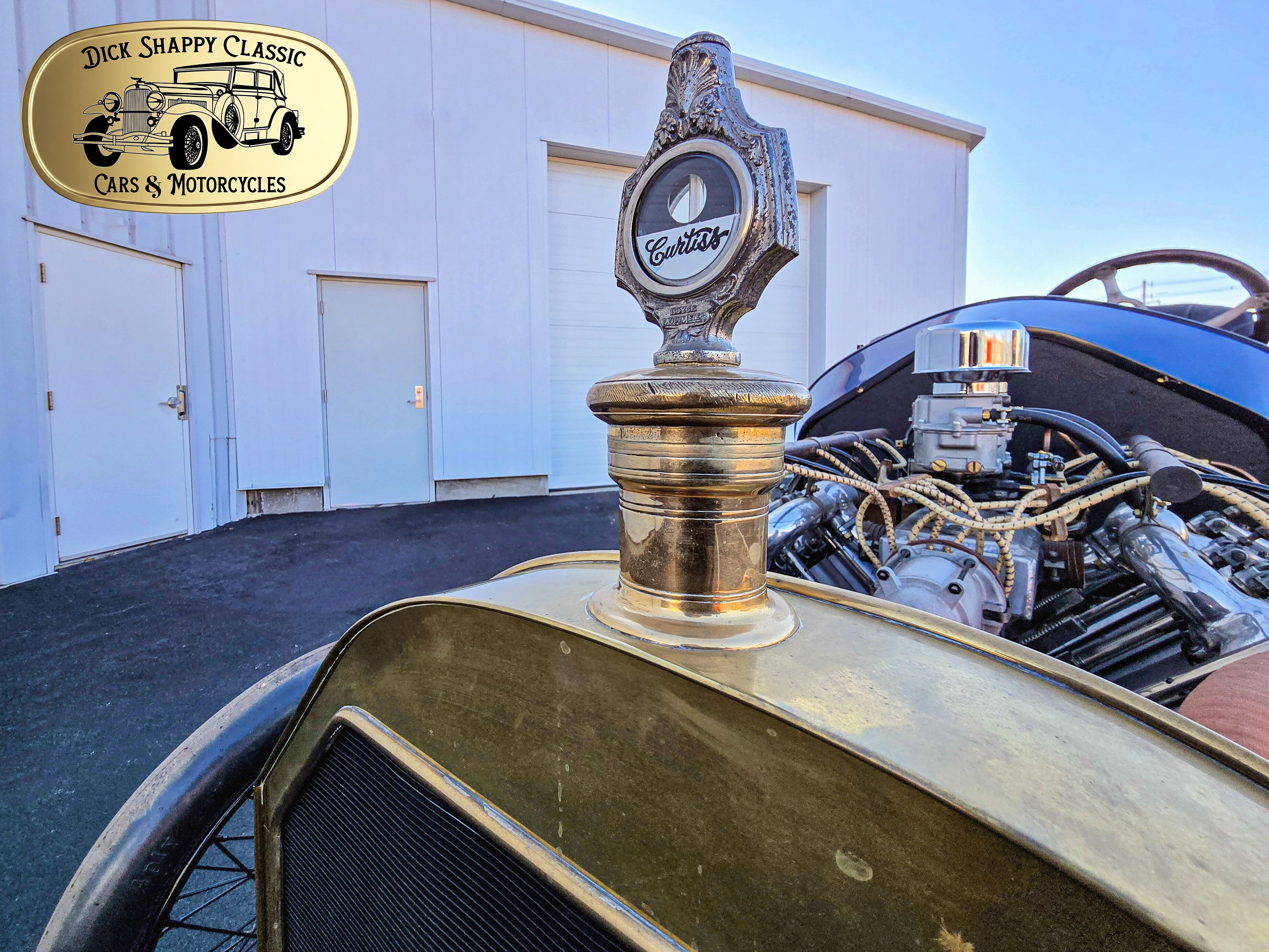
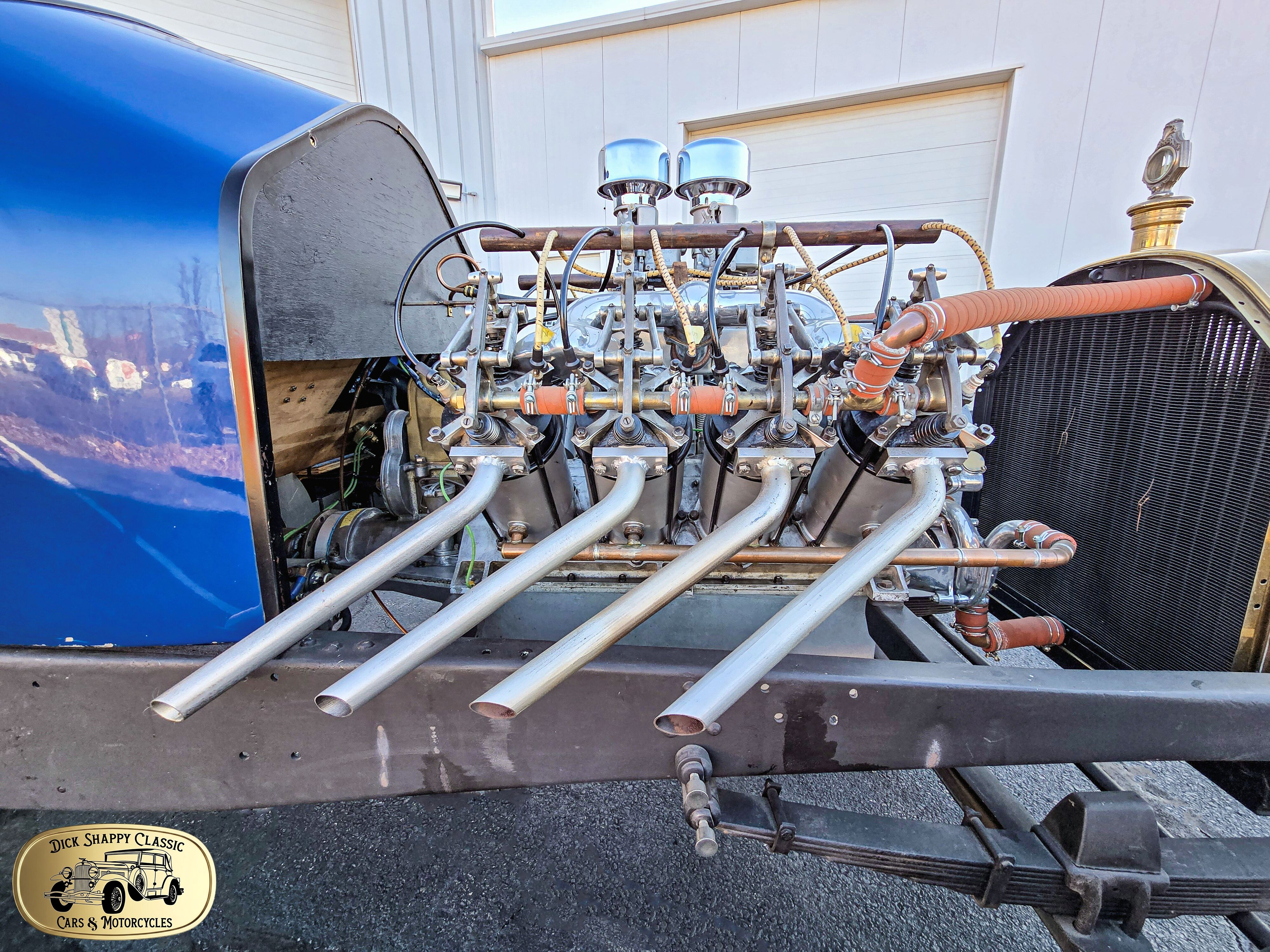
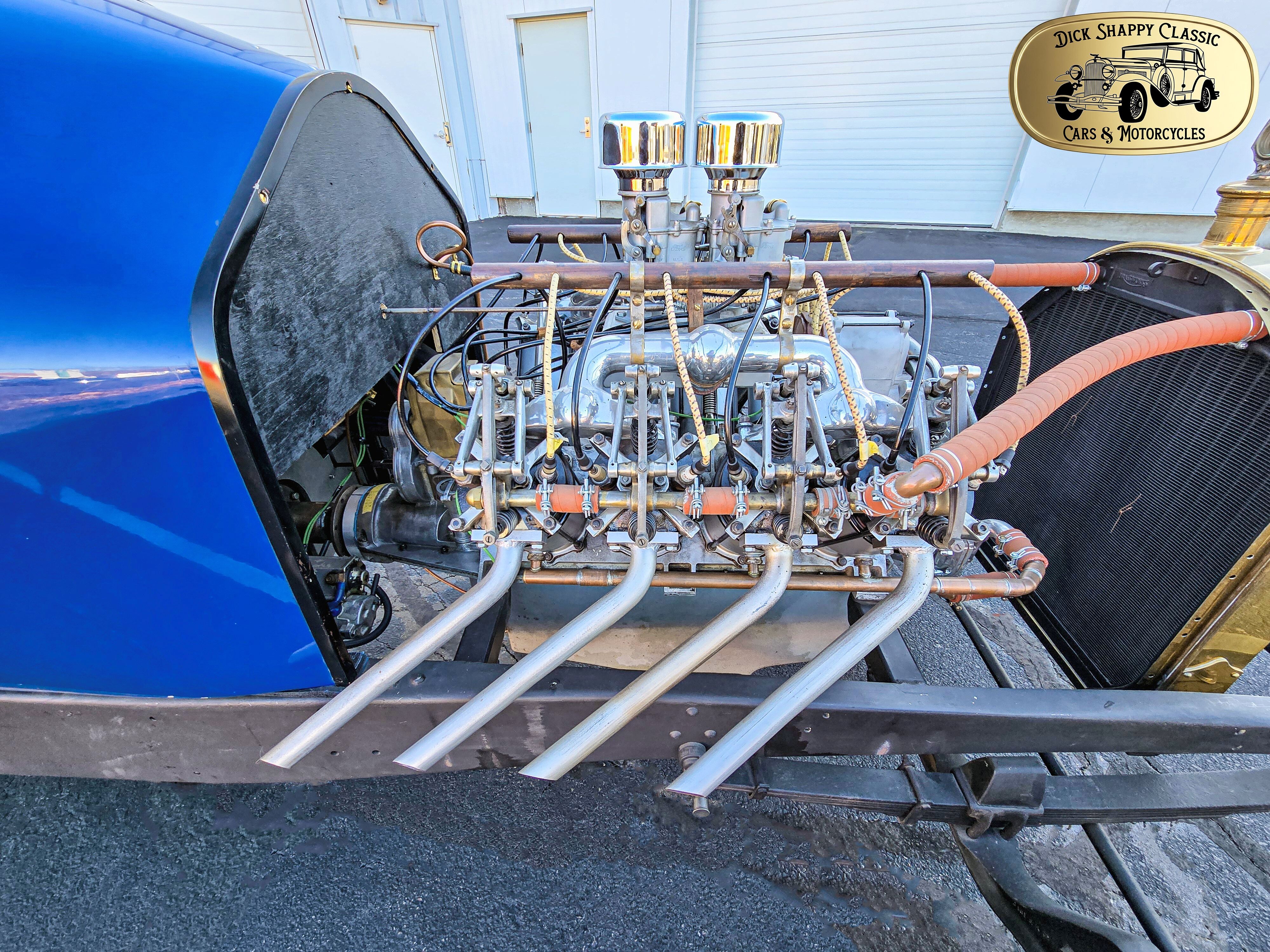
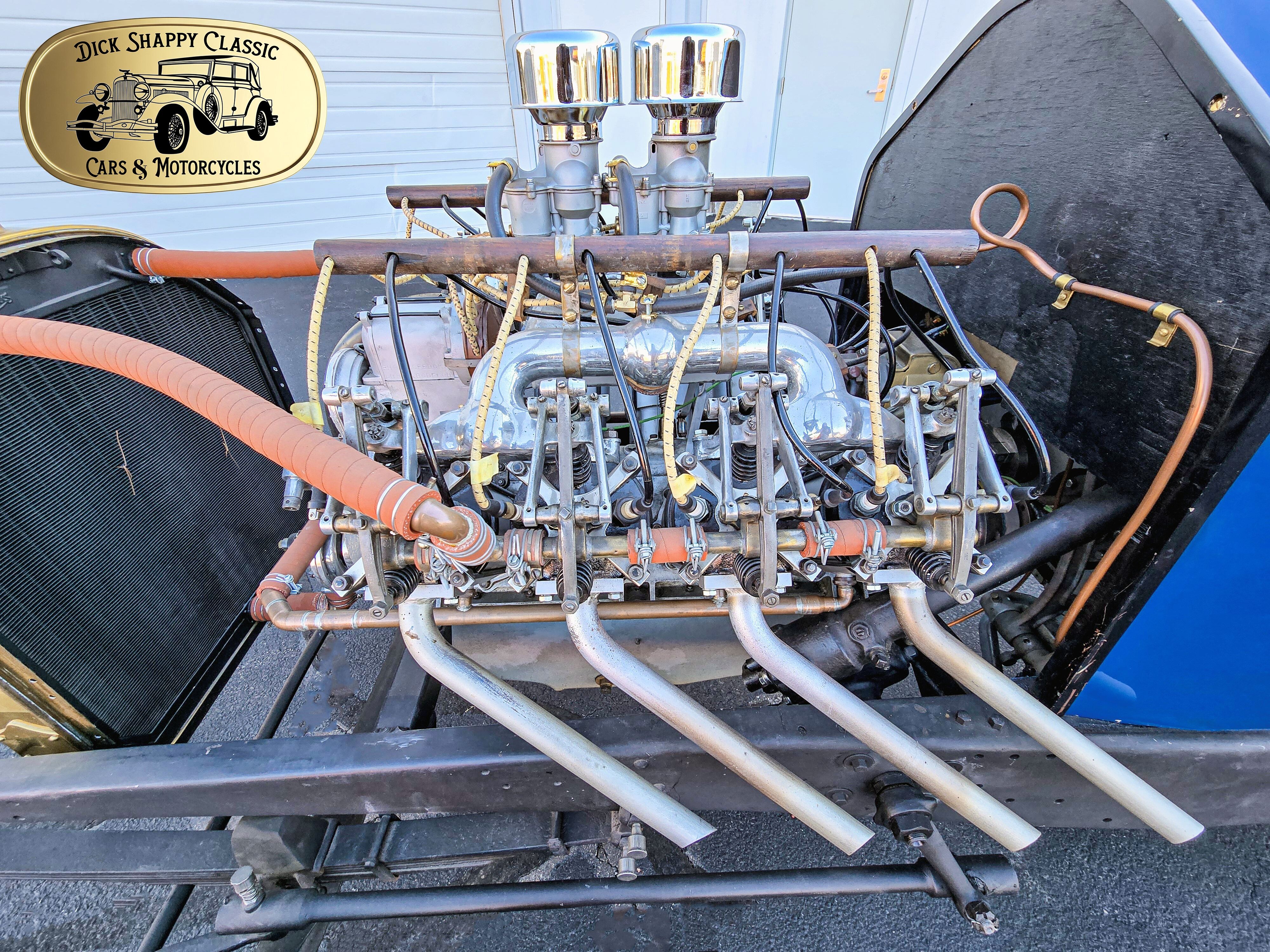
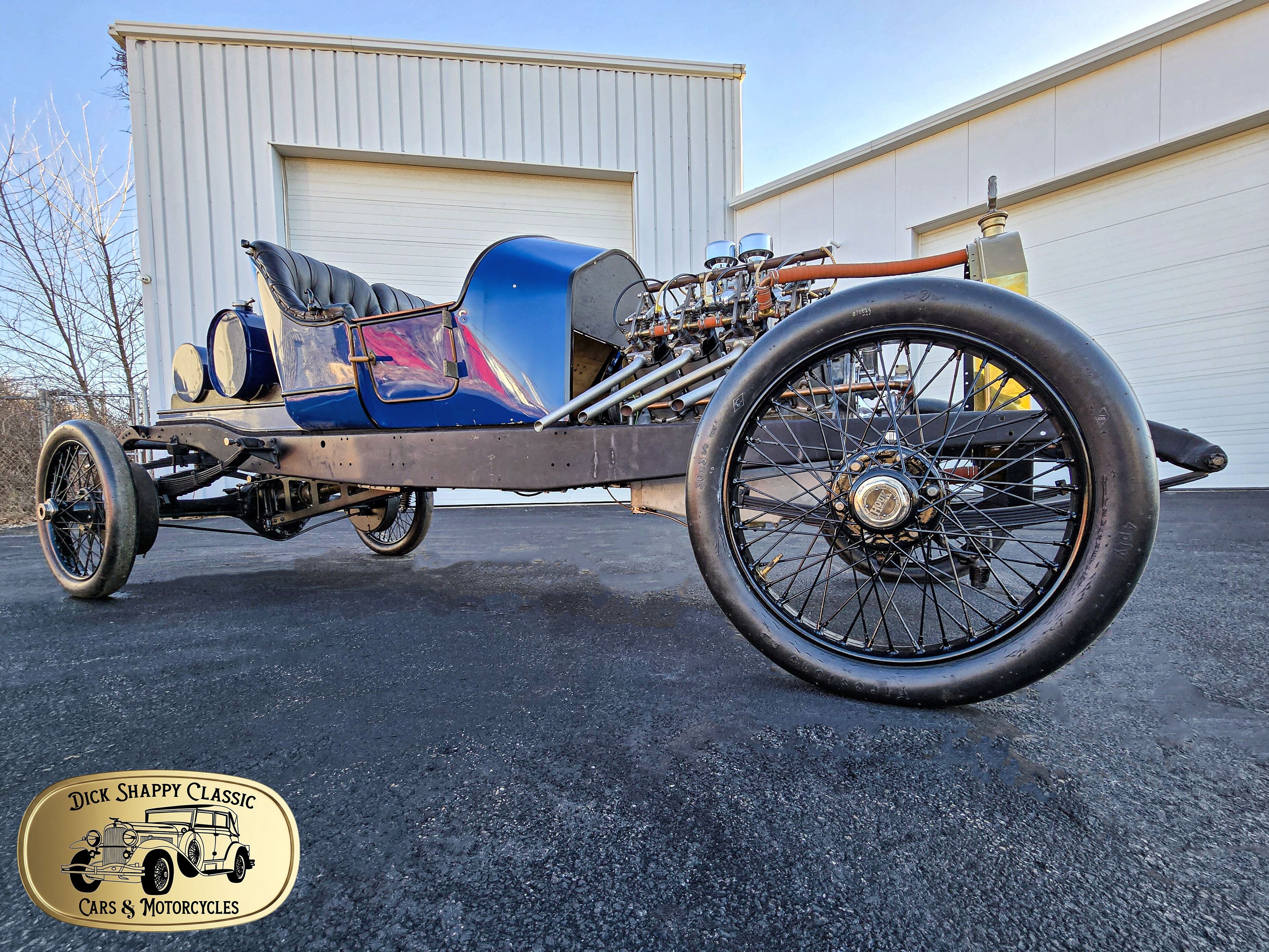
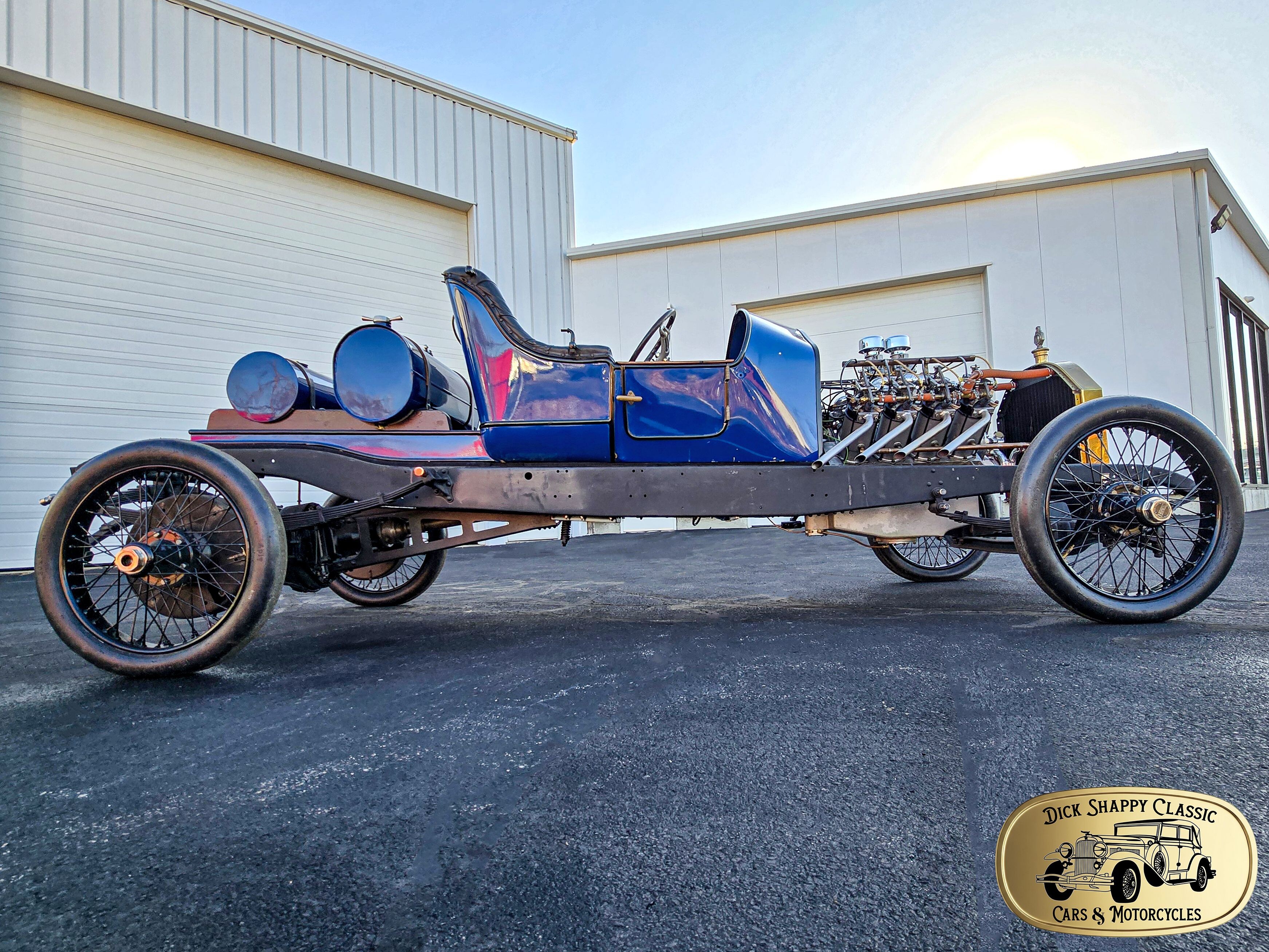
Also in 1916, Curtiss developed his improved 90° V-8 water-cooled engine, the powerful OXX-6, from his famous OX-5. The OXX-6 was a V-type reciprocating engine producing 100 hp. He added a second magneto for better reliability and more power. It features dual overhead camshafts (SOHC) with a displacement of about 567 cu. in. The engine was popular, powering seaplanes like the Curtiss N9 and many early American planes. The OXX-6 was even adapted for early race cars and experimental land vehicles, showcasing its versatility. It was often used in pairs on flying boats, as they could counter-rotate to counteract torque. The OXX-6 and the OX-5 were among the most frequently used American-built engines during and after WWI, reflecting Curtiss’ pivotal role in early aviation powerplants.
Glenn Hammond Curtiss was not known for building complete vehicles, but he did design innovative automotive concepts, used his powerful engines in unique cars (making him an early “hot rodder”), and pioneered revolutionary recreational vehicles (RVs) like the Curtiss Aerocar, which essentially created the fifth-wheel trailer. His focus was on aircraft, motorcycles (where he was a speed king), and aviation-inspired vehicles, not traditional automobiles.
The Curtiss Aeroplane and Motor Company and the Wright Aeronautical Corporation merged in 1929, forming the Curtiss-Wright Corporation and creating a massive aviation conglomerate. Glenn eventually sold his company shares, retired to Florida, and became a developer, though he remained involved in Curtiss-Wright until his death in 1930 from complications after an appendectomy.
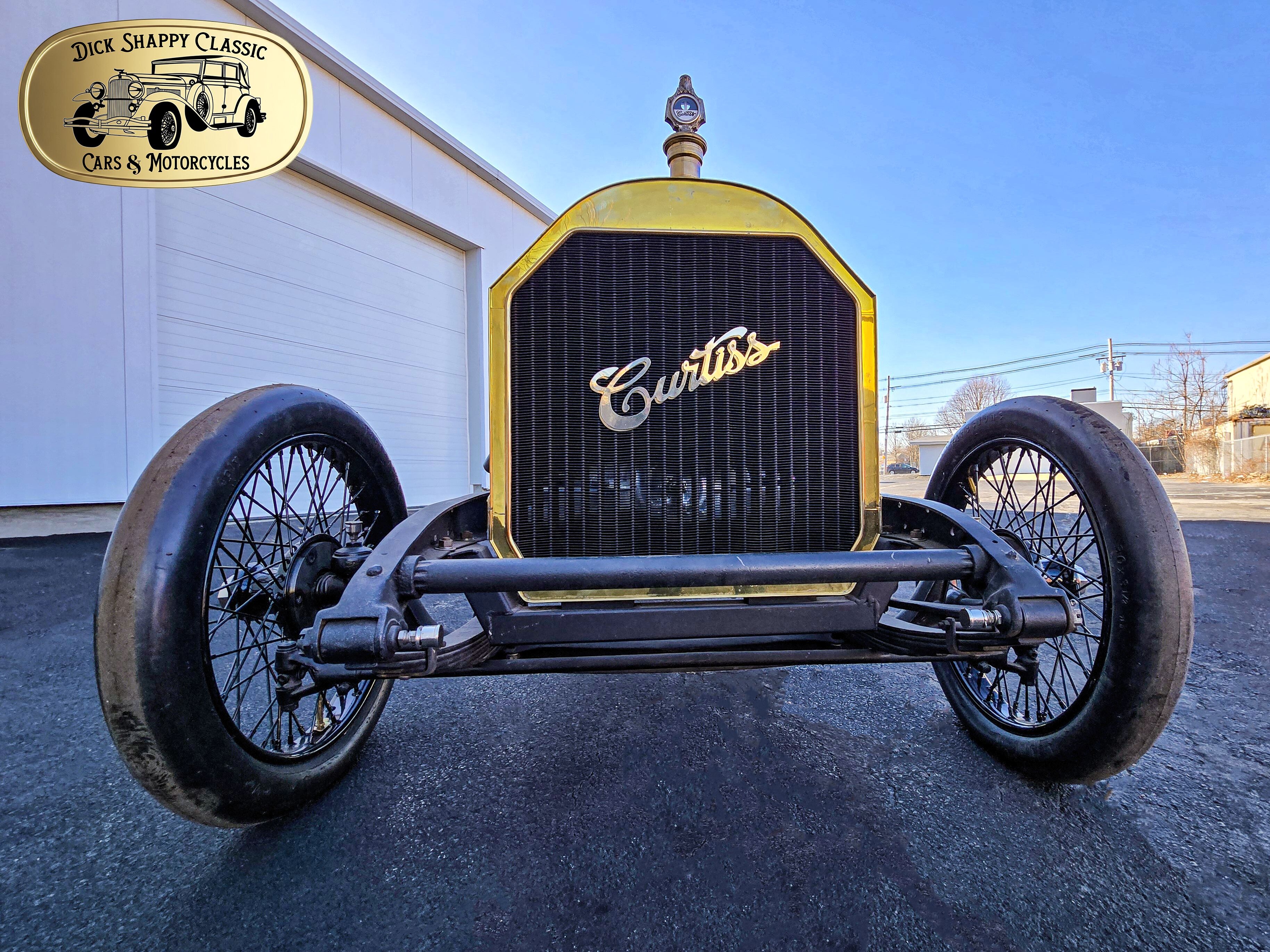
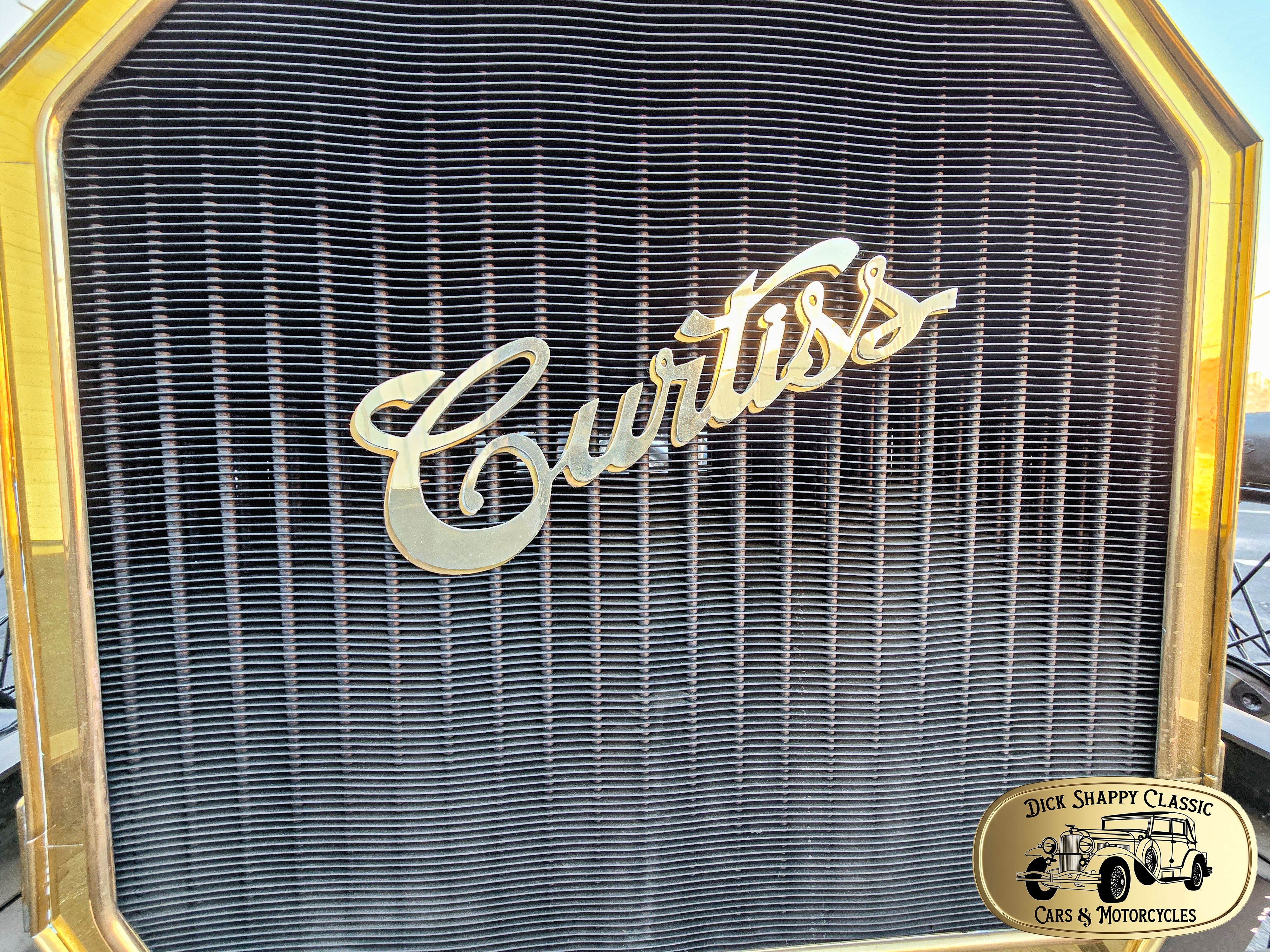
The son of NASCAR engine builder and founder of Wallace Engine Company, Brad Wallace, kept the Curtiss OXX-6 engine, manufacturer’s number 5665, in his estate. After the engine entered the collection and care of Dick Shappy in 2019, he immediately took up its restoration. Thousands of hours went into its preservation at the Dick Shappy Vintage Auto Shop. Master craftsman Walt Spinelli converted a starter and machined various parts, including exhaust flanges, a bellhousing, clutch parts, a flywheel, rocker arms, and a transmission assembly. Brassworks of Paso Robles, California, built a custom radiator, and Sandberg Machine of Chepachet, Rhode Island, spent a year on the major undertaking of converting the rare Houk artillery wheels to wire-spoke.
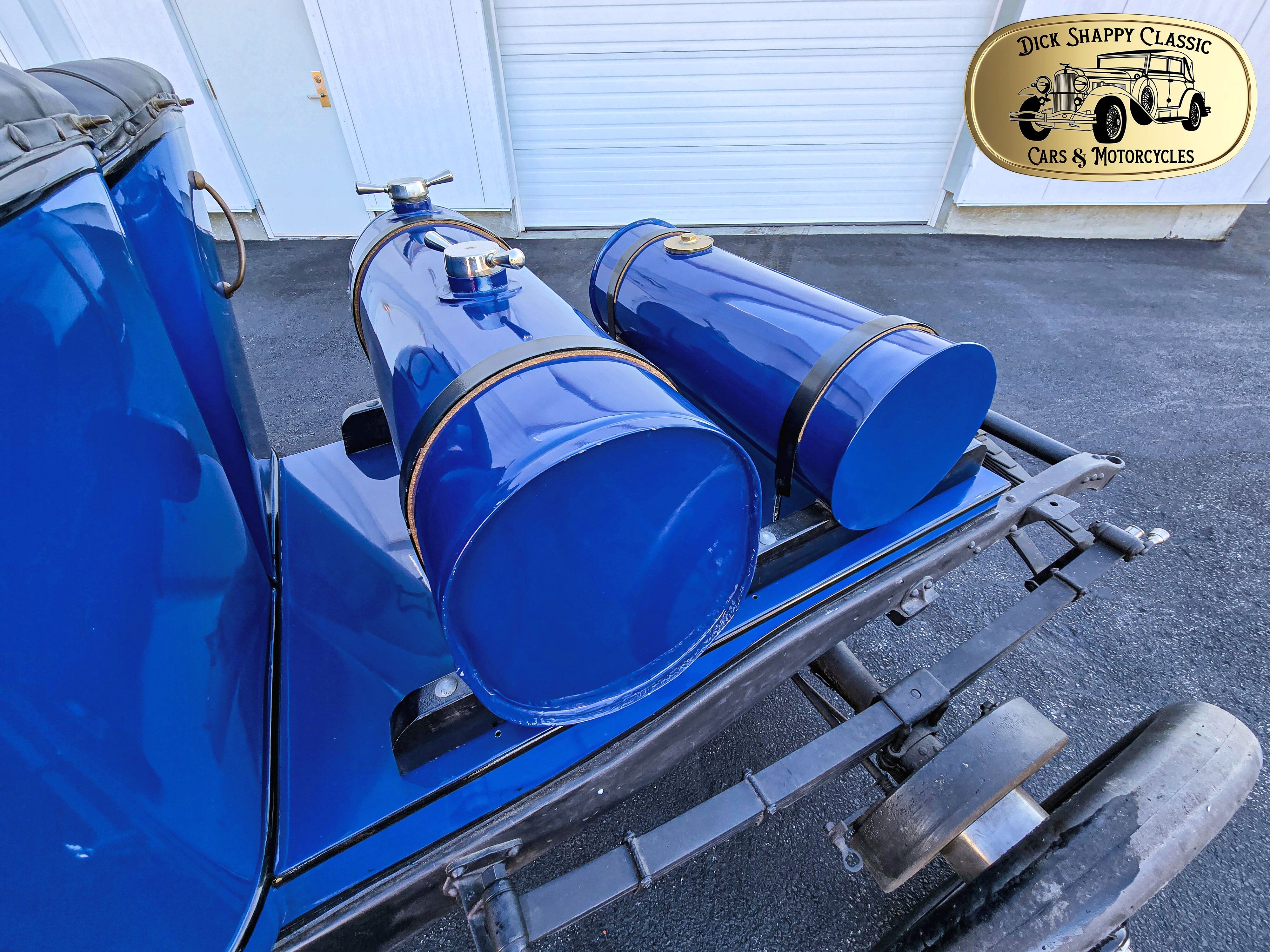
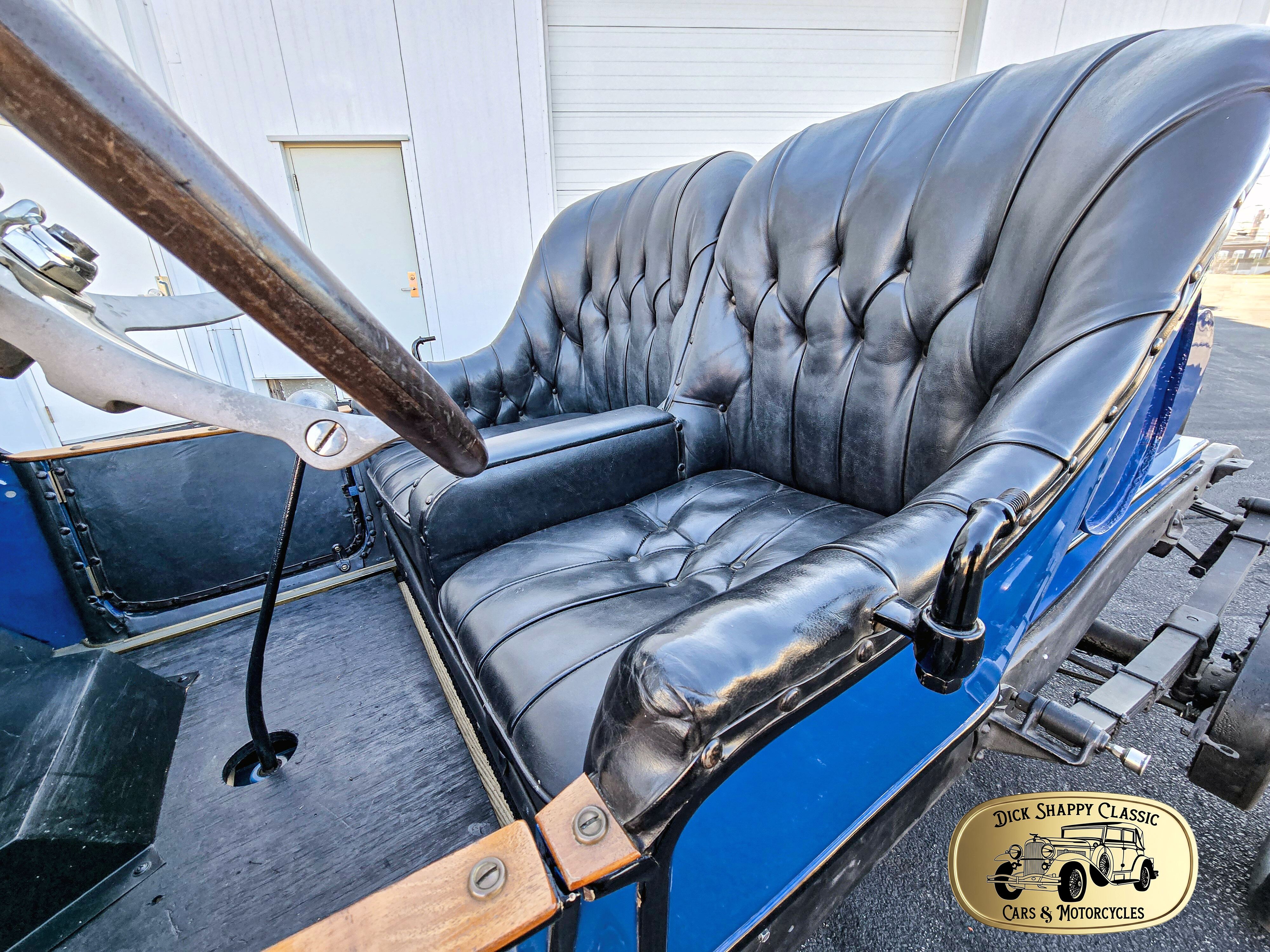
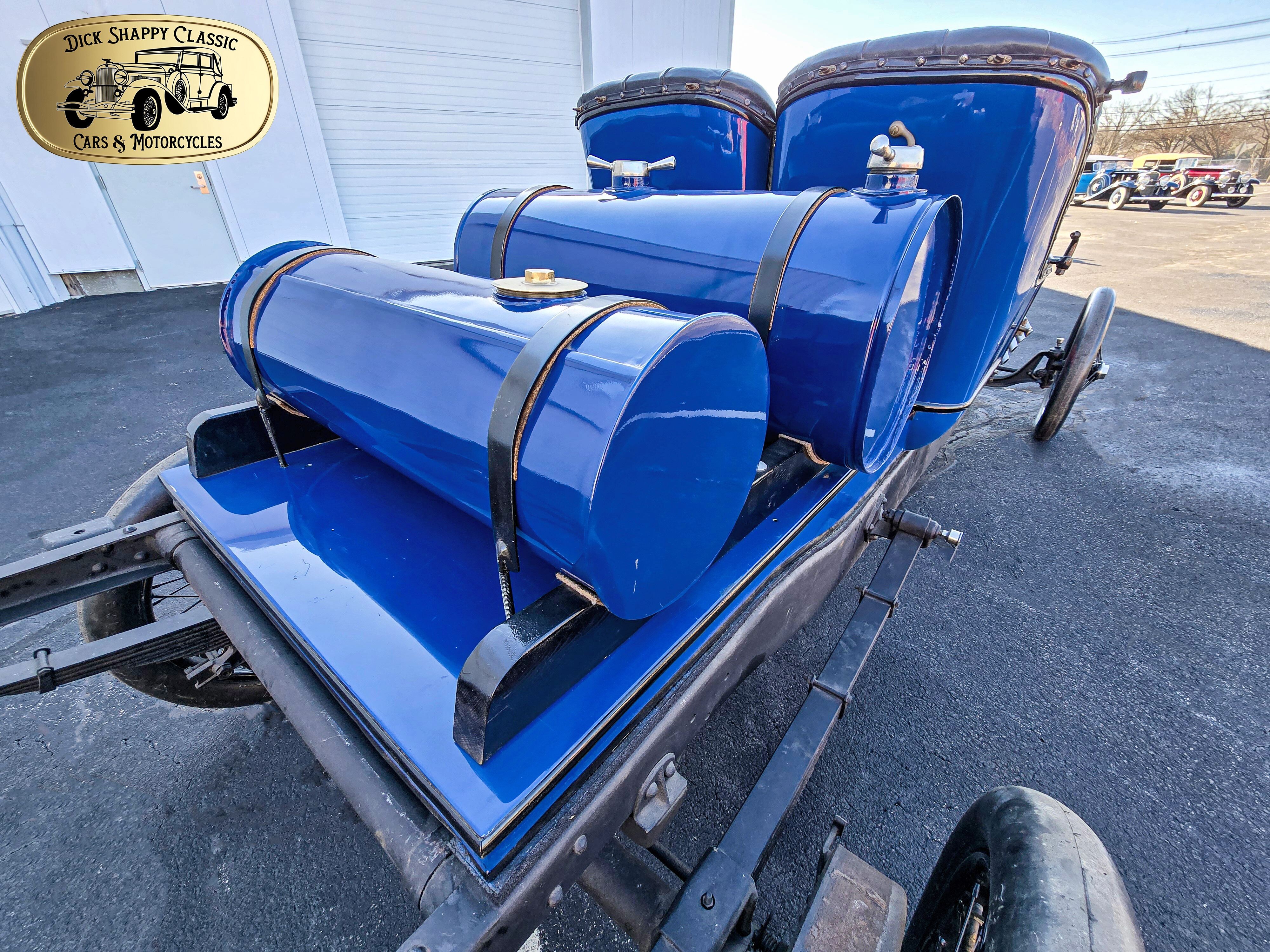
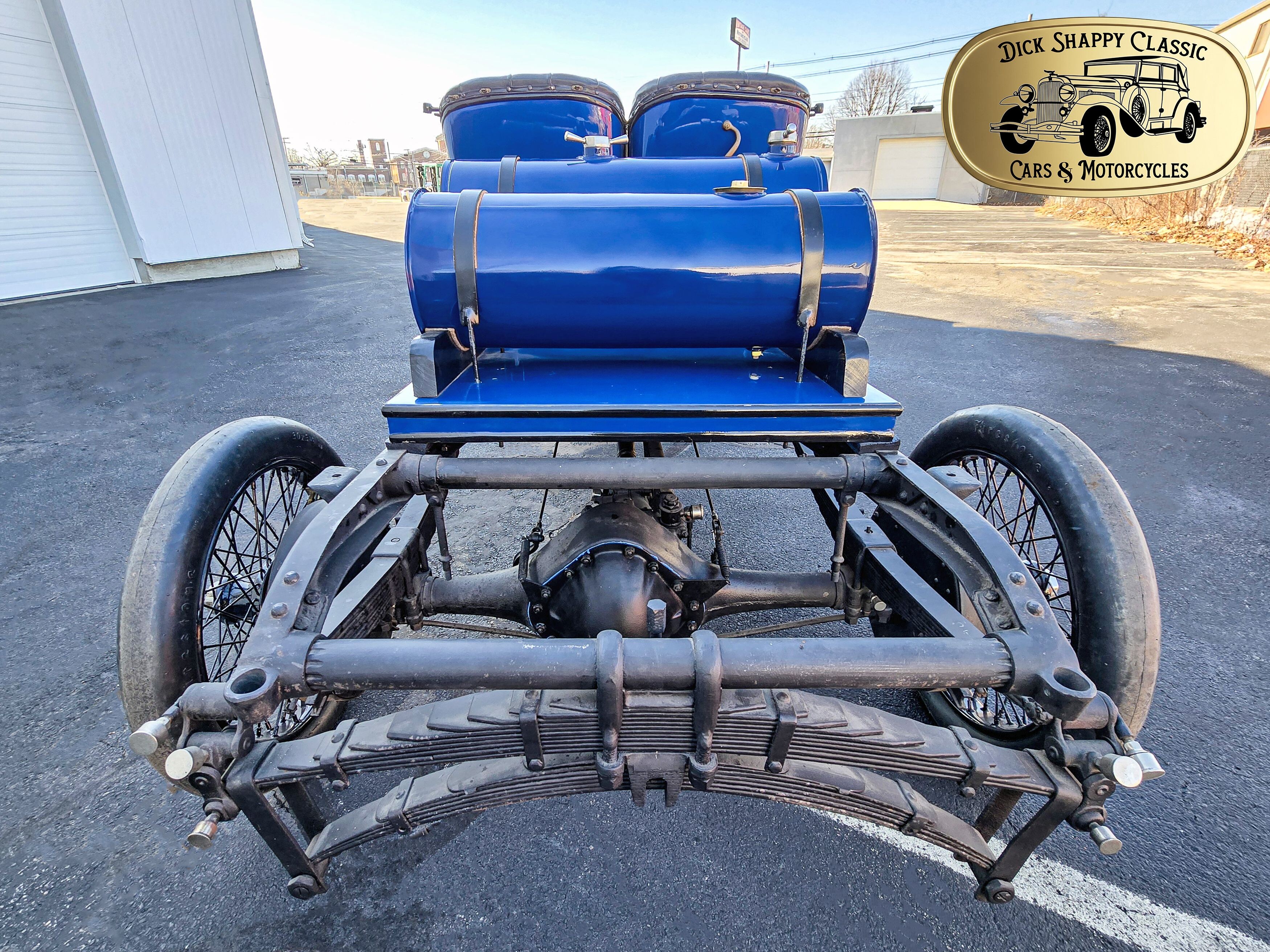
A National Speedway Model S Racer body was chosen to showcase the engine on a vintage Cadillac chassis. The National Motor Vehicle Company was founded in 1900 in Indianapolis and was known for its early racing success. It became a major player at the beginning of the automotive era. The company produced vehicles until succumbing to post-WWI market pressures in 1924, leaving behind a legacy of racing wins, including the 1912 Indy 500. National’s Speedway was designed for performance, not luxury, and advertised as the “Fastest stock car in the world.” They were highly customized for maximum aerodynamic advantage, making it the perfect pairing to showcase a Curtiss OXX-6 airplane engine.
Previously only glimpsed on American Pickers, this 1917 Curtiss OXX-6 Racer debuts as a one-of-a-kind automobile, not just in the Dick Shappy Collection, but in the world.