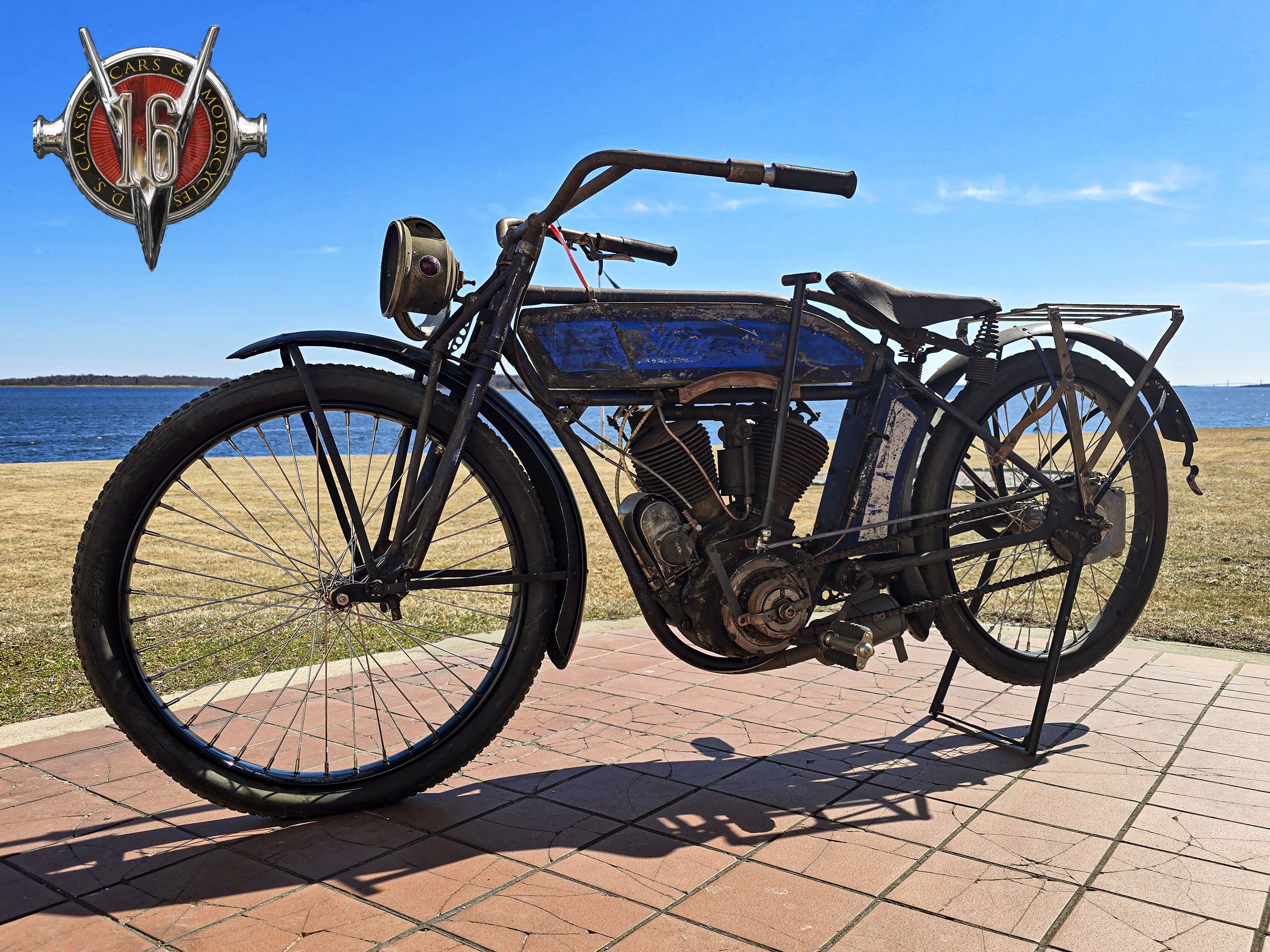
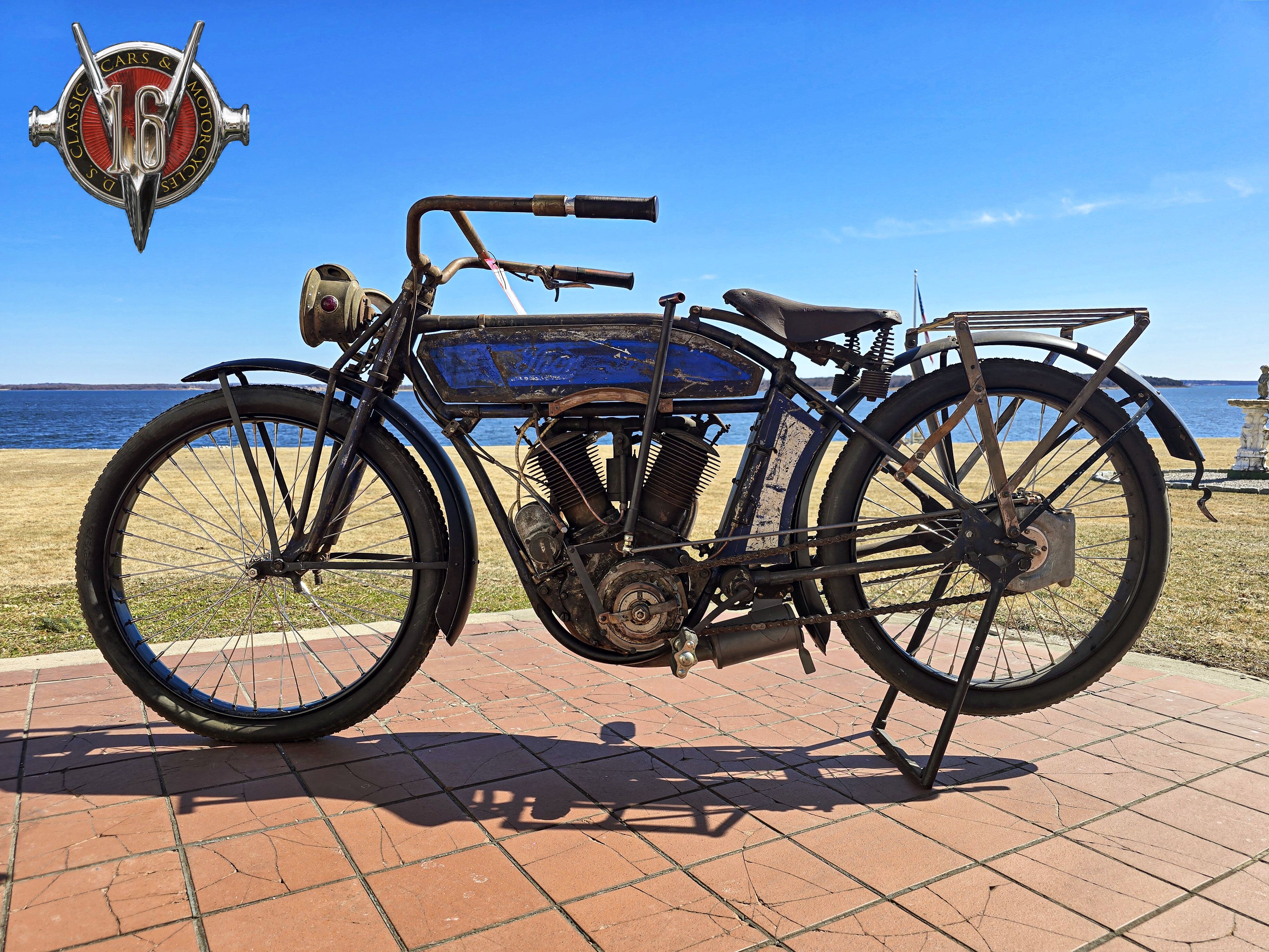
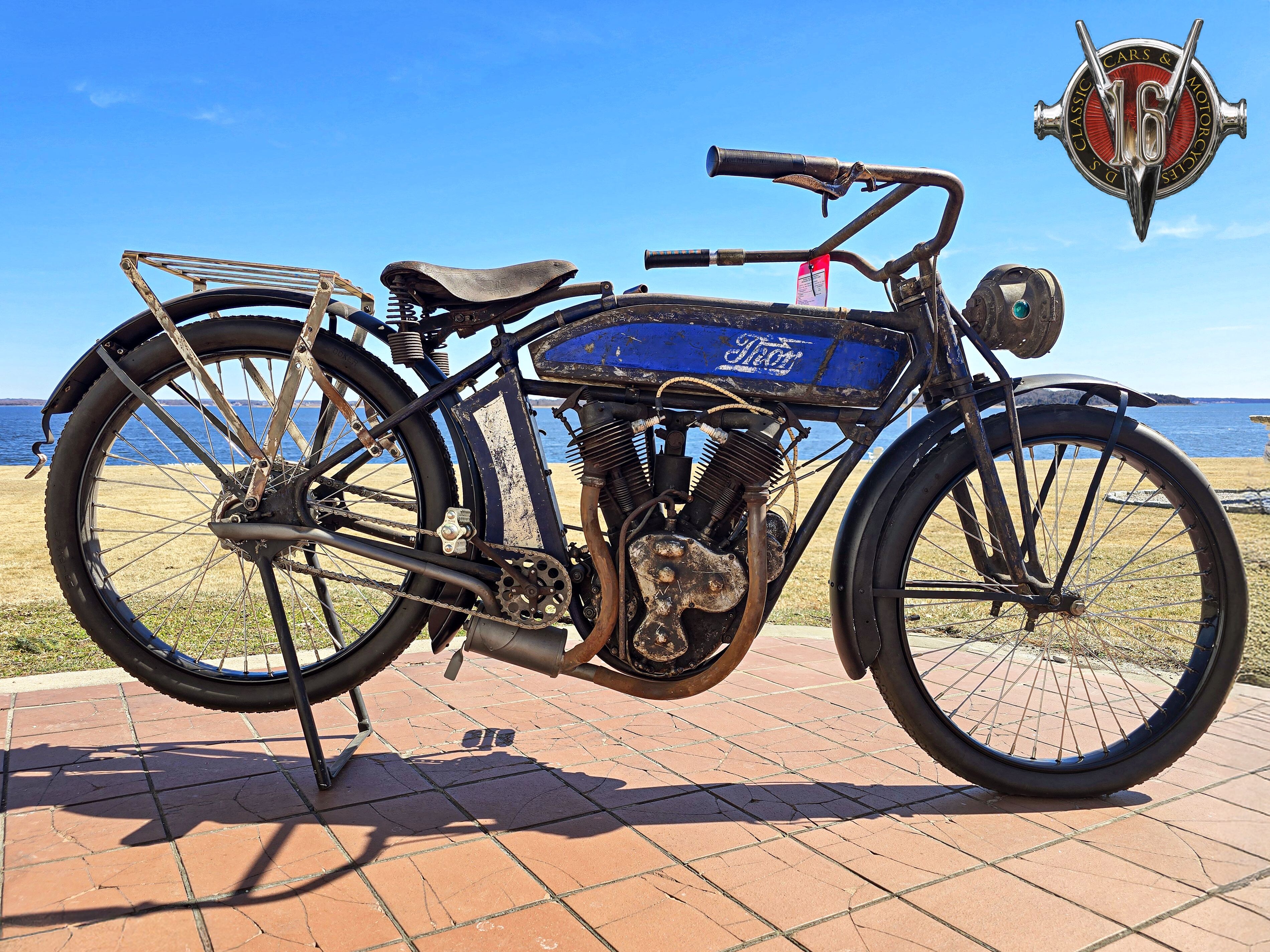
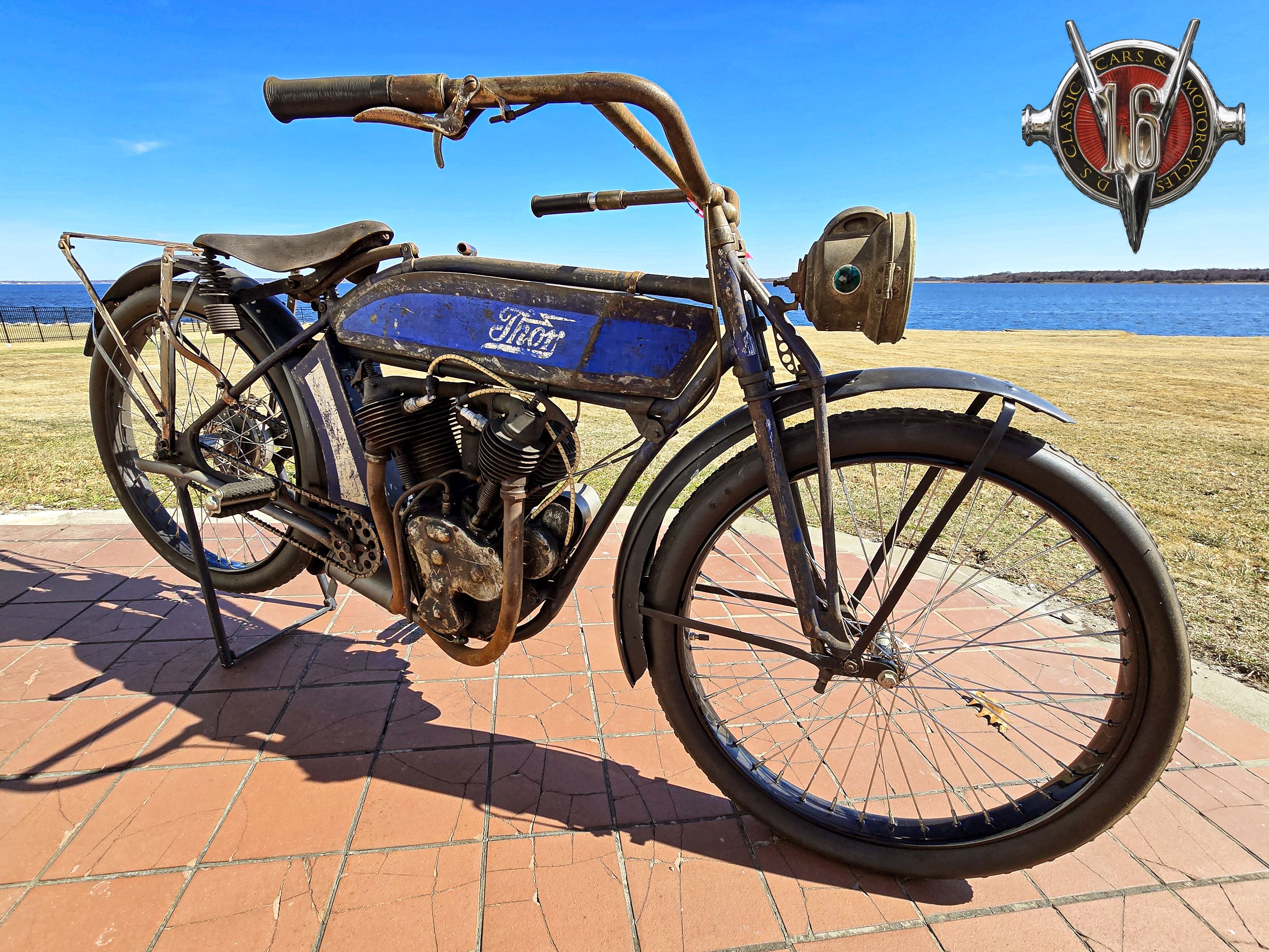
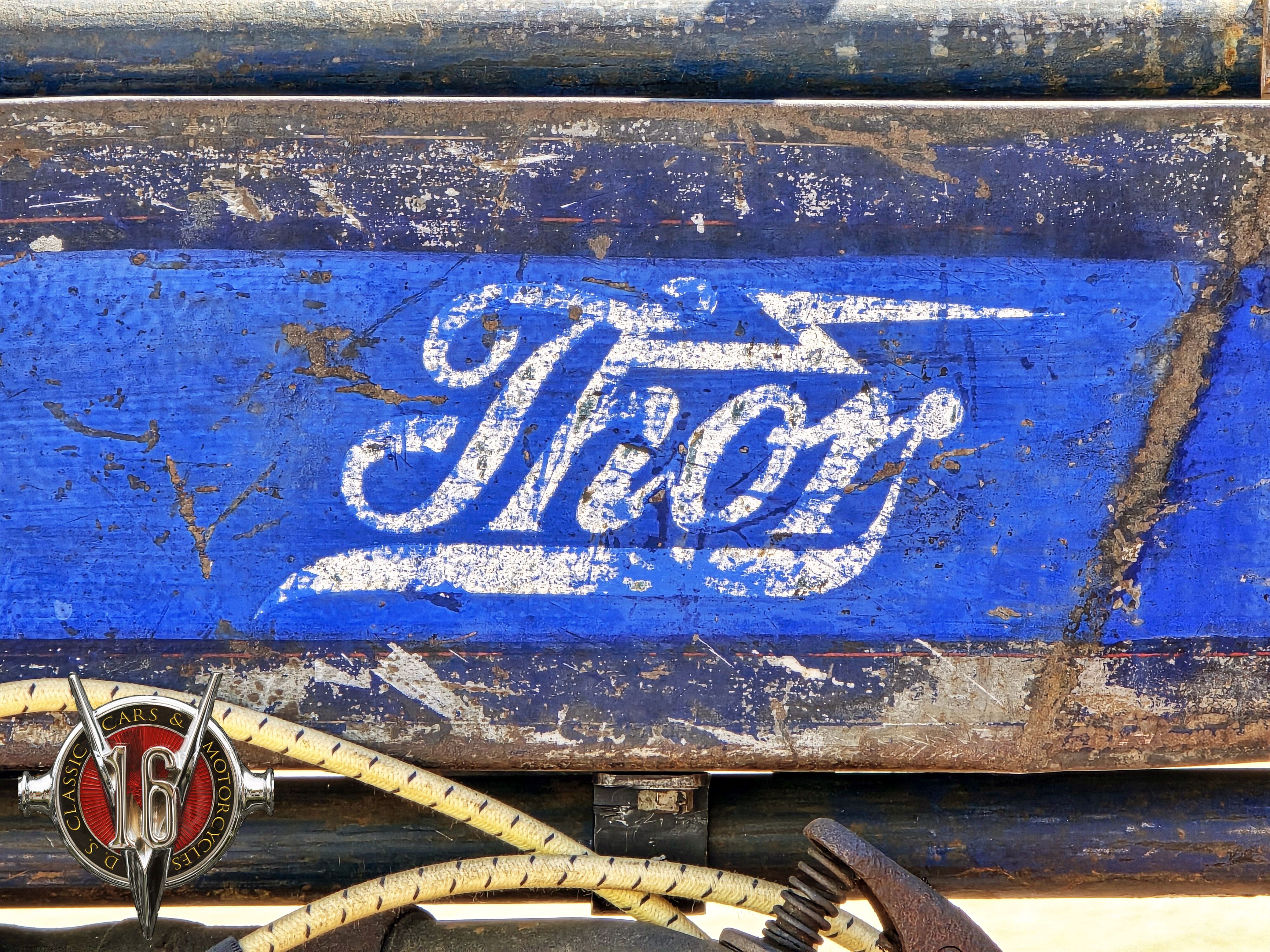
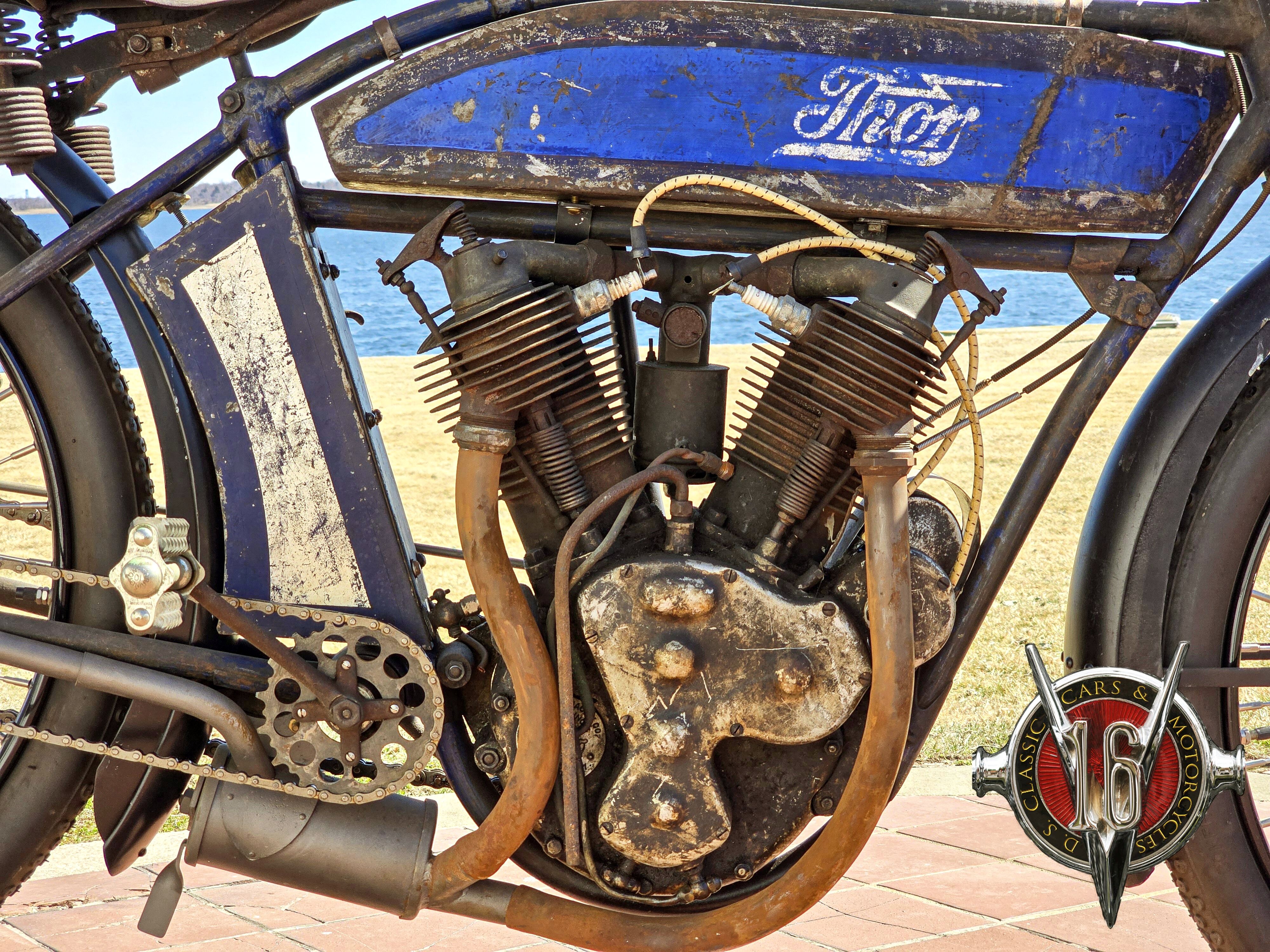
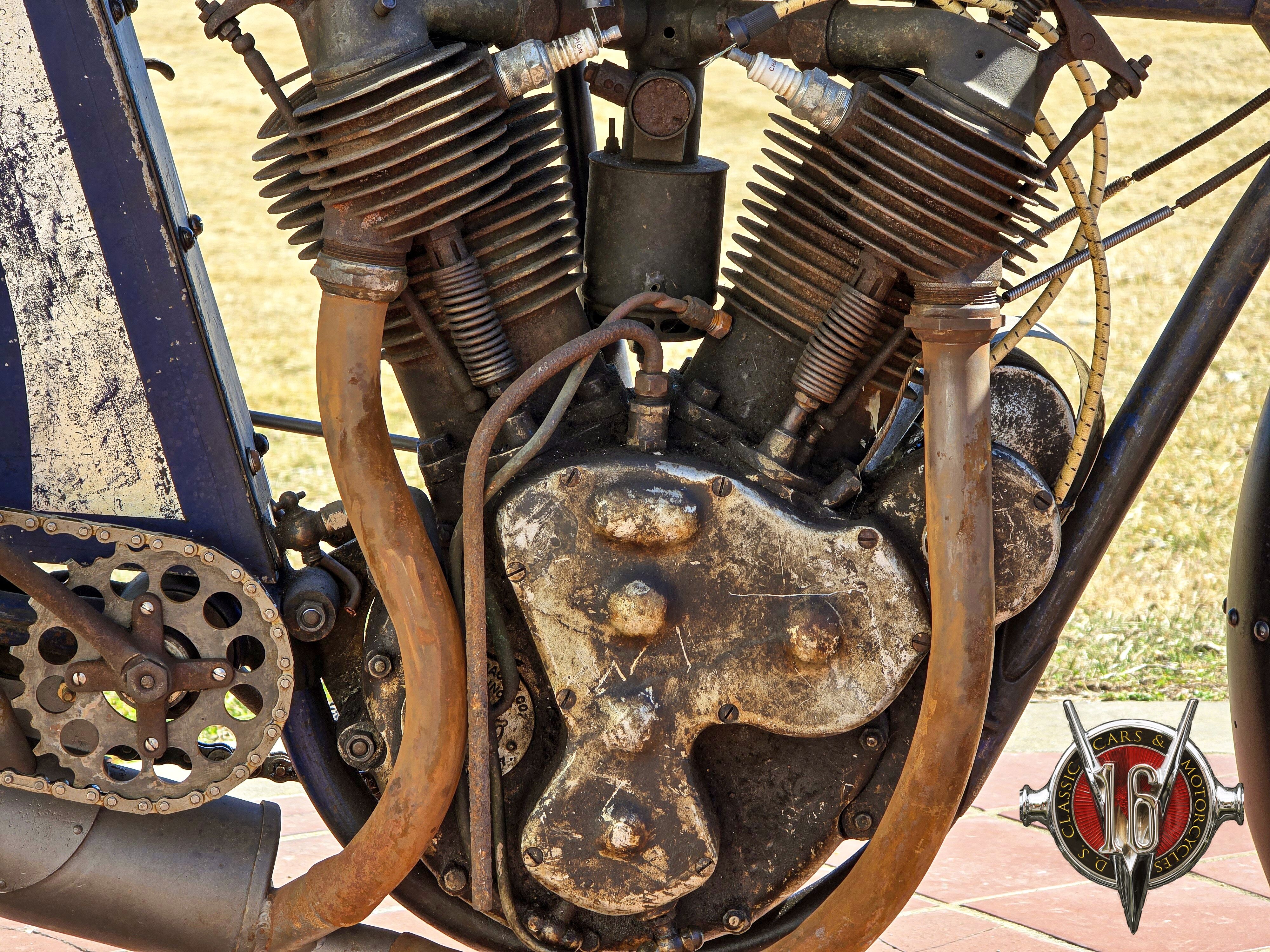
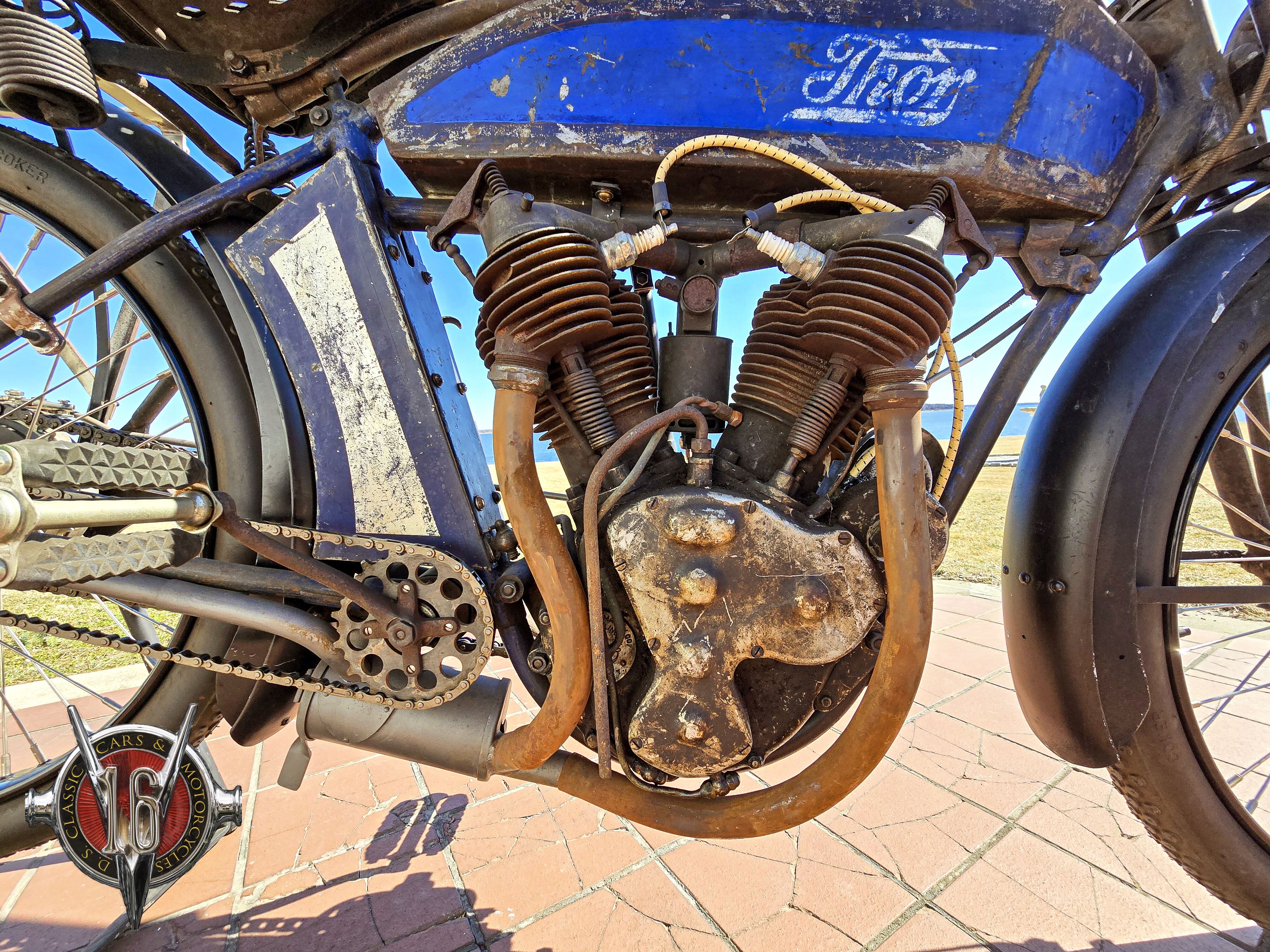
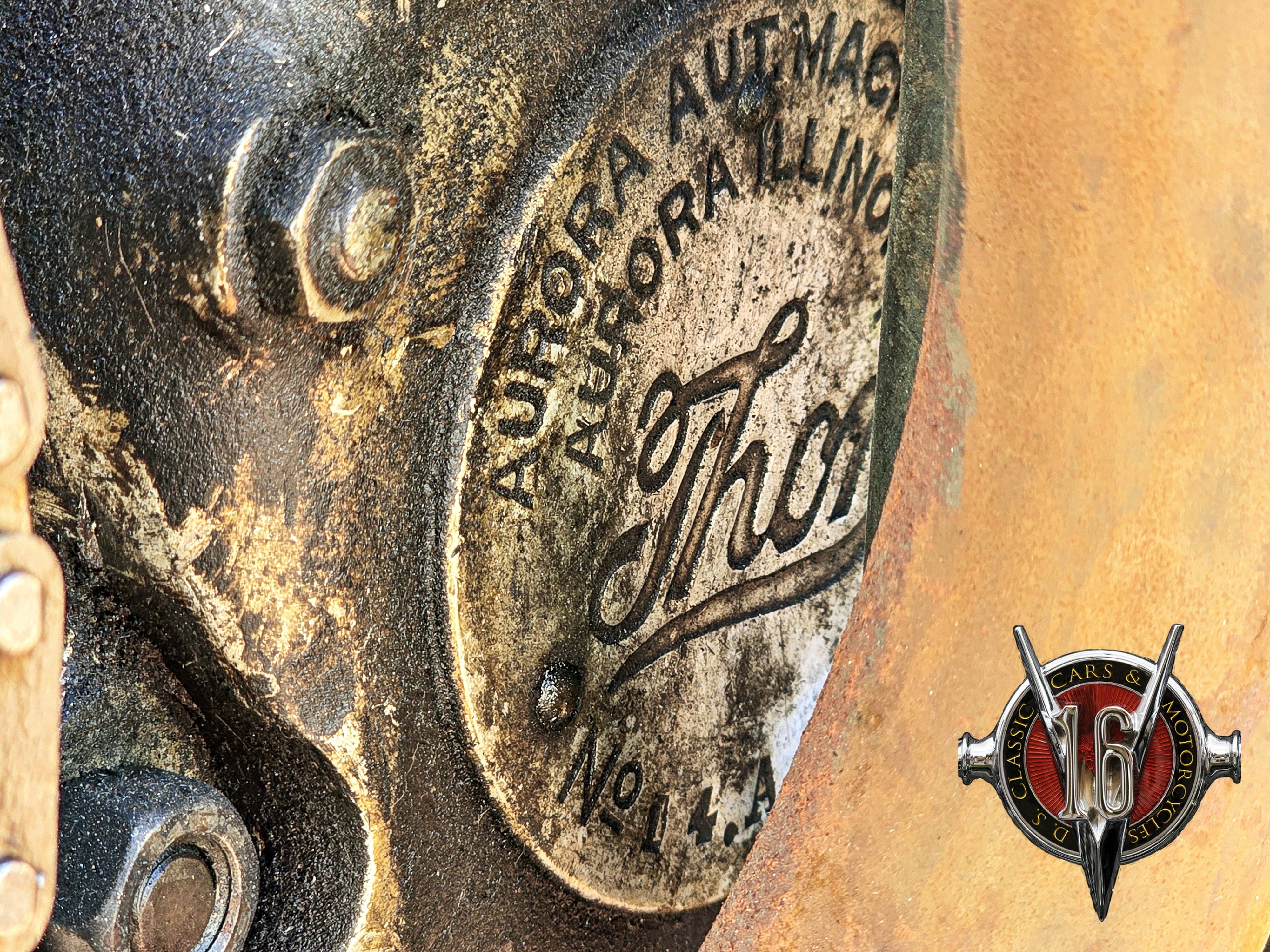
1914 Thor Twin Model 14A
Inventory Number: 5106
$59,500
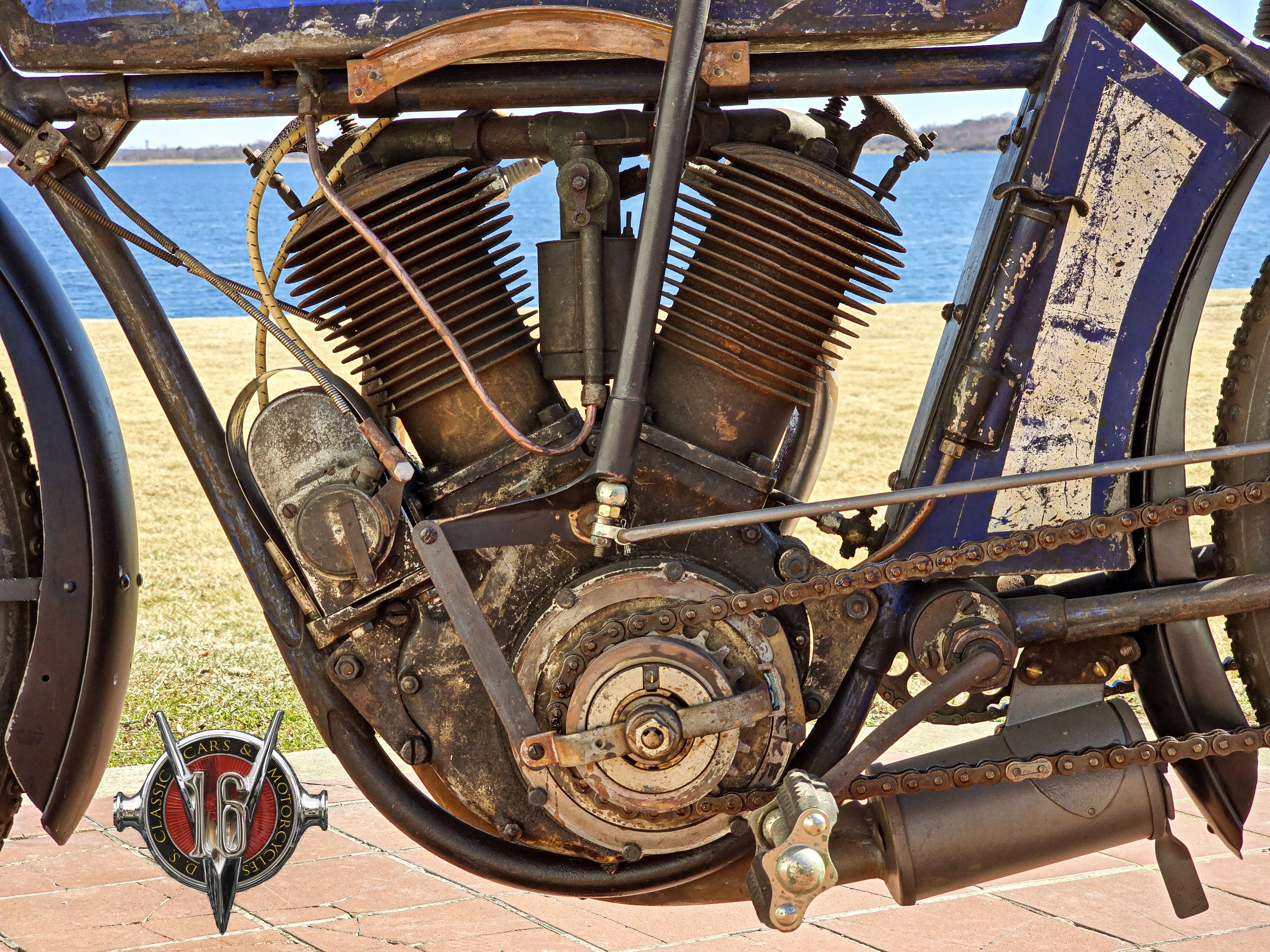
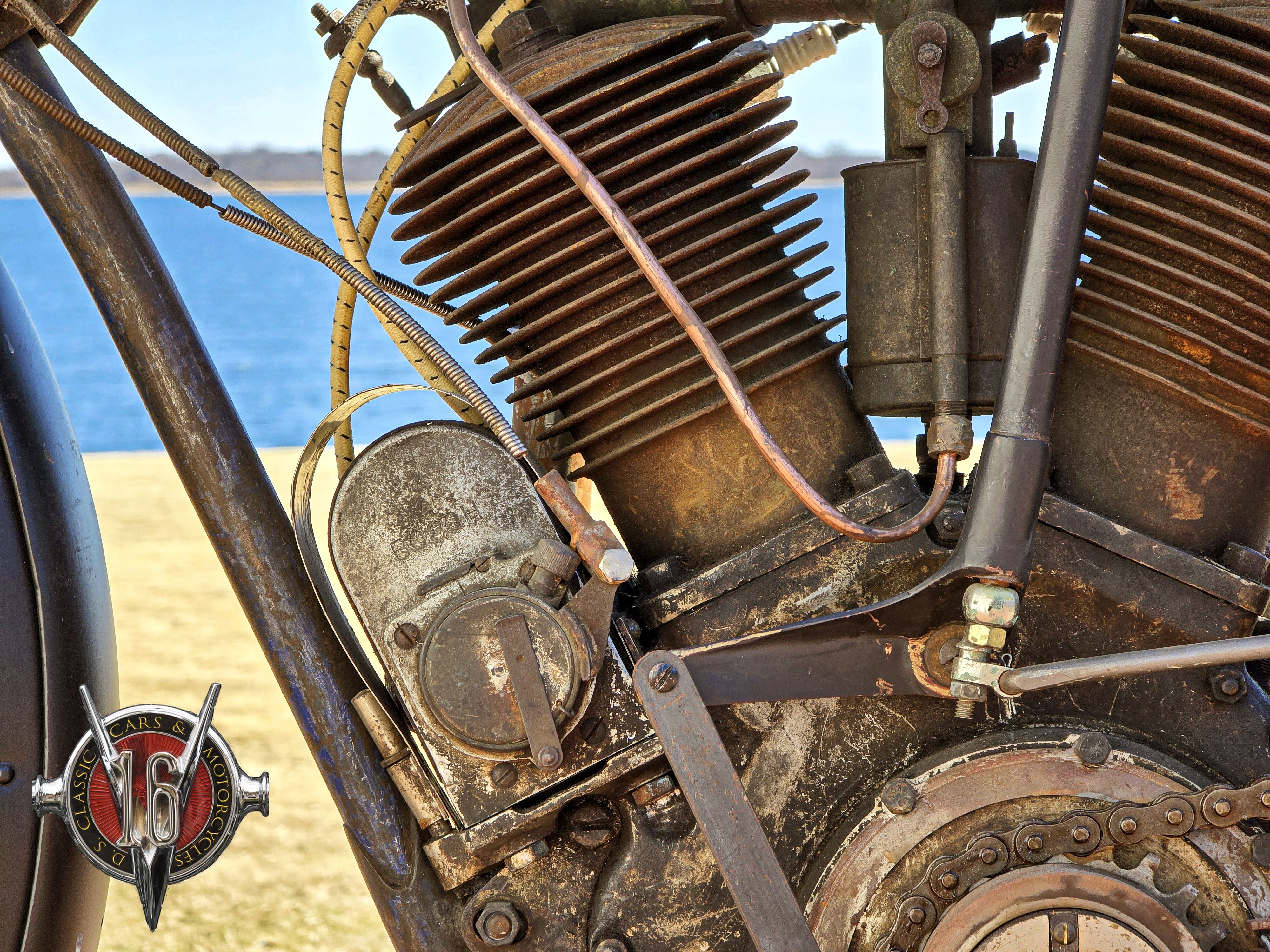
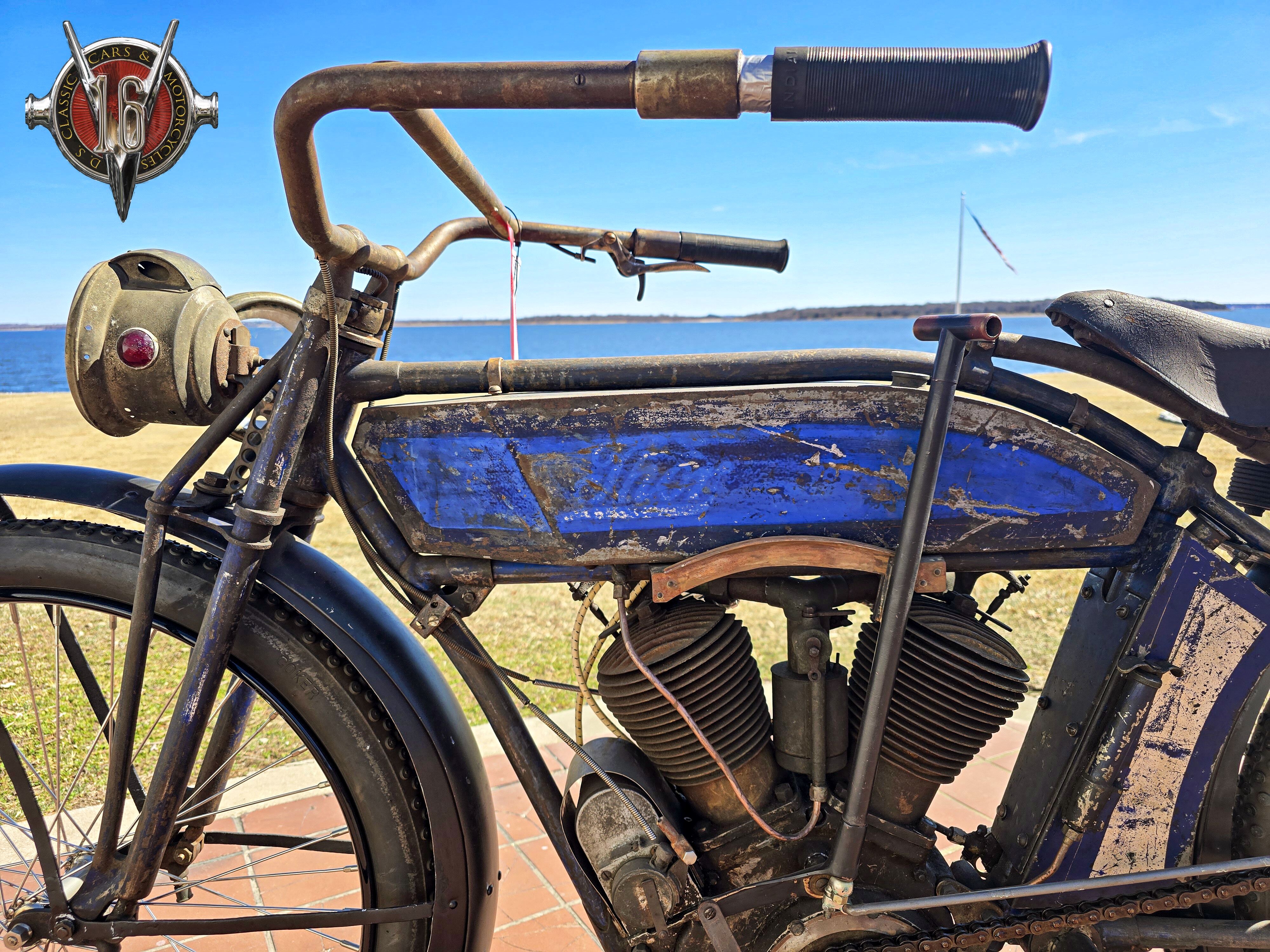
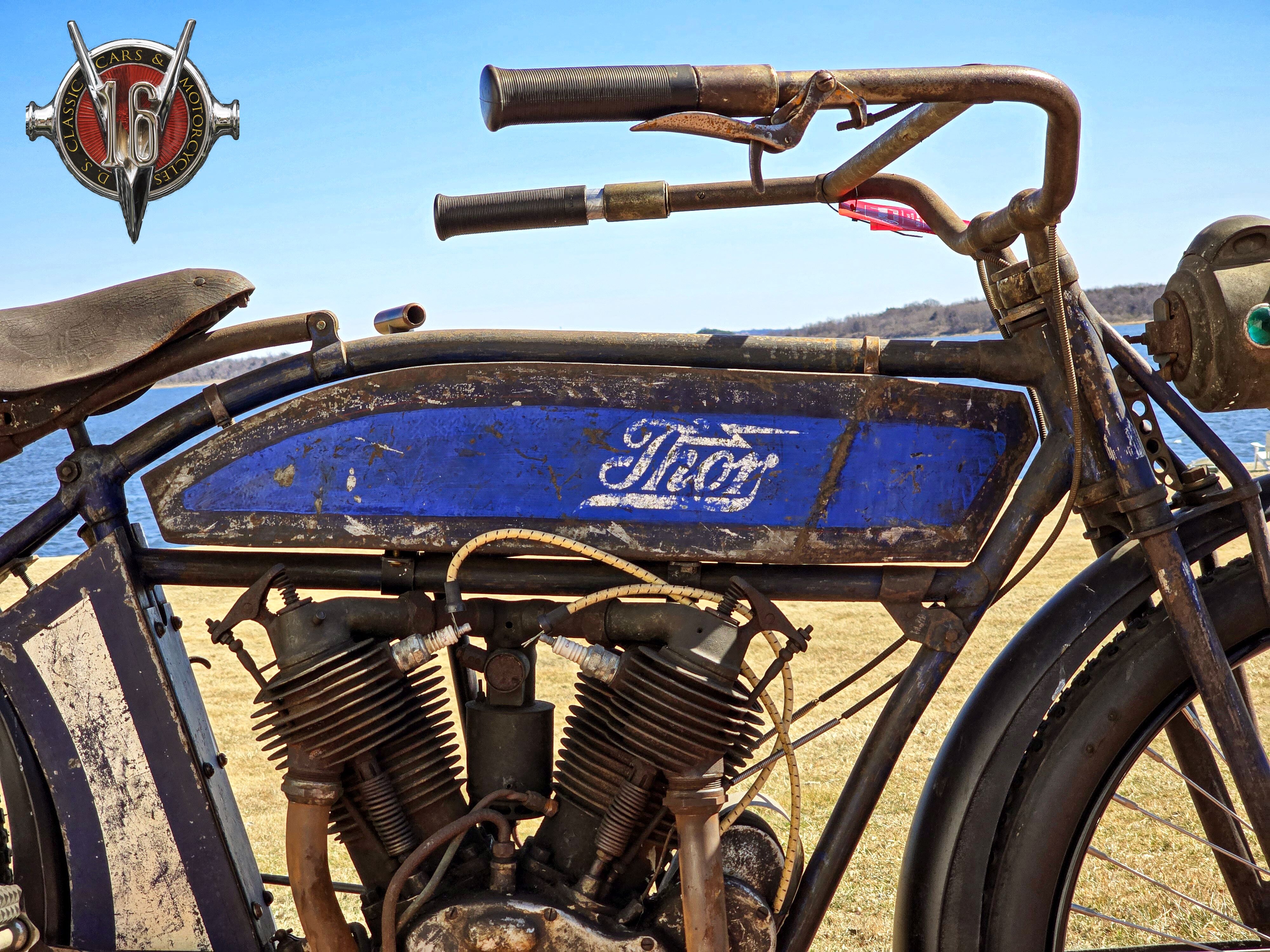
- ENGINE: 1,200 cc, 76.25 cu.in. V-twin with a bore and stroke of 3.57 x 3.80 inches F-head (intake over exhaust)
- ENGINE NO: 14A407
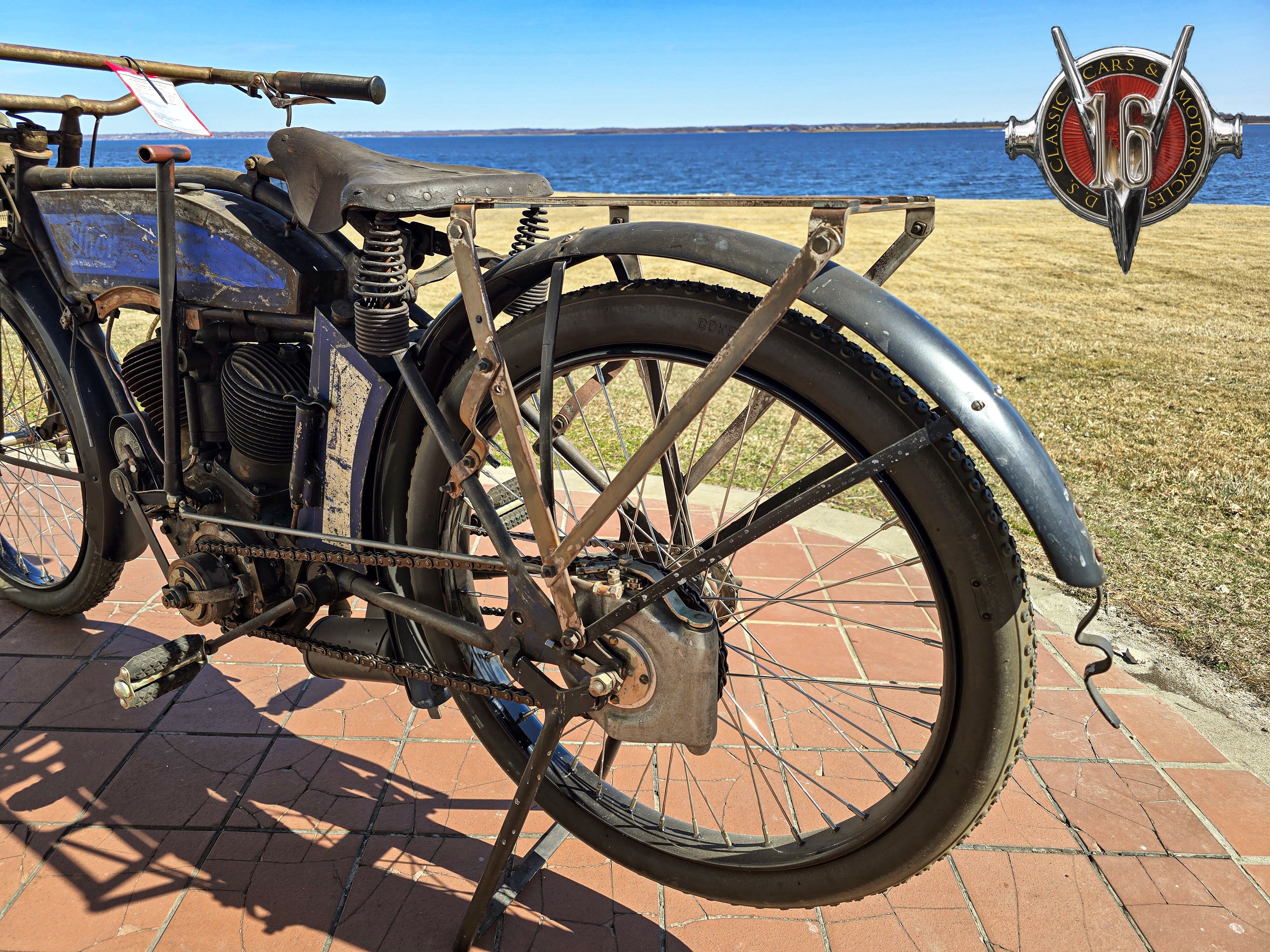
- TRANSMISSION: Two-Speed cast-iron chain drive mounted to the rear hub activated by linkage a right-side T-handled lever
- BRAKES: Left-side pedal-activated crank and chain Bendix bicycle-style coaster brake
- MAGNETO: Bosch
- CARBURETOR: Schebler
- HP: 9-14 (Motorycle Illustrated, June 1914)
- WHEELBASE: 55.5 in.
- TIRES: 28 in. x 2.75 in.
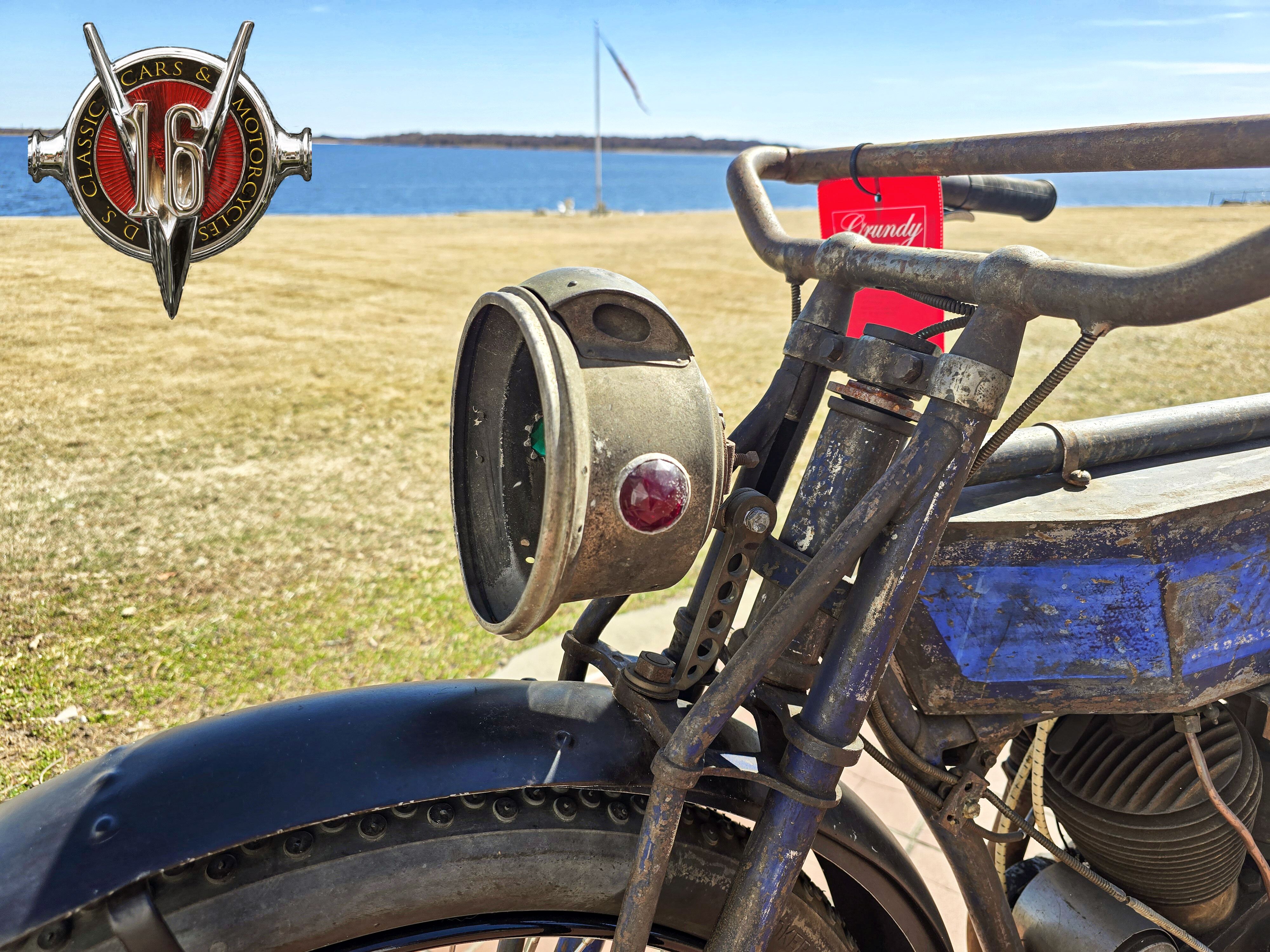
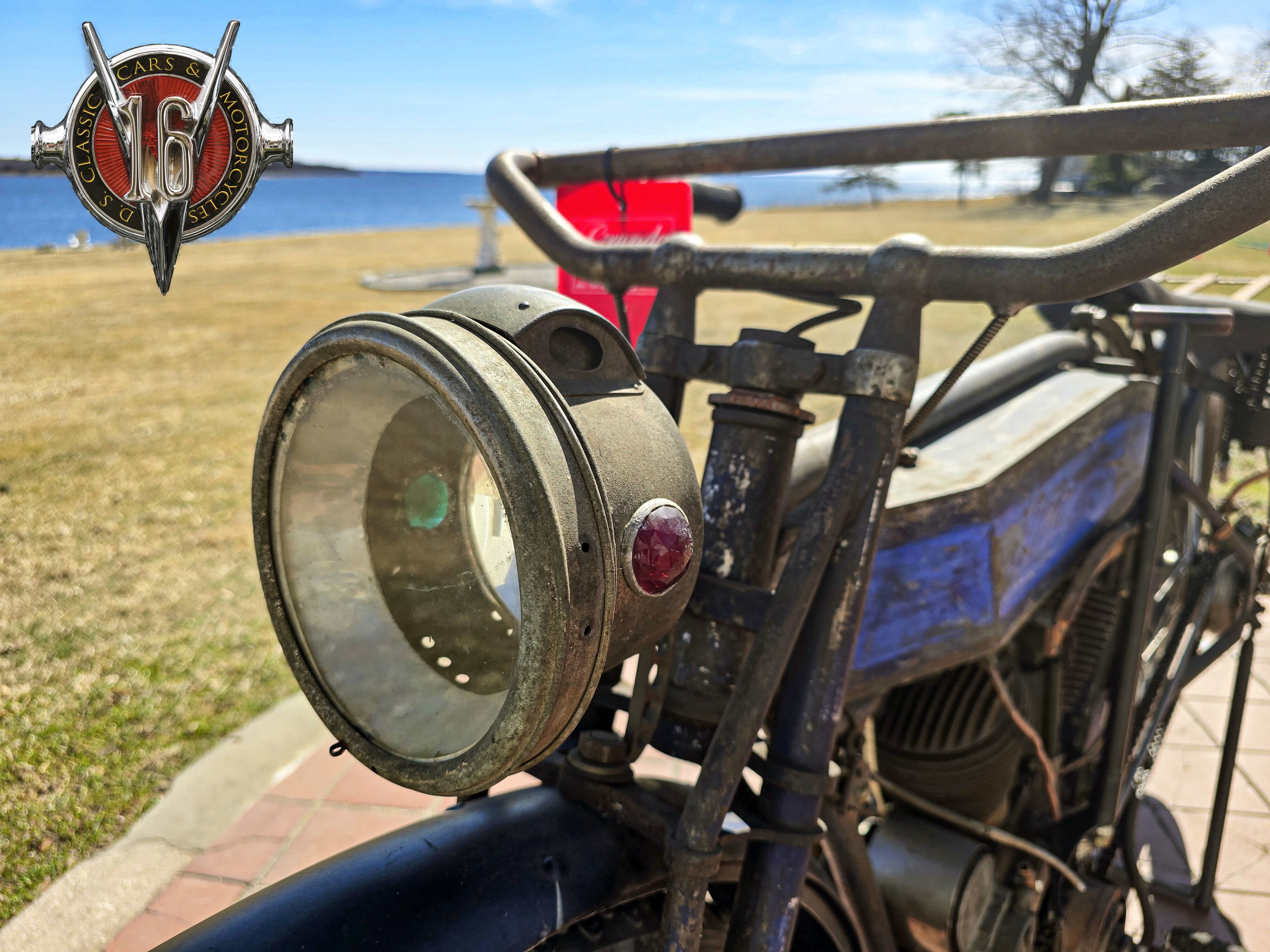
- HEADLIGHT: Acetylene
Peter Egan of Cycle World describes an experience riding this model in a captivating article 1996 article, 1914 Thor Twin: “The intakes are operated by an external pushrod and rocker arm, which need to be hand-oiled from time to time.”
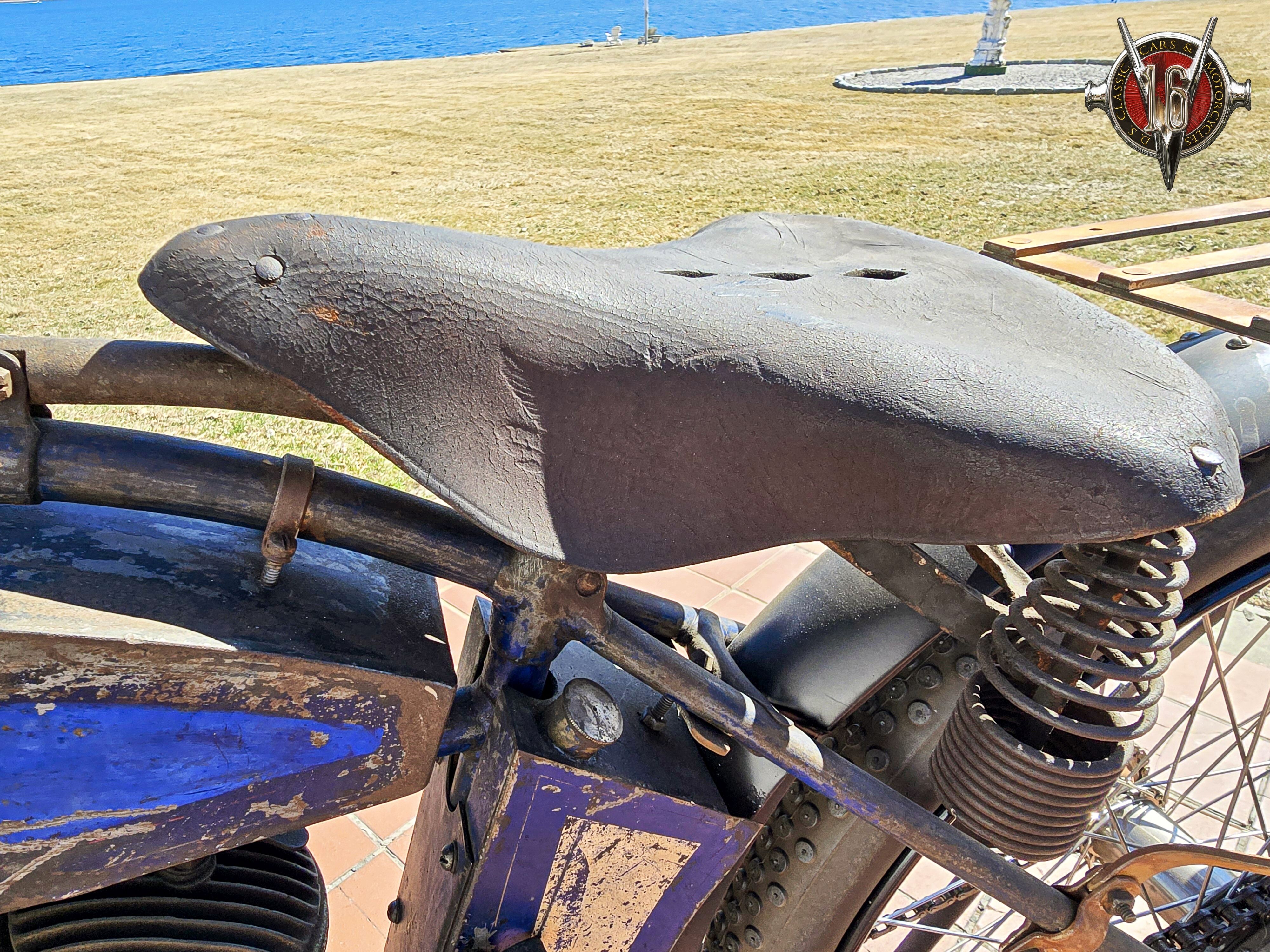
LUBRICATION: “Internal engine oil is pumped from a tank on the seat downtube, and never returns—total loss. There’s also a small thumb-pump on the oil tank, to provide extra pressure for hard running.”
CLUTCH: “the enclosed clutch, which is operated by a fore-aft lever that you also have to twist to change gears”
SUSPENSION: Rear hardtail. “The front uses a rigid truss that contains thin internal springs, allowing a minute amount of travel on the leading links, which rock on a fulcrum and pull downward on the springs.”
Egan also goes into fascinating STARTING INSTRUCTIONS:
- “Put bike on rear stand.
- Shove T-handled clutch lever all the way forward with left hand.
- Turn T-handle straight ahead, parallel with tank, which is high gear (bike is too hard to start in low).
- Pull in right-hand compression-release lever on handlebar.
- Set throttle at about 1/4 open by turning LEFT twistgrip inward (no return spring, it stays where you leave it).
- Turn RIGHT twistgrip clockwise, away from yourself to retard magneto advance.
- Set choke by twisting a threaded disc in the carburetor throat.
- Turn on fuel petcock under tank.
- Turn on oil petcock (very, very important) on oil line at right rear of engine.
- Stand up on pedals, push hard to get engine turning over.
- Pedal like crazy.
- When engine is spinning fast, let go of compression release lever.
- When engine fires, pull clutch lever back into neutral.
- Push backwards on bicycle pedal so Bendix brake stops the rear wheel from spinning.
- Get off bike to roll it forward, then fold up rear stand.
- Climb back on bike and roll on just enough throttle with left grip.
- Tum T-handle clutch lever sideways for first gear and ease lever forward with left hand.
- Make same left hand leap back to throttle for more gas, then back to clutch lever for more clutch, etc., until underway.
- Adjust magneto advance to suit load and speed.
- You are now rolling. To shift, you simply dial the throttle back (counterclockwise with left hand), pull backwards on the clutch lever, turn it sideways into top gear and shove it forward again.”
In 1908, it designed automatic intake valves on its engine and offered options like battery or magneto ignitions and belt or chain drives. From 1909–1913, William Ottaway led Thor to racing success, setting national records in dirt and boardtrack racing with engineer Al Crocker. Ottaway would go on to become one of the first engineers employed by Harley-Davidson, and Crocker would found the Crocker Motorcycle Company. In 1910, Thor introduced a V-twin F-head engine with one cylinder pointing straight up, and by 1913, it had developed a more advanced, larger-displacement engine in a typical V-shape.
As demand declined with the rise of the Ford Model T, engine production ceased by 1916. Motorcycle production dwindled, mostly assembled from leftover parts, until 1920. The Aurora Automatic Machinery Company would go on to shift its focus to tools and household appliances, but not before leaving an indelible mark on the history of the American motorcycle.