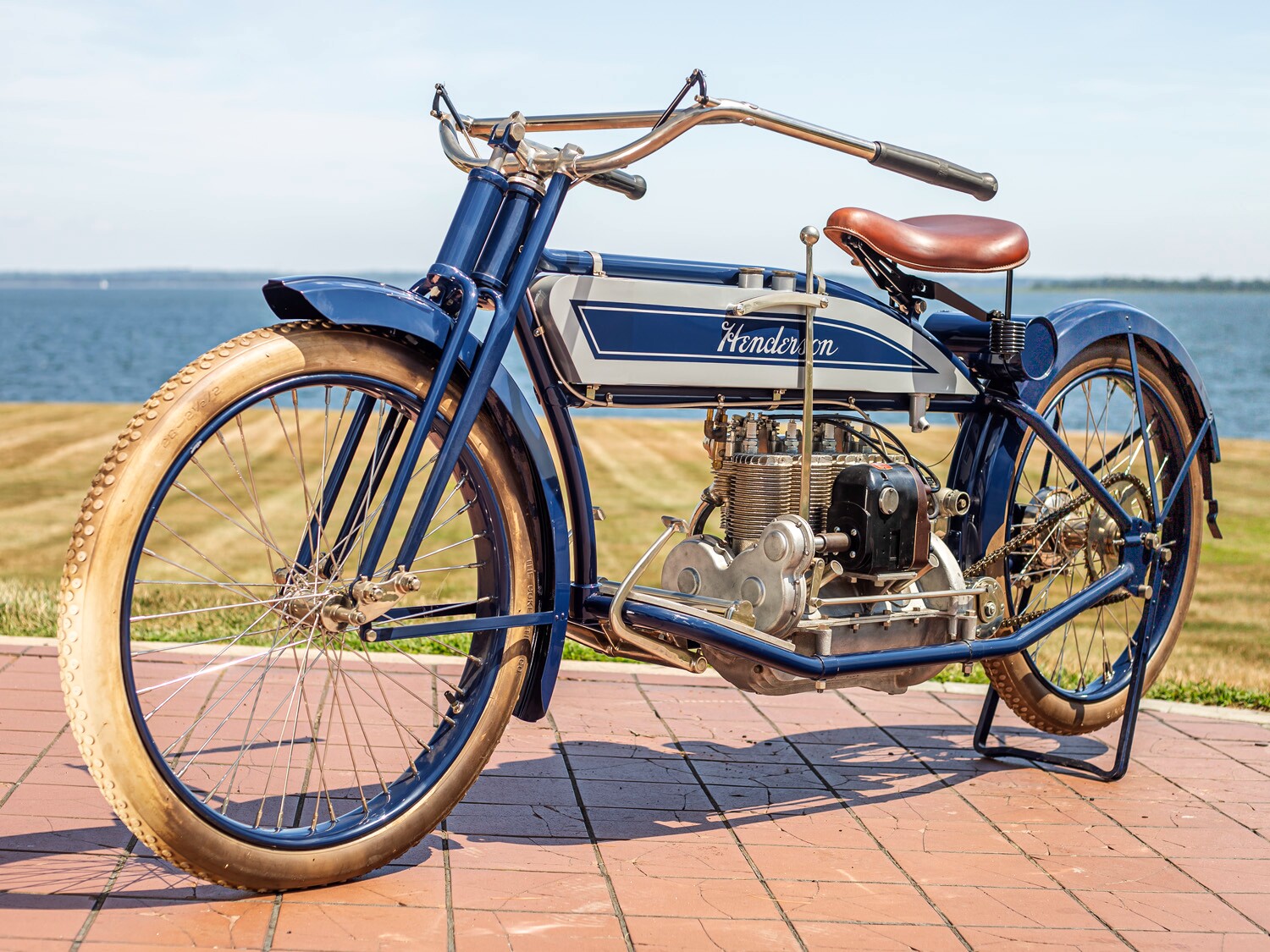
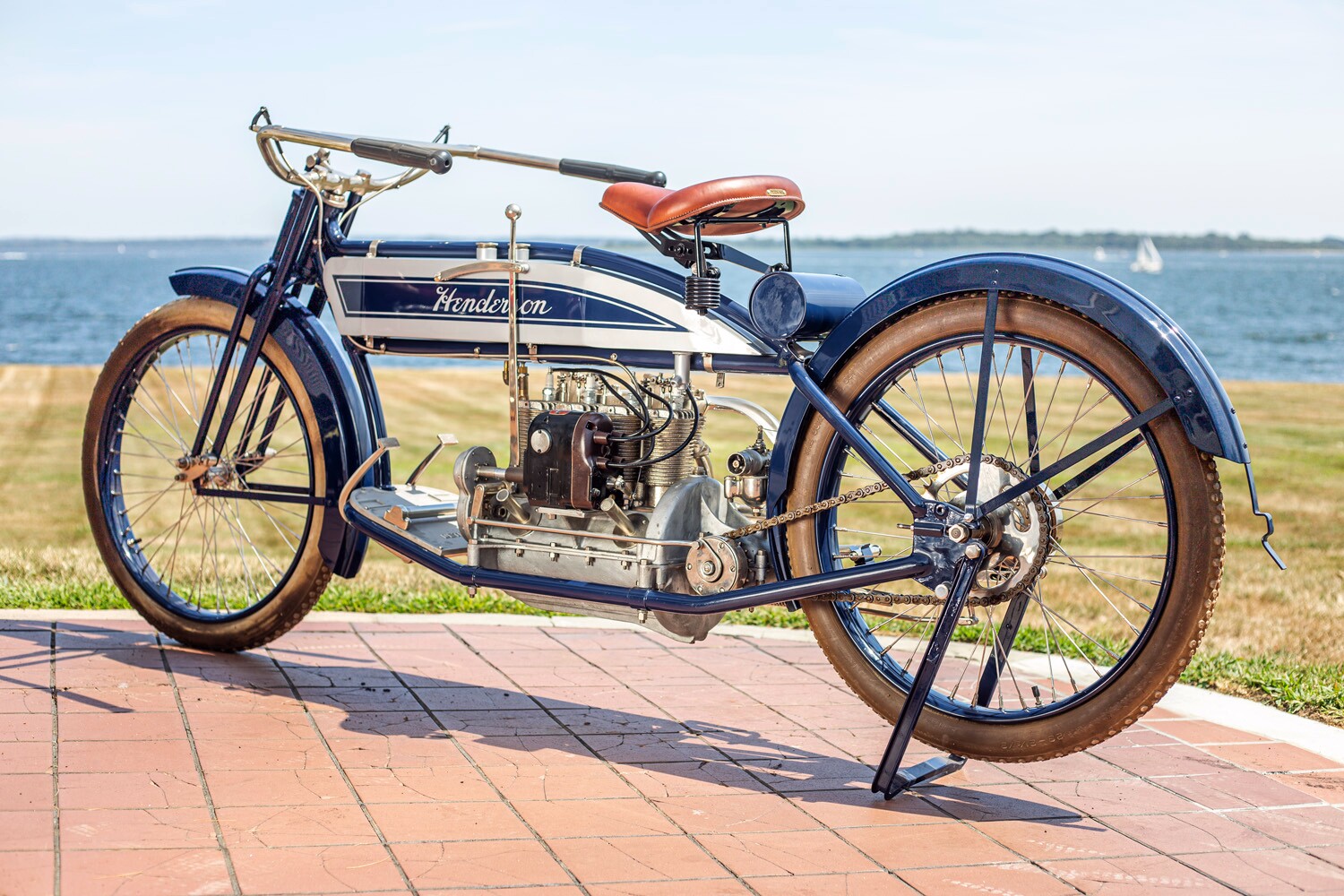
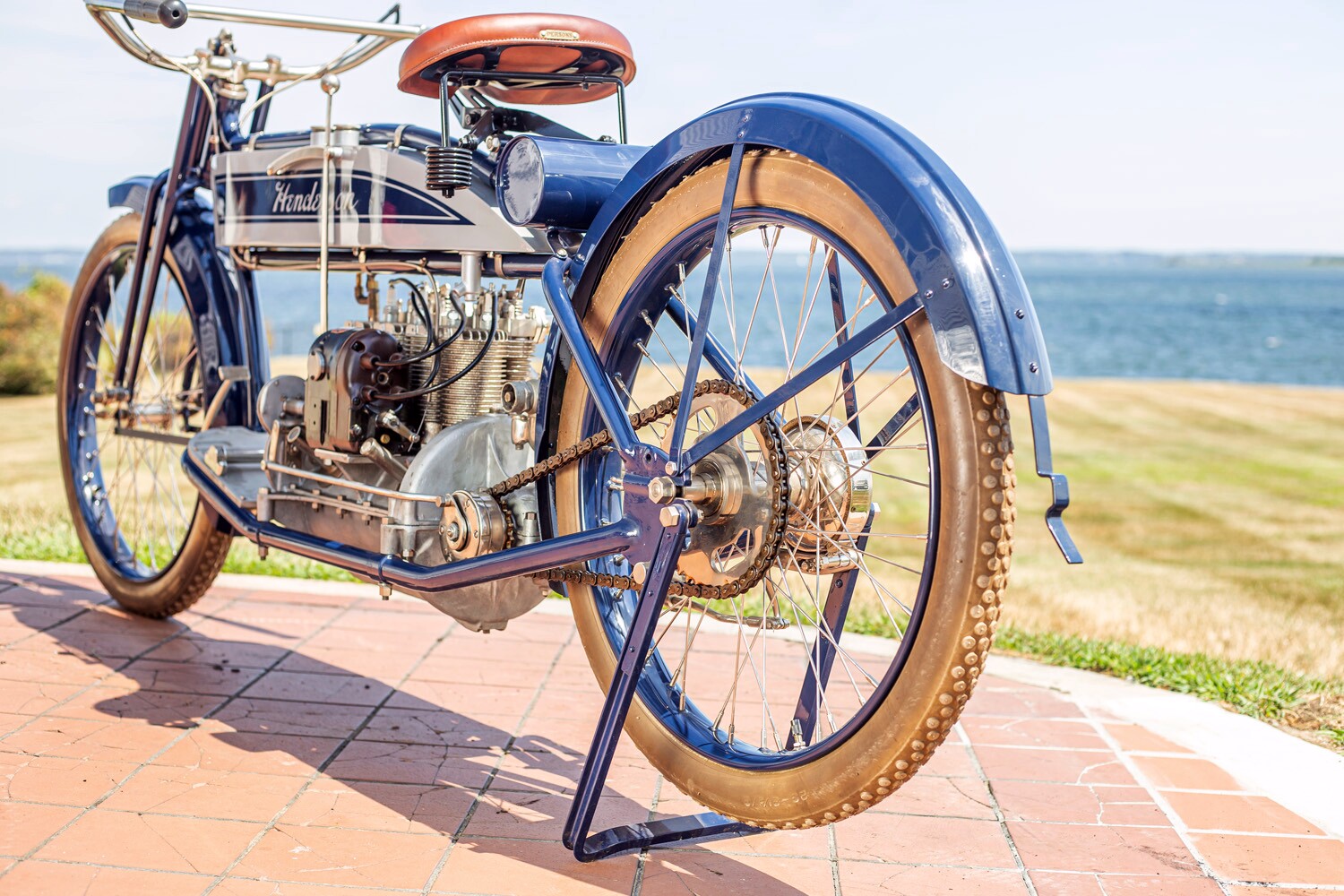
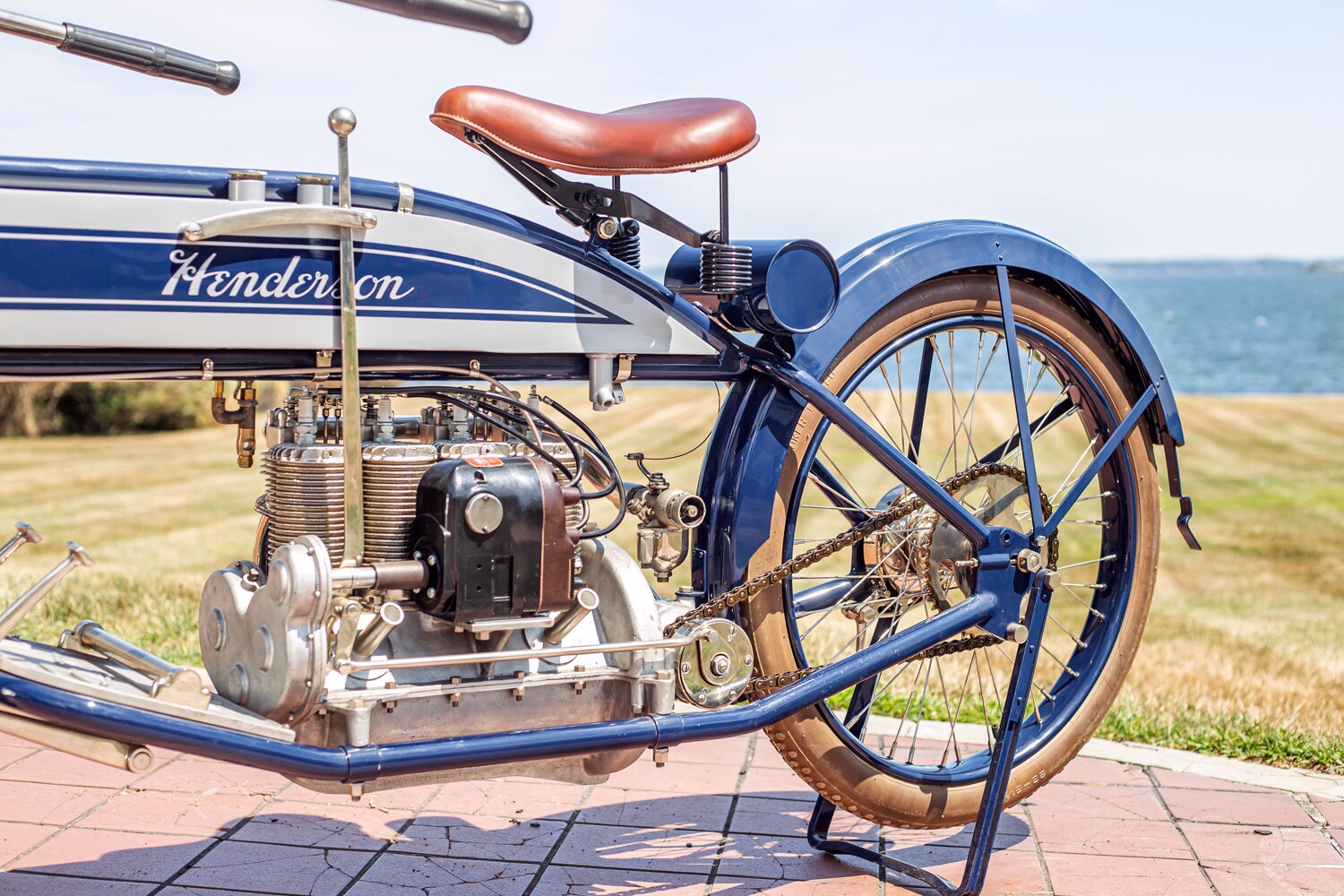
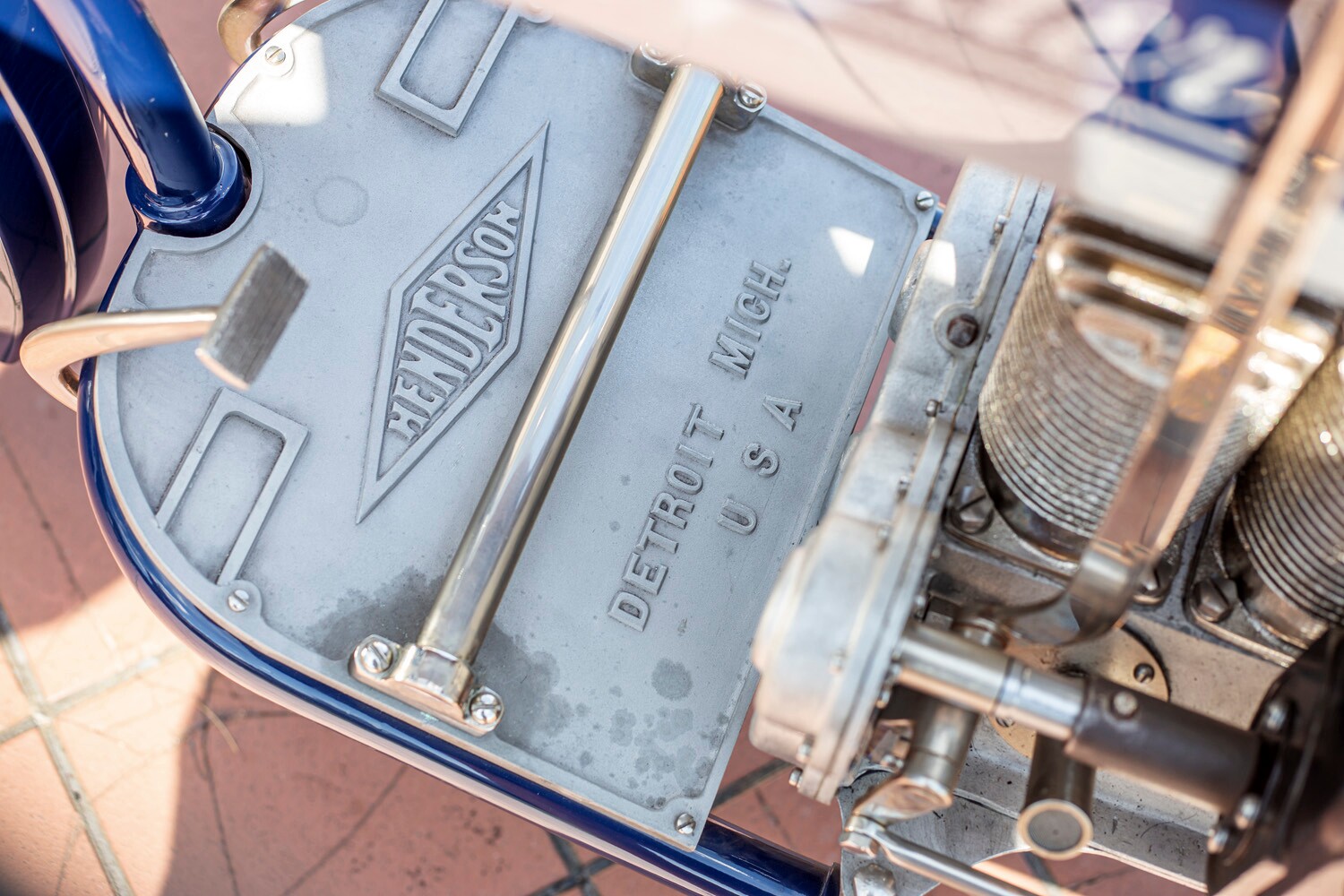
1913 Henderson 4
Inventory Number: 5046
$225,000
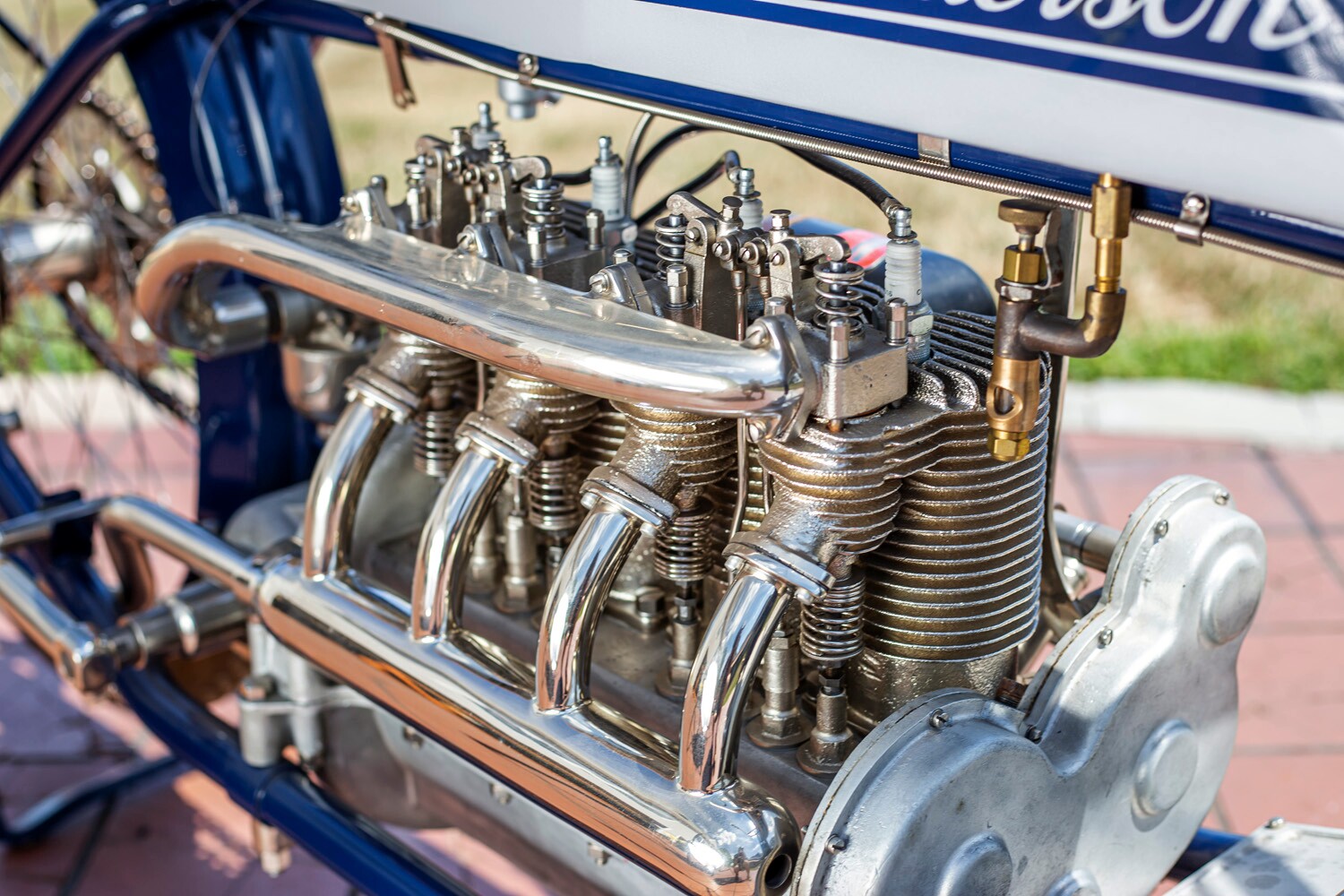
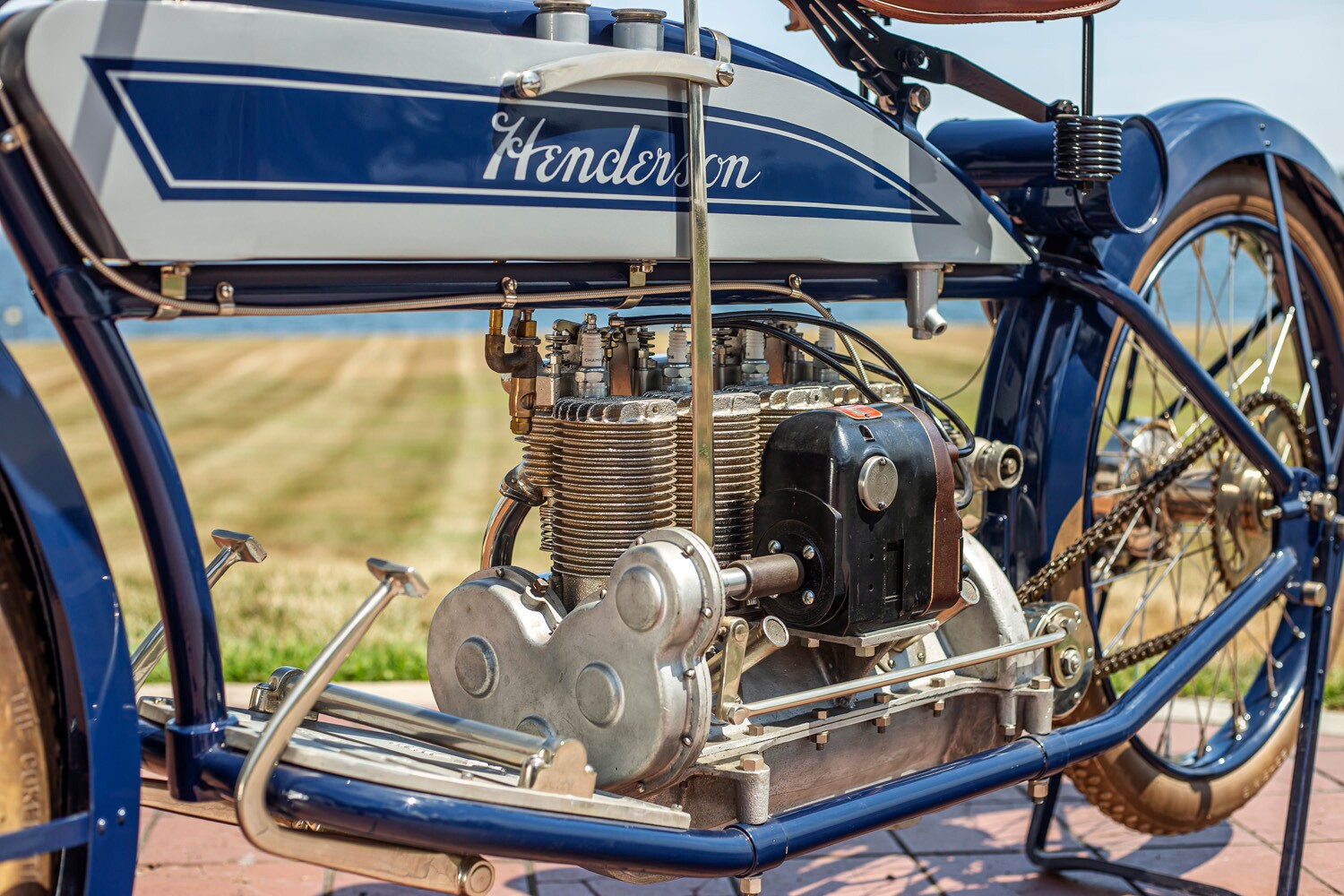
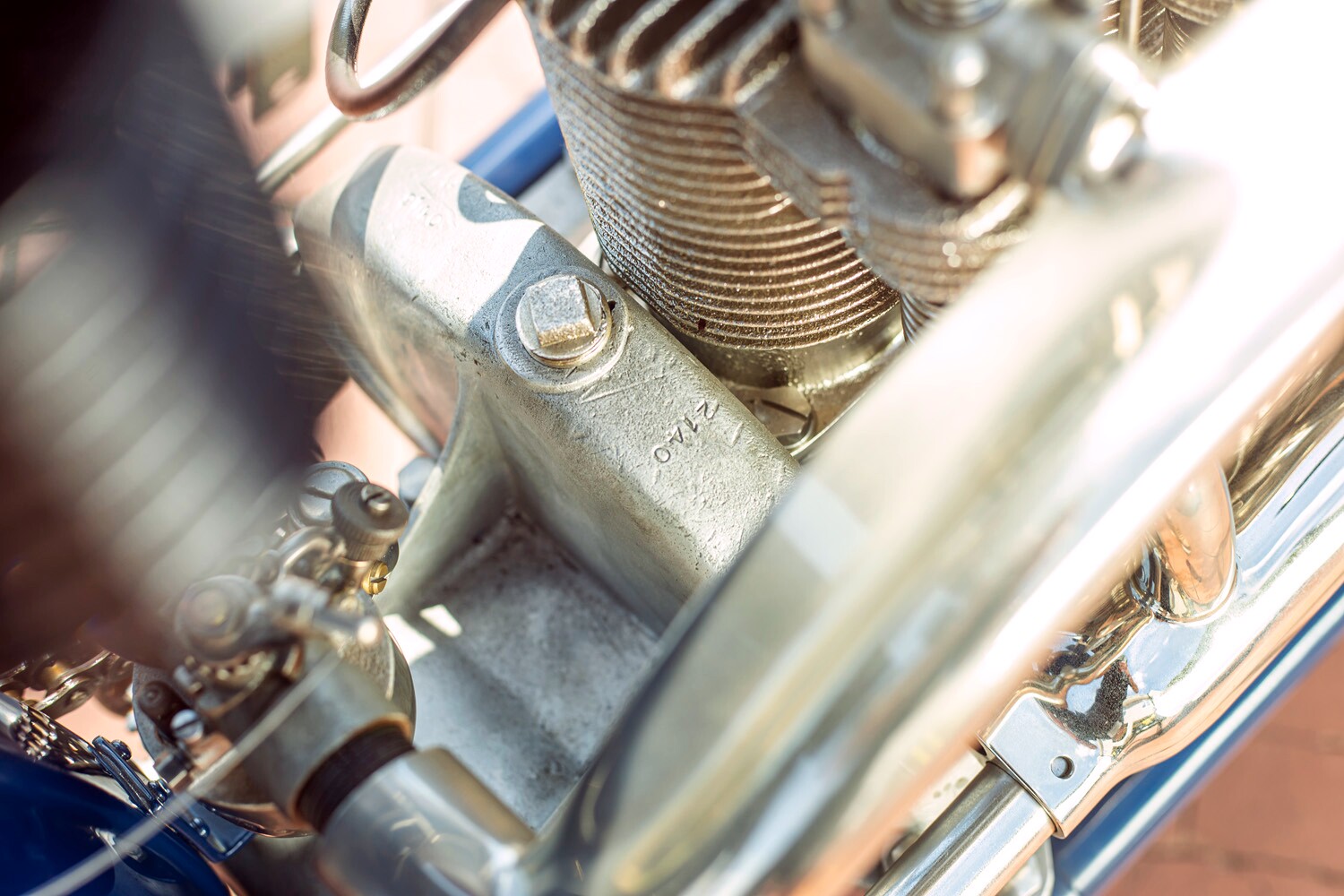
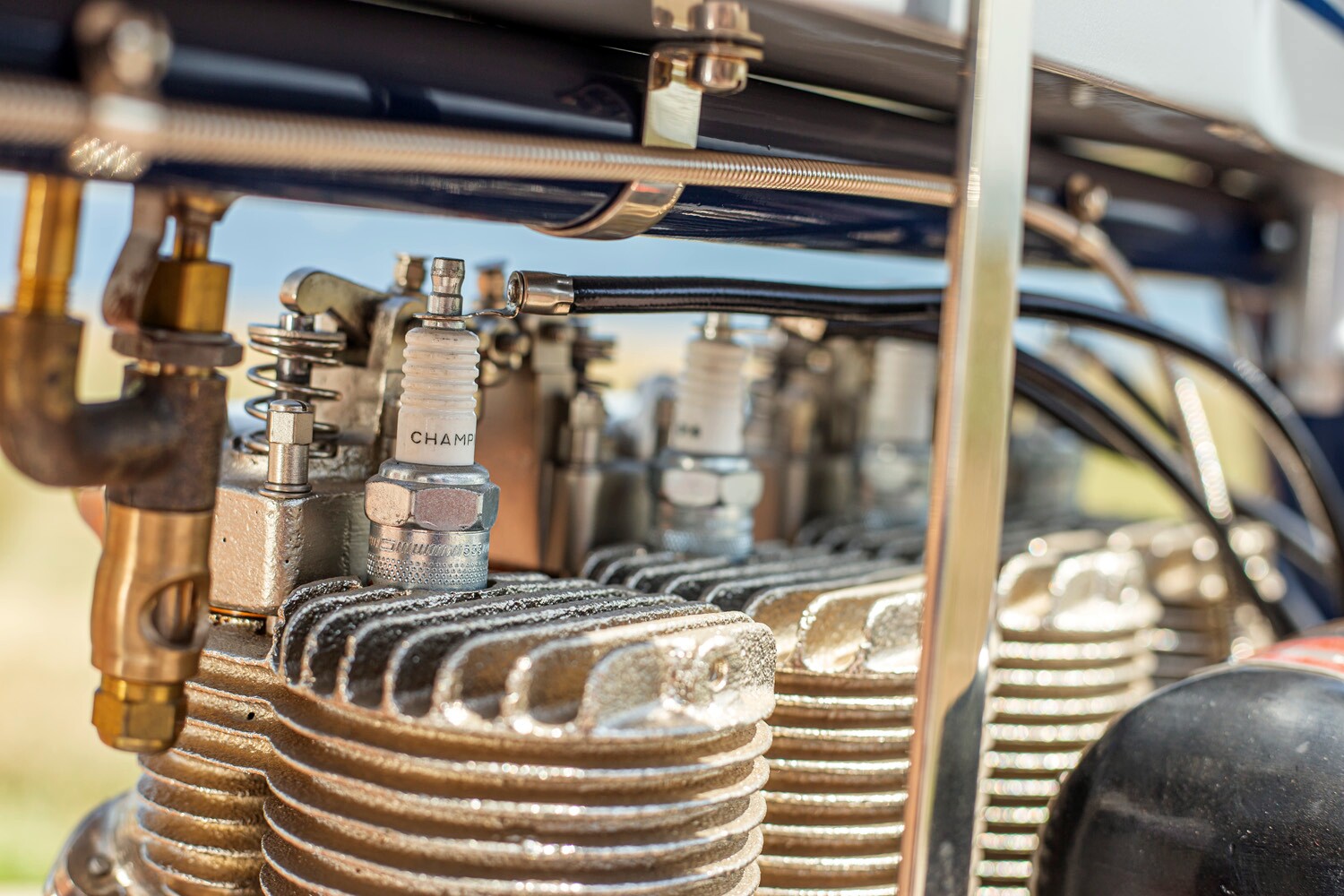
- ENGINE: Four-Cylinder 965 cc
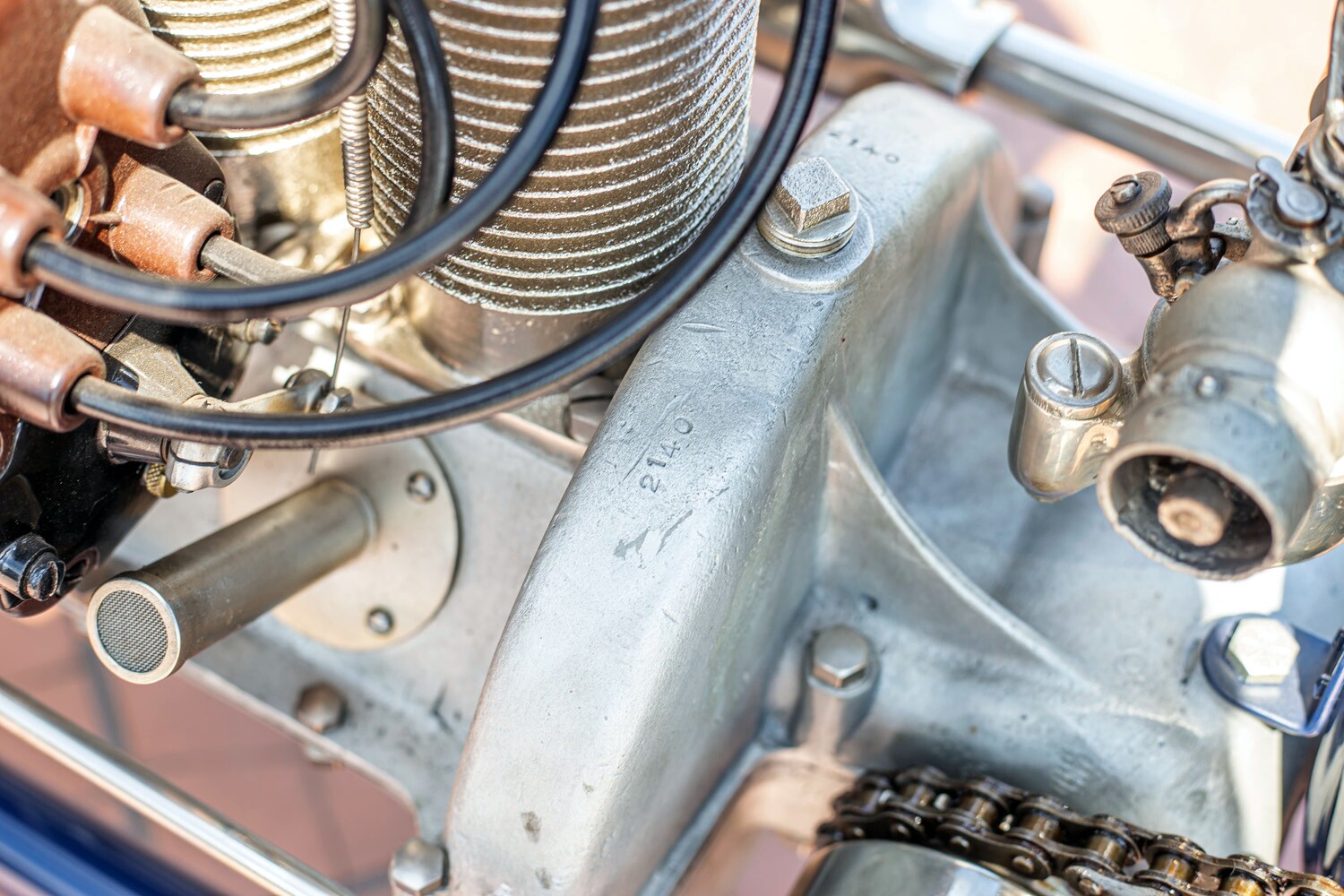
- ENGINE NO: 2140
- HP: 7
- WHEELBASE: 65”
- WEIGHT: 310 LB.
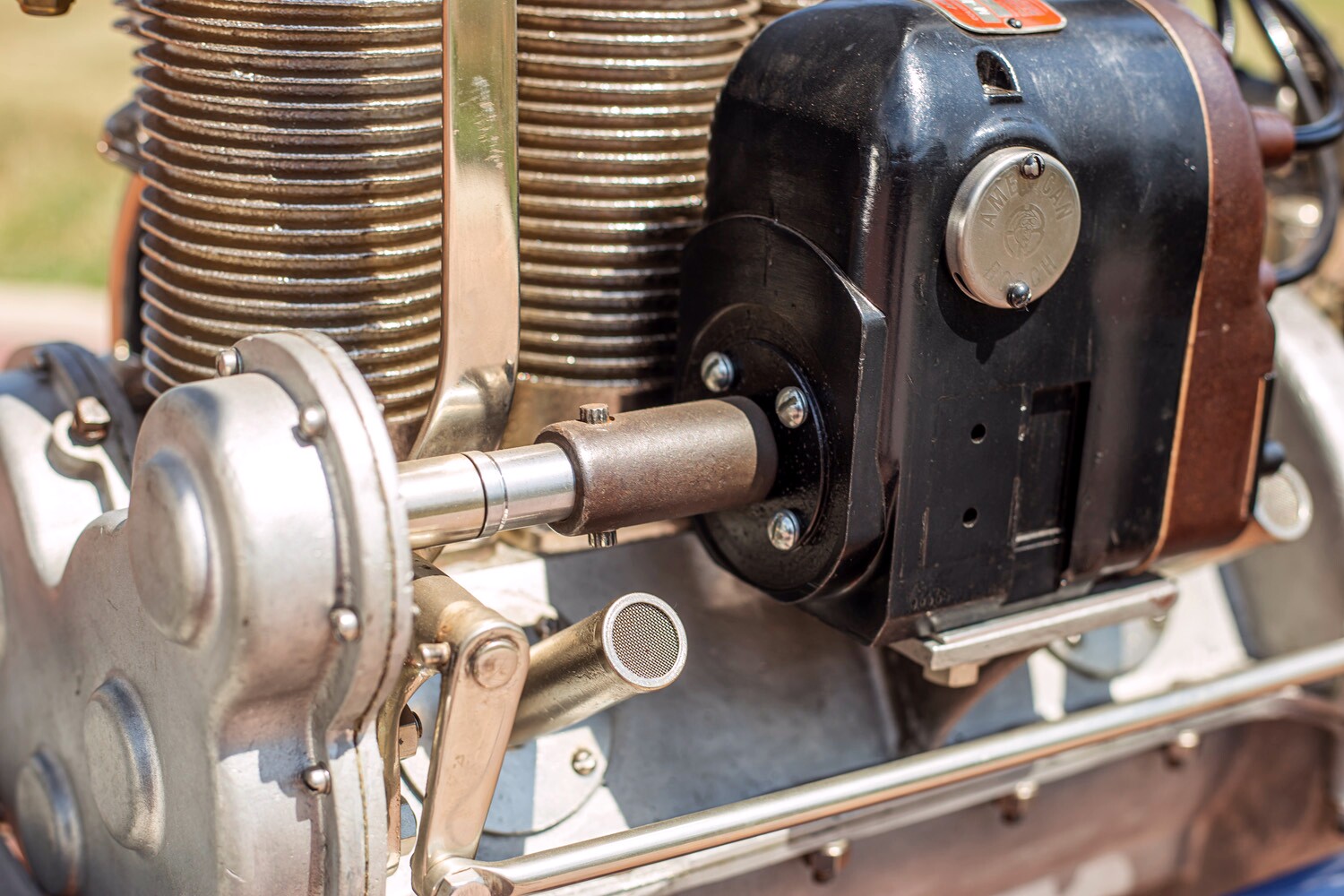
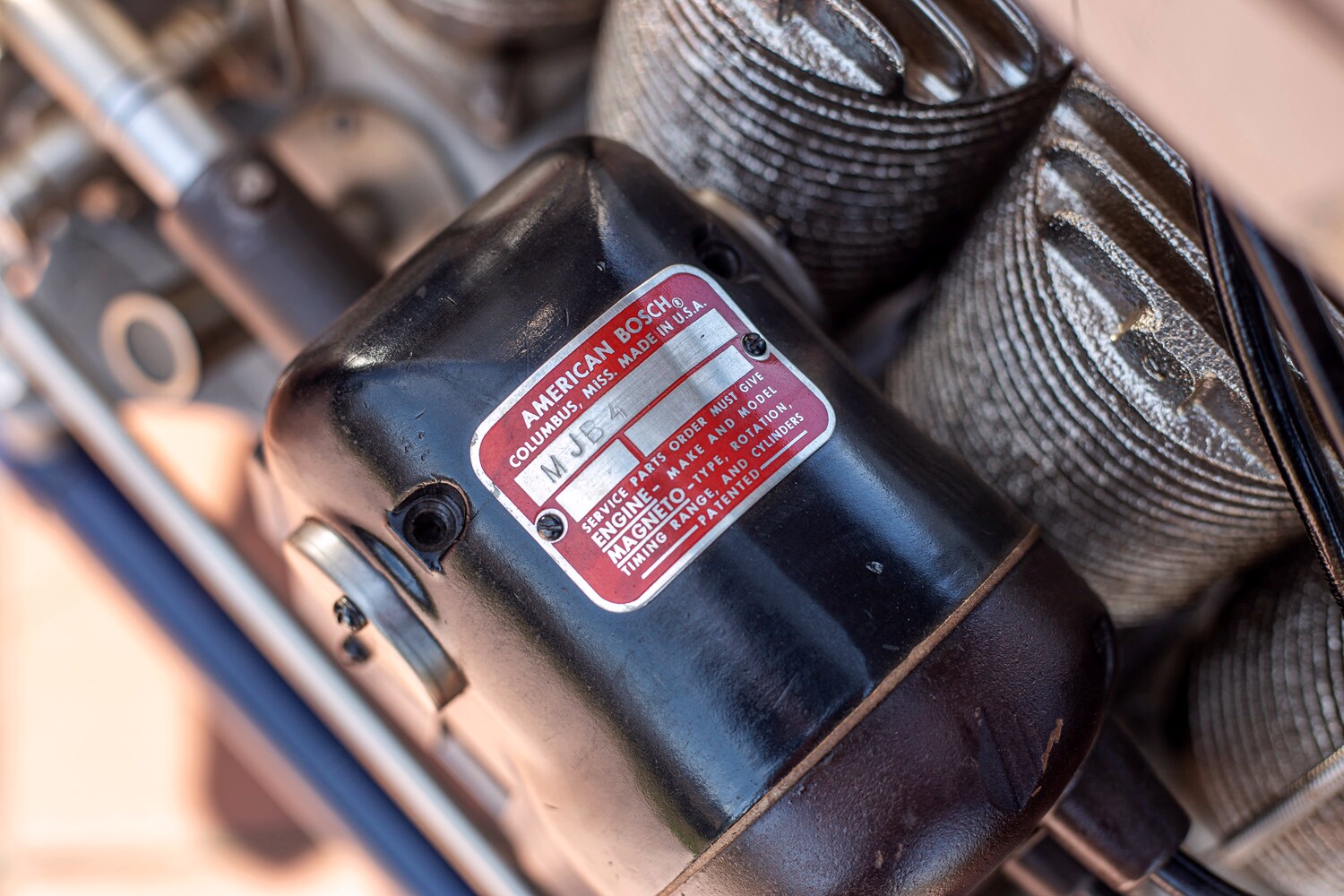
- MAGNETO: Bosch #MJB4
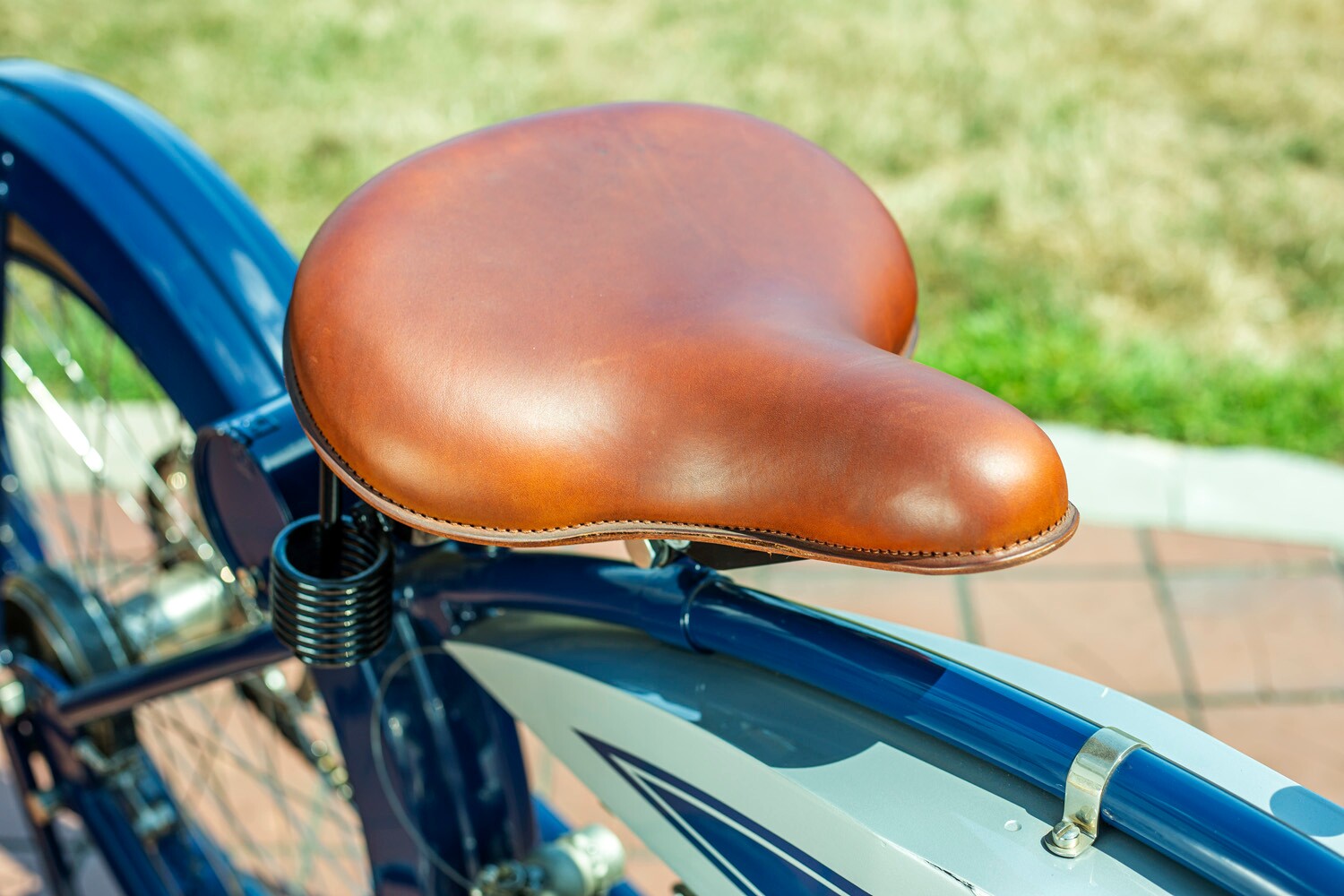
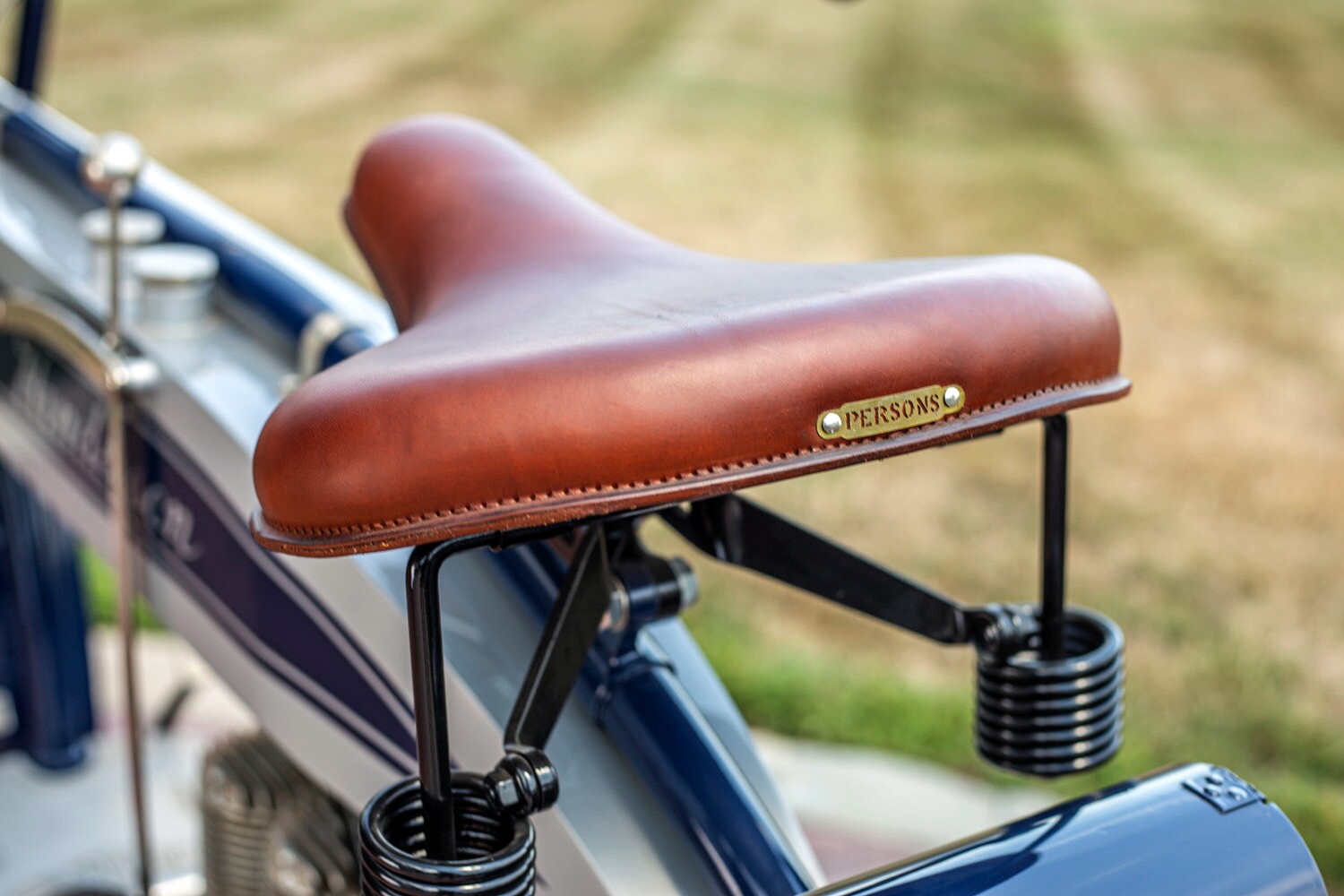
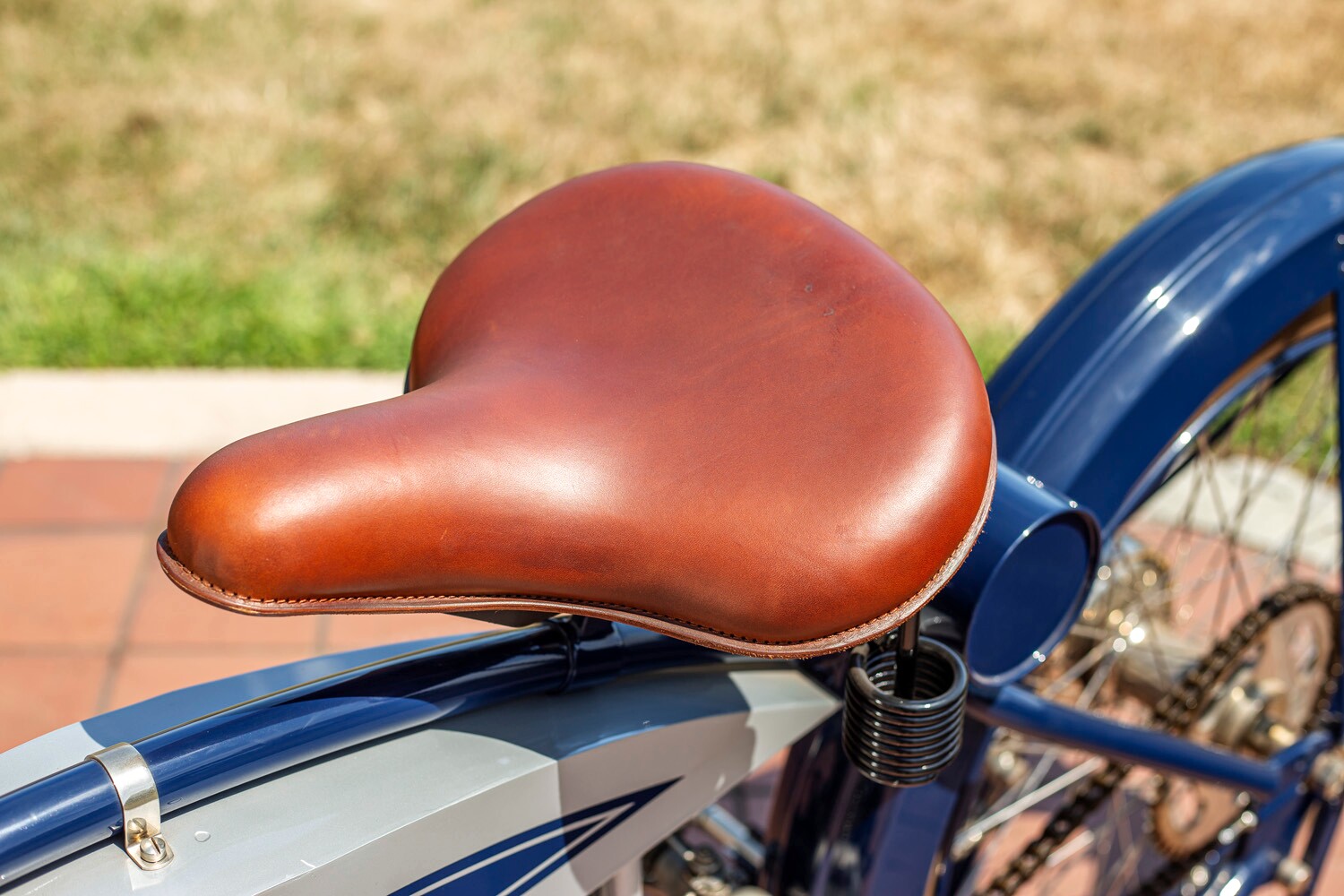
- SEAT: Persons
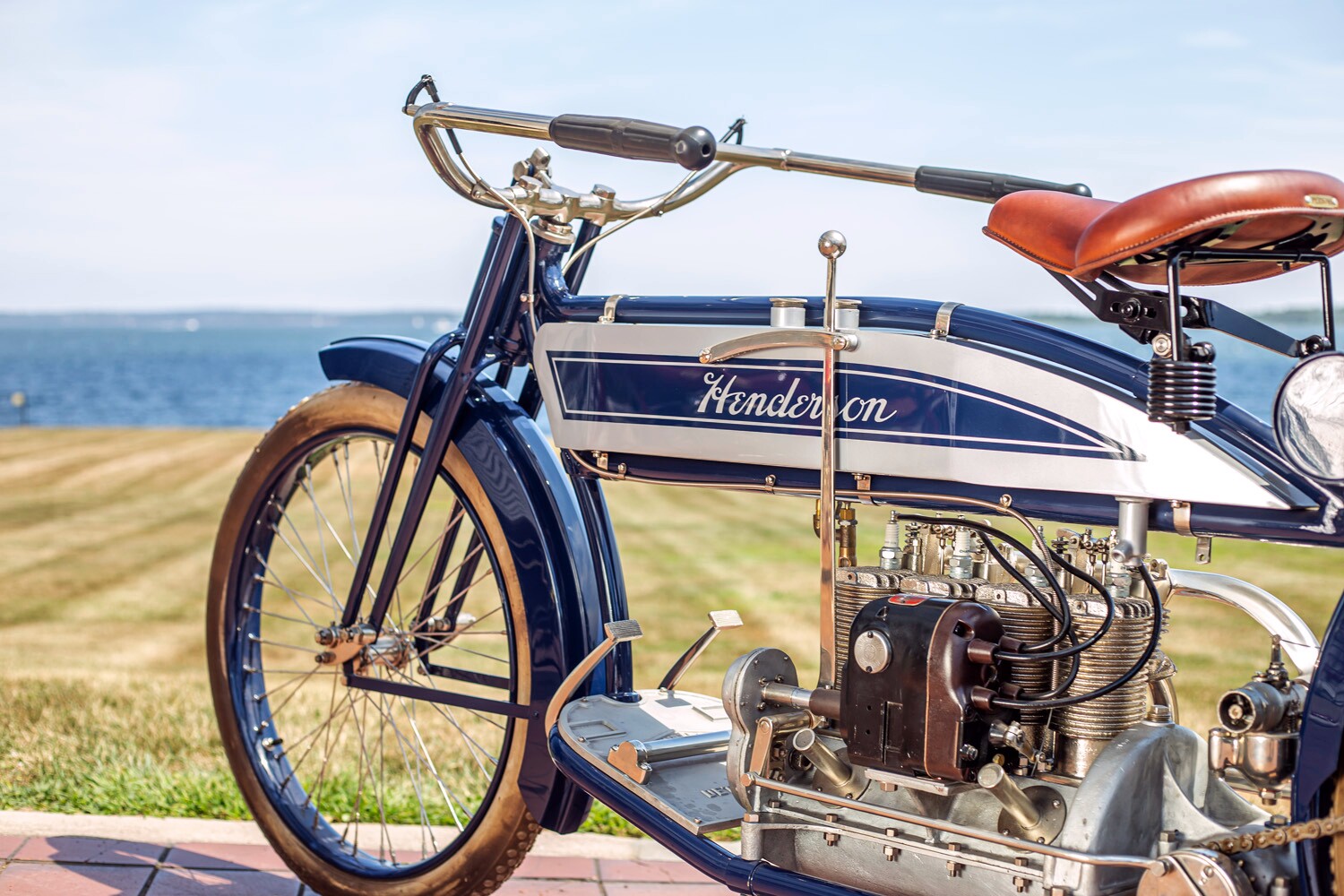
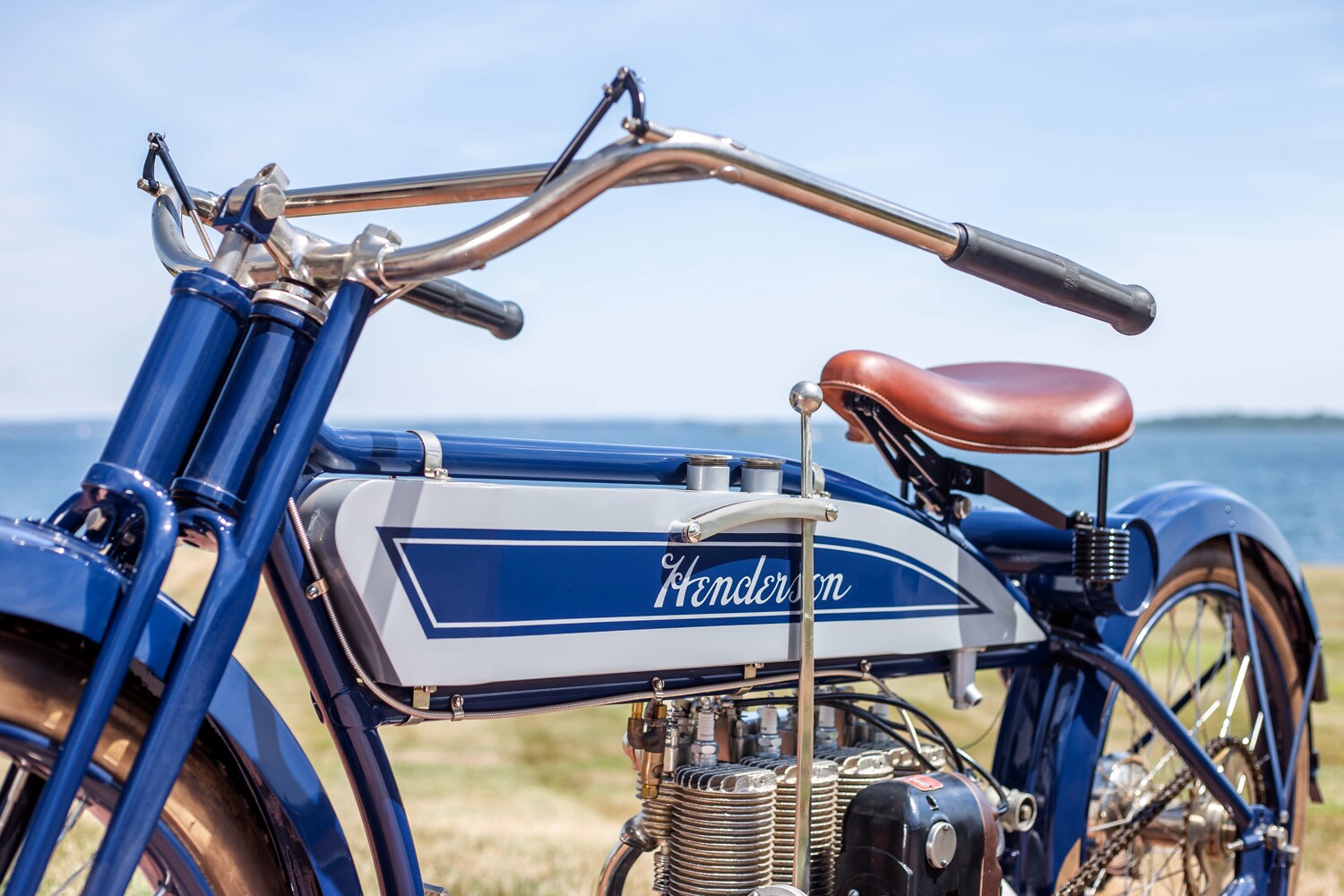
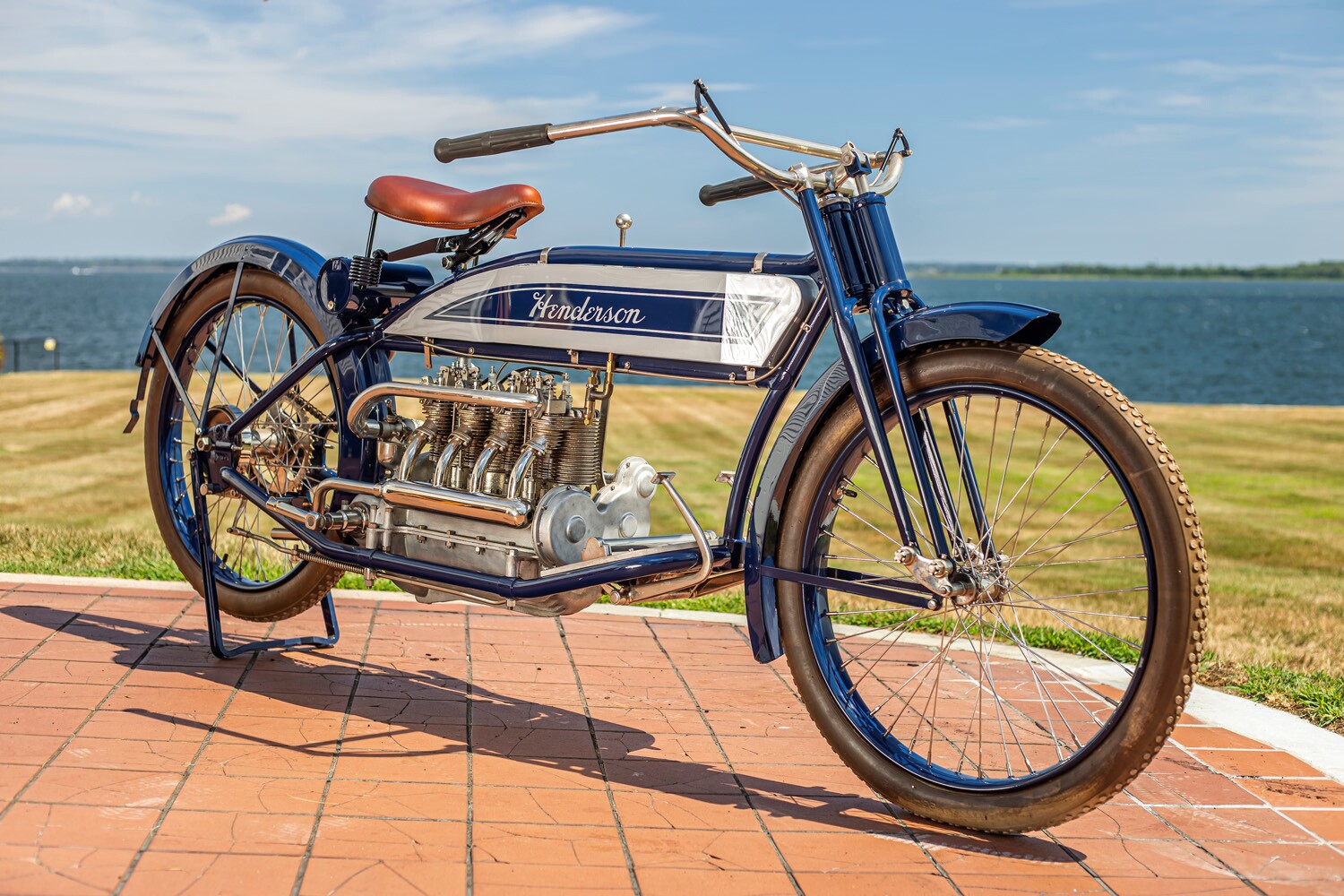
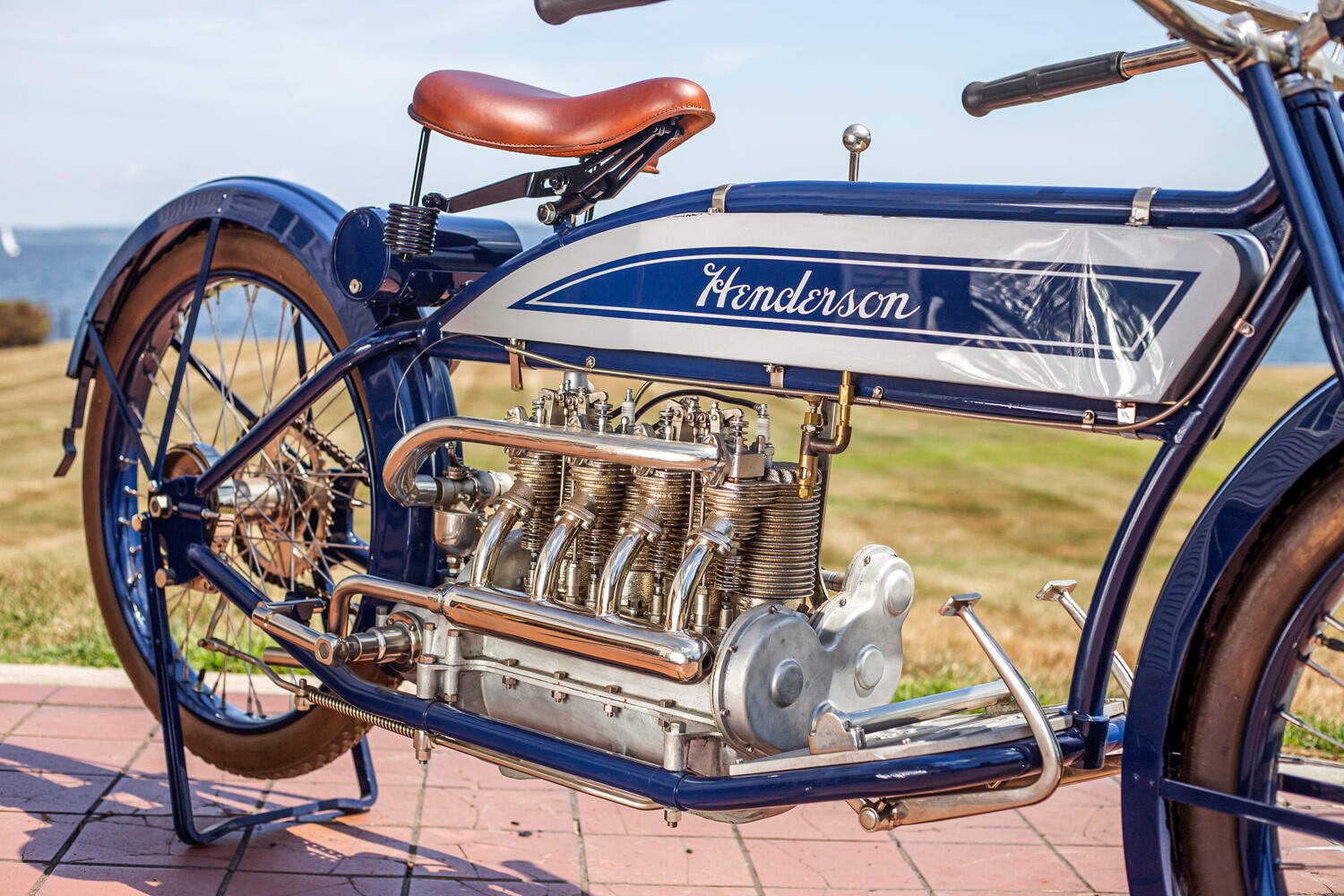
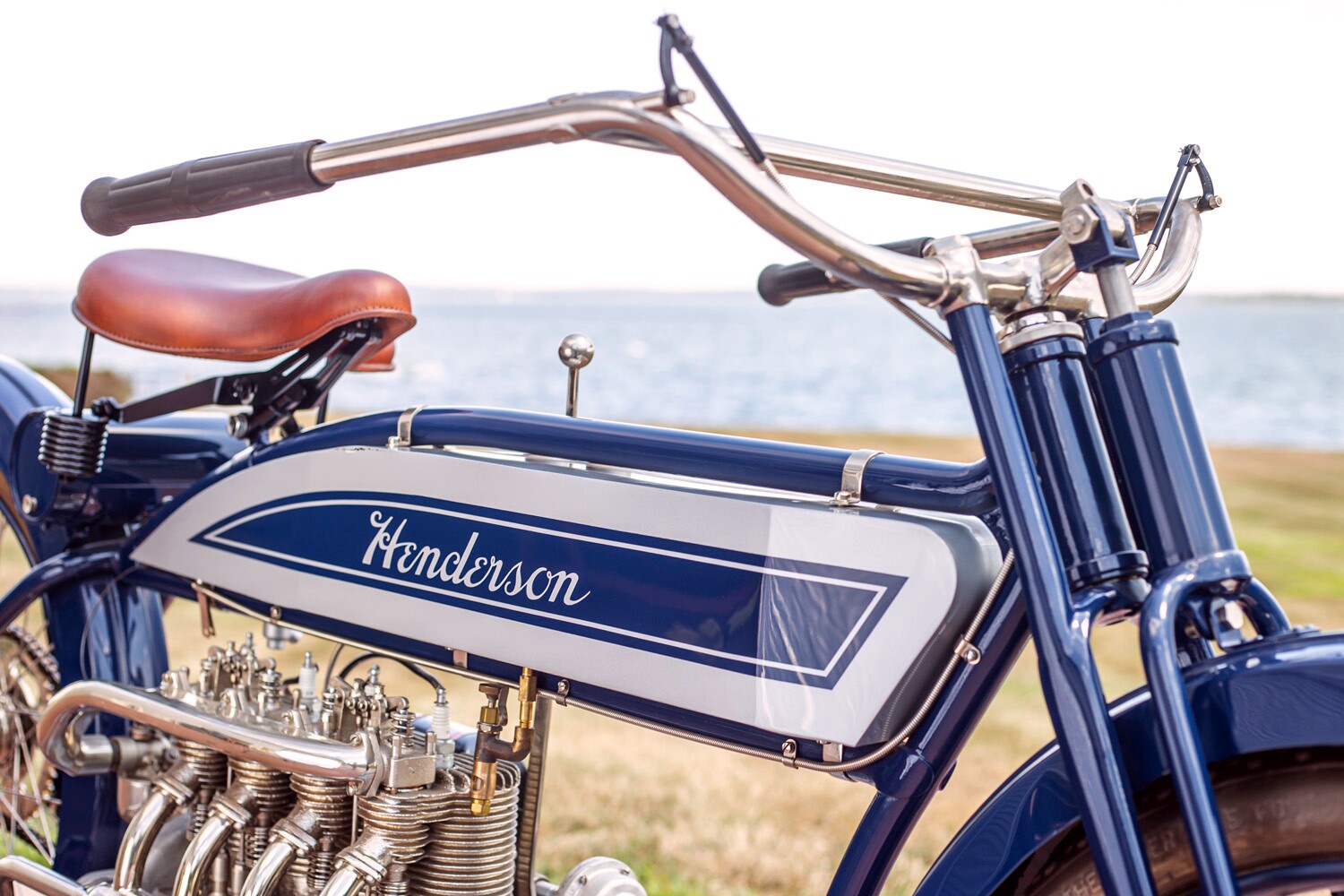
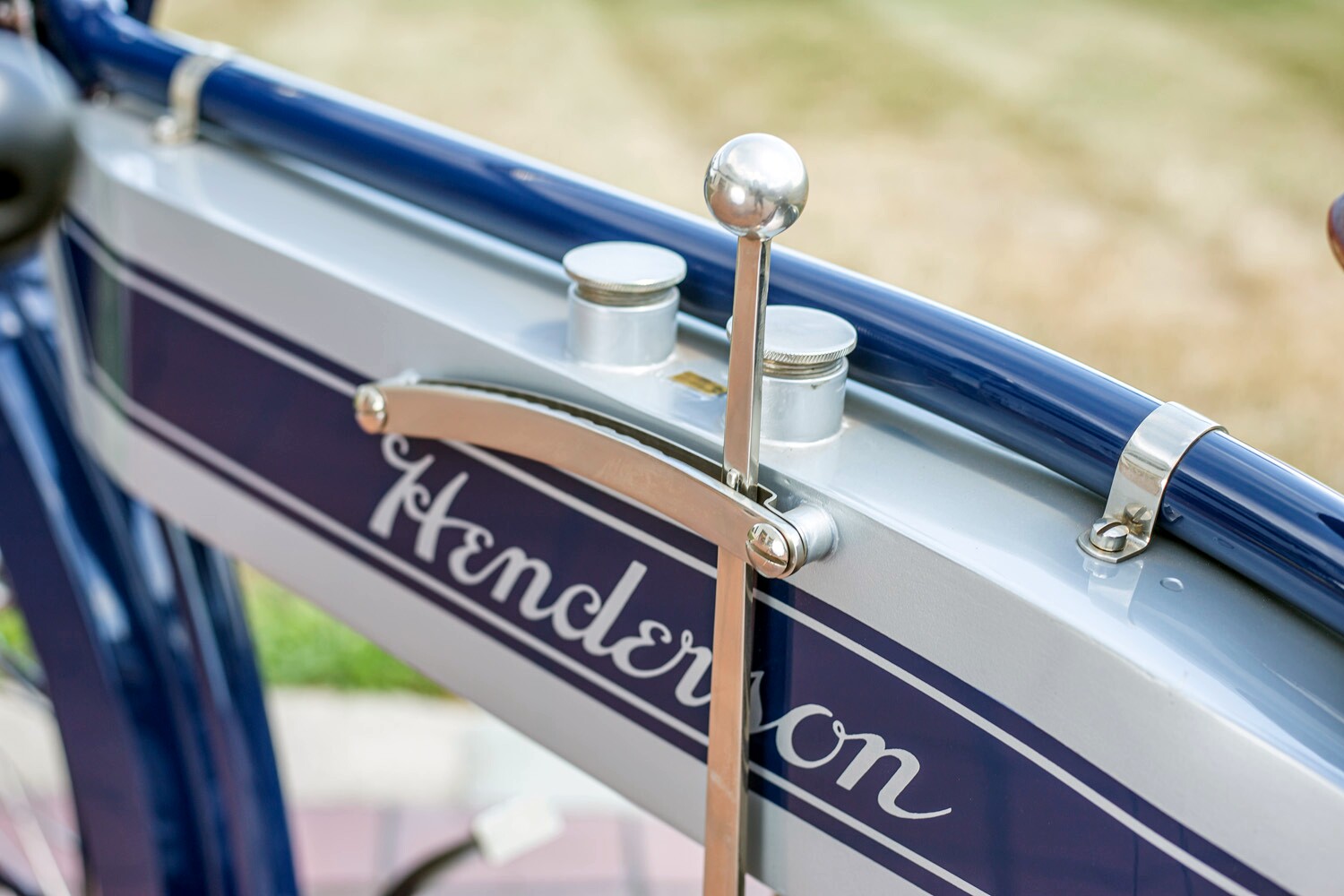
The model year 1913 was not only Henderson’s second year of production but also the first year for the new “square tank” after the first-year torpedo-tank models. The chassis remained very long, which provided much-needed stability for the terrible roads of the day. It proved to be so well-built that the Henderson 4 was the first motorcycle to circle the globe in 1912–13 under Carl Stearns Clancy.
In 1917, the Hendersons sold the company to Ignaz Schwinn of Schwinn bicycles and Excelsior motorcycles, and production was moved to Chicago, Illinois. Henderson motorcycles became known as the largest and fastest in the industry, becoming the favorite of police departments until the Great Depression. Despite the success of Schwinn’s motorcycle production, after the stock market crashed in 1929, motorcycle sales plummeted, and by 1931, with a full order book, Ignaz ordered production to cease. His words, “Gentlemen, today we stop,” may have saved the company, as focusing on bicycles was a far more cost-effective endeavor, leaving surviving relics as a piece of American history.
In 1998, the Henderson brothers were inducted into the Motorcycle Hall of Fame. The Henderson name also saw a brief revival from 1998–2000 when Dan Hanlon secured the rights, founded the Excelsior-Henderson Motorcycle Company in Minnesota, and produced around 2,000 Super-X 1,386-cc V-twin motorcycles before the company went bankrupt.
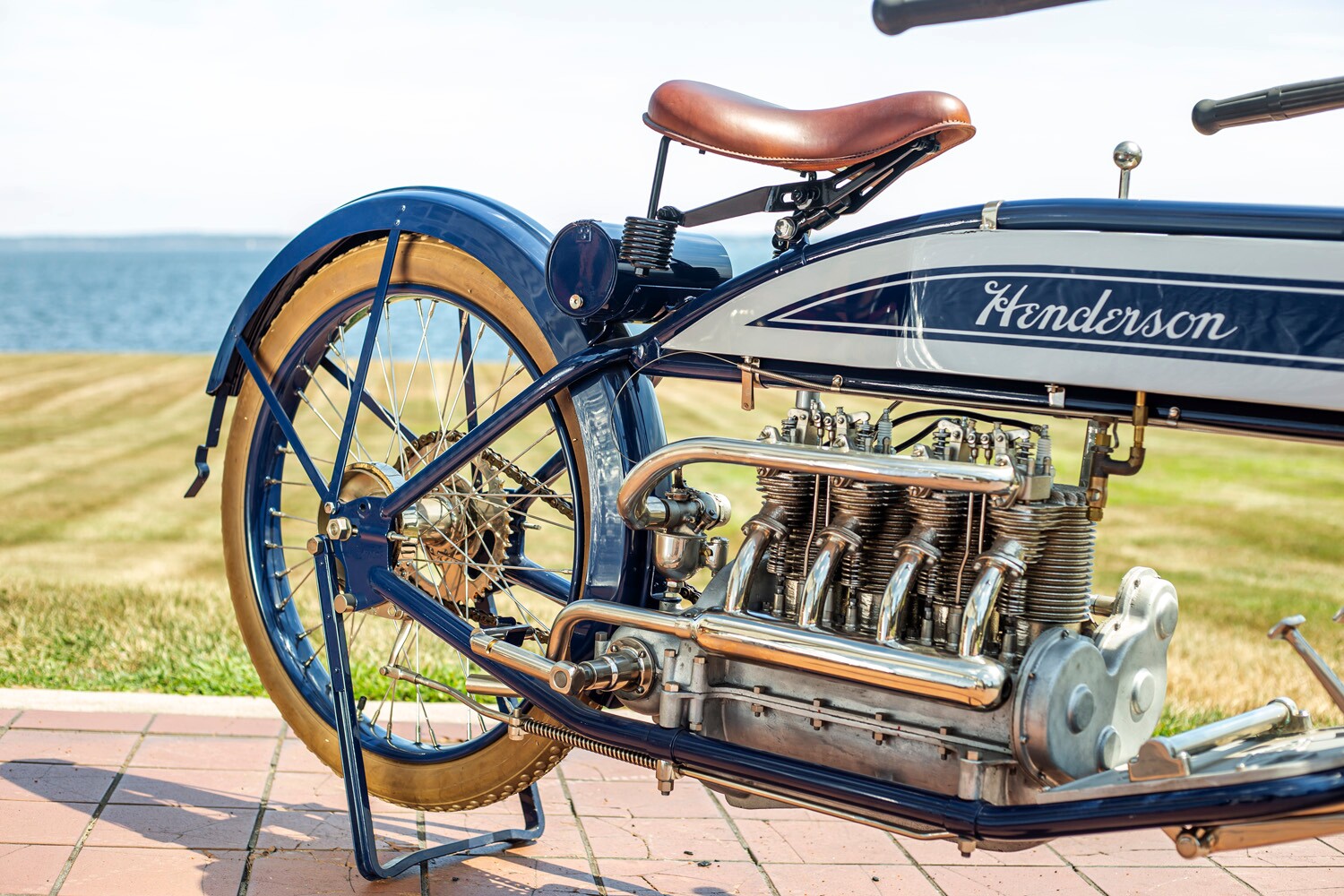
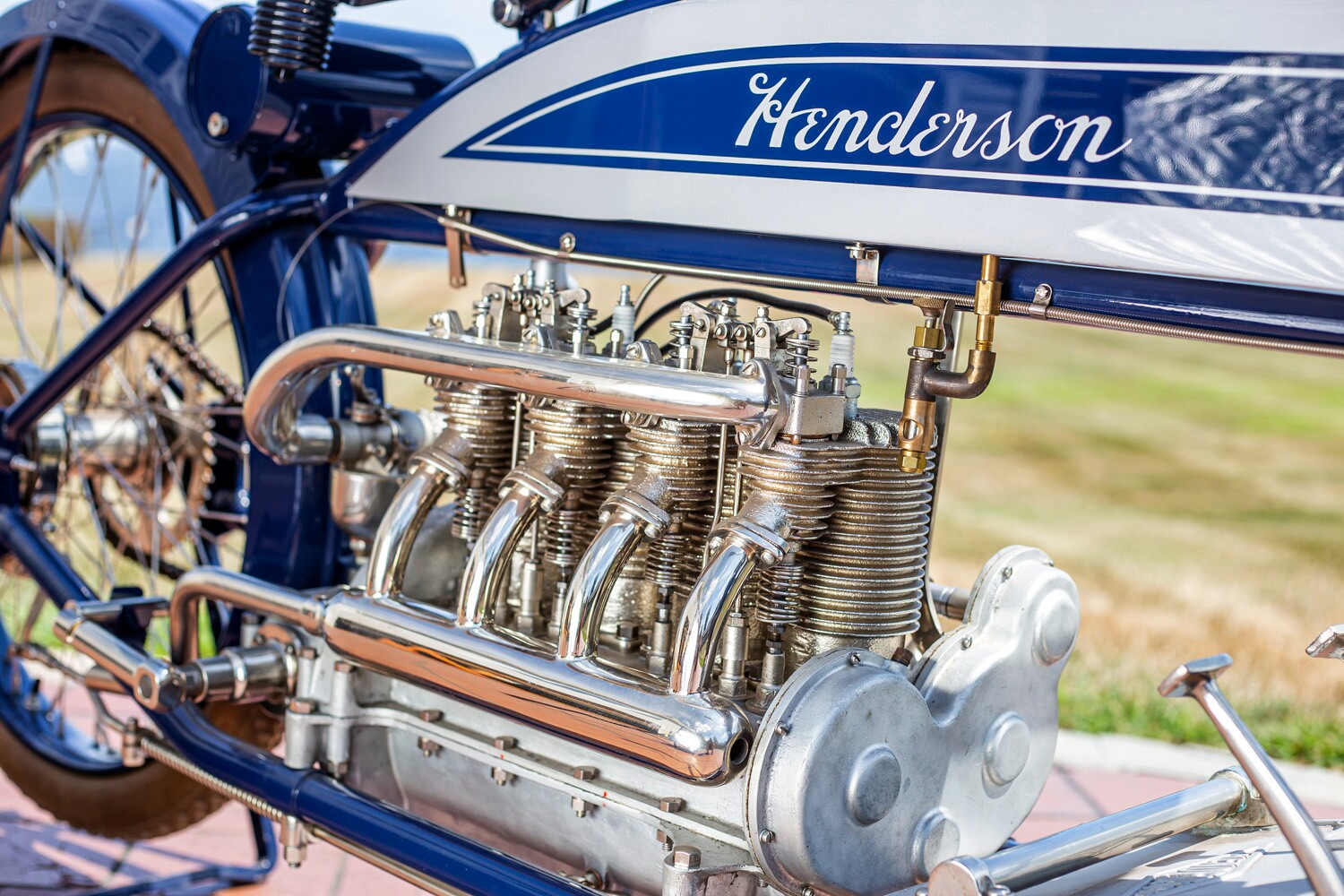
Henderson motorcycles were renowned for their smooth-running inline-four engines, which were powerful, quiet, and offered exceptional torque and consistent power delivery—a significant technological advancement at the time. They were considered the “Cadillacs of motorcycles,” known for their luxury, high performance, and durability. These features made them popular for speed and endurance, and they were favored by police for their speed and ability to provide a smoother, more comfortable ride compared to the thumping of single- and twin-cylinder bikes. They featured a long wheelbase, comfortable seating, and floorboards for added rider comfort. Founded by the Henderson brothers, the company quickly established a reputation for quality and high performance in the early days of motorcycling. This success led William Henderson to found the Ace Motor Corporation, which also focused on powerful four-cylinder machines, further cementing his legacy.