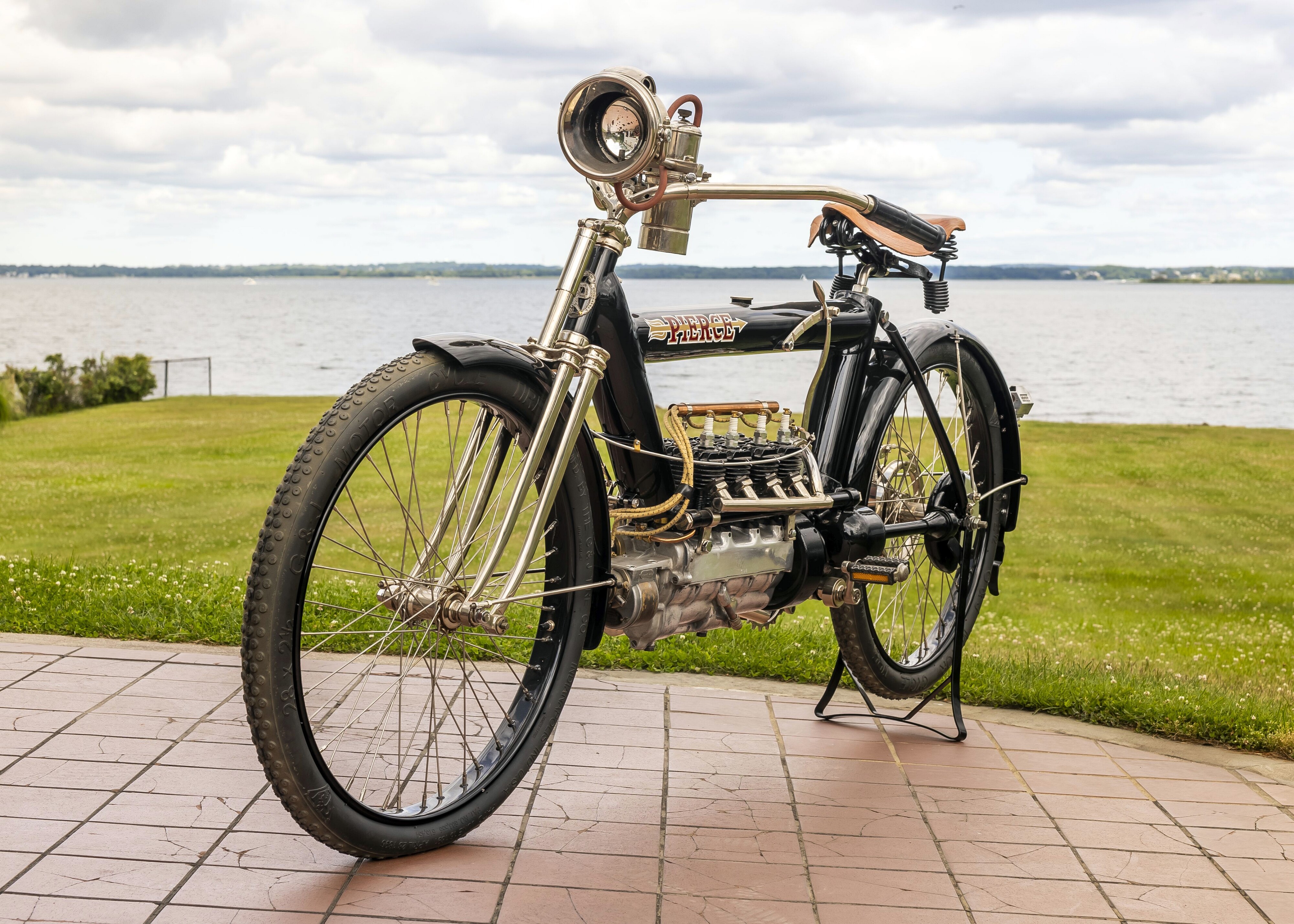
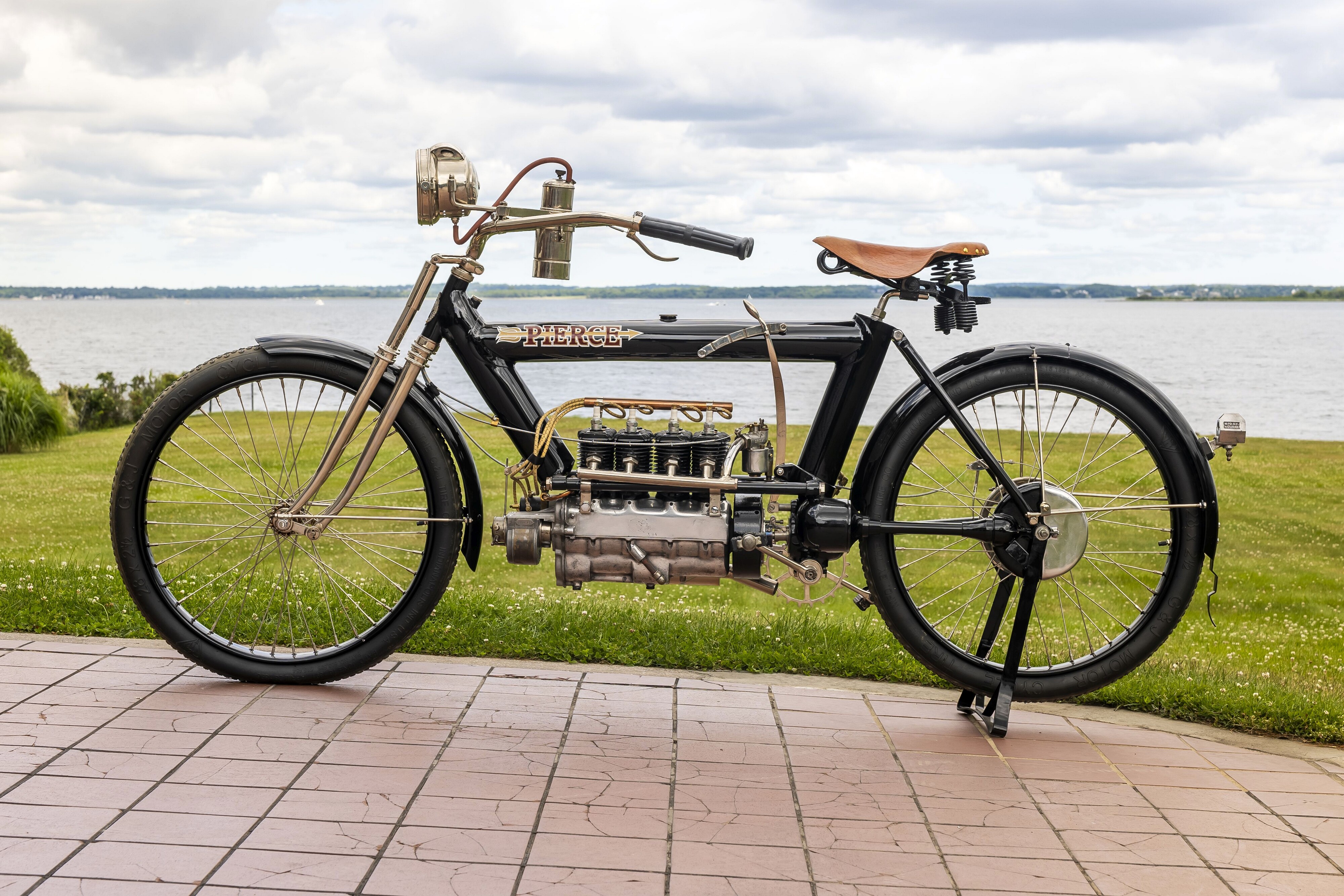
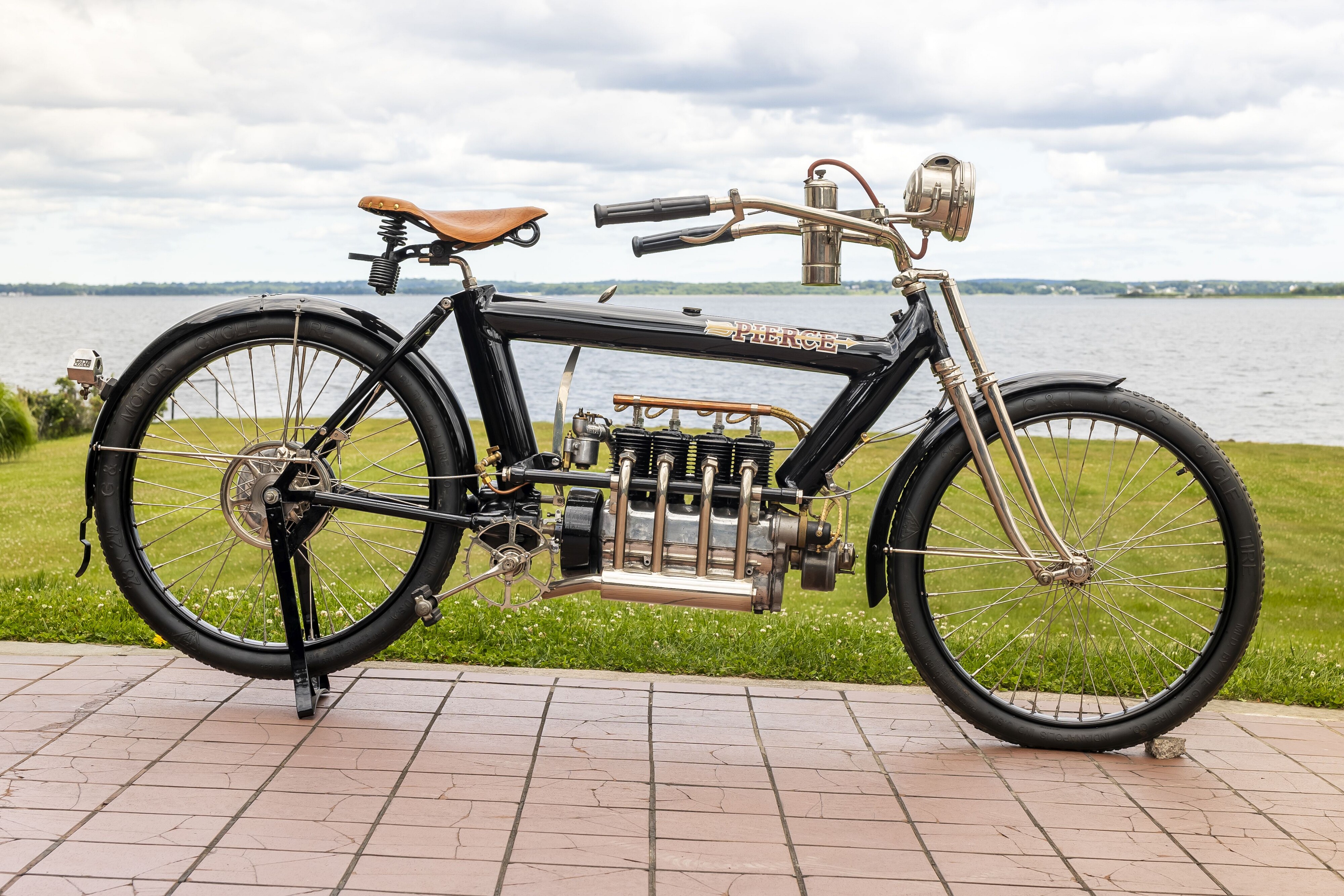
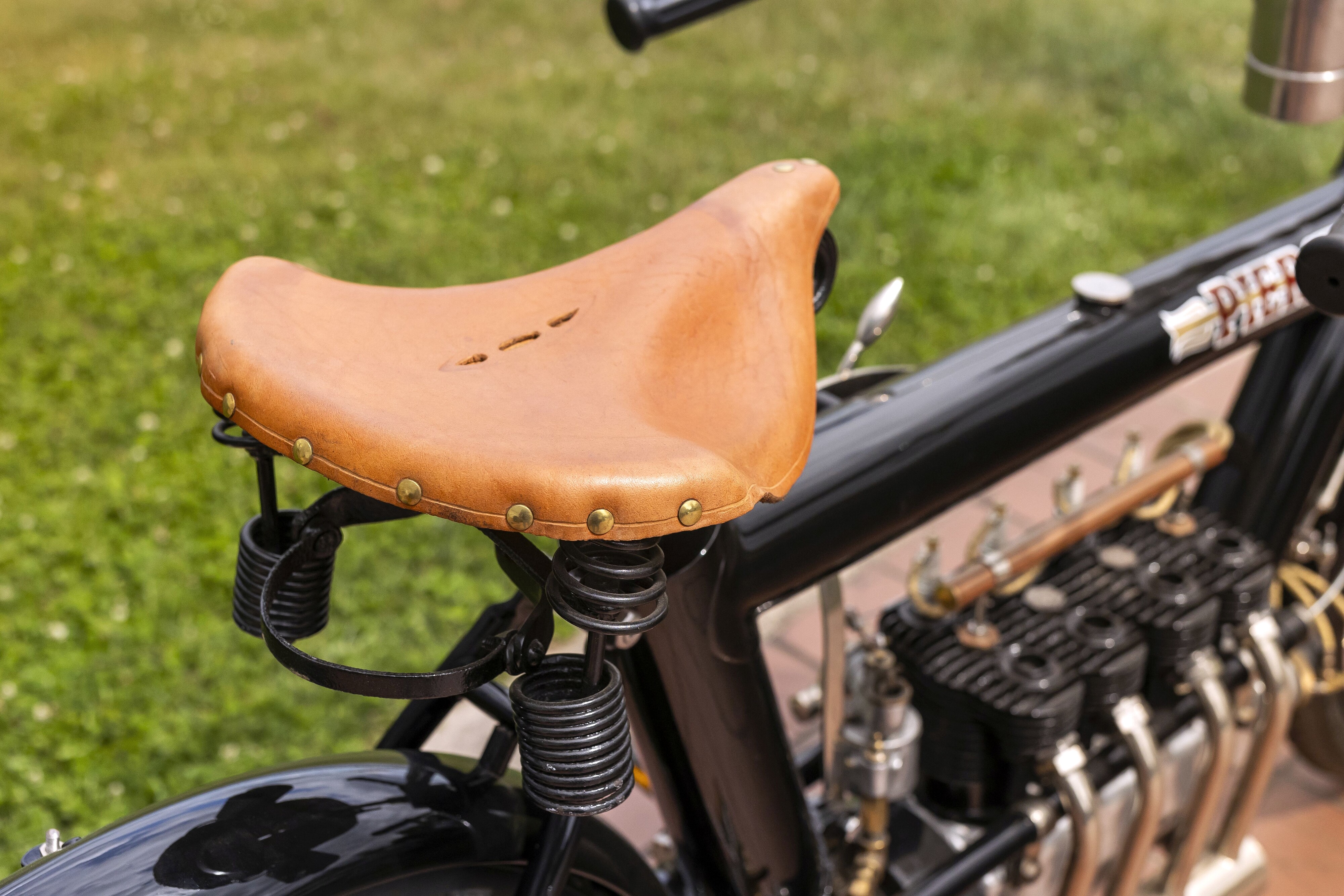
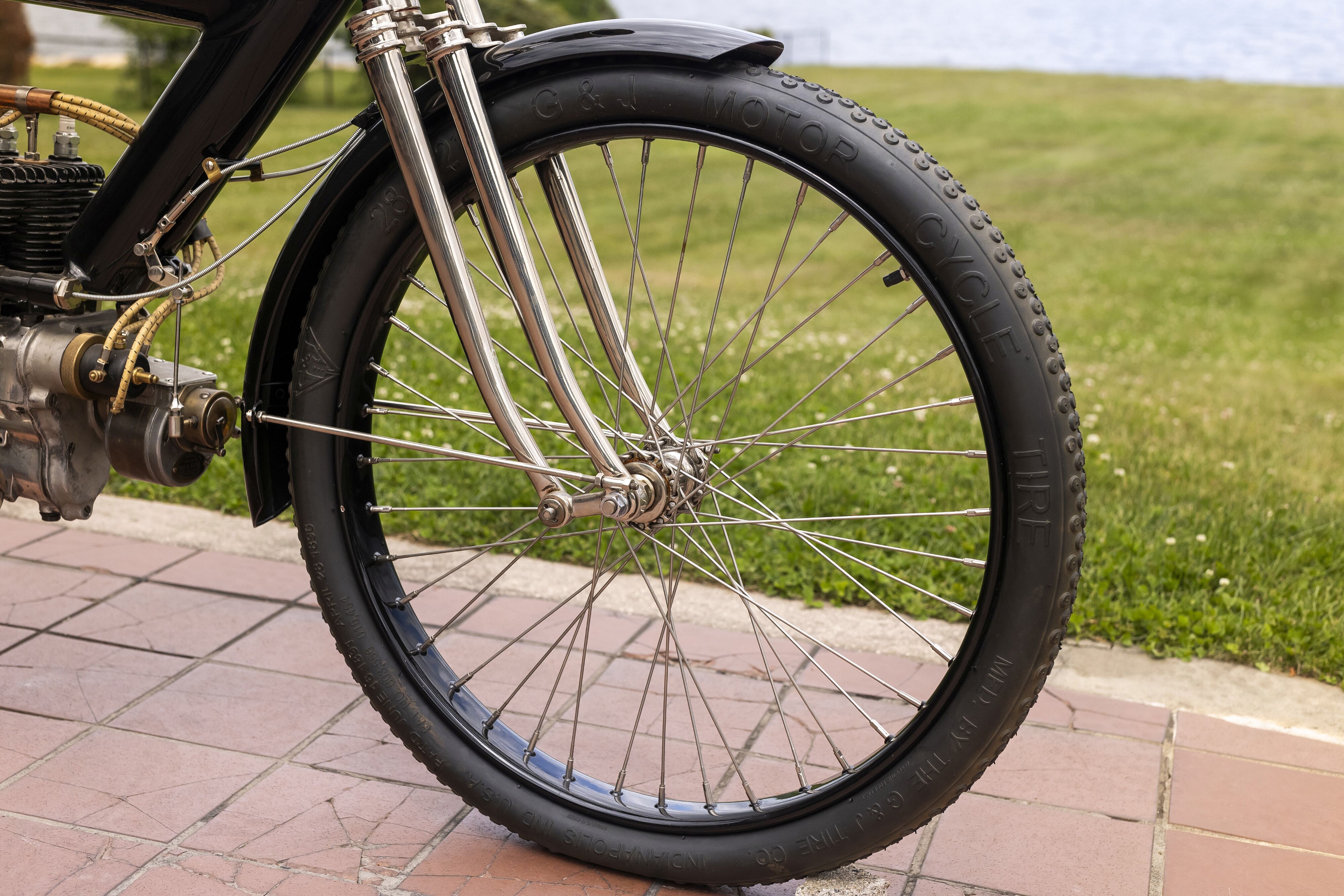
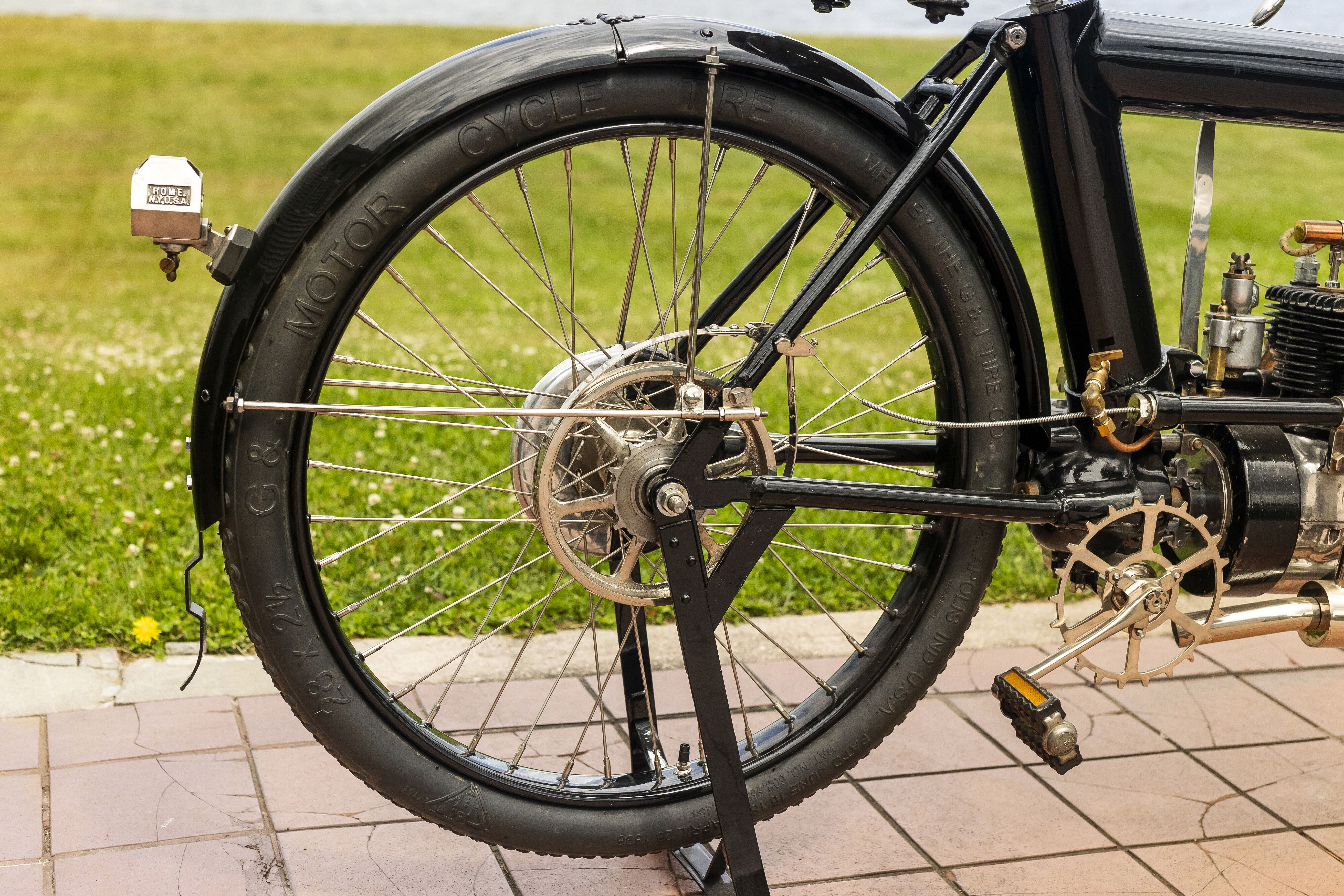
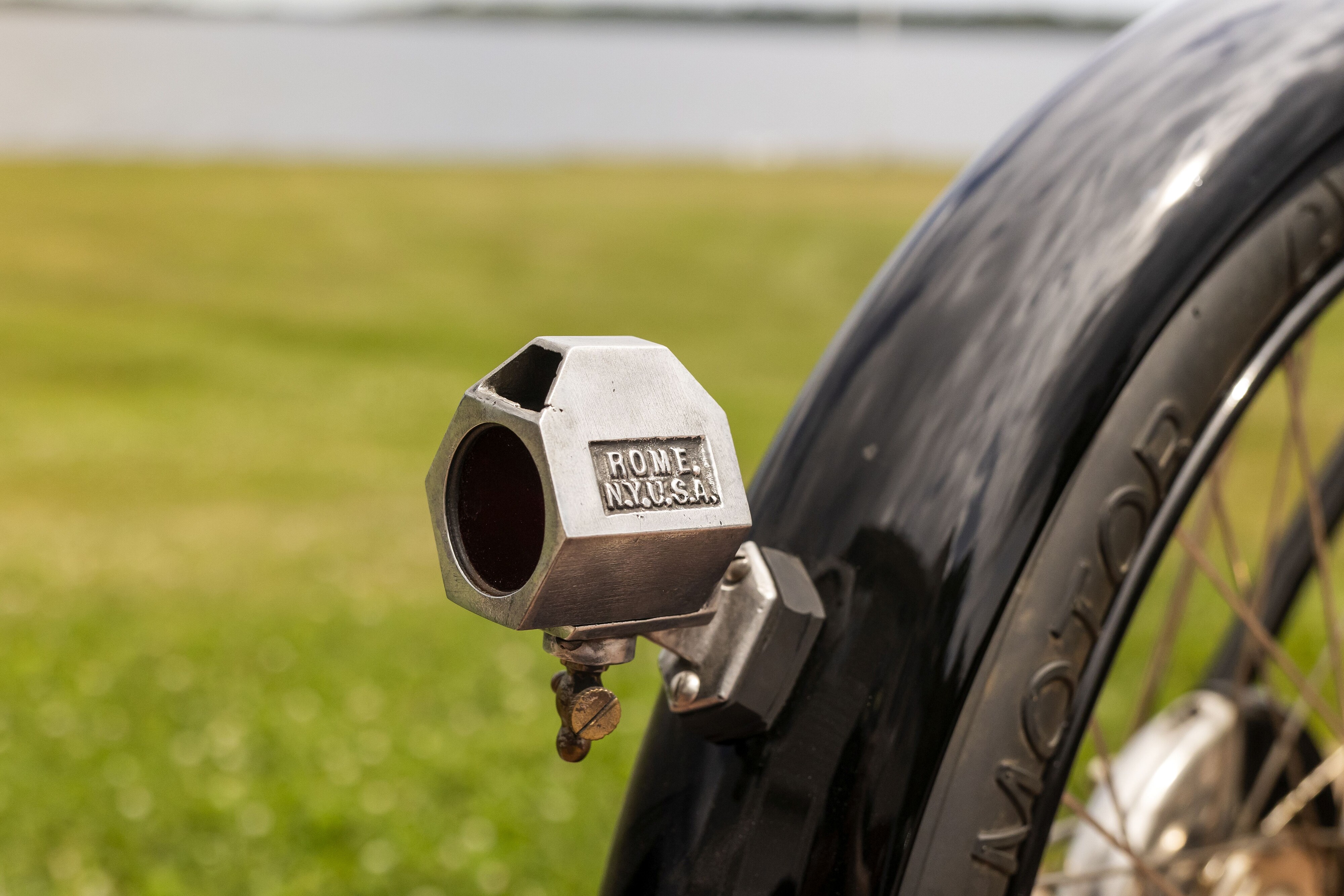
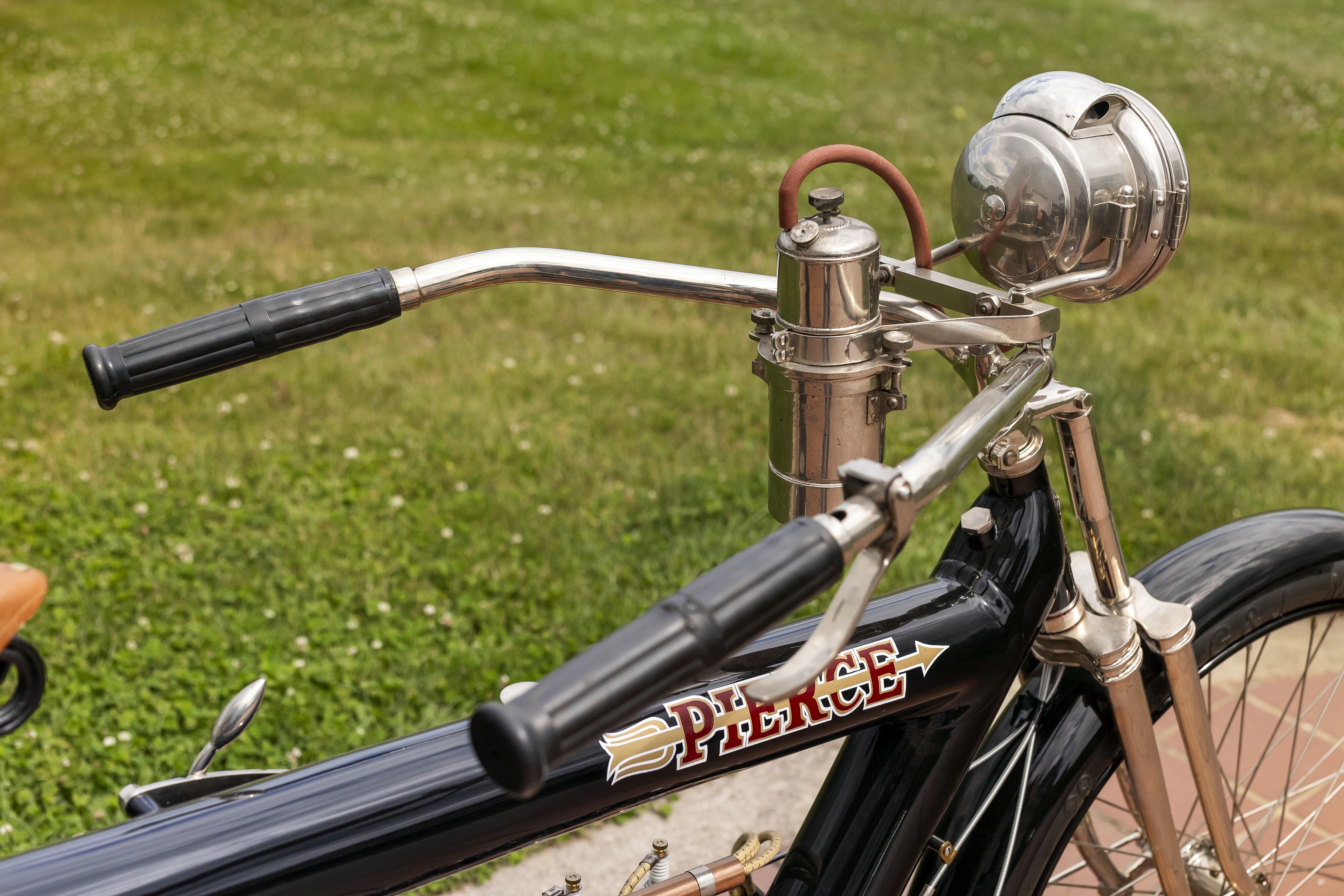
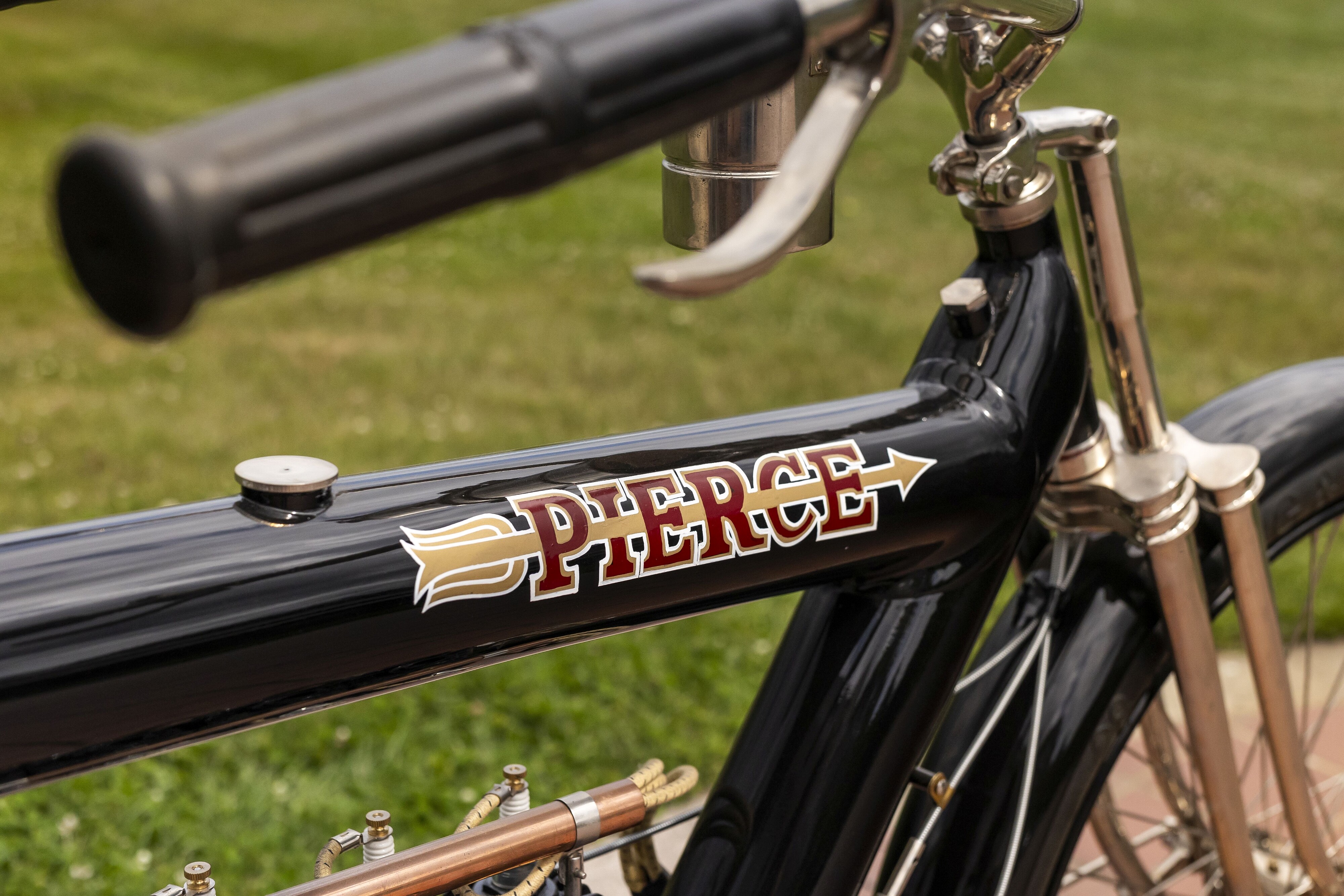
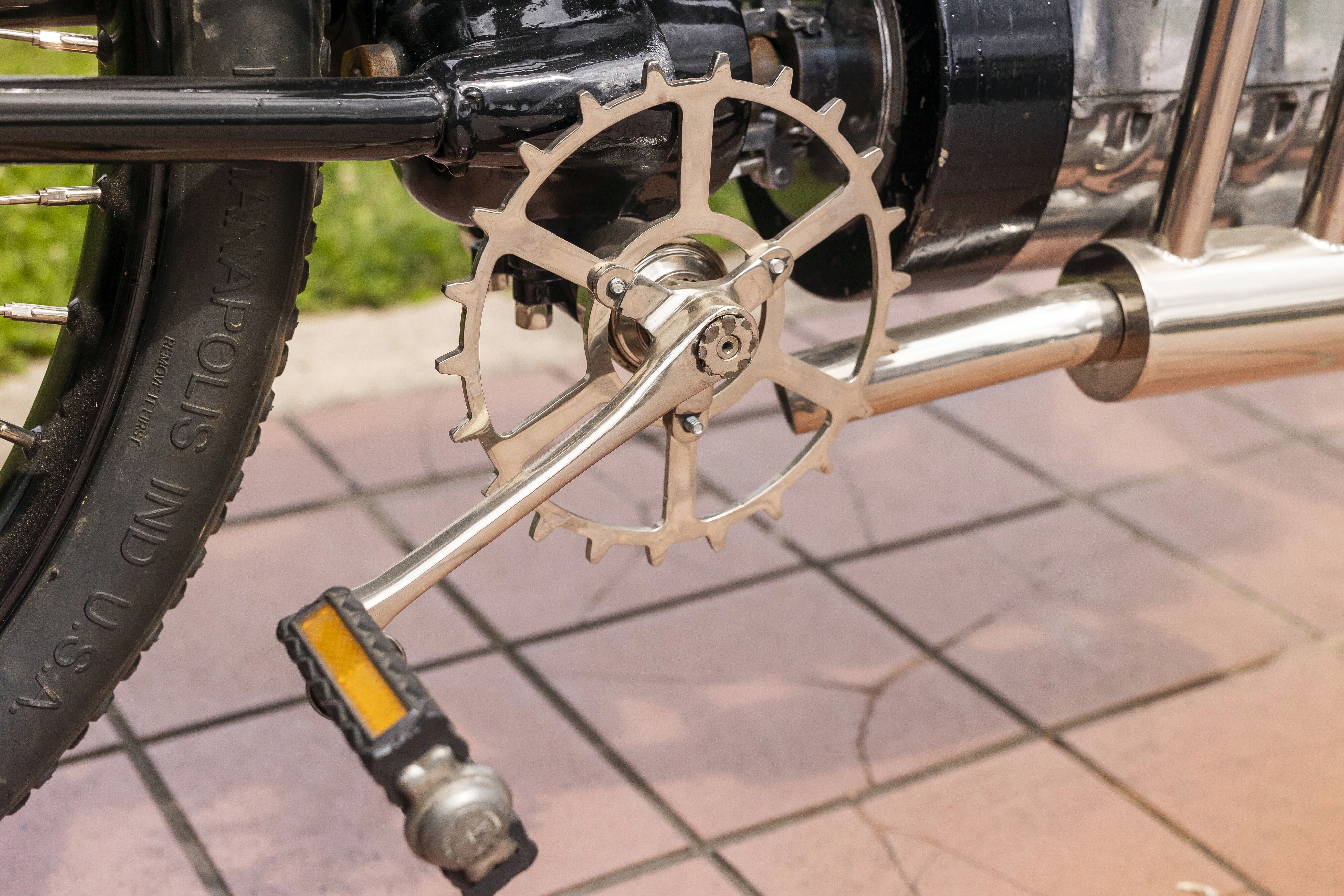
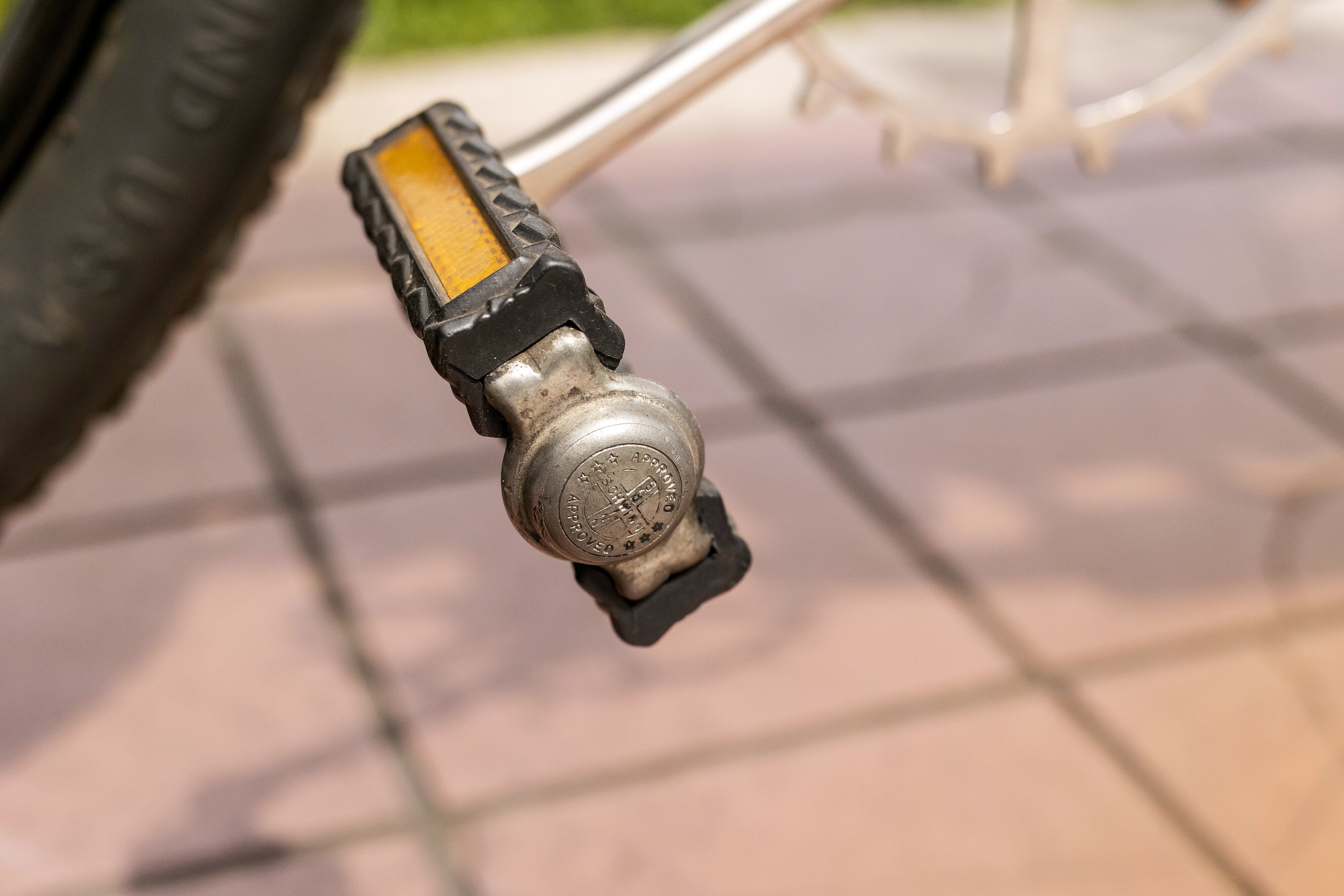
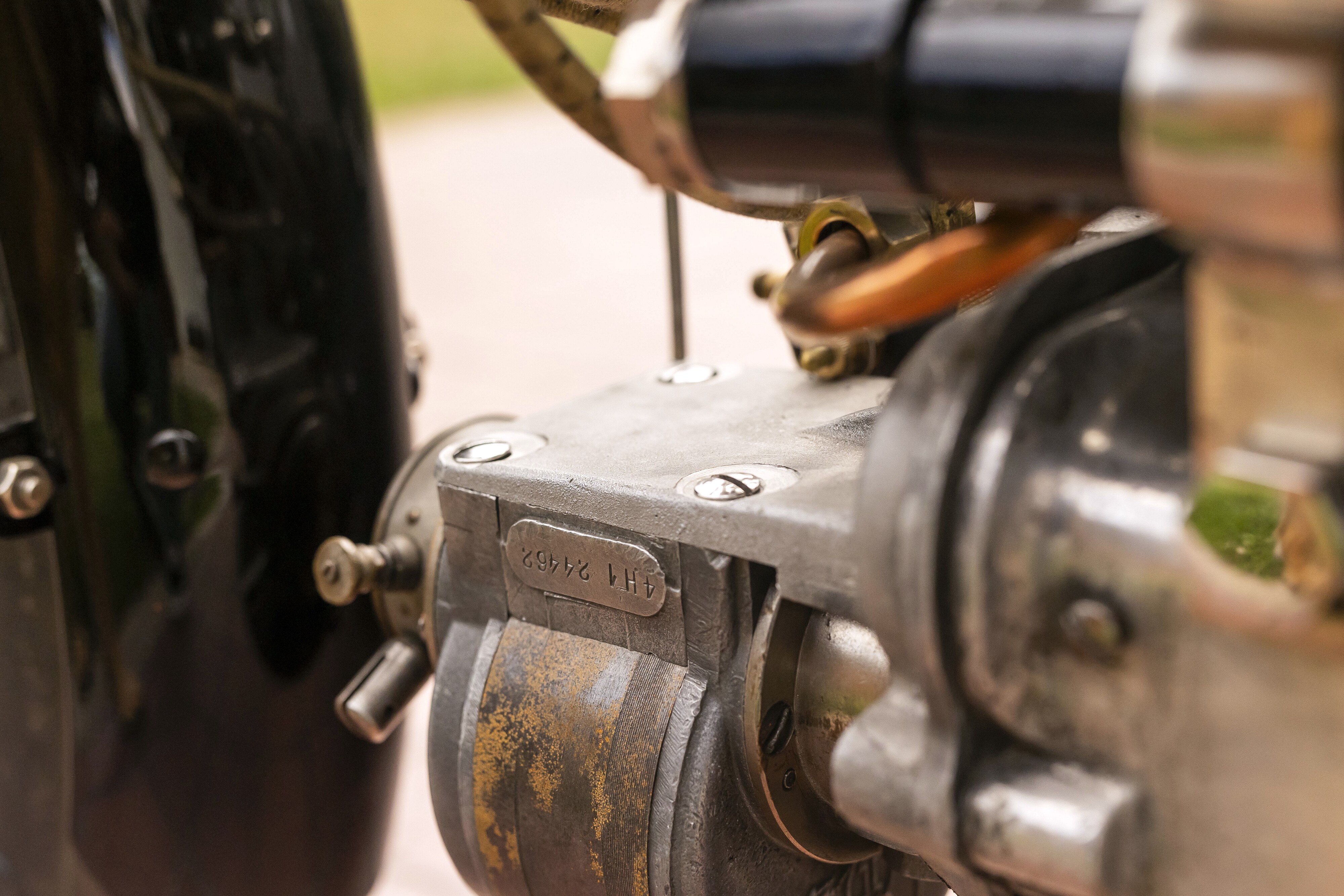
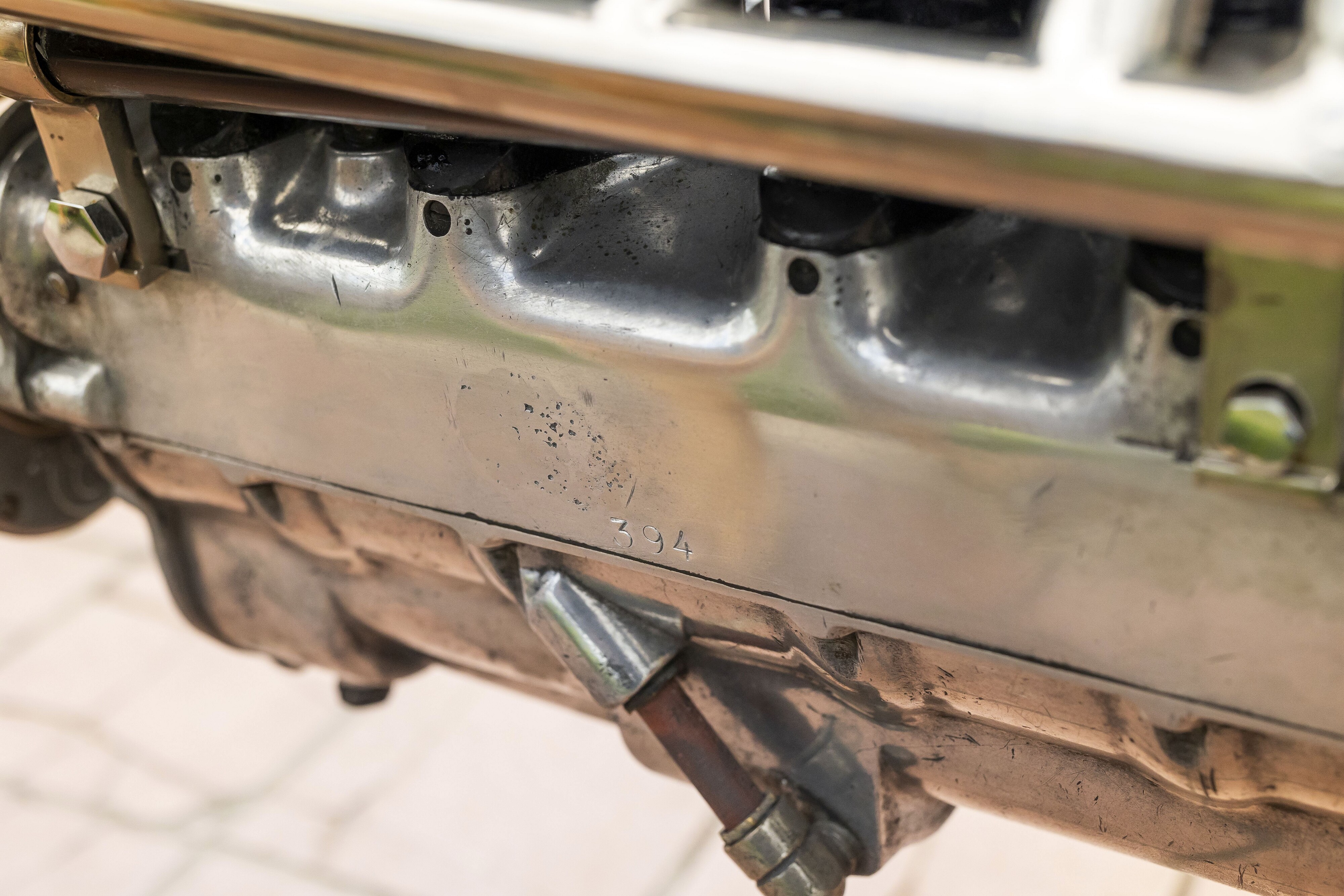
1911 Pierce Four (Engine No. 394)
Inventory Number: 5083
$125,000
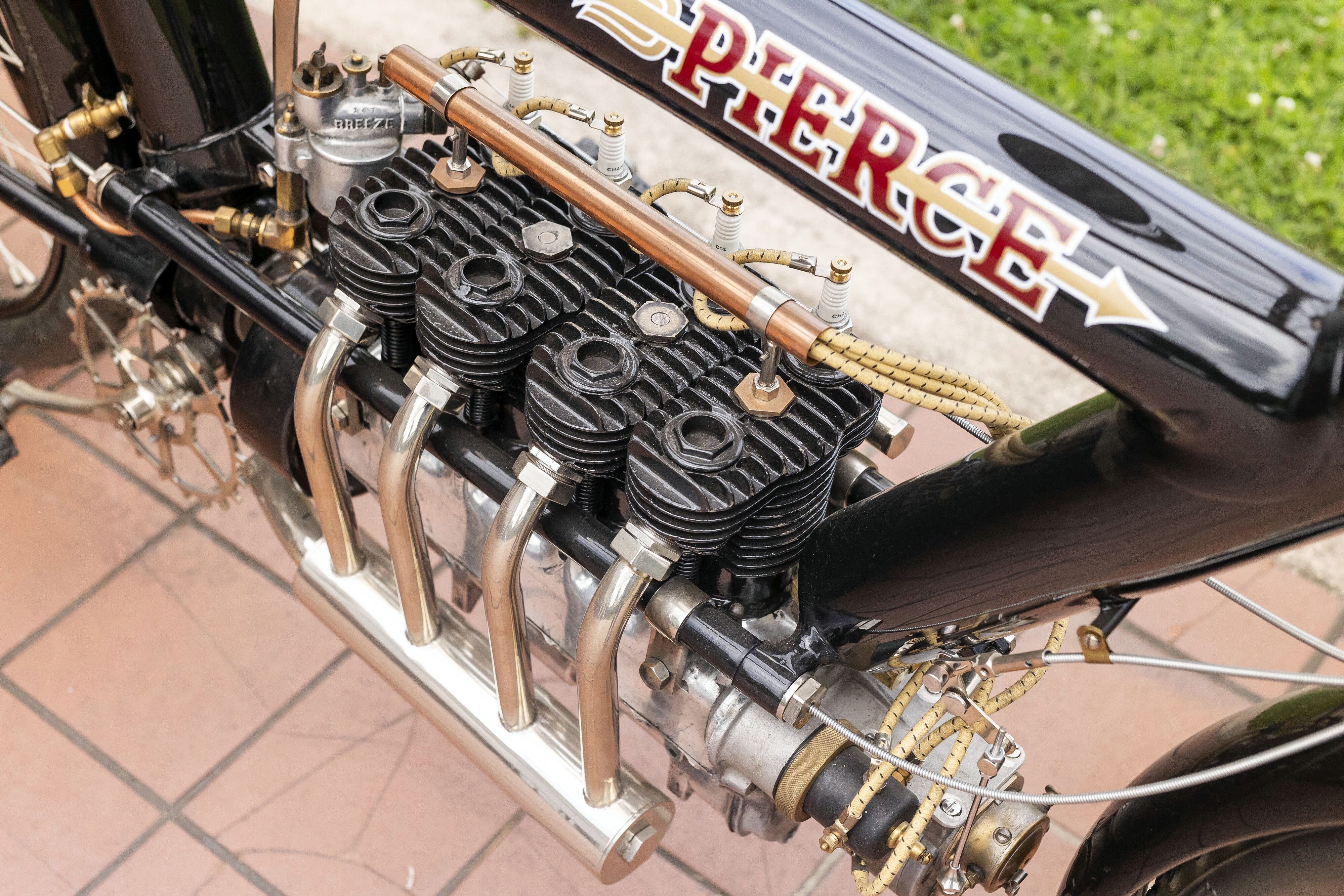
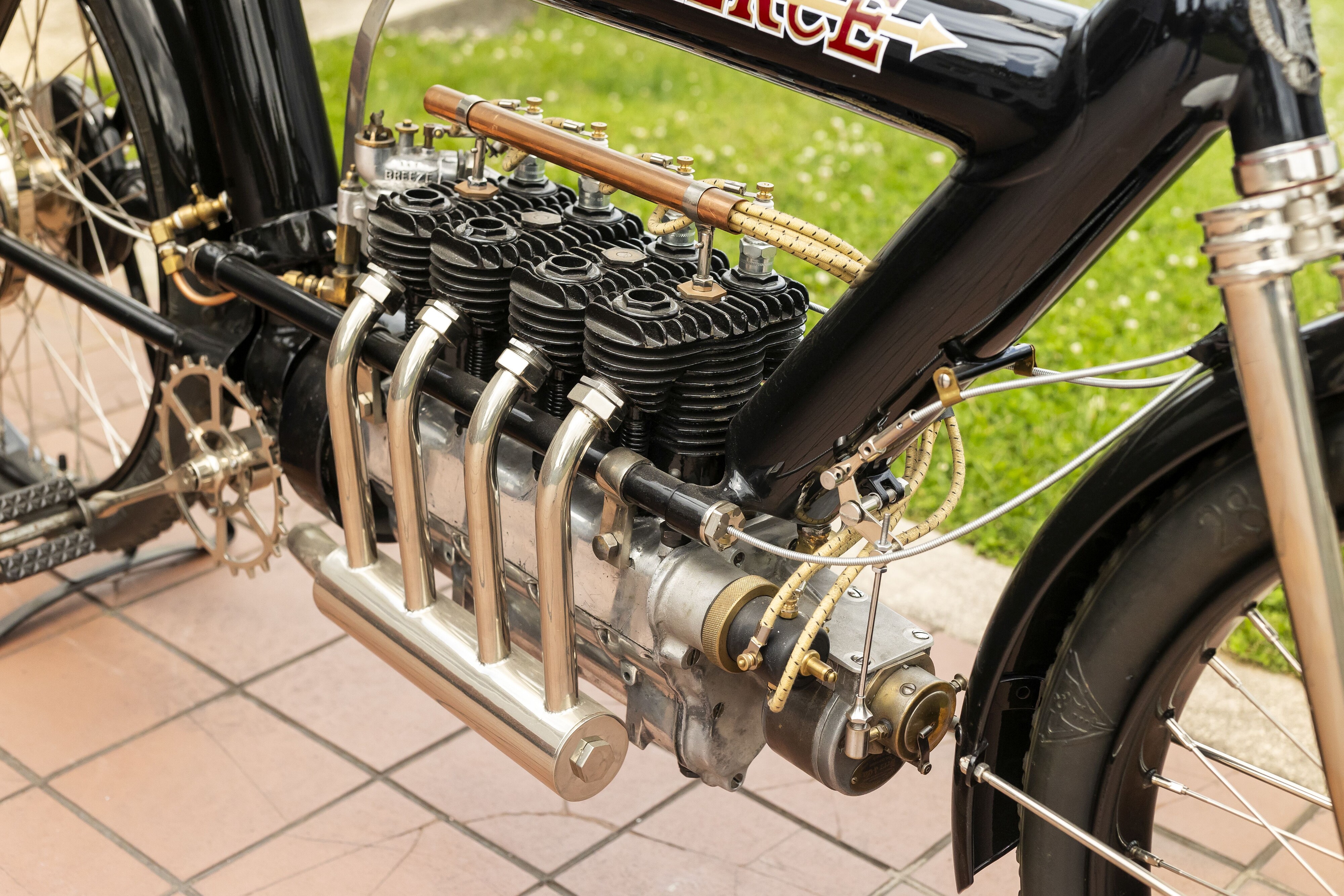
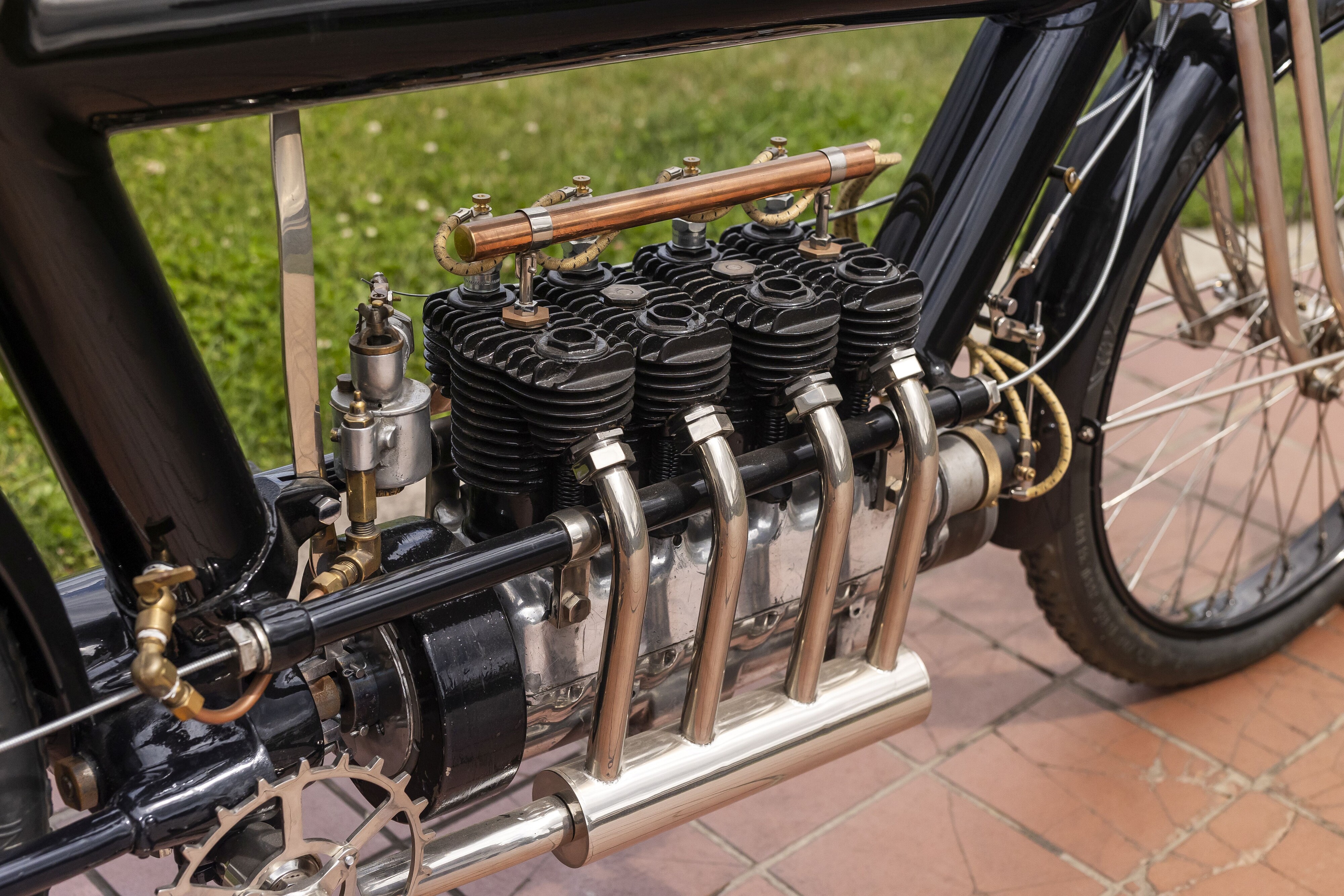
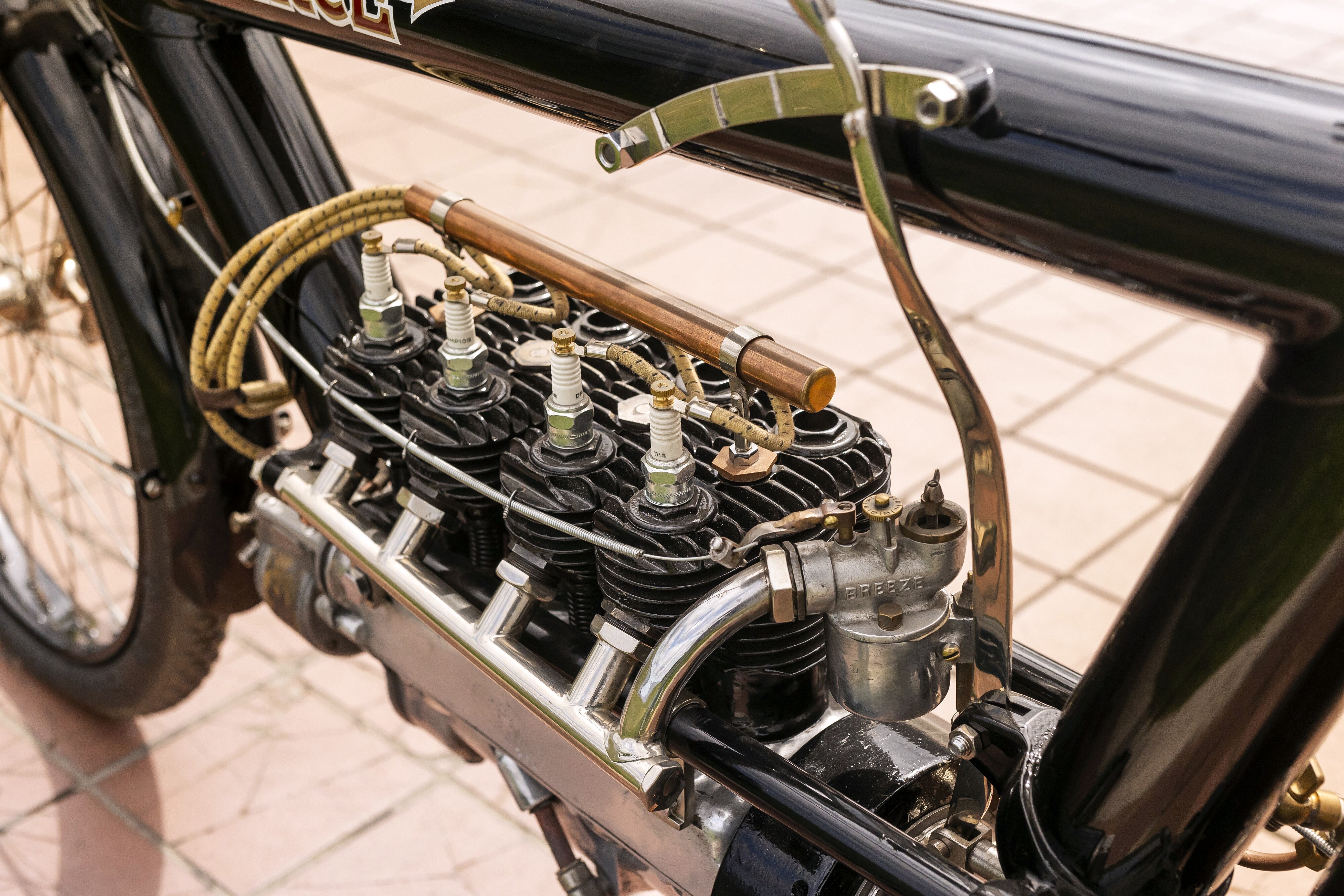
- ENGINE: Inline 4-Cylinder 688 cc T-head with the Inlet and Exhaust Valves on opposite sides of the Combustion Chamber
- ENGINE NO.: 394
- MANUFACTURED: Buffalo, NY, USA
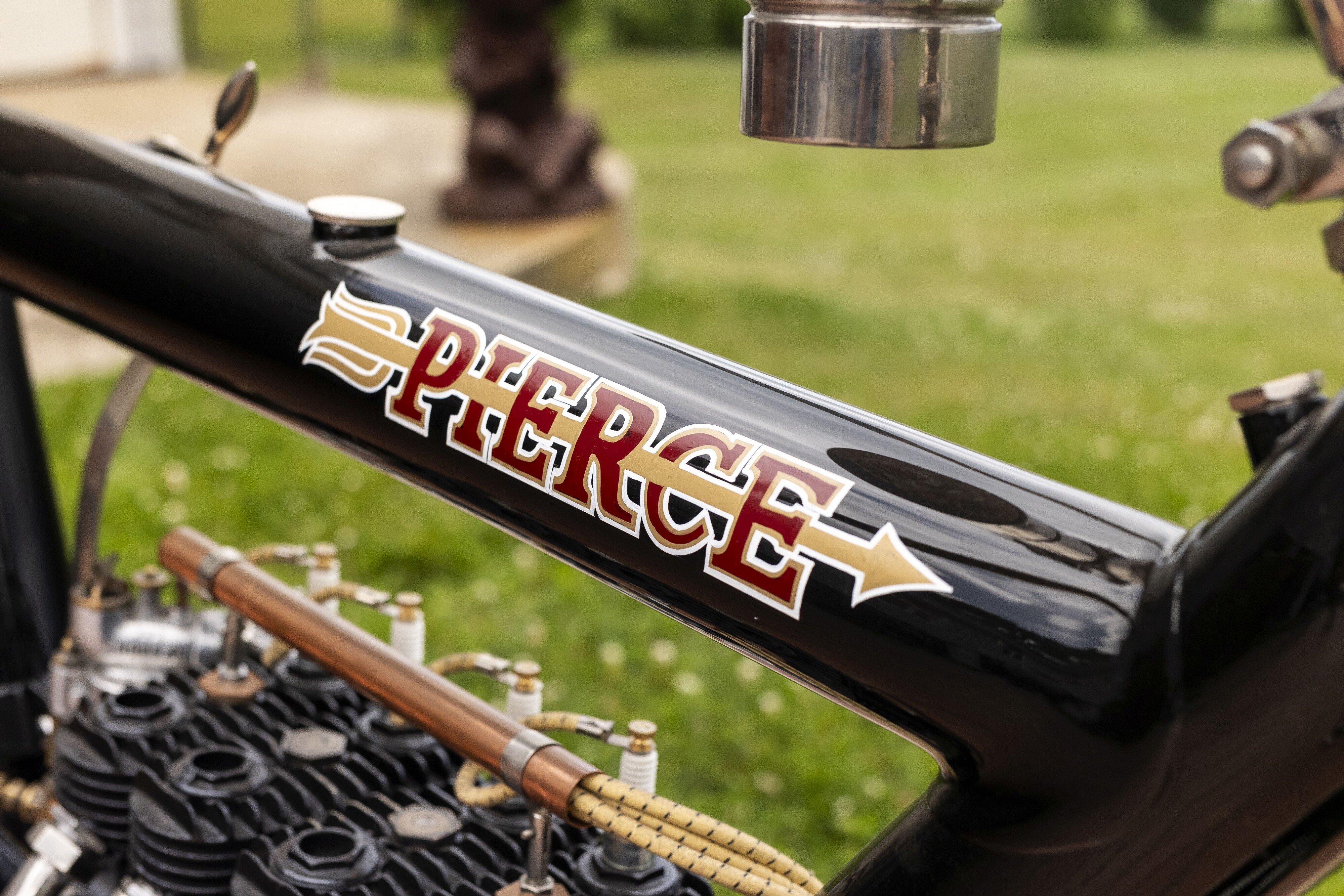
- FRAME: 3.5 in. Copper-lined Steel Tube Frame with Internal Oil Tank, Gas Tank & Control Cables
- PAINT: Black
- TRANSMISSION: Sliding Gear Two-Speed Shaft Drive & Friction Disc Clutch
- SUSPENSION: Sprung Front Fork
- TOP SPEED: 60+ mph
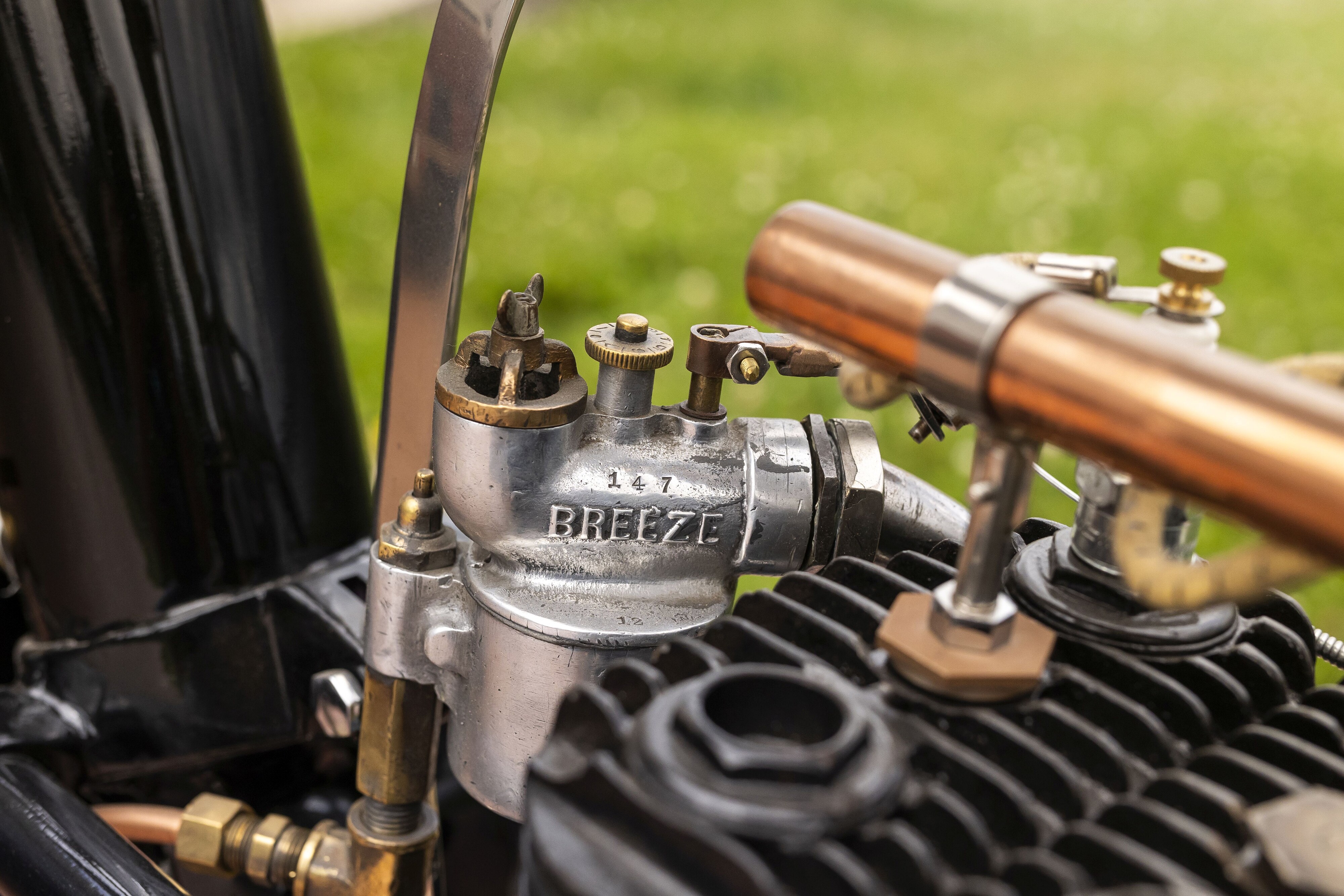
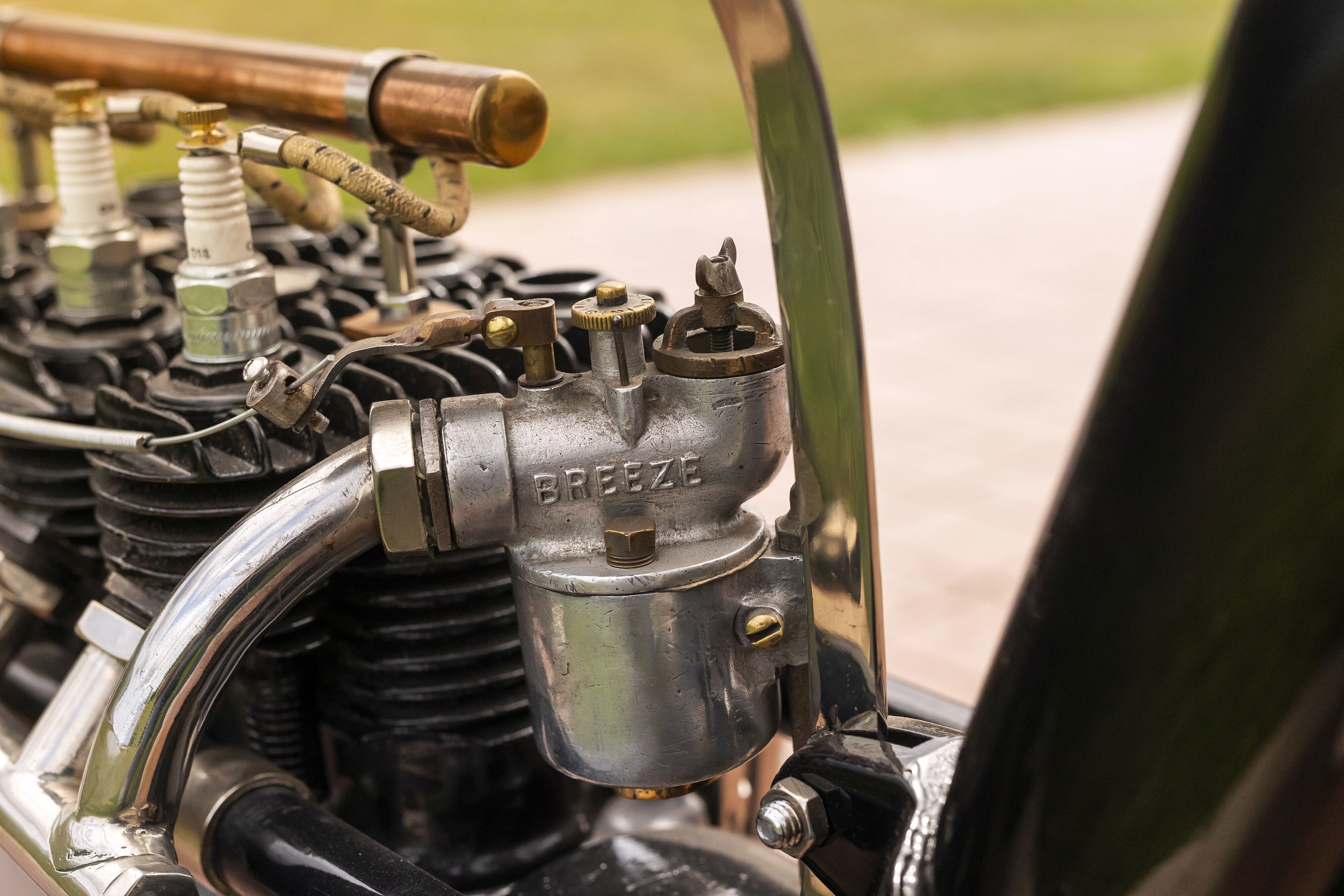
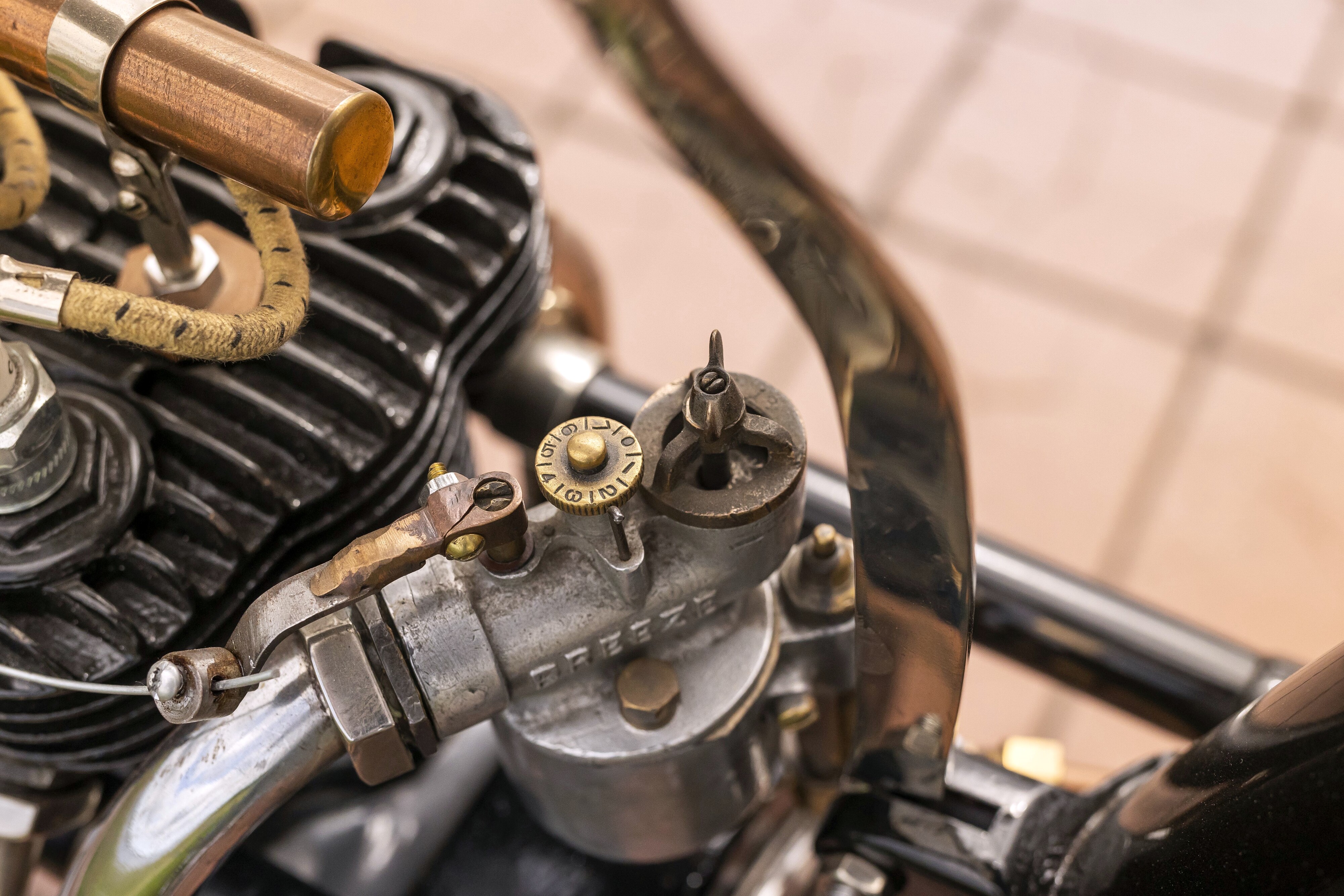
- CARBURETOR: Breeze #147
- FORK: Cartridge Spring
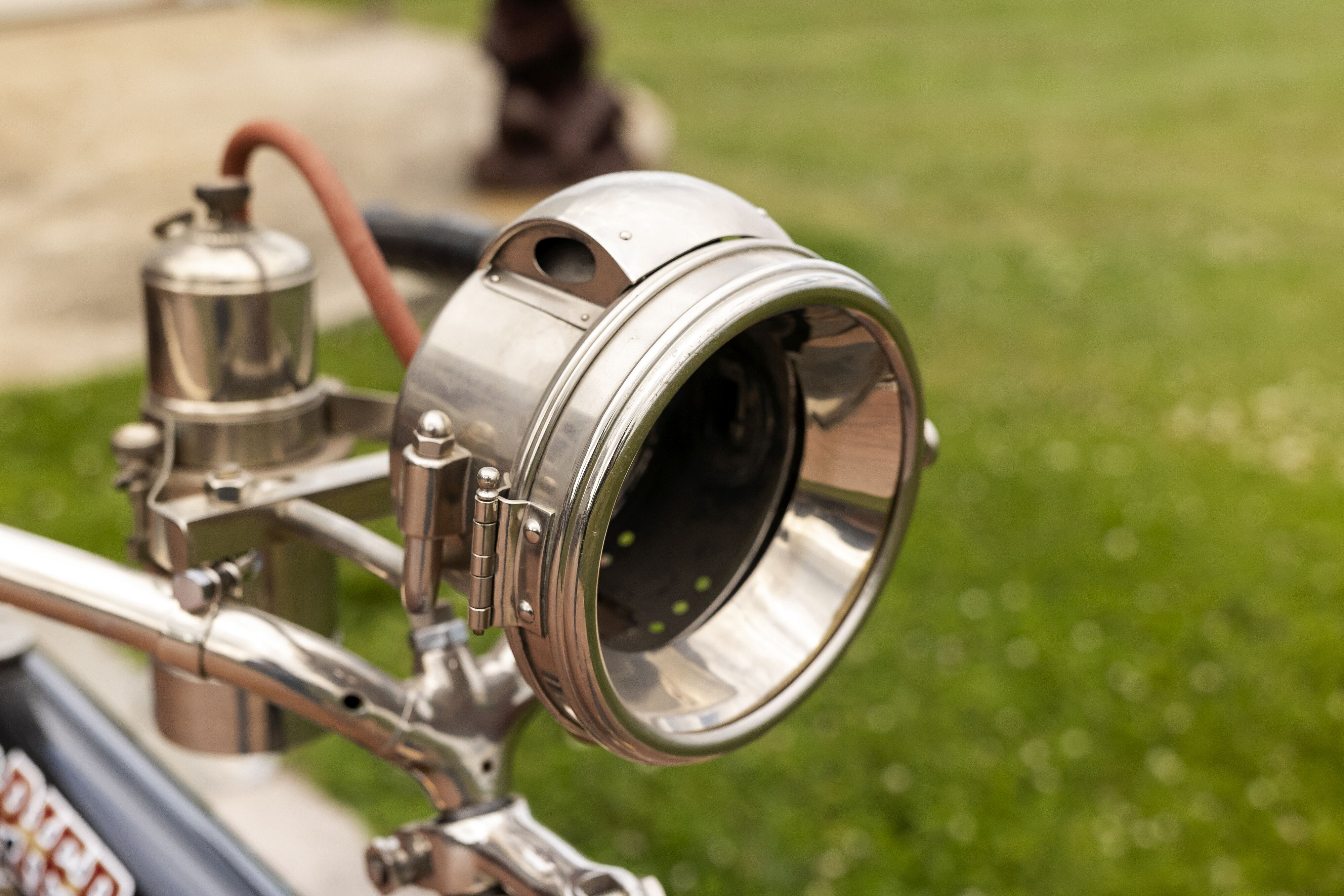
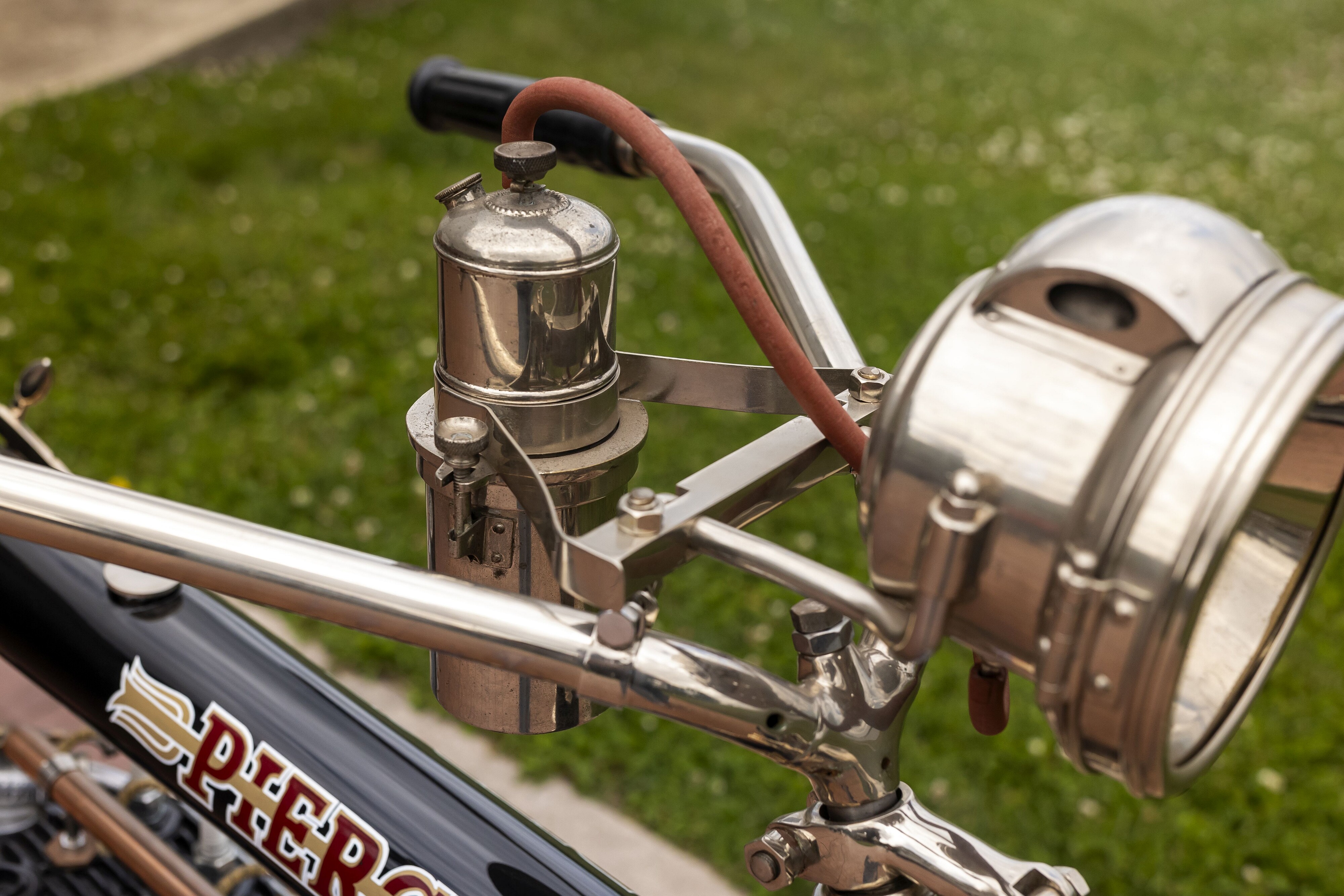
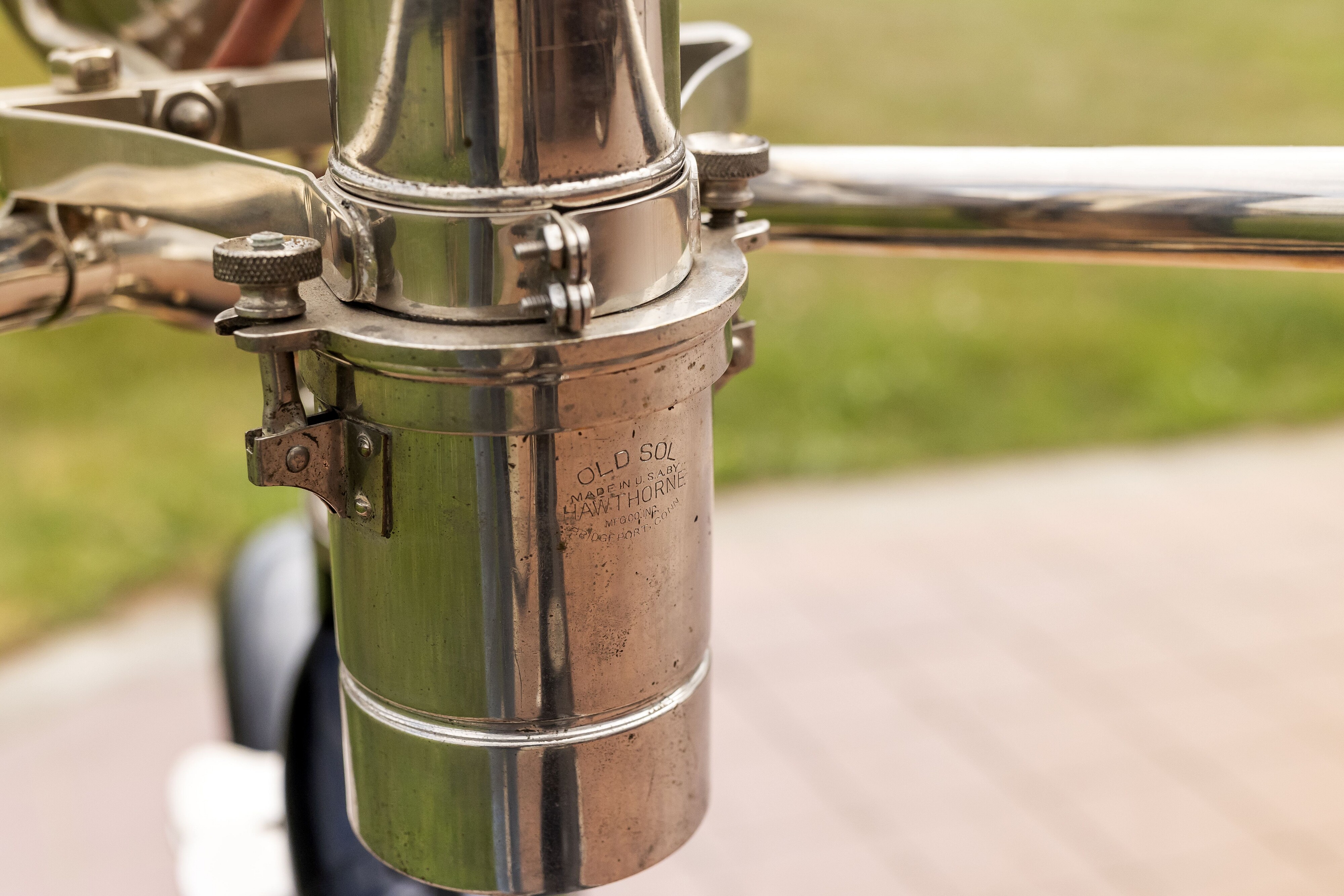
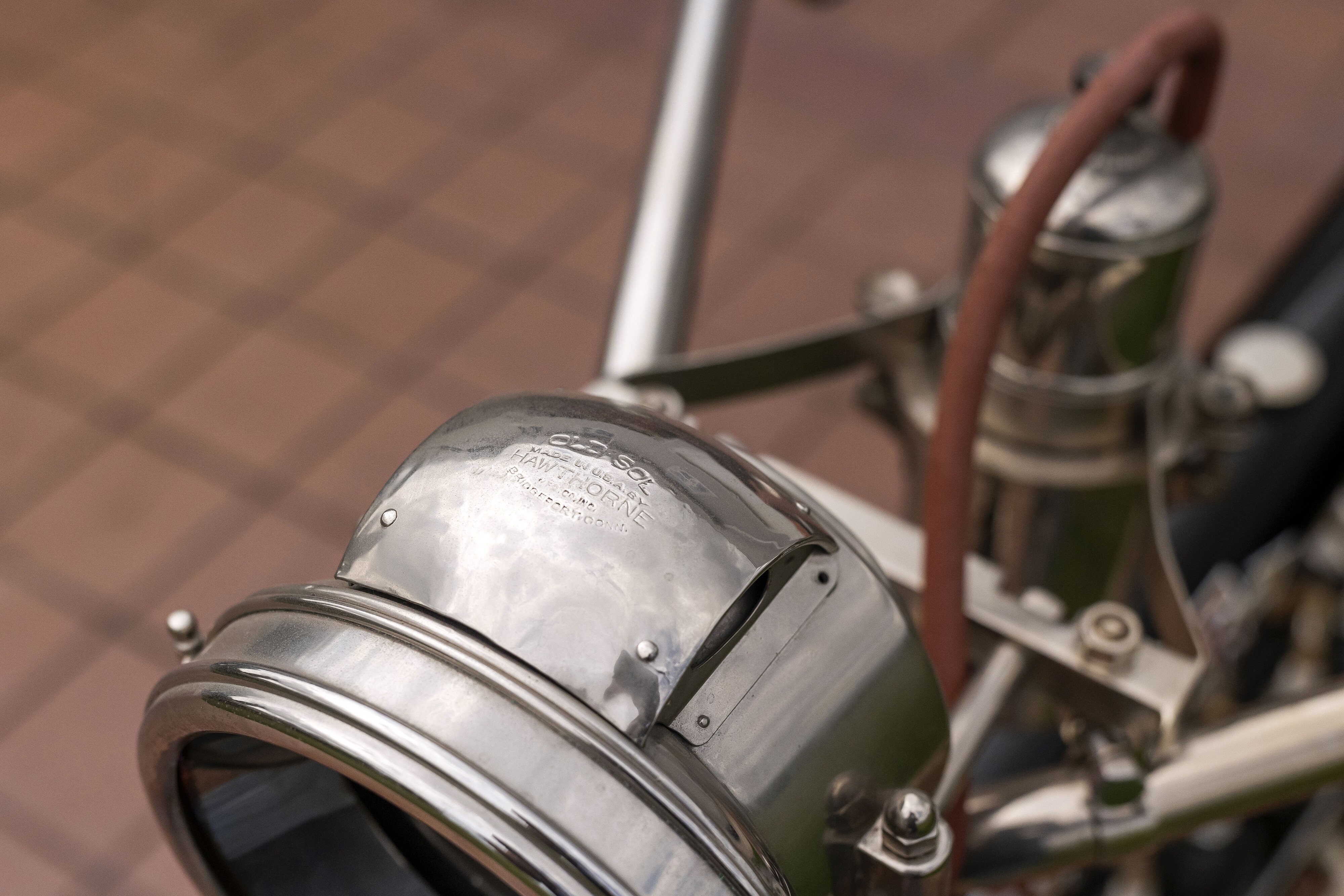
- HEADLAMP: Carbide Hawthorne Old Sol
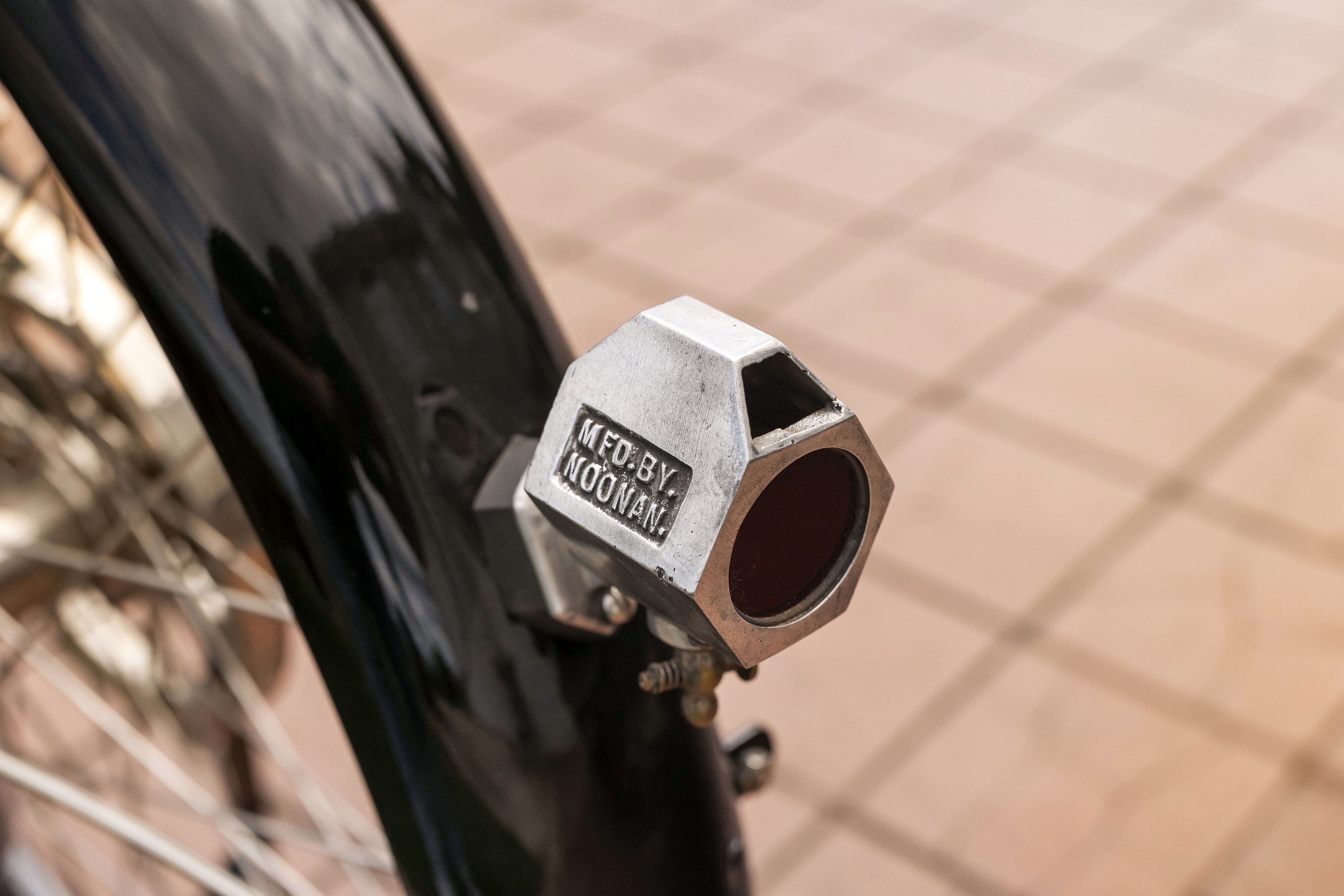
- TAIL LIGHT: Noonan Rome
- PEDALS: Schwinn
- WHEELS: 28 in. with 2.5 in. Tires
- WHEELBASE: 60 in.
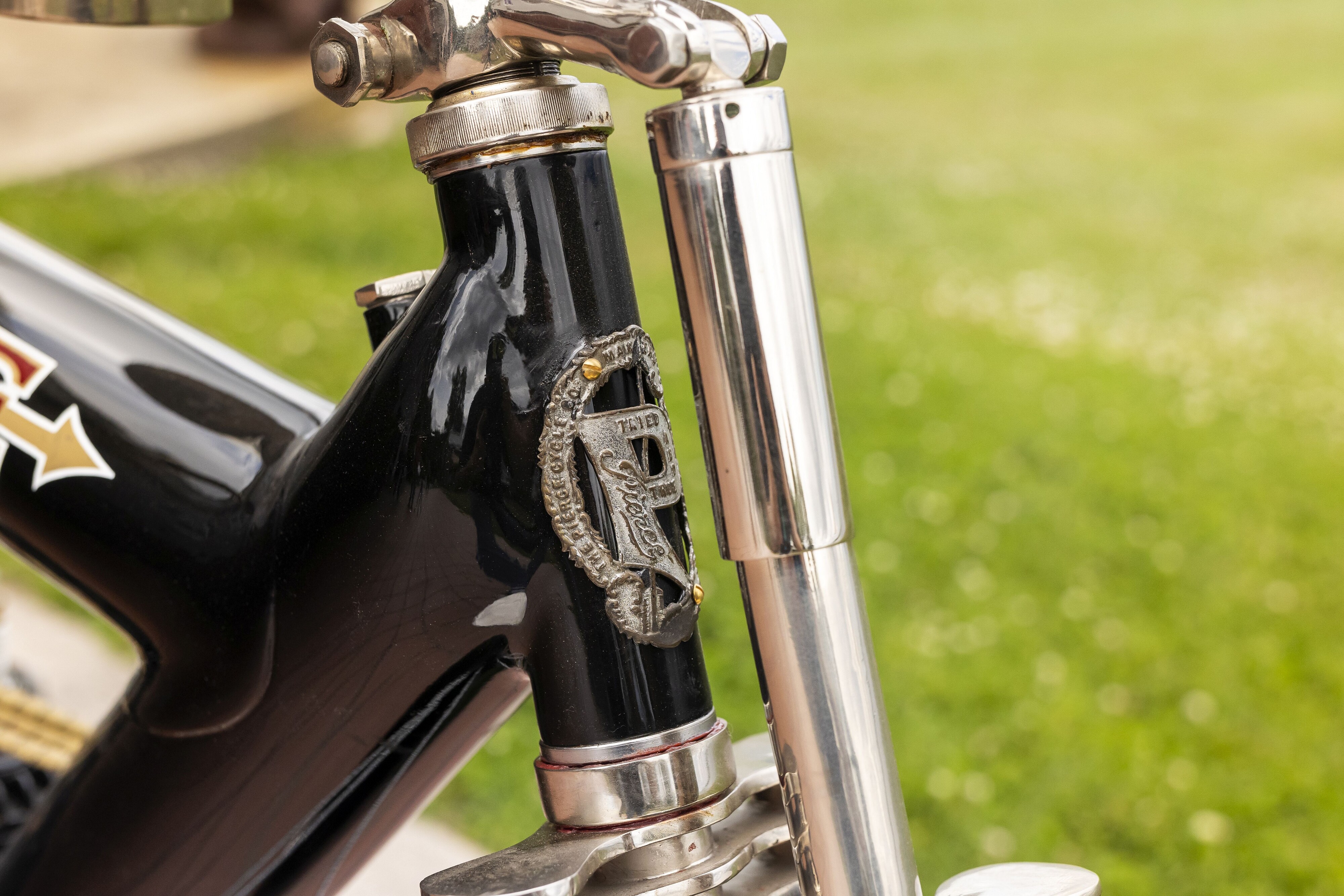
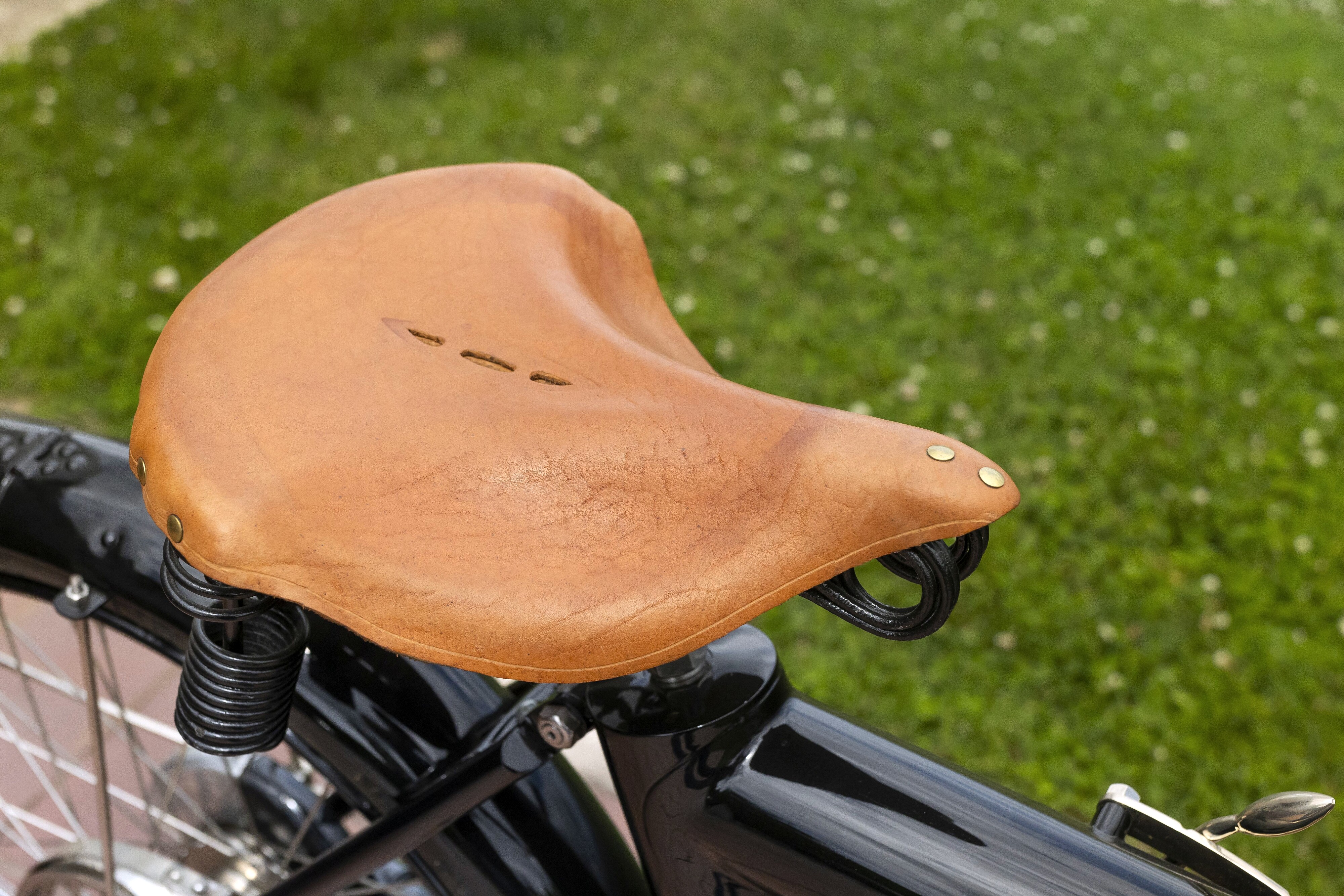
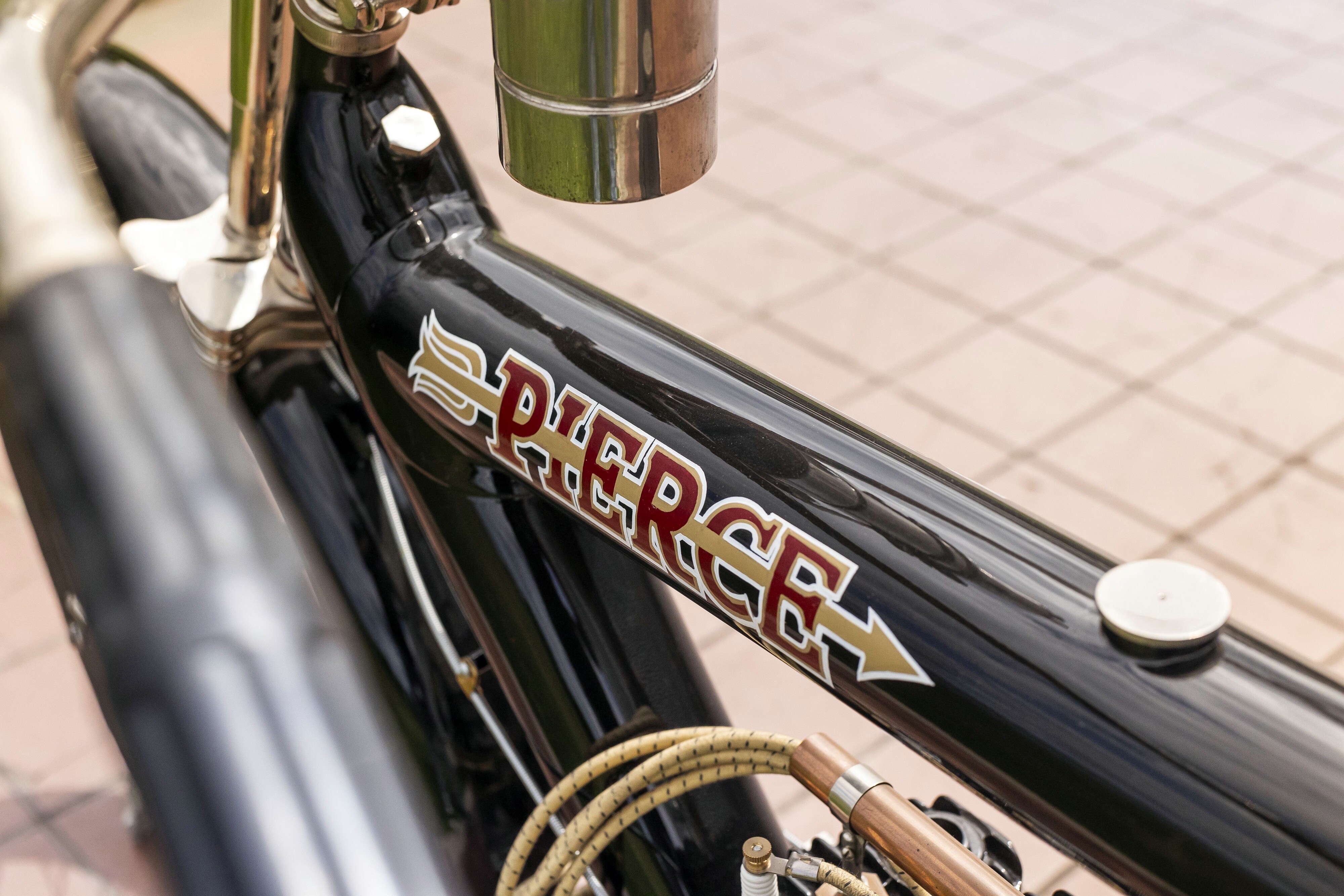
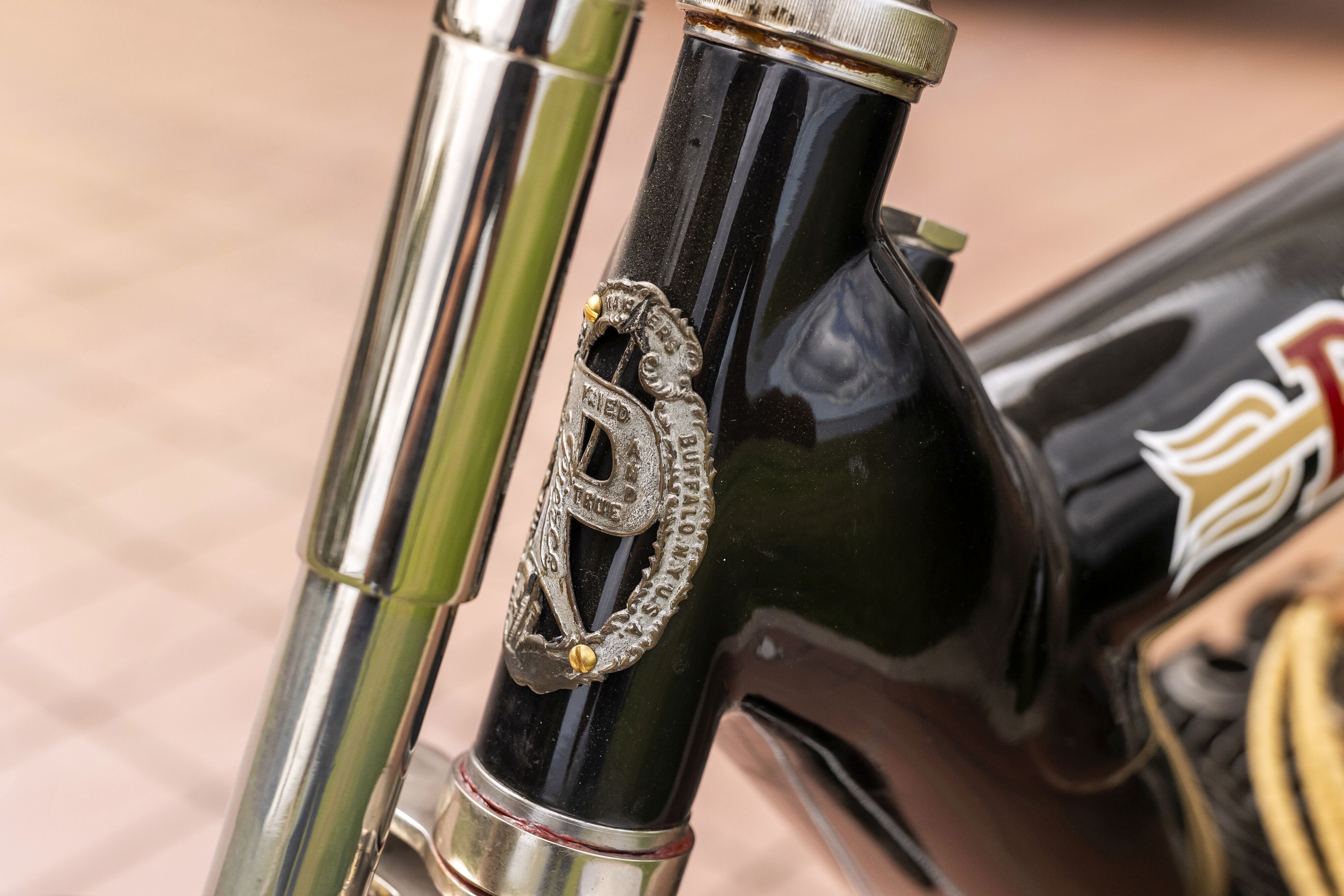
- FEATURES: Headlight, Taillight, Foldable Rear Fender, Pierce Emblem
- HISTORY: This example was discovered for sale in Argentina and was recently restored to perfection.
In 1865, Heinz, Pierce, and Munschauer were established to sell household items, including gilded bird cages and refrigerators, in Buffalo, NY. Seven years later, Pierce would buy out his partners, form the George N. Pierce Company, and in the 1890s, pivot to selling bicycles with the soon-to-be-famed ‘arrow’ logo. In 1900, he sent three board members to Europe to study technology, and they returned with a De Dion engine. Forming the Pierce-Arrow Automobile Company in 1901, they would become known for producing some of the finest, most expensive luxury cars, on par with Rolls-Royce, from the 1910s into the 1930s, which George’s son, Percy, raced competitively.
In 1907, Percy was appointed President of the newly formed Pierce Cycle Company, thereby separating the bicycle business from the automobile business. Following tradition, he went to Europe to study motorcycles and acquired a Fabrique National Four, the world’s first production four-cylinder bike, in 1908. With FN’s inspiration, the Pierce Cycle Co. would produce the first American four-cylinder motorcycle, the meticulously hand-built Pierce Four, with the finest quality components. It debuted in 1909 at an expensive $325 as “vibrationless” and complete with many high-end features at the very top of the market. Radically different from any other motorcycle on the market, it was also far more expensive. It had a strong, large-diameter copper-lined steel frame that hid gasoline, oil, and control cables. Unlike the FN, the Pierce had a T-head sidevalve engine and cam-driven intakes. It also featured a shaft drive and a sprung front fork—a significant improvement over the FN Four. Capable of reaching speeds over 60 MPH, they were used for long-distance endurance events, often won by Percy Pierce himself.
The 1910 Four would improve even further with the addition of a clutch and two-speed transmission. A November 12, 1910, Pierce advertisement describes: “The Four Cylinder, we scarcely need to point out, is the world’s leading motorcycle. The rider who wants the best will always buy the Pierce Four. There is no motorcycle which approaches it in smooth running qualities, in hill climbing qualities, and road touring capability. This machine is built for the severest kind of usage. It will give service and satisfaction everywhere and under all conditions.” In September 1911, their advertisements boasted that a Pierce motorcycle was the “only motorcycle known to have climbed Simplon Pass (One of the highest peaks in the Alps.)” and the “Only American machine that holds a Grand Prize award. (Won at Buenos Aires International Centennial Exposition. Pierce sole winner against European competition.)”
Costly to produce, the price increased to $400 in 1913, making the innovative motorcycle the selection of “more prosperous sportsmen.” The market expanded to include 14 countries outside of the United States, from Japan to Argentina, and Pierce boasted of “a few hundred” US dealers. However, it was said that the motorcycle cost more to produce than even that high price tag. By 1914, they were bankrupt, having produced fewer than 500 motorcycles. Pierce-Arrow would continue manufacturing automobiles until the Great Depression caused its decline in 1938, but Pierce motorcycles became a chapter of history.
Pierces are now considered classics, having been included in the AMA Motorcycle Hall of Fame’s Classic Bikes. Due to their high cost and low demand, fewer than 500 Pierce motorcycles were ever built, and surviving examples are rare. Of the remaining examples, most known bikes are still functioning today.