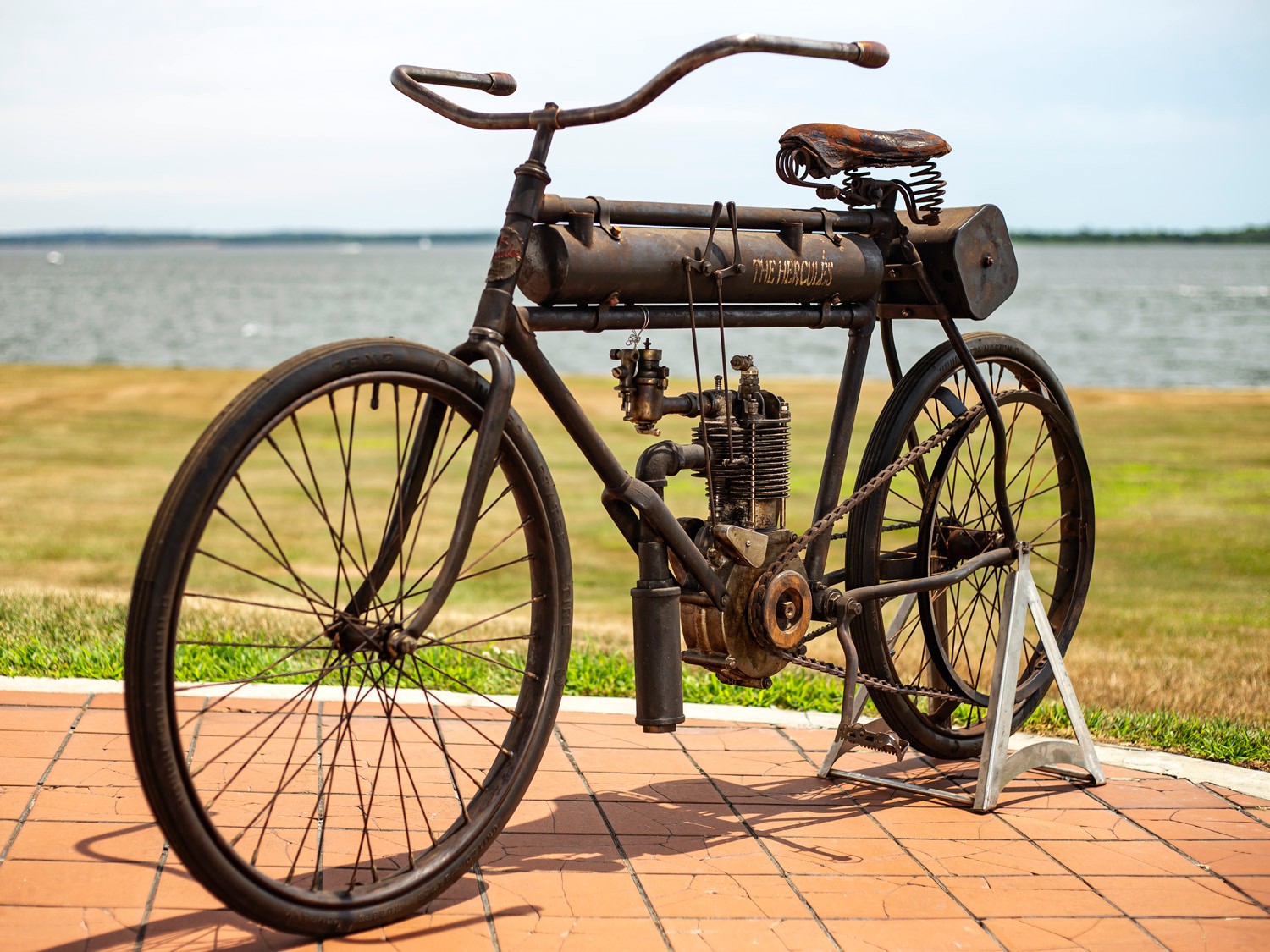
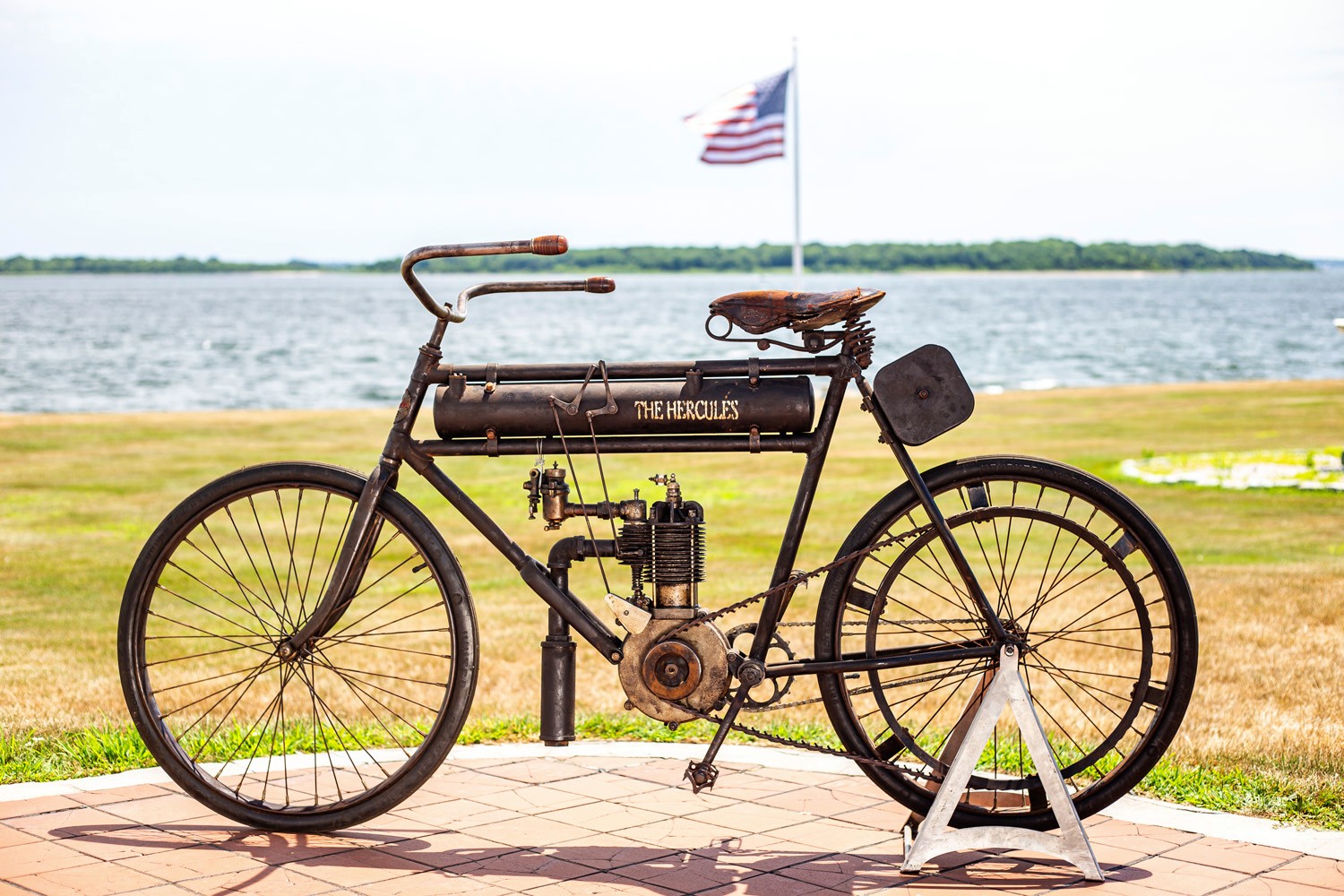
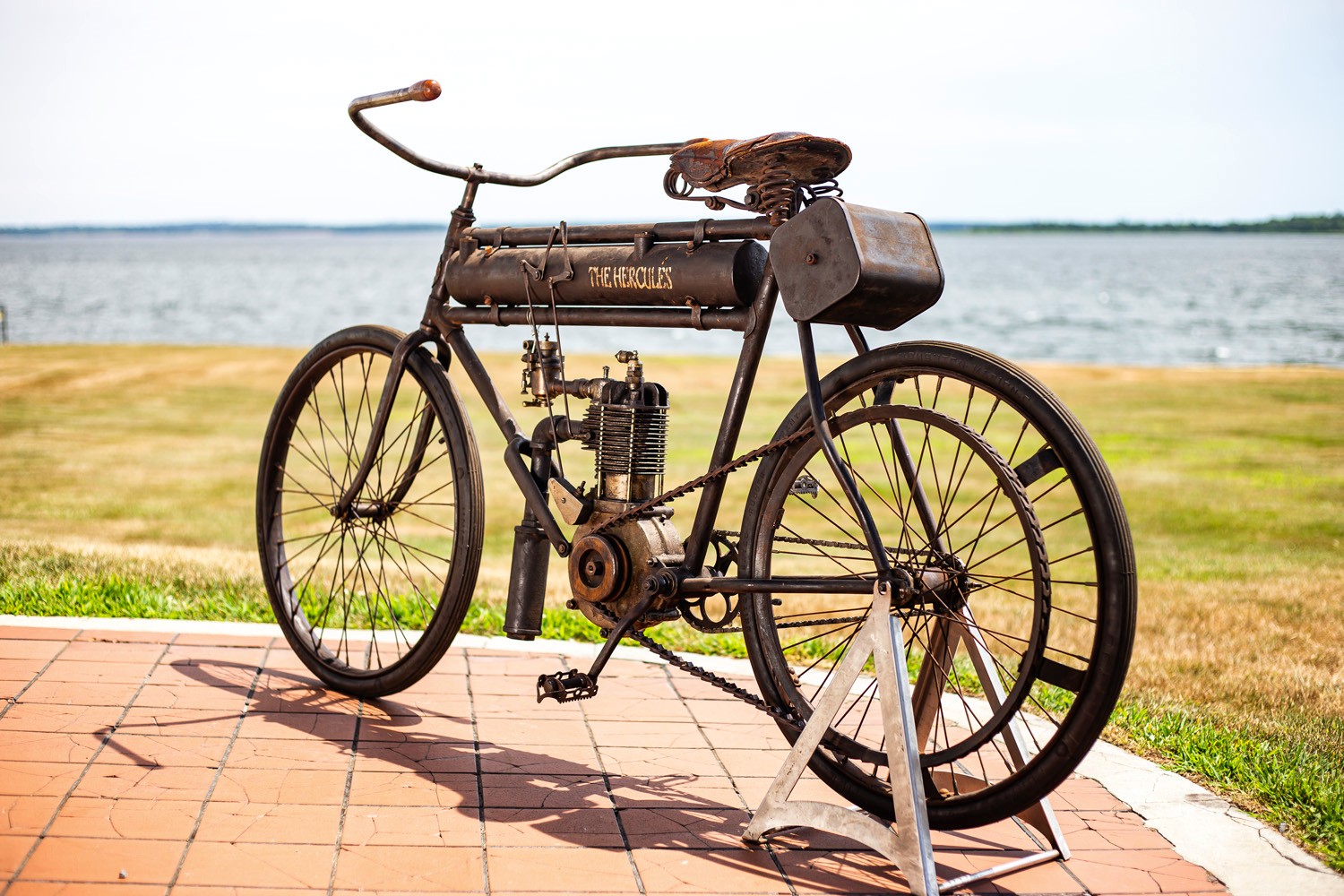
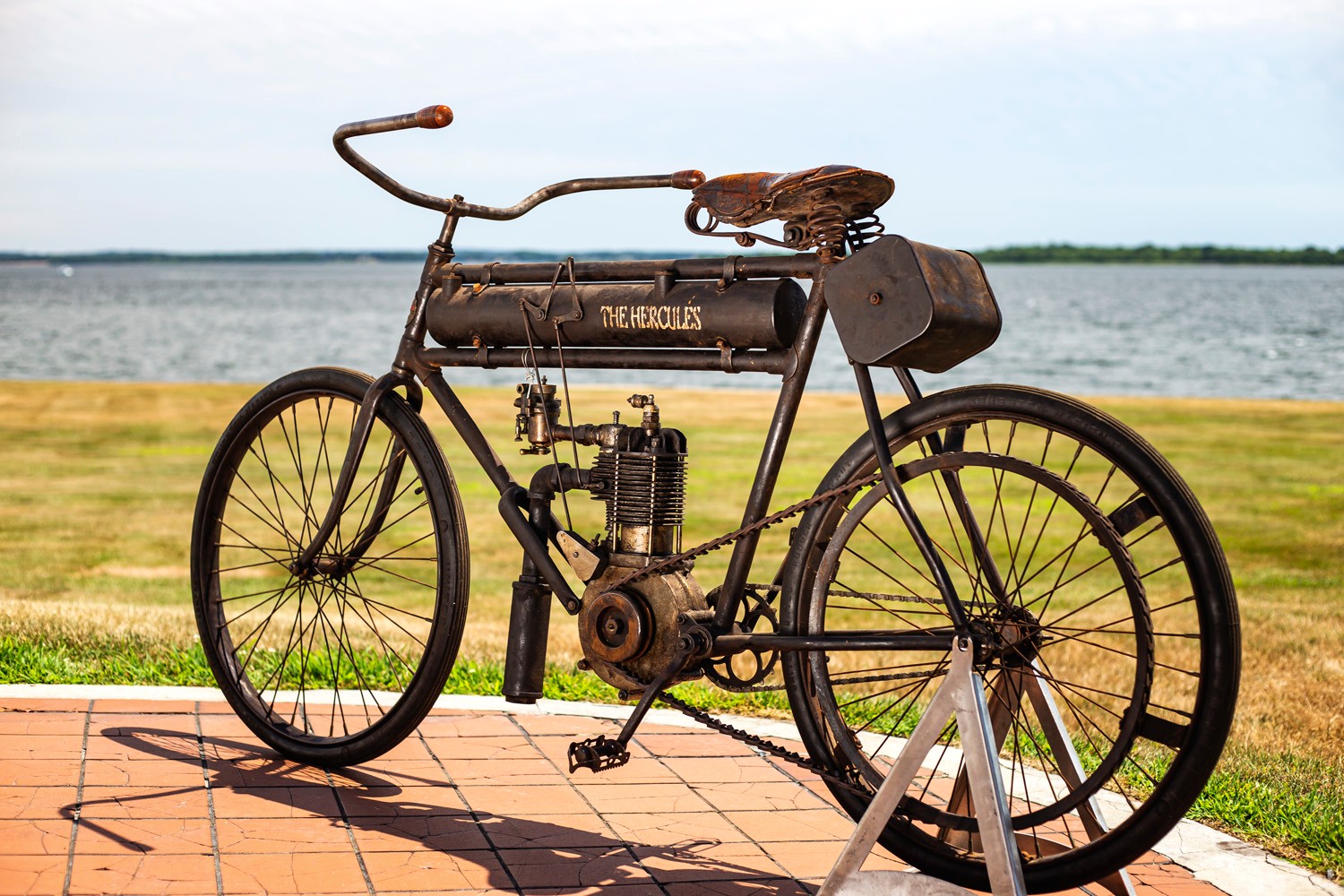
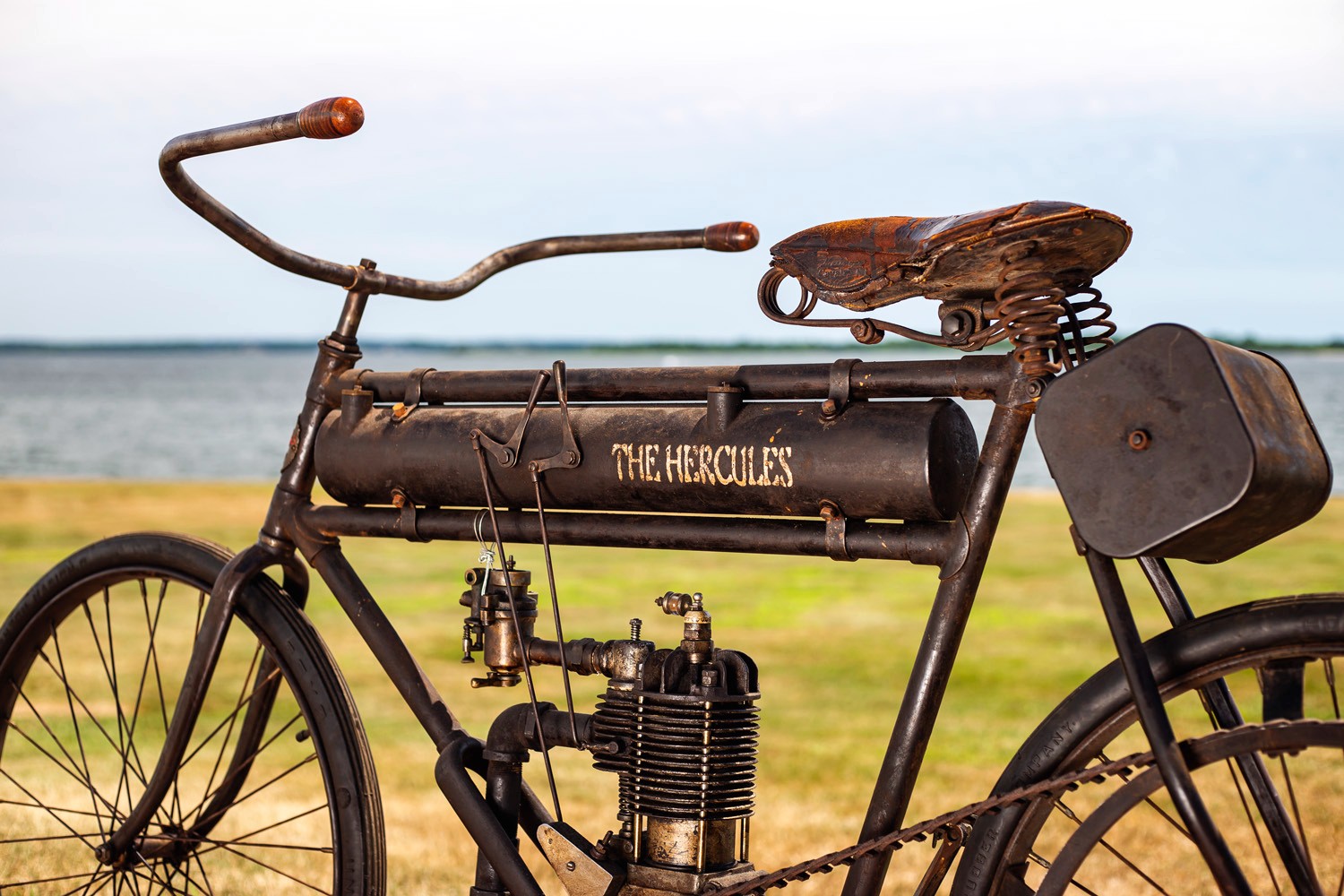
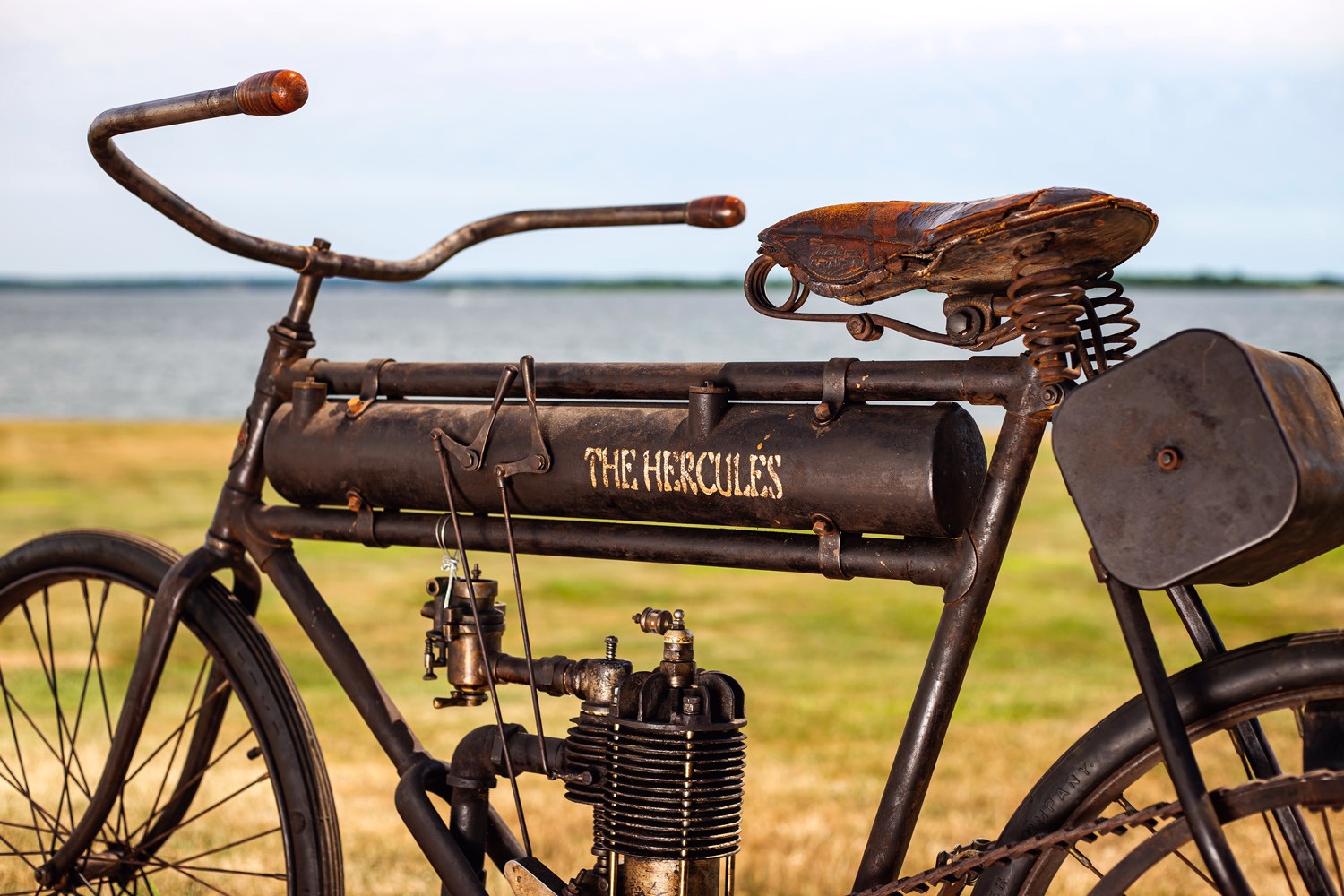
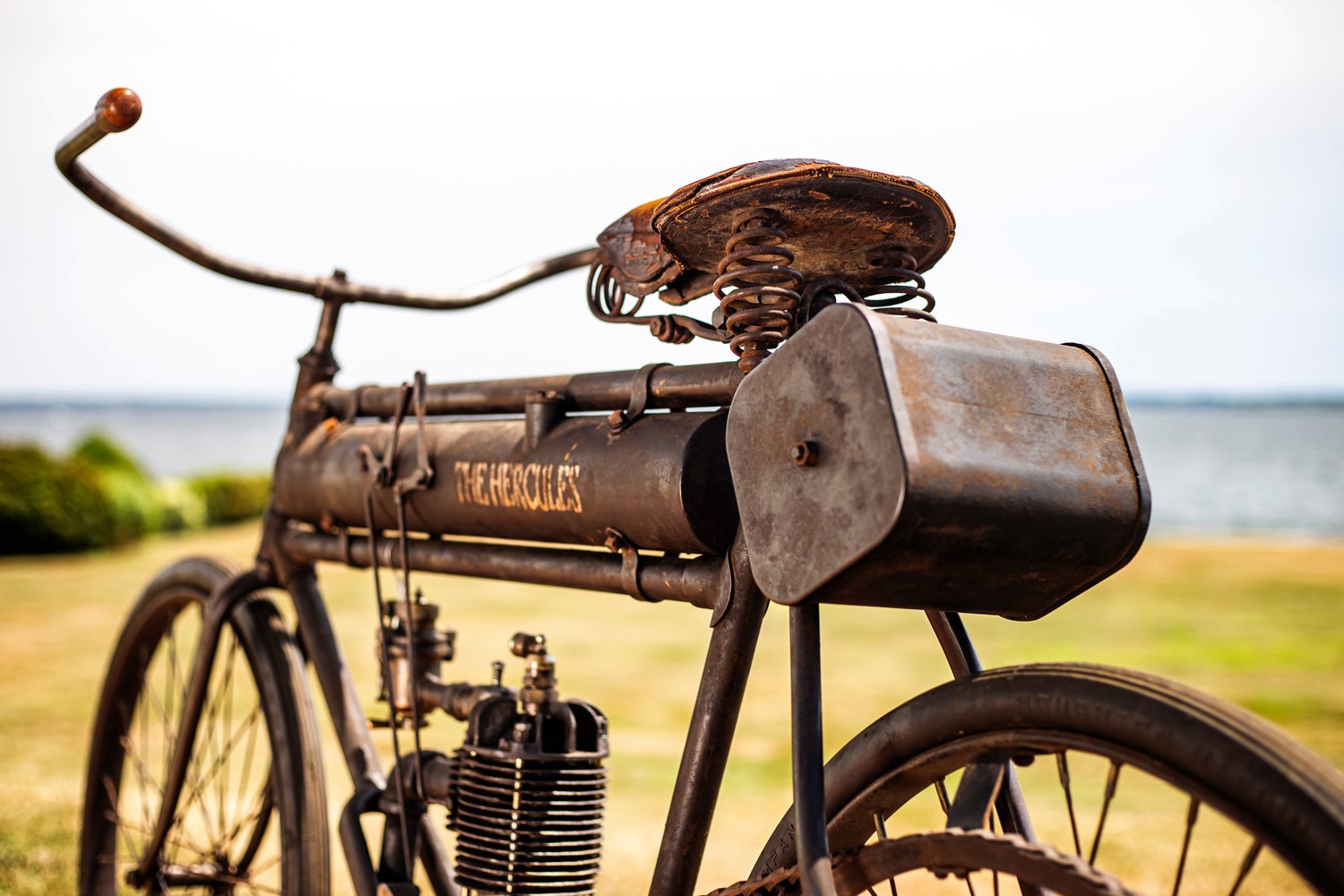
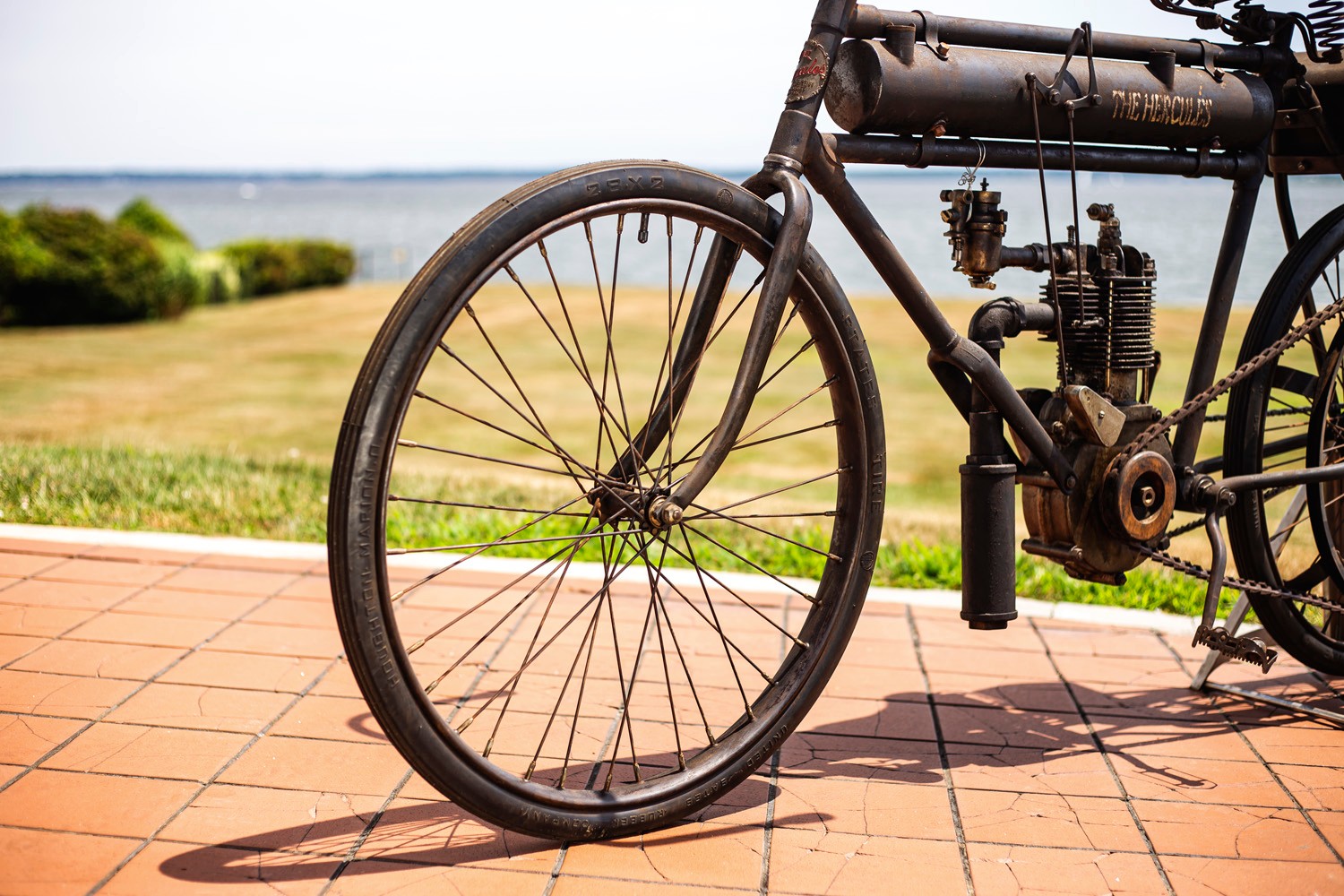
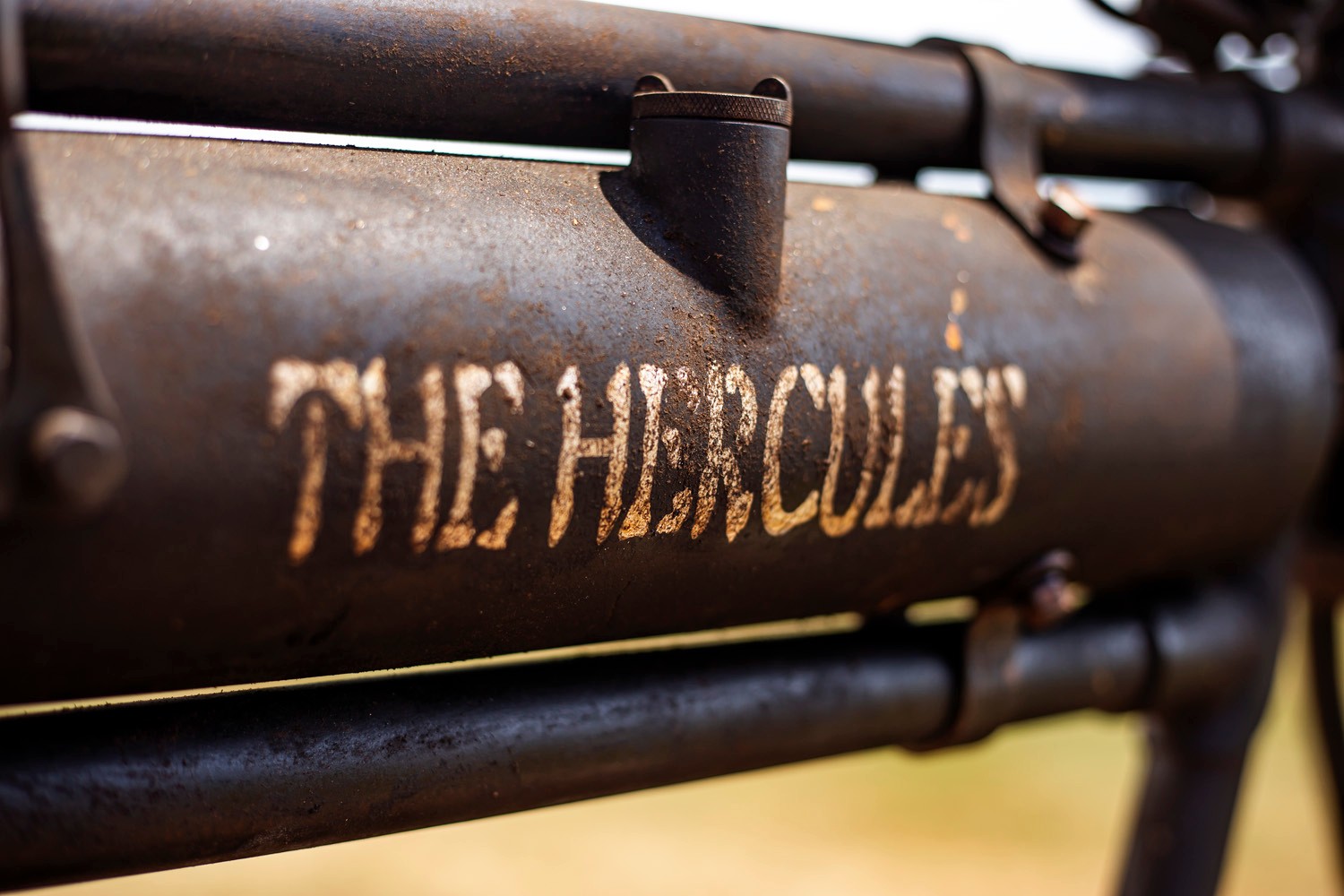
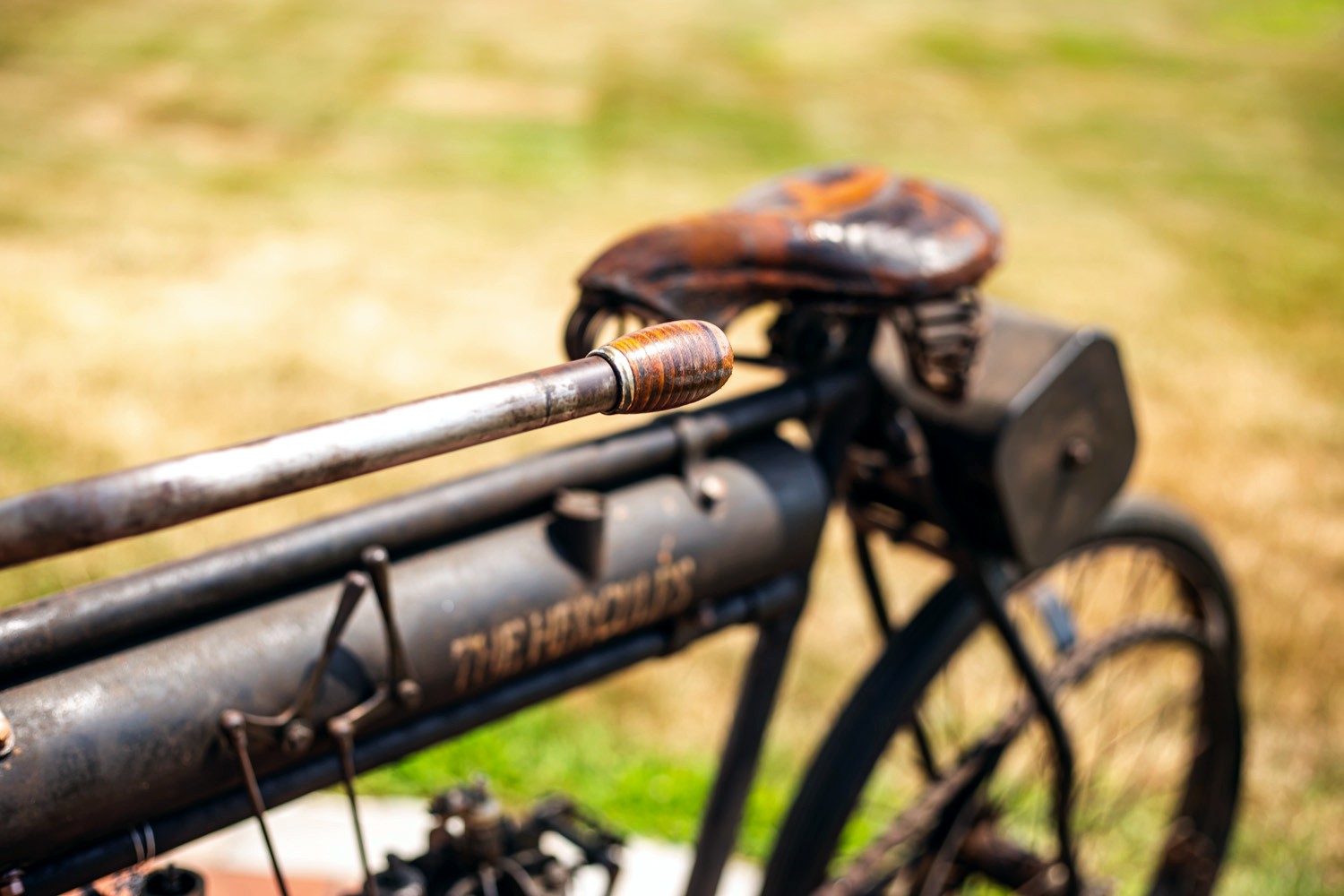
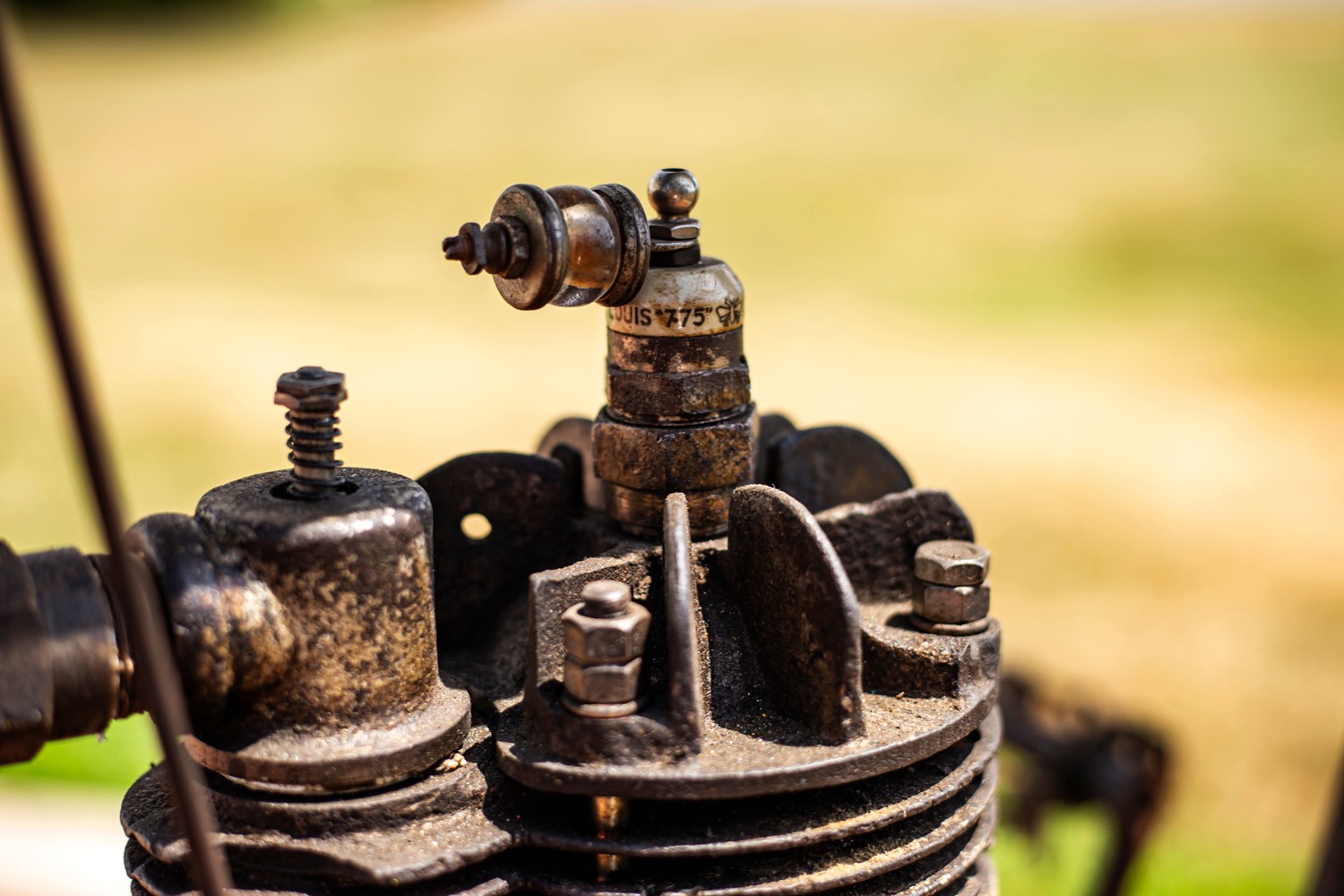
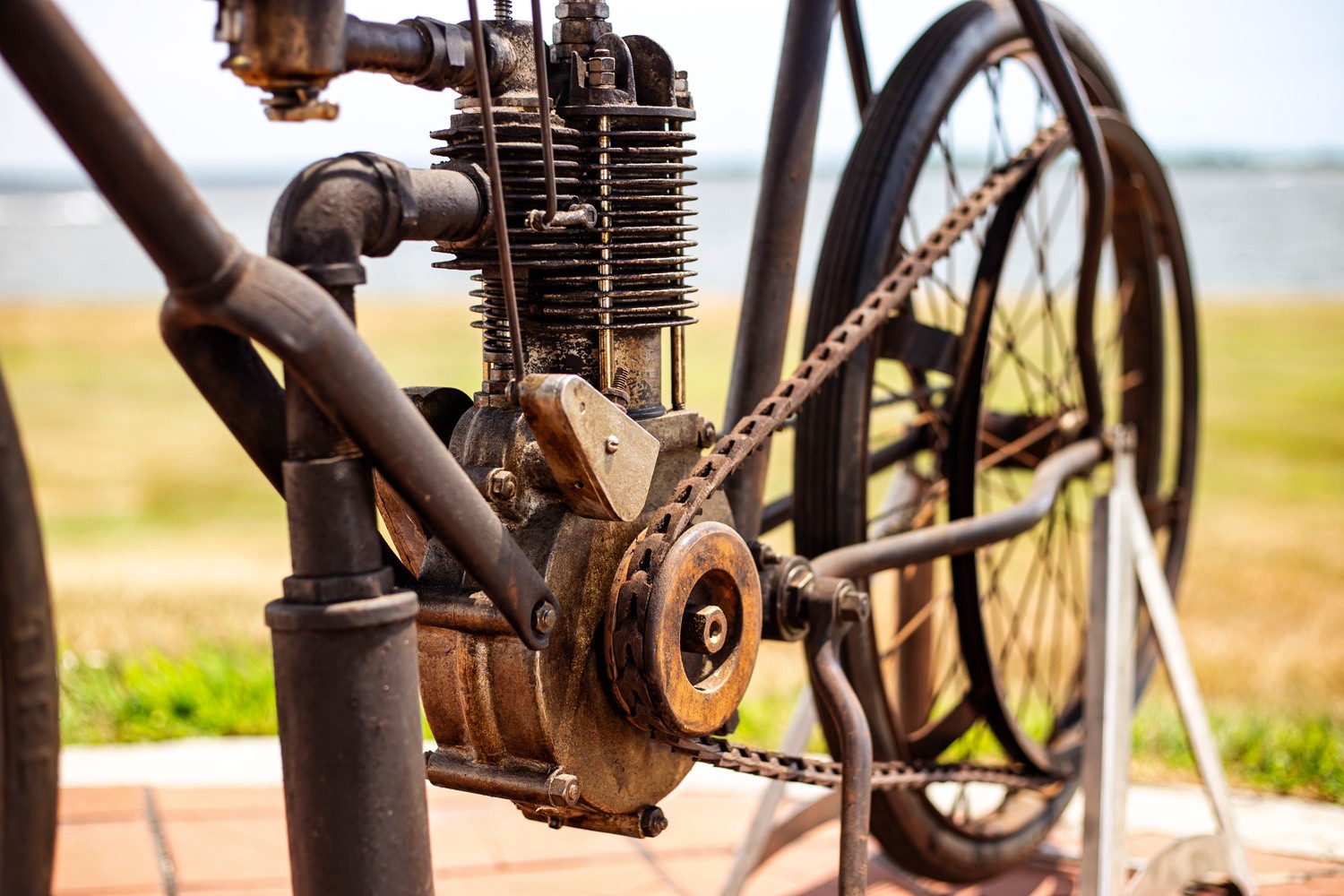
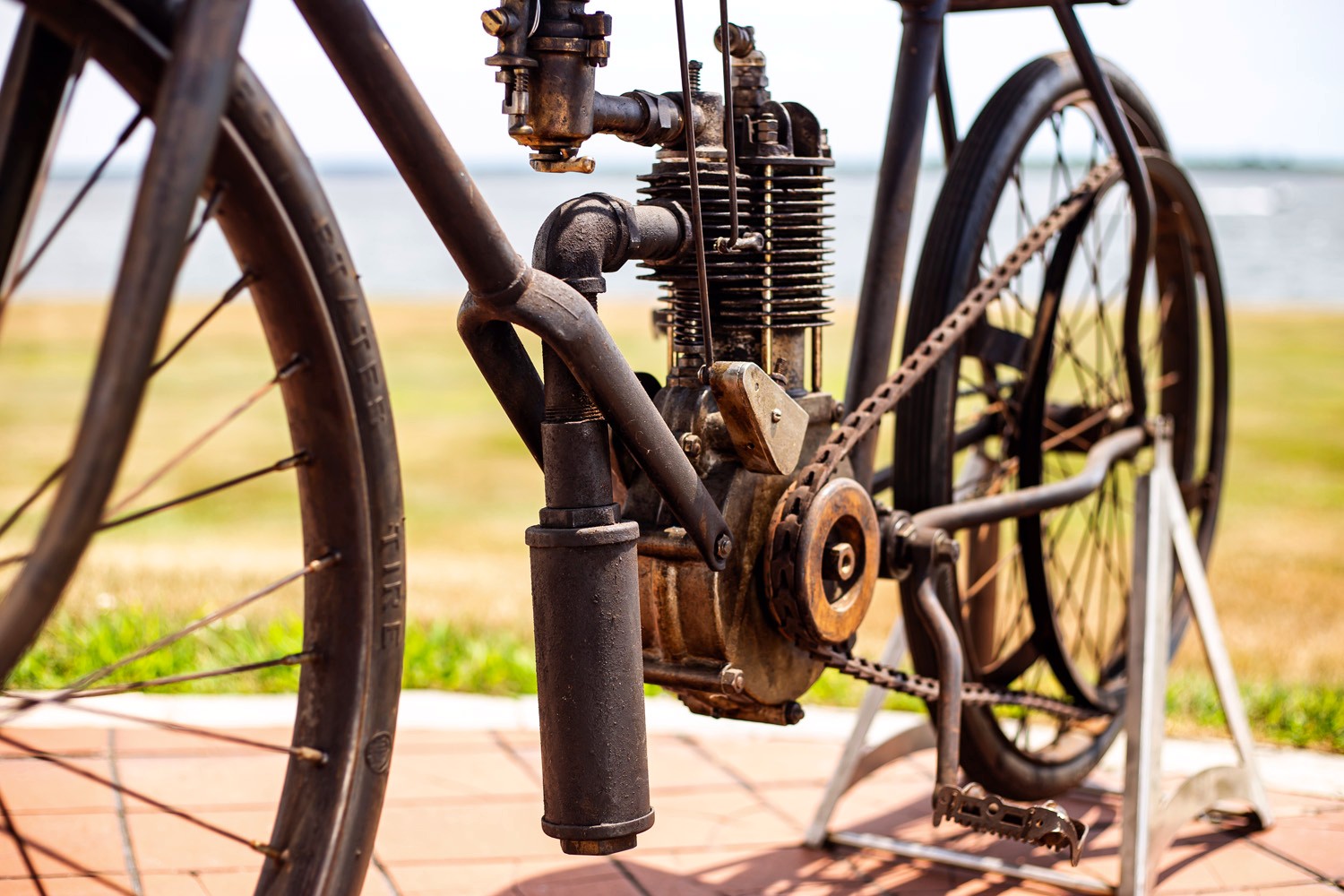
1902 Hercules #126
Inventory Number: 5052
Price on Request
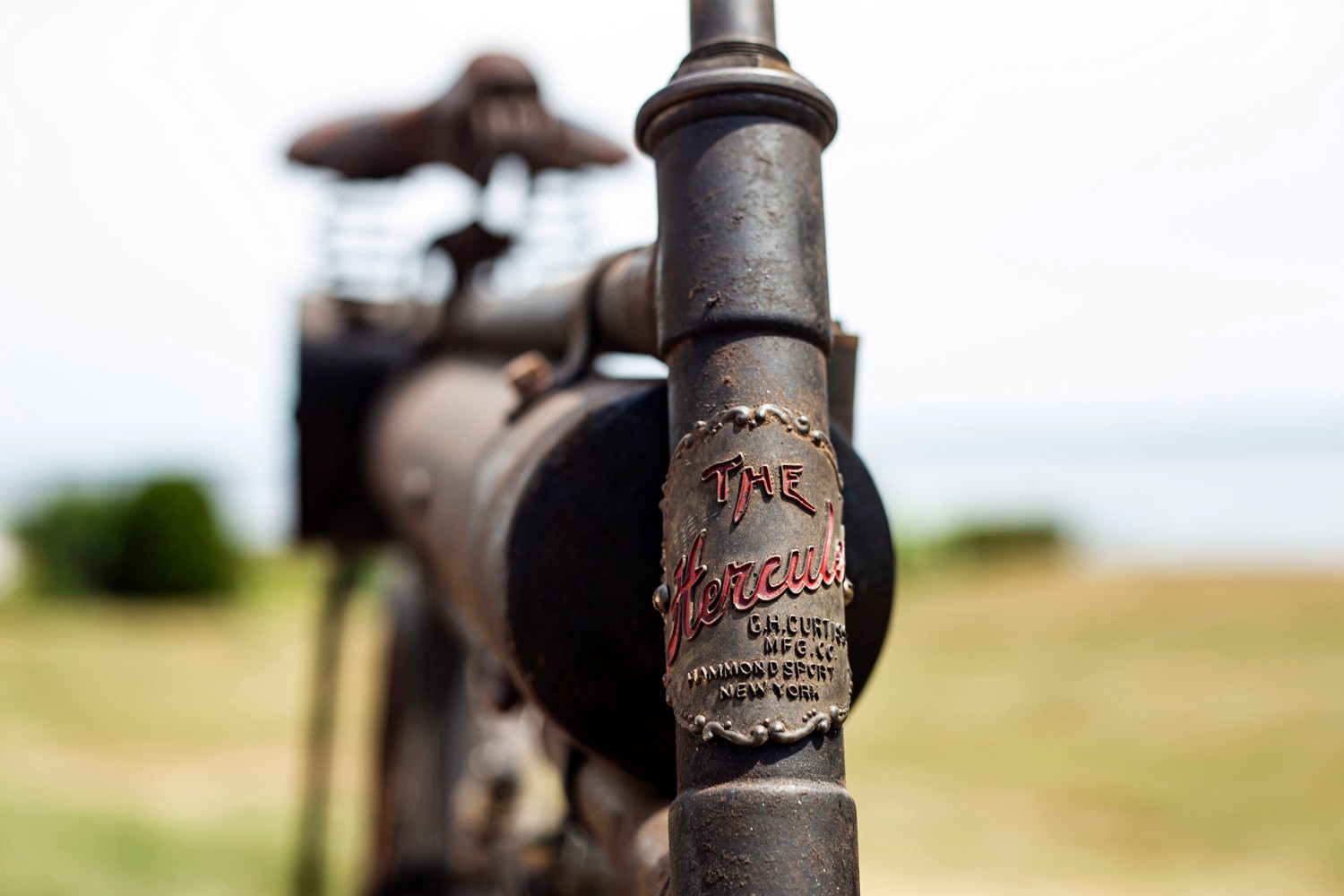
- MANUFACTURER: The G. H. Curtiss Manufacturing Company
- MANUFACTURED: Hammondsport, New York, USA
- YEAR: 1902
- MODEL: Hercules
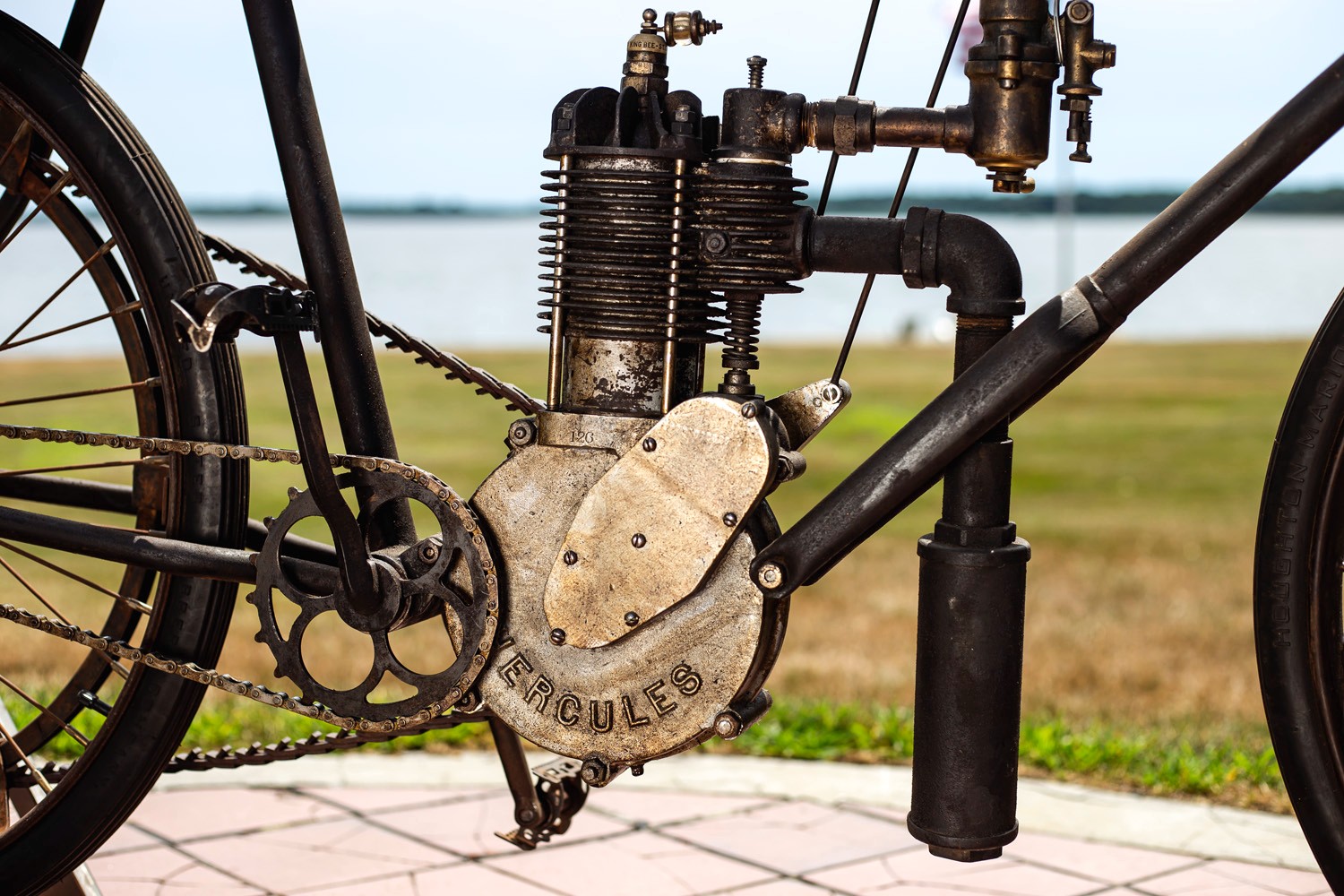
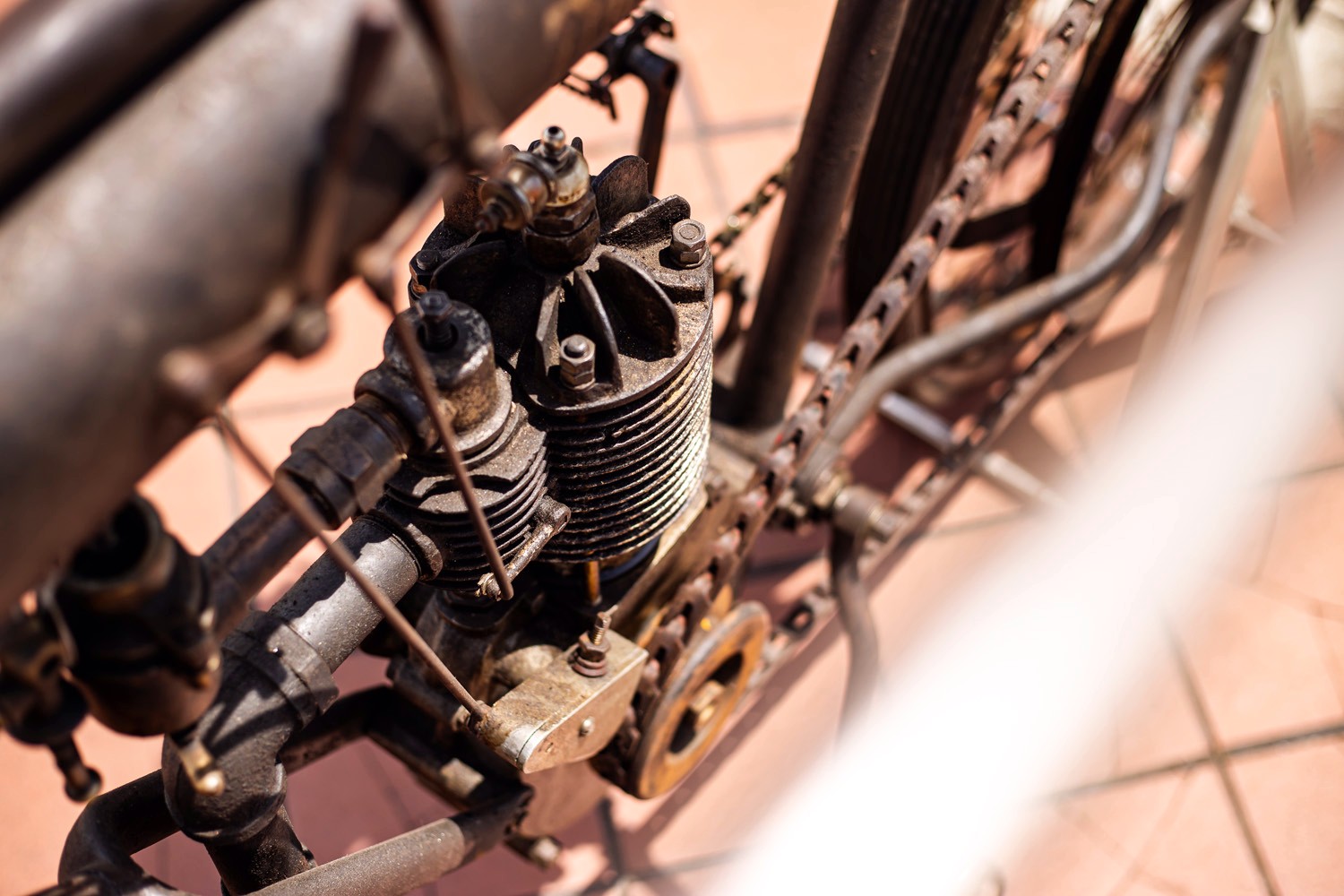
- ENGINE: Single Cylinder
- WHEELBASE: 56”
- WEIGHT: 125 lbs.
- HP: 2.5
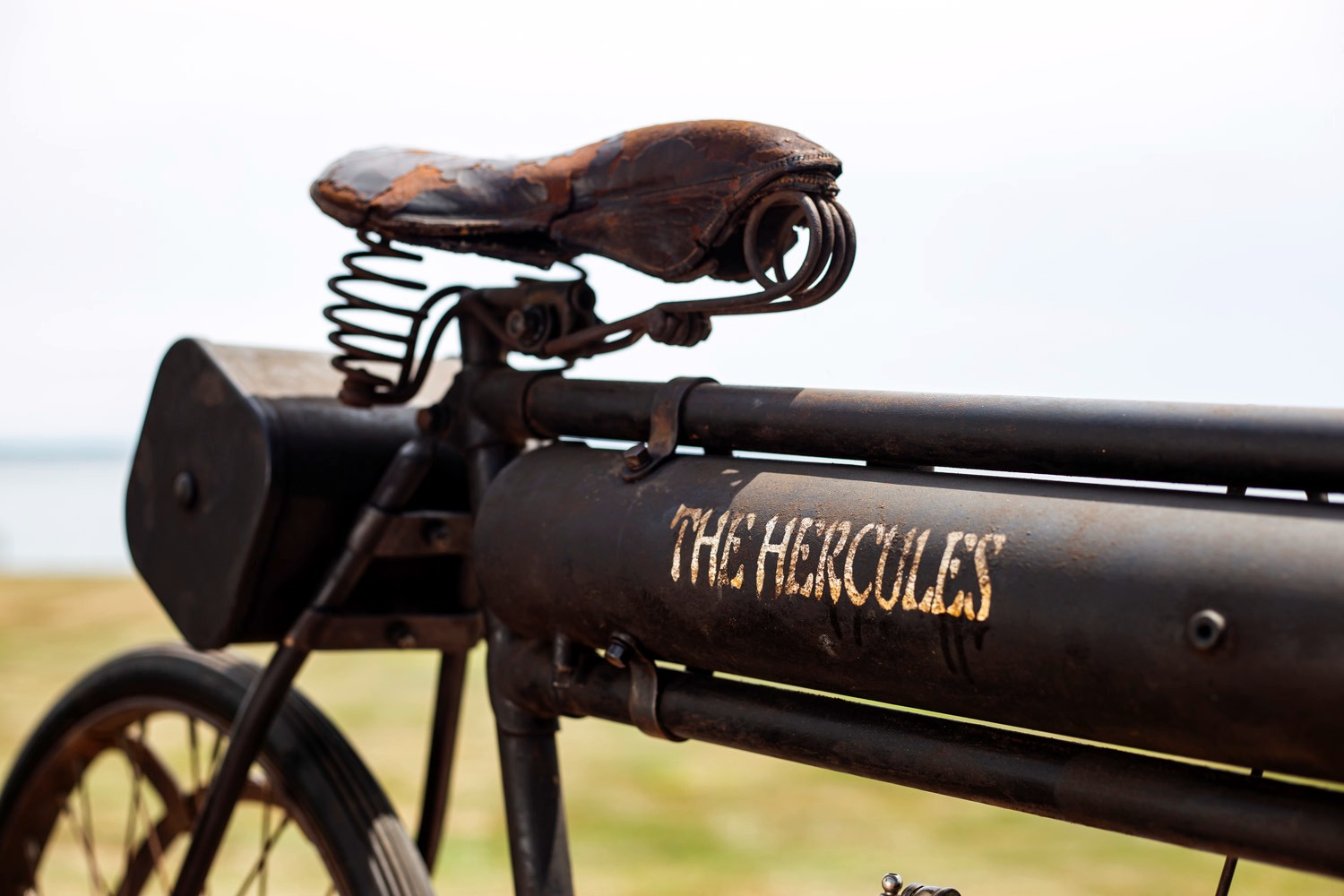
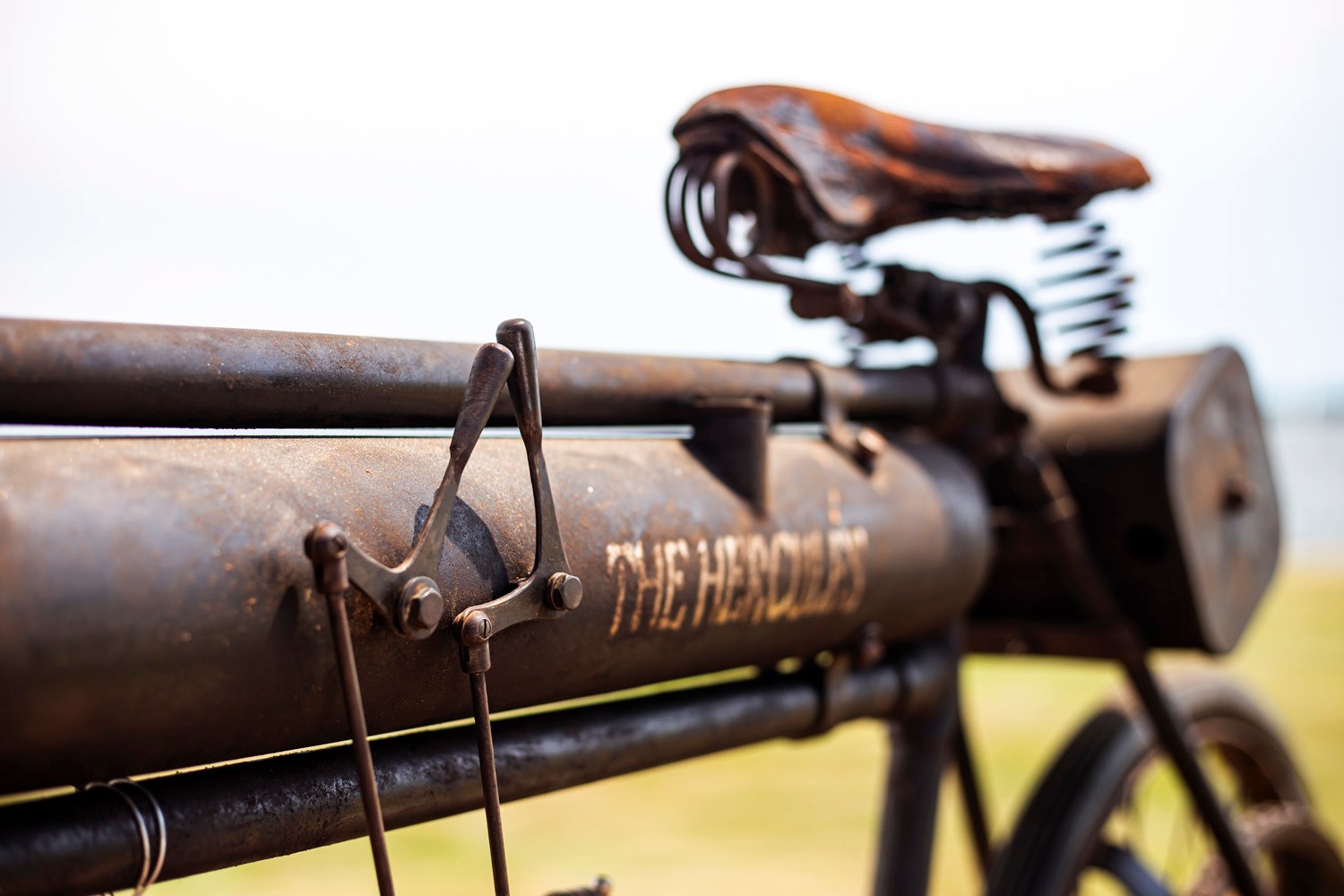
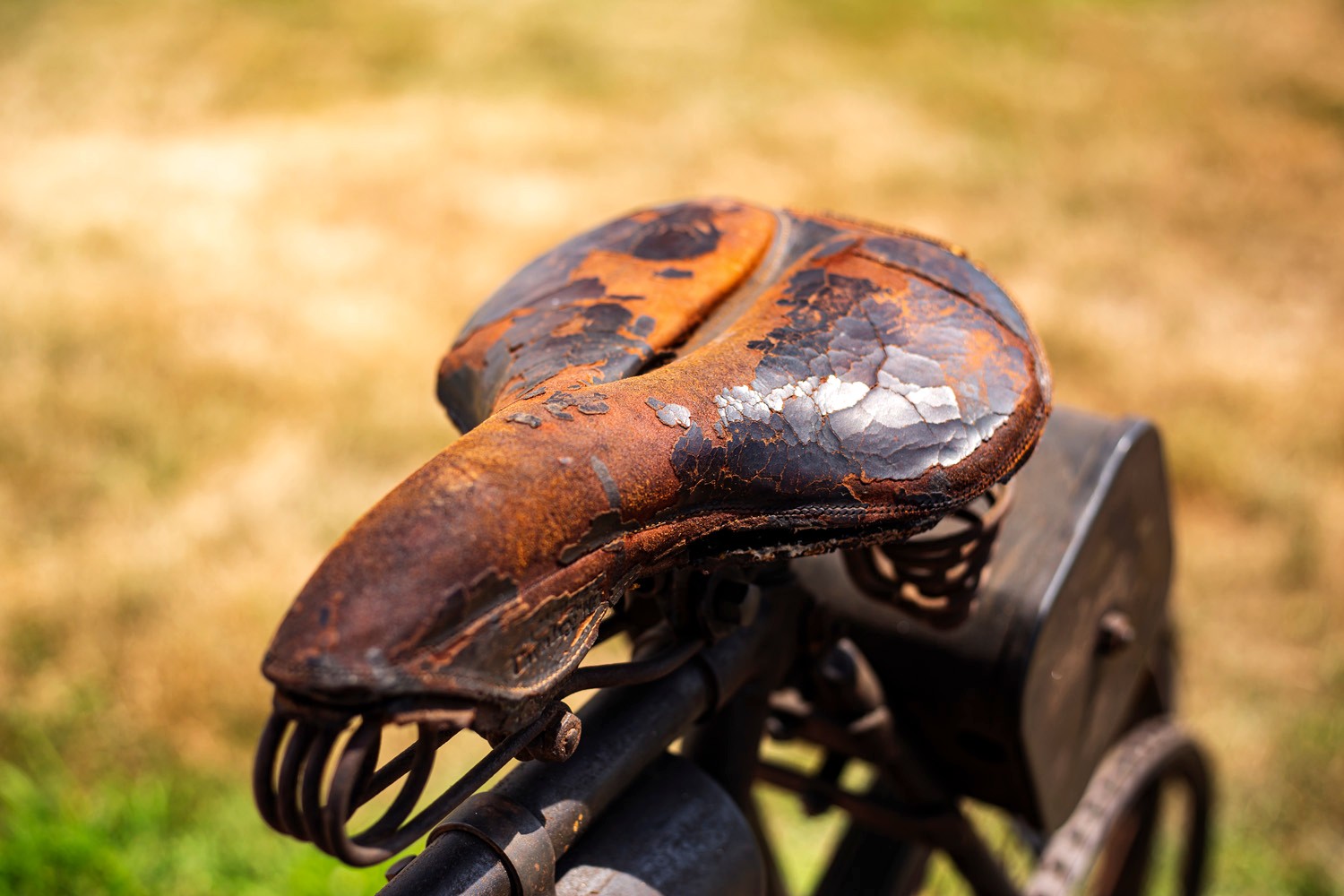
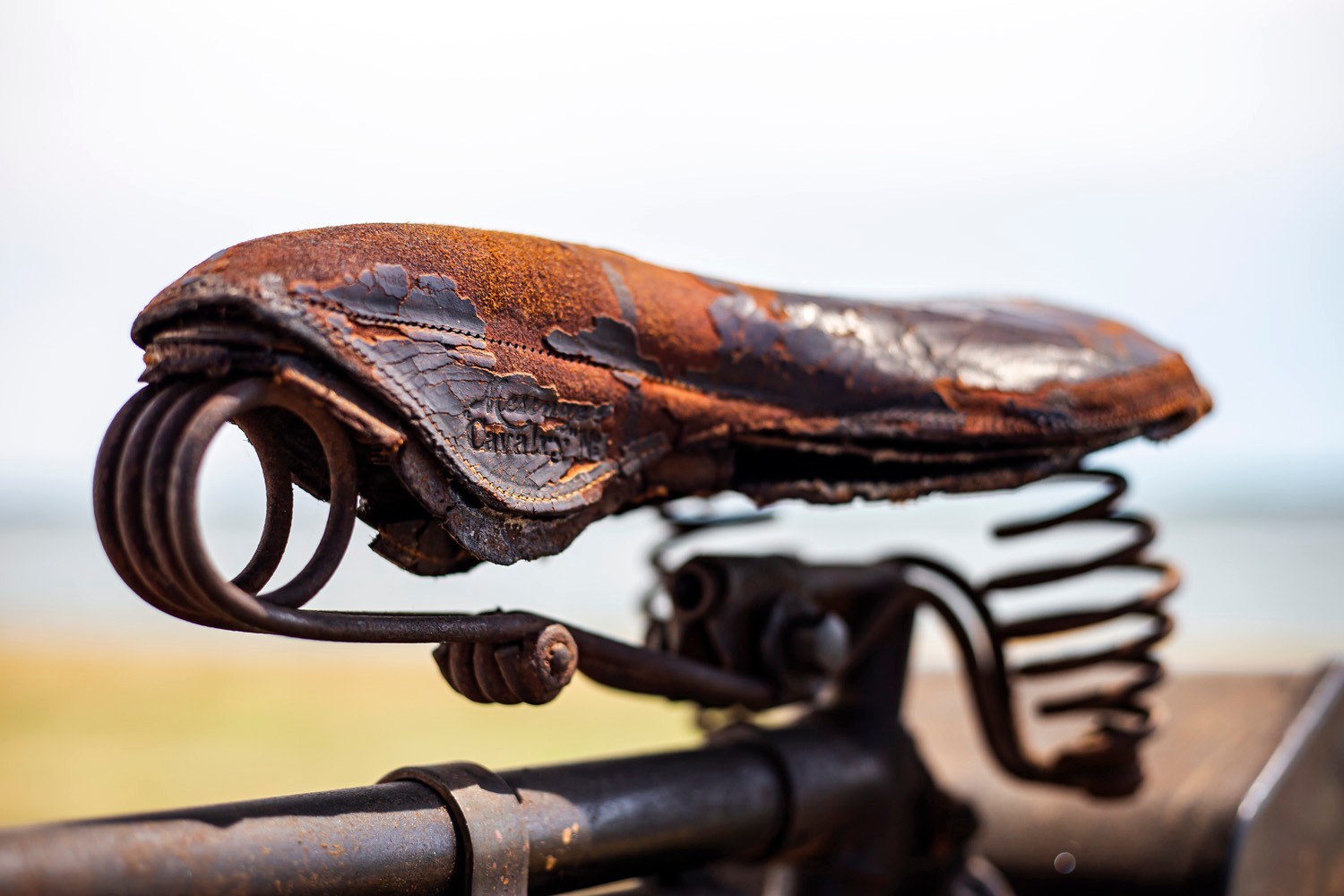
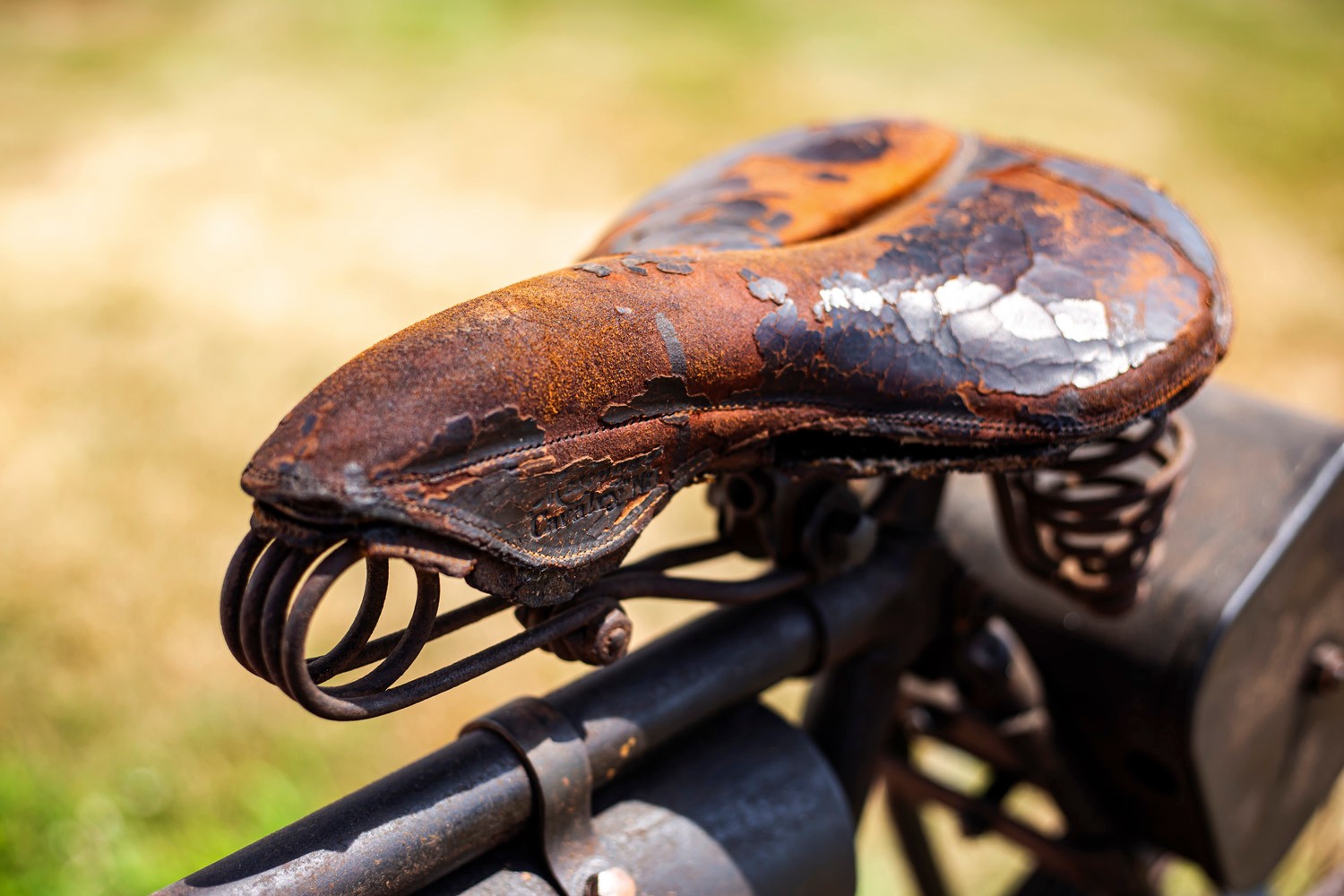
- SEAT: Mesinger Cavalry No. 2
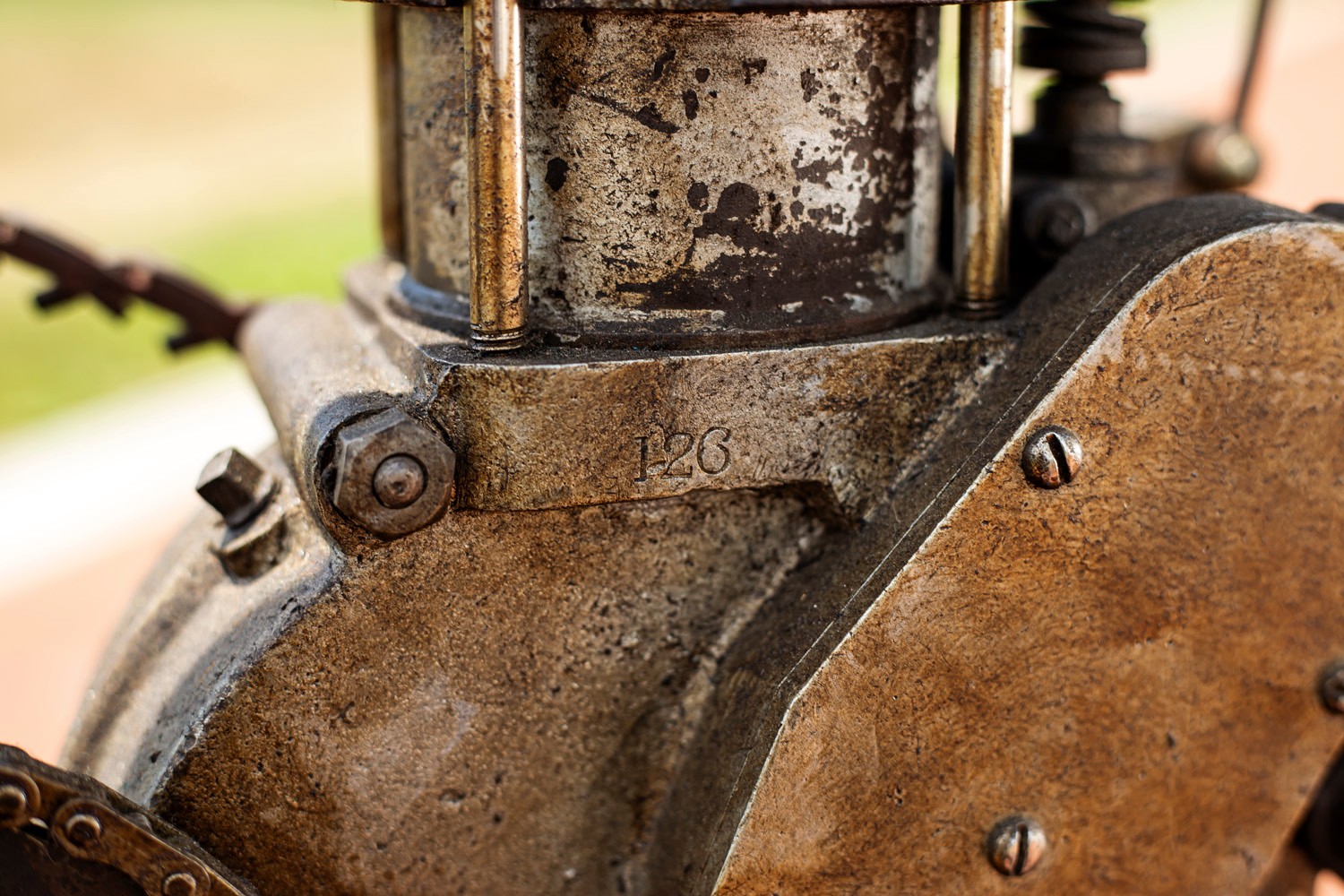
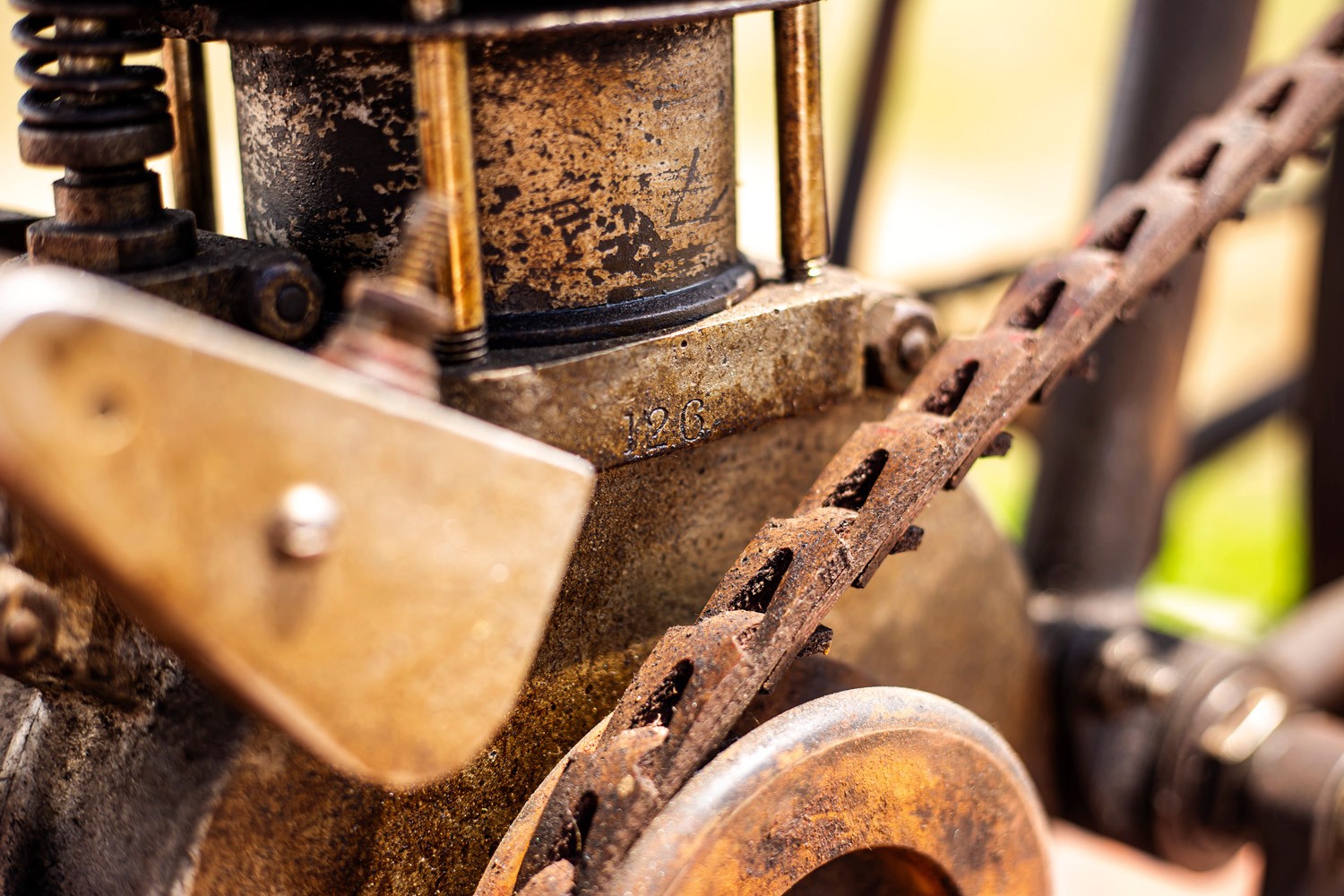
- ENGINE NO: 126
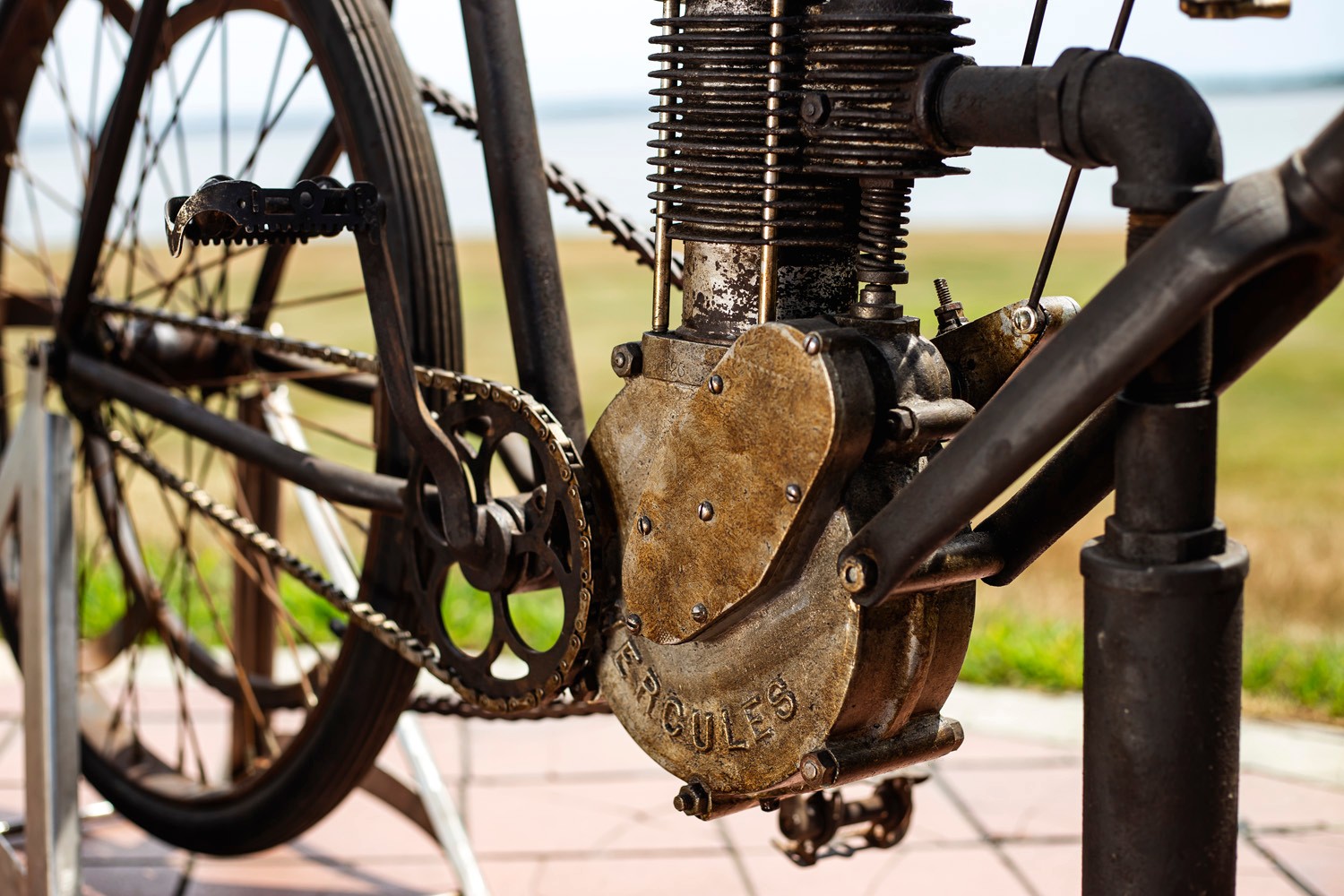
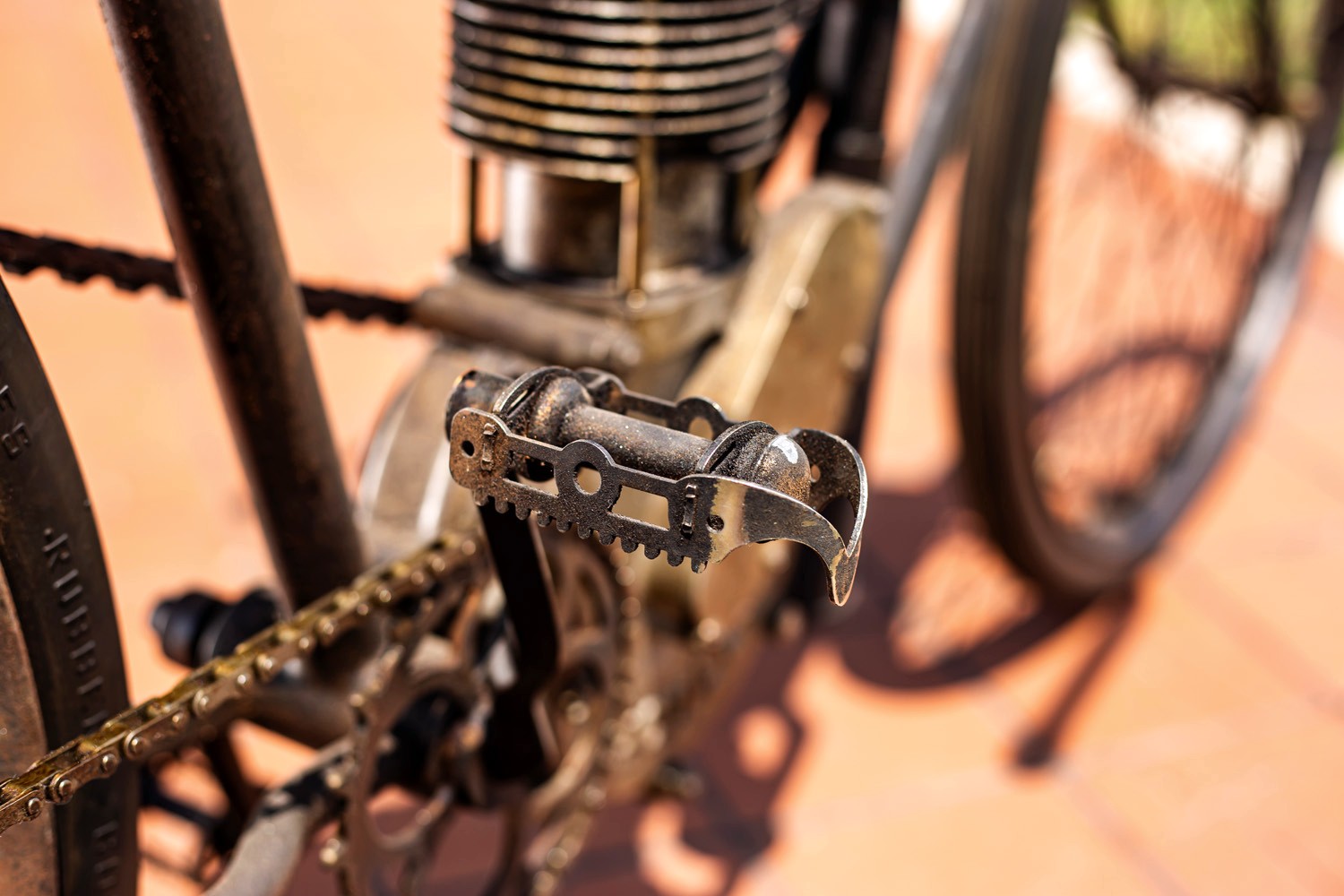
The sixth engine he ever produced, a single-cylinder 2.5 hp with a leather belt drive under the name “Hercules,” can be found here, according to premier Curtiss historian Dale Axelrod. The G. H. Curtiss Manufacturing Company engraved “126”; the “1” is reported to represent the first and earliest run of the Hercules engines. The “2” is for the year of manufacture: 1902. Axelrod shares that the “6” makes this the sixth motorcycle engine Curtiss produced. The Audrain Auto Museum notes that this is the earliest known example of this extremely rare, unrestored motorcycle.
In 1904, he found that “Hercules” was already patented and began the “Curtiss” line as he was taking home the gold against even rival Indian motorcycles. He even put his 9 hp V-twin engine into the first successful dirigible in the United States, the California Arrow. Until 1912, he and his team would go on to build, sell, and race motorcycles out of their Hammondsport garage, but this wasn’t his only successful endeavor. In the same period, Curtiss was the chief rival of the Wright brothers, designing airplane engines, creating the most widely used U.S. aircraft in WWI, and developing the first amphibious aircraft while joining the Aerial Experiment Association. Curtiss was one of the great engineers of the early 20th century, producing innovative and high-performance motorcycles, including inventing the handlebar throttle, and helping to create the U.S. aviation industry.